General Leak Detector Tools: Acoustic and Gas Detection Systems
Home »
Core Categories of Leak Detection Technology
A general leak detector is not one tool for every job. Acoustic systems help locate pressurized water leaks by tracing sound and vibration through pipes, soil, and building materials, while electronic gas detection systems identify refrigerant, fuel-gas, and other airborne vapors. Visual methods, including UV dye and bubble spray, provide useful confirmation when a connection or closed fluid system is accessible. Recognizing the early signs of a hidden water leak helps technicians select the right approach. Modern non-destructive testing relies on four core categories to locate problems without causing structural damage, providing property owners with reliable leak detection in Columbia, SC and surrounding areas.
Acoustic Leak Detector Tools for Pressurized Plumbing
When a pressurized plumbing pipe cracks, the high-velocity fluid escaping into the surrounding environment generates mechanical vibrations. These vibrations create distinct sound profiles, typically ranging from low-frequency gurgling and water hammering to high-frequency hissing or rushing sounds. Acoustic listening systems capture these minute mechanical waves through piezoelectric sensors placed against solid surfaces or inserted into soft ground.
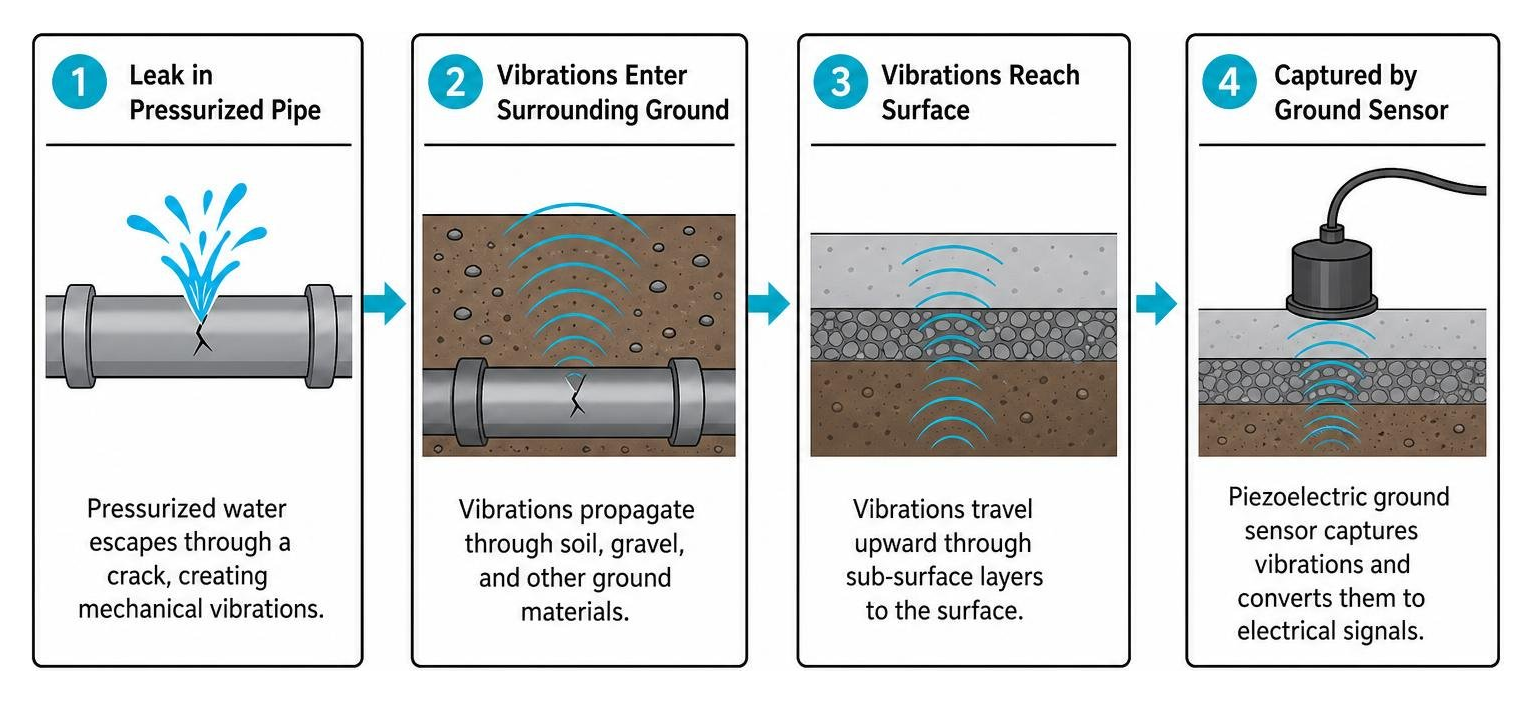
A high-performance acoustic system uses audio filtering calibrated between 100 Hz and 1000 Hz to isolate target water noise from ambient environmental interference like traffic, footsteps, and wind. The system amplifies sound waves by roughly 56 dB, allowing technicians to hear micro-vibrations through solid concrete, sub-base gravel, and flooring substrates. Acoustic leak locator tools require an active, pressurized line to operate. If a supply line is completely depressurized or drained, it generates zero acoustic friction, making sound-based pinpointing impossible without introducing artificial pressure.
Electronic Gas Detection Systems for Refrigerants and Combustible Gases
Electronic leak detectors identify gaseous leaks by measuring changes in electrical resistance or ion flow when targeted vapor molecules hit an active sensor tip. In heating, cooling, and fuel gas systems, modern electronic detectors use heated diode technology to analyze surrounding air. A heated ceramic or metallic diode operates at elevated temperatures, ionizing gas molecules as they pass through the sensing chamber and generating an electrical current proportional to gas concentration.
Advanced electronic detectors utilize integrated mechanical sampling pumps rather than relying on passive ambient diffusion. A mechanical pump draws continuous air streams directly across the sensor tip, speeding up response times and catching microscopic leaks as low as 1 gram per year. Multi-gas heated diode sensors can detect standard A1 refrigerants, mildly flammable A2L blends, combustible A3 hydrocarbons like propane, and combustible fuel gases including methane and natural gas without requiring physical sensor swaps between tasks.
Visual Confirmation Tools for Accessible Leaks
Fluorescent dyes and bubble test fluids offer direct visual confirmation when electronic or acoustic methods are impractical. Fluorescent leak detection relies on ultraviolet dye formulations circulating within closed-loop fluid systems. High-grade dyes are filtered down to 2 microns, ensuring complete miscibility so host fluid viscosity, chemical stability, and lubricity remain unaltered in engine oils, hydraulic lines, closed-loop chillers, and specialized water systems. When illuminated by high-output violet or UV LED inspection lights, escaping dye fluoresces a bright yellow-green at the exact exit point.
Chemical bubble sprays provide immediate verification on accessible pipe joints, threaded unions, valves, and weld seams. When sprayed onto a pressurized connection carrying air or fuel gases, surface-tension additives entrap escaping gas to generate expanding foam or localized bubbling. Modern formulations are biodegradable and PFAS-free, ensuring safe application across plumbing, gas lines, and mechanical equipment without degrading delicate elastomers or leaving hazardous residues behind.
Choosing General Leak Detector Tools for Plumbing and HVAC Systems
Selecting the right leak detection tool depends on the medium being tested, the density of the surrounding structural material, and the physical accessibility of the line. Using an acoustic ground sensor on a low-pressure open drain line will yield no results, just as applying bubble spray to an underground slab pipe is impossible. Weighing DIY vs professional leak detection in Lexington, SC helps determine when specialized equipment is required. Matching the diagnostic hardware to the specific mechanical environment ensures fast, non-destructive results.
Acoustic Leak Detector Features and Audio Filtering
A professional-grade acoustic system must adapt to varying ground densities and listening environments. Hard surfaces such as concrete foundation slabs, asphalt driveways, and ceramic tile require a heavy, wind-shielded piezoelectric ground sensor disc. This disc sits flat against the hard substrate to capture mechanical vibration without picking up air currents. When evaluating soft surfaces like turf, sod, landscaping beds, or thick interior carpeting, threaded sectional probe rods are inserted into the ground to carry sub-surface acoustic vibrations directly to the sensor element.
Preset frequency filters eliminate operational guesswork by allowing technicians to toggle between low-pass, high-pass, and band-pass filtering within the 100 Hz to 1000 Hz spectrum. When background noise is severe or water leaks produce faint acoustic signatures due to low supply pressure, technicians use a Sound Amplification Manifold (SAM). This tool introduces regulated compressed air into the water line, creating an aerated mixture that dramatically increases escaping fluid velocity and magnifies acoustic hiss for reliable pinpointing.
Electronic Gas Detector Options for Refrigerants and Gases
HVAC and fuel gas testing require electronic instruments with versatile sensor compatibility. Modern cooling systems increasingly use mildly flammable A2L refrigerants and flammable A3 hydrocarbons, making sensor safety and broad chemical sensitivity essential. Field instruments must deliver high sensitivity, down to 0.03 ounces per year (1 gram per year) in stationary testing and 0.1 ounces per year (3 grams per year) in sweeping motions across line sets and condenser coils.
Heated diode sensors can support multi-gas detection, but sensor life and maintenance needs vary by instrument and operating conditions. Premium electronic detectors may include automatic ambient recalibration to help account for background gas in unventilated mechanical rooms, along with manual zero modes that help technicians trace increasing gas concentrations toward a potential leak source. Continuous mechanical suction can improve sampling response, while integrated usage counters can help technicians follow the manufacturer’s recommended sensor-replacement interval. For stationary refrigeration and air-conditioning equipment covered by federal rules, technicians should also follow the EPA’s leak repair requirements.
Chemical Bubble Sprays and Fluorescent Dyes for Direct Inspection
Direct chemical testing remains a dependable method for exposed connections and enclosed fluid circuits. Bubble sprays formulated for testing gas categories under EN 437 standards allow quick visual checks on threaded pipe connections, flange joints, and compression fittings. A quality fluid clings to vertical and inverted pipe joints without dripping immediately, forming distinct foam clusters around micro-fissures. When working with copper or PVC piping, technicians should rinse testing fluids with clean water after inspection to prevent localized chemical residue buildup that could otherwise accelerate corrosion or cause pinhole leaks in copper pipes.
For hydraulic reservoirs, industrial gearboxes, and closed liquid loops, concentrated fluorescent dyes provide clear visual tracing. Dyes carrying NSF certifications for categories HX-2 and HTX-2 can be safely introduced into specialized heat exchangers and processing machinery. A standard 8-ounce bottle of concentrated fluorescent dye treats up to 64 gallons (242 liters) of fluid, circulating throughout the system and highlighting hairline fissures under violet LED light during routine preventative maintenance.
Key Specifications for Acoustic and Gas Detection Systems
When comparing general leak detector tools, focus on the specifications that matter for the leak type being investigated. Acoustic systems need dependable sound pickup and filtering for pressurized plumbing, while gas detection systems need appropriate sensor sensitivity, sampling performance, and safety ratings for the gases or refrigerants present.

Acoustic systems require high sensitivity ratings (such as 1.00V/g at 400 Hz) combined with robust audio amplification up to 56 dB. Premium noise-cancelling headphones featuring a Noise Reduction Rating (NRR) of at least 23 dB isolate target frequencies from ambient jobsite noise. Automatic safety muting protects the technician’s hearing from high-volume spikes if a probe slips or contacts metallic piping abruptly.
For electronic gas instruments, sensor longevity, sampling speed, and hazardous location ratings are critical. Equipment used around combustible gases or flammable refrigerants requires certifications like ATEX Zone 2 and Class I, Division 2. These ratings ensure the tool’s internal electronics and battery compartments cannot produce an incendiary spark. Maintaining these safety ratings often requires specific battery types, such as lithium iron disulfide cells, which also provide stable voltage across extreme operating ranges from -4°F to 122°F (-20°C to 50°C).
Recognizing When You Need Non-Invasive Leak Detection
Concealed plumbing leaks often develop slowly, causing hidden structural damage before water pools visibly inside a living space. Homeowners often first notice a problem when dealing with a high water bill with no visible leak, indicating that municipal water is flowing continuously through damaged sub-surface lines.
Early identification prevents costly damage to flooring, wall framing, and building foundations. Unexplained warm spots on tile floors, persistent musty odors, damp baseboards, or localized sound of running water behind drywall are common slab leak symptoms indicating sub-slab plumbing failures. Chemical reactions with soil minerals or aggressive water chemistry can cause localized pitting, leading to tiny pinhole leaks in copper pipes that spray fine mists inside wall cavities.
Catching the subtle warning signs early prevents mold growth and structural rot. Unexplained drops in flow volume across multiple plumbing fixtures are among the likely causes of low water pressure, often signaling that water is escaping through cracked underground distribution pipes rather than reaching your faucets. Deploying non-invasive acoustic and electronic testing allows plumbing professionals to pinpoint the exact failure point, eliminating exploratory demolition and preserving property integrity.
Frequently Asked Questions About Acoustic and Gas Leak Detector Tools
How does an acoustic general leak detector pinpoint pipes underground?
An acoustic general leak detector uses a high-sensitivity piezoelectric sensor to capture vibrations created by pressurized water escaping from a pipe. The system filters these vibrations between 100 Hz and 1000 Hz, amplifies the signal by up to 56 dB, and transmits it to noise-cancelling headphones so the operator can identify the loudest sound profile directly above the leak.
What is the difference between an HVAC refrigerant detector and a plumbing leak locator?
An HVAC refrigerant detector uses a heated diode or infrared sensor with an internal sampling pump to identify airborne chemical vapors escaping from cooling lines. A plumbing leak locator uses acoustic ground microphones or listening rods to detect physical sound waves and mechanical vibrations moving through solid materials from pressurized water pipes.
How does a Sound Amplification Manifold help detect faint water leaks?
A Sound Amplification Manifold connects to a pressurized plumbing line to introduce regulated compressed air alongside water. This air-water mixture increases the velocity of escaping fluid, significantly magnifying acoustic vibrations to make faint or deeply buried leaks audible to ground sensors.
Can acoustic leak locators find leaks under concrete slabs or tile floors?
Yes. Dense materials like concrete, asphalt, and tile conduct high-frequency acoustic vibrations effectively. Placing a heavy, wind-shielded ground sensor flat against the floor allows operators to pinpoint sub-slab leaks without breaking concrete.
What safety certifications are needed for combustible gas and refrigerant leak detectors?
Detectors used around flammable gases and modern A2L or A3 refrigerants should carry ATEX Zone 2 and Class I, Division 2 intrinsically safe ratings. These certifications ensure the instrument’s electrical components and battery circuits cannot create sparks in hazardous environments.
How do fluorescent UV dye kits locate leaks in closed fluid systems?
A technician adds a fluid-compatible fluorescent dye into a closed system such as hydraulic lines, engine oil, or cooling loops. After running the system to circulate the dye, they inspect connections and hoses using a violet or UV LED light, which causes escaping fluid to glow bright yellow-green.
When should you use a spray leak finder instead of an electronic detector?
Spray leak finders are ideal for accessible, exposed pipe joints, threaded unions, and gas fittings where direct visual confirmation is needed. While electronic detectors locate general gas presence in an area, bubble spray confirms the precise fitting or seam that requires tightening.
How do noise-cancelling headphones improve acoustic leak detection accuracy?
Headphones with a 23 dB Noise Reduction Rating block external ambient sounds like traffic, wind, and HVAC blowers. This allows the technician to isolate faint water leak frequencies while built-in safety switches mute sudden loud audio spikes to protect hearing.
What are the earliest warning signs of a hidden residential water leak?
Early indicators include sudden spikes in municipal water bills, the water meter dial turning while all fixtures are off, warm patches on concrete or tile floors, unexplained drops in fixture water pressure, and persistent musty odors near baseboards.
Why should property owners hire professionals for leak detection in Columbia, SC?
Professional plumbers use specialized diagnostic tools like acoustic locators, line transmitters, and thermal imaging to isolate leaks without damaging walls or foundations. Comparing DIY vs professional leak detection in Lexington, SC highlights how professional equipment avoids unnecessary digging, while expert leak detection in Columbia, SC ensures repairs meet local building codes and plumbing standards.
Conclusion
Finding hidden leaks does not require destructive guessing, torn-up drywall, or shattered foundation concrete. The right general leak detector approach starts with identifying the medium involved: acoustic tools for pressurized water lines, electronic systems for refrigerants and combustible gases, and visual confirmation methods for accessible connections.
While basic DIY methods like bubble testing can help with simple, exposed fittings, hidden water leaks under slabs, behind walls, or underground require commercial-grade acoustic tools and professional expertise. Gas and refrigerant concerns also require properly rated electronic detection equipment and careful safety practices. If you have safety concerns, suspect a gas leak, need specialized acoustic equipment, or notice hidden moisture issues, contact our professional leak detection technicians at Franklin Plumbing & Drain Cleaning. We pinpoint hidden plumbing issues quickly to protect your home and restore your water system.

professional
drain cleaning

highly
recommended

through
repairs

quality
work