
Water Line Repair or Replacement? How to Know Which You Need
Home »

Water Line Repair or Replacement Starts With Finding the Leak
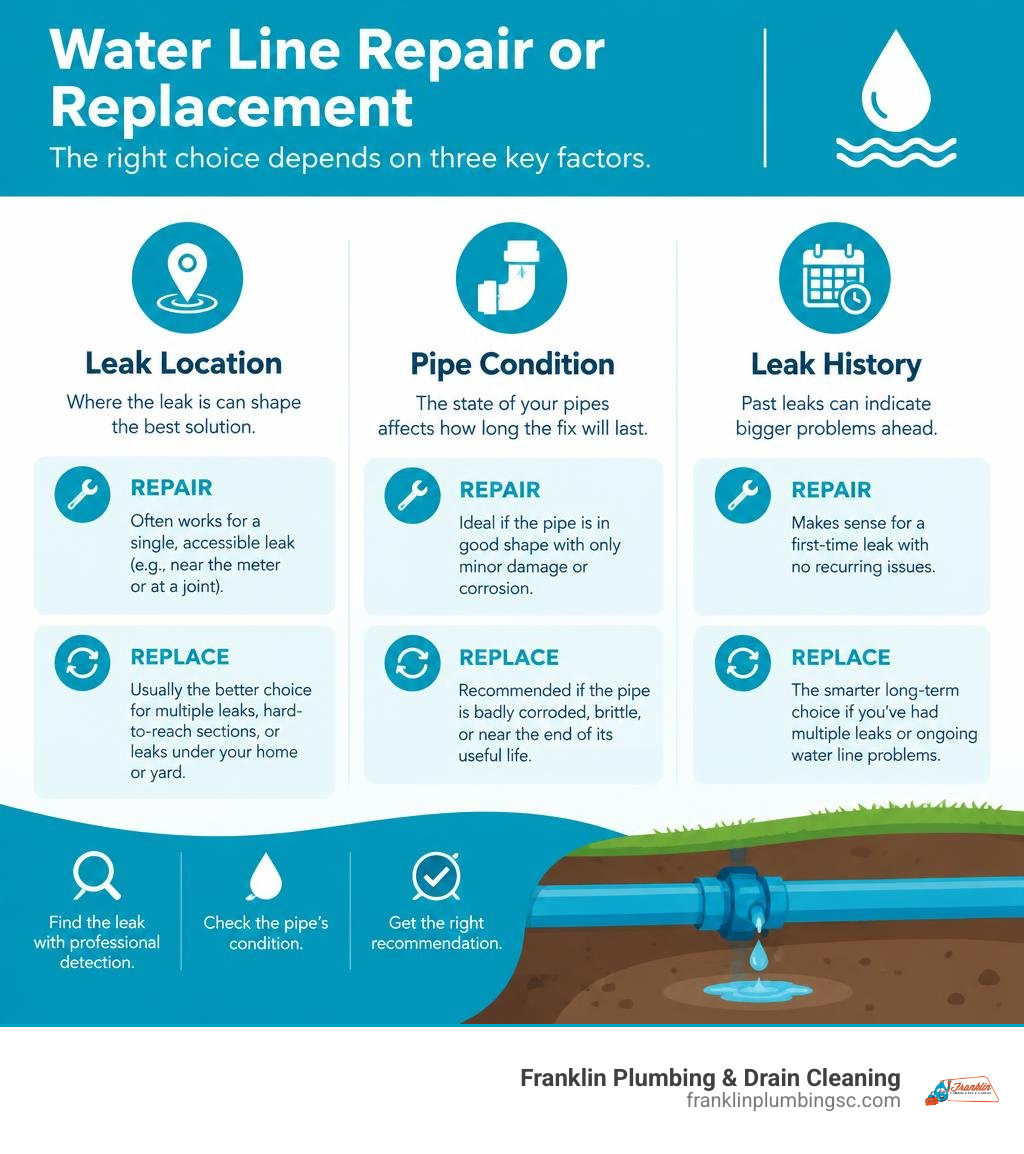
A single leak in an otherwise sound water line may need only a targeted repair. If the pipe is badly corroded or has leaked more than once, replacement may be the better long-term choice. For a hidden leak in Columbia, SC, start with professional leak detection. A plumber can locate the problem and check the pipe’s condition before recommending either option. When you need expert leak detection Columbia homeowners trust, a systematic diagnostic approach protects your yard, foundation, and budget.
Watch for an unexplained rise in your water bill, a drop in water pressure, or a persistently wet patch of yard. Don’t wait for water to surface. According to the EPA, leaks in the average home can waste more than 10,000 gallons a year.
Our plumbing team uses the inspection findings to explain which repair or replacement option best fits your water line.
A sudden change in your monthly bill can be one of the first signs of a hidden leak. This overview of leak detection costs in West Columbia, SC explains the factors that can affect an inspection and repair recommendation, while our guide to pressure-drop leak detection explains why a professional diagnosis is important before excavation or repair work begins.
Recognizing Hidden Water Line Issues: Signs and Local Risk Factors
Identifying a broken underground pipe before it undermines your driveway, cracks your foundation, or drives your utility bills sky-high requires a keen eye. In the Midlands, our unique geological makeup and weather patterns create specific challenges for subterranean plumbing systems. The expansive clay soils common across Richland and Lexington counties undergo extreme swelling during wet seasons and severe shrinkage during hot, dry summers. This continuous ground movement places immense physical stress on rigid underground pipes, frequently causing shearing, joint separation, and hairline fractures.
Compounding this soil activity, older neighborhoods in Columbia, SC, West Columbia, SC, and Cayce, SC, often feature plumbing infrastructure built decades ago. Over time, internal oxidation degrades metal pipes, leading to chronic issues like pinhole leaks in copper pipes. When moisture escapes unseen beneath your property, mold spores can colonize drywall and flooring within 24 to 48 hours. At the same time, thousands of gallons of treated water escape silently into the earth, showing up only as unexplained high water bills.
Early Warning Signs in Columbia Homes
Water line leaks rarely announce themselves with a dramatic geyser shooting through your front lawn. Instead, they produce subtle, progressive symptoms that worsen over weeks or months. Recognizing these warning flags early allows you to address the underlying problem before it causes catastrophic structural damage:
- Unexplained Pressure Loss: If your shower pressure drops unexpectedly when no other fixtures are running, an underground rupture may be bleeding off volume before water reaches your home.
- Soggy Lawn Patches: Spongy, overly lush, or constantly muddy patches of grass along your main supply path during dry weather indicate subsurface pooling.
- Hot or Damp Flooring: Under-slab hot water lines that fail will create warm, damp spots on hardwood, tile, or carpeting.
- Foundation Cracking: As escaping water erodes soil beneath your home or causes localized clay swelling, foundations can settle unevenly, resulting in drywall fissures and sticking doors. Reviewing common slab leak warning signs helps pinpoint whether the rupture is sitting directly beneath your living area.
- Audible Water Movement: Hissing, trickling, or rushing sounds behind walls or under floors when every fixture is turned off signal continuous water loss.
If you observe an active surge or rapid pooling, learning how to shut off your water main is the most critical first step you can take to protect your home.
Why DIY Methods Fail and When to Seek Expert Leak Detection Columbia
When homeowners suspect a leak, their first instinct is often to dig up sections of the lawn or cut exploratory holes in drywall. Unfortunately, water travels along the path of least resistance. The physical spot where moisture surfaces is frequently tens of feet away from the actual pipe rupture, making blind digging both destructive and ineffective.
Attempting DIY leak location carries severe risks, including accidentally striking buried electrical conduits, damaging gas lines, or crushing healthy sewer pipes. Furthermore, surface observations cannot measure pipe wall integrity or uncover multiple microscopic failure points. Understanding common hidden leak signs is helpful for awareness, but specialized acoustic and thermal diagnostic tools are required to pinpoint subterranean breaches without unnecessary property destruction.
How Expert Leak Detection Columbia Pinpoints the Exact Pipe Problem
Modern diagnostic plumbing relies on non-invasive technology that eliminates guesswork. Rather than trenching through entire yards or tearing apart concrete slabs, certified technicians use advanced equipment to locate ruptures down to the exact inch. Our dedicated leak detection services identify the root cause of pressure loss while protecting your landscaping and structural integrity.
Advanced Diagnostic Technologies Used in the Midlands
Plumbing experts deploy a combination of specialized technologies to assess underground and inside-slab piping:
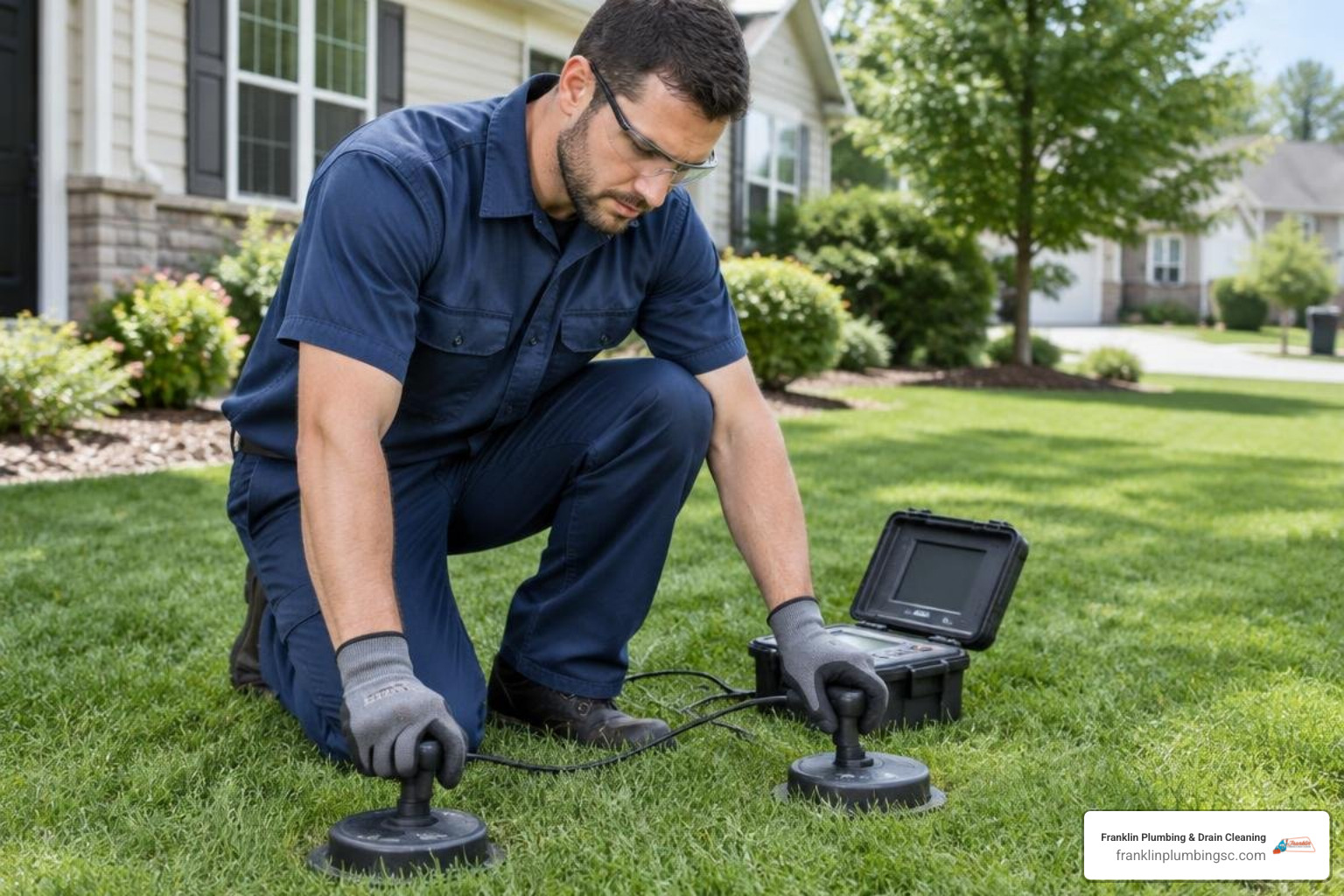
- Electro-Acoustic Ground Microphones: High-frequency acoustic sensors pick up the distinctive harmonic frequencies created by pressurized water escaping tiny fissures, filtering out ambient surface noise.
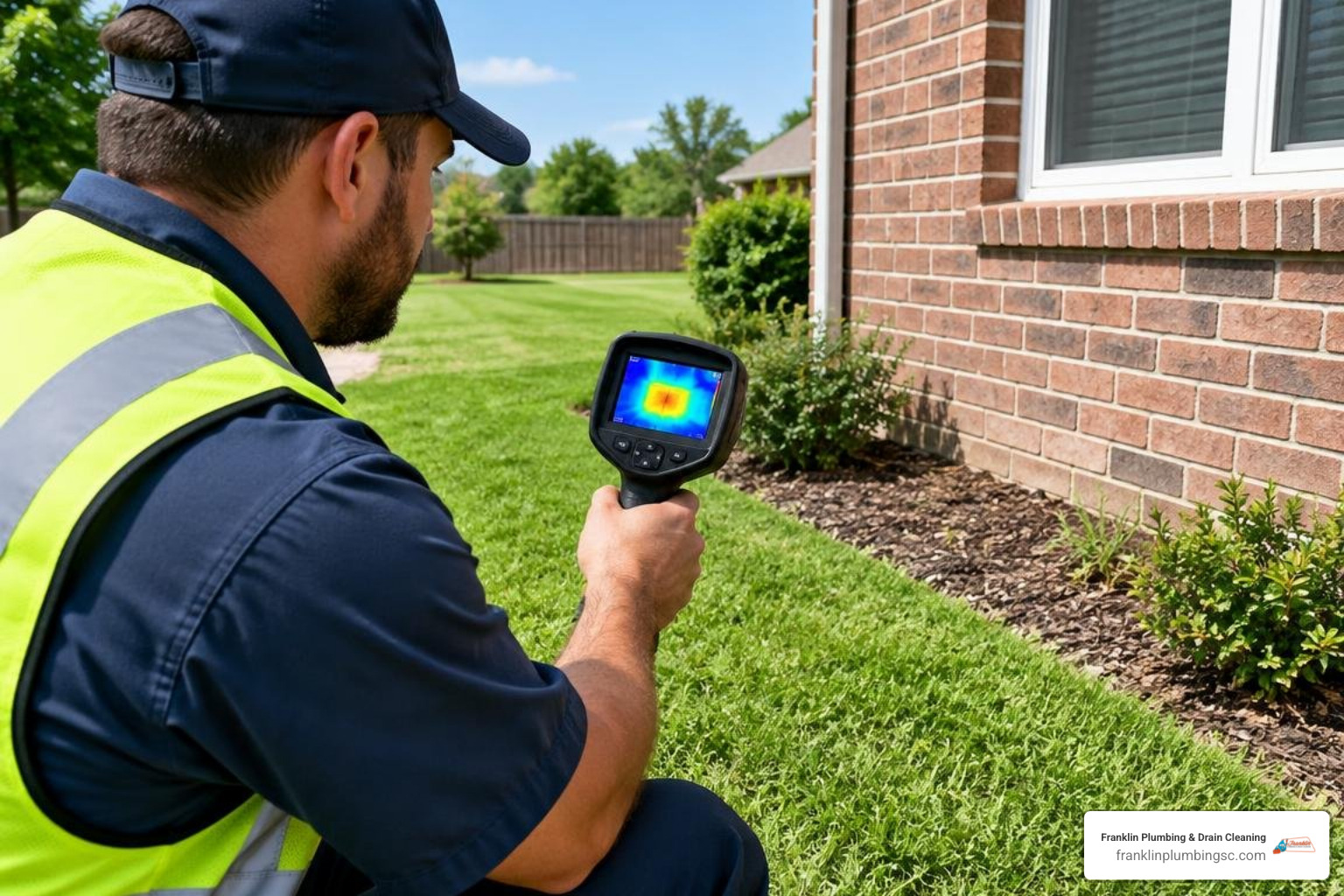
- Infrared Thermal Imaging: High-resolution thermal cameras detect minute temperature variations across concrete slabs and finished walls, instantly highlighting hidden hot or cold water plumes.
- Helium Tracer Gas Analysis: For elusive pinhole breaches in non-metallic piping, non-toxic, non-flammable tracer gas is introduced into the depressurized line. Specialized “sniffer” sensors detect the gas escaping through the ground surface.
- Electromagnetic Pipe Locators: Line transmitters trace the exact depth and trajectory of underground utilities, ensuring repairs are targeted and precise.
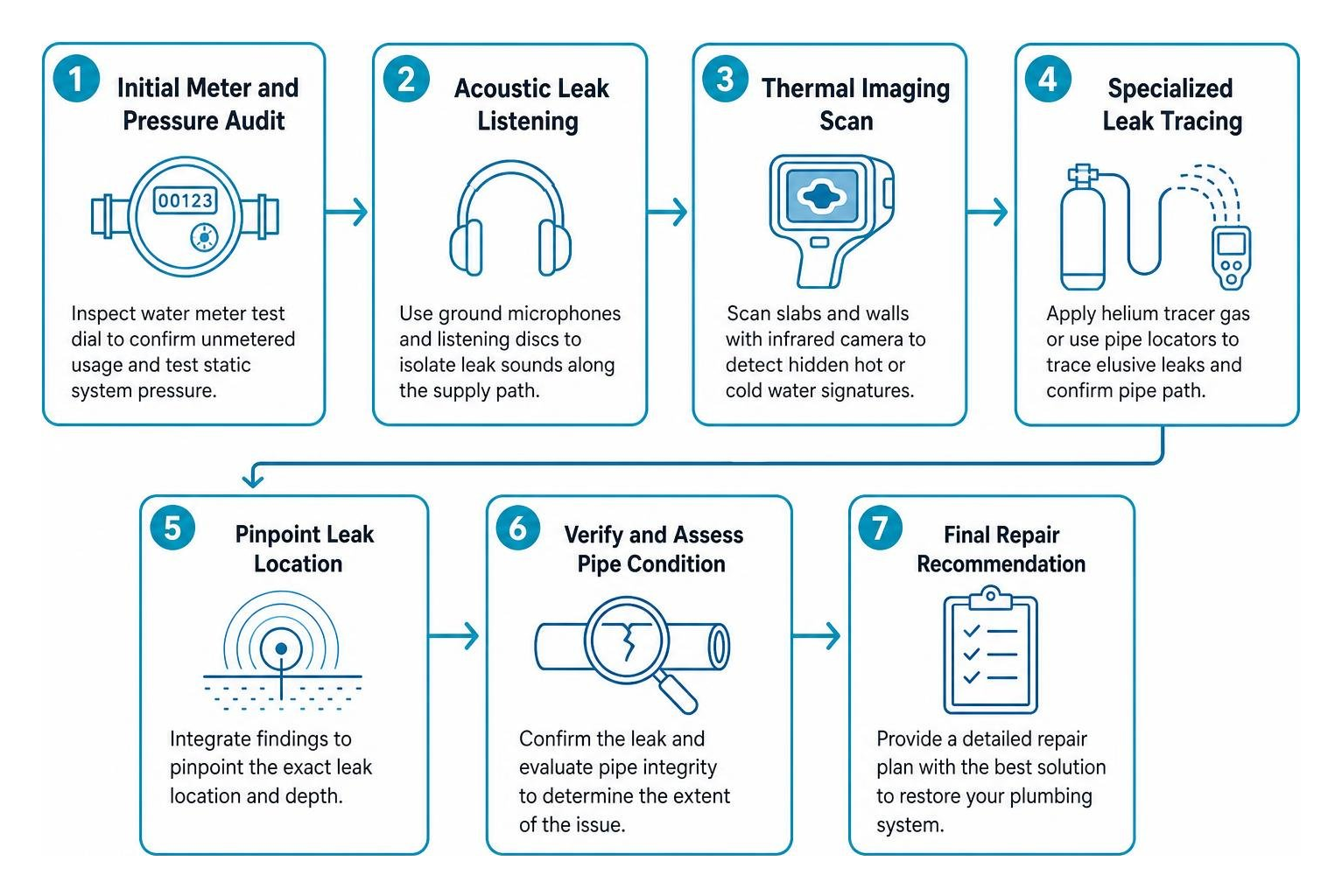
The Step-by-Step Diagnostic Process for Expert Leak Detection Columbia
A systematic diagnostic procedure ensures accurate assessments:
- Initial Meter and Pressure Audit: The technician inspects the municipal water meter test dial to confirm unmetered consumption, followed by attaching calibrated digital gauges to evaluate static system pressure.
- System Isolation: The main supply is systematically isolated at key valves to determine whether the leak resides inside the main yard line, the interior distribution plumbing, or beneath a concrete slab foundation.
- Acoustic and Thermal Mapping: Technicians trace the pressurized pipe’s path across your yard or floors using acoustic listening discs and infrared imaging to find sound spikes and moisture plumes.
- Depth and Coordinate Pinpointing: Once the acoustic profile peaks, electronic depth locators map the exact depth and surface coordinates of the pipe failure.
- Condition Reporting: The diagnostic findings are compiled into an actionable condition report, detailing pipe depth, material health, and a clear recommendation for sectional repair versus full replacement.
Water Line Repair vs. Replacement: Key Factors to Consider
Once the exact leak location is established, property owners must choose between a localized spot repair and a full water line replacement. Making the right decision involves evaluating several technical factors:
- Pipe Material: Modern PEX and well-maintained copper respond exceptionally well to spot repairs. In contrast, aging galvanized steel or brittle polybutylene piping should almost always be replaced, as a spot repair simply shifts water pressure to the next weakest joint.
- Age of the Plumbing: Water lines exceeding 40 to 50 years of age are nearing the end of their design lifespan. Patching an aged pipe often leads to repeated leaks months later.
- History of Failures: A single isolated leak caused by tree roots or accidental ground work justifies a repair. A pipe that has leaked multiple times shows systemic degradation and requires replacement.
- Location and Access: A yard leak under soft soil is straightforward to patch. A leak deep under a finished concrete foundation may make a trenchless reroute or full replacement more cost-effective over time.
| Decision Factor | Targeted Water Line Repair | Complete Line Replacement |
|---|---|---|
| Primary Pipe Material | Modern Copper, PEX, High-Grade PVC | Galvanized Iron, Polybutylene, Thin Copper |
| Pipe Age Profile | Under 20–25 years old | 40+ years or unknown vintage |
| Leak History | First-time isolated incident | Multiple historical repairs |
| Structural Integrity | Strong pipe walls, minimal corrosion | Widespread flaking, pitting, rust buildup |
| Overall Scope | Small localized excavation | Complete pull or directional boring |
| Future Risk | Low for healthy surrounding pipe | High if patching obsolete material |
When a Spot Repair Is the Best Option
Targeted repairs make the most sense when dealing with isolated physical damage on an otherwise healthy line. For example, if a landscaper punctures a modern PEX line or a minor joint separation occurs on thick copper pipe, a focused water line repair quickly restores service without unnecessary costs. In these scenarios, technicians excavate a small access hole, cut out the damaged section, and install high-grade brass or mechanical compression fittings designed to last for decades.
When Full Water Line Replacement Is Necessary
When supply lines suffer from systemic corrosion, brittle wall structures, or recurring ruptures, continuing to patch individual leaks is a losing battle. Homes built throughout Columbia, SC, between the late 1970s and mid-1990s often contain polybutylene piping, which degrades unpredictably when exposed to standard municipal water treatments.
In these situations, choosing comprehensive water line replacement solutions offers complete peace of mind. Using modern trenchless installation methods like horizontal directional drilling or pipe pulling, our team can install seamless, heavy-duty PEX or high-density polyethylene (HDPE) lines directly from the municipal meter to your home with minimal disruption to your lawn, driveway, or landscaping.
Frequently Asked Questions About Water Line Services in Columbia
How do Columbia’s soil and climate conditions affect underground water lines?
The Midlands region is known for high-density red clay and sandy loam soils. Expansive clay swells significantly during wet periods and shrinks during droughts, exerting intense external pressure on buried water lines. This cyclic movement causes rigid lines to shift, crack, or separate at mechanical joints.
Who is responsible for repairing a leaking water service line in Columbia, SC?
In Columbia, SC, the municipal utility (Columbia Water) is responsible for maintaining the main distribution network and the service line up to the water meter box. The property owner is responsible for all piping, valves, and fittings running from the meter outlet into the home.
How quickly can a hidden supply line leak cause structural property damage?
Underground water leaks can wash away supporting soil within days, creating voids beneath driveways, sidewalks, and foundations. If the leak is beneath a concrete slab, structural settling and indoor mold growth can begin within 24 to 48 hours of moisture entering wall cavities.
How do plumbers locate underground water leaks without digging up the yard?
Technicians use specialized acoustic listening discs, ground microphones, thermal imaging cameras, and tracer gas detectors to isolate the sound and heat signatures of escaping water, mapping the exact rupture location before any excavation begins.
What are the main signs that an underground water line has failed?
Common indicators include unexplained spikes in monthly utility bills, reduced indoor water pressure, soggy or sunken areas in the lawn, warm spots on interior floors, and the sound of running water when all fixtures are closed.
Will homeowners insurance cover the cost of water line replacement?
Standard policies typically cover sudden, accidental water damage to the home’s interior, but they often exclude the cost of repairing or replacing the aged or corroded pipe itself. Adding an optional utility line endorsement can help cover buried supply line failures.
Can tree roots crack underground water supply lines?
While tree roots more commonly infiltrate low-pressure sewer pipes, they can wrap around pressurized water lines. As the root expands, it exerts severe mechanical pressure that can crush or fracture brittle copper, PVC, or galvanized pipes.
How long does a typical professional water line replacement take?
Using modern trenchless techniques, a standard residential water line replacement can usually be completed in one to two business days, minimizing downtime and landscape disruption.
Is trenchless water line installation available for all properties?
Trenchless methods are suitable for most residential properties, provided the subsurface path is free of heavy bedrock, large boulder fields, or severe utility cross-connections that require open excavation.
What should I do immediately after discovering a major water line break?
Locate your main water shut-off valve, shut down the water supply to prevent flooding and structural erosion, and schedule an immediate inspection with a licensed plumbing contractor.
Conclusion
Determining whether your property requires a targeted sectional repair or a complete water line replacement begins with pinpoint diagnostic accuracy. Hidden supply line leaks waste thousands of gallons of water, weaken foundation soils, and put your home at risk of expensive structural damage. By diagnosing the issue with non-invasive acoustic and thermal equipment, you can avoid unnecessary digging and make an informed decision based on the actual condition of your plumbing system.
For dependable diagnostic precision and long-lasting pipe repairs in Columbia, SC, West Columbia, SC, Lexington, SC, and surrounding Midlands communities, turn to our licensed plumbing team. Franklin Plumbing & Drain Cleaning can help protect your property with reliable, lasting plumbing solutions. Contact our professional leak detection technicians to schedule an inspection and discuss the right next step for your water line.

professional
drain cleaning

highly
recommended

through
repairs

quality
work