Pinhole Leaks in Copper Pipes: Causes, Signs, and Fixes
Home »
Why Pinhole Leaks in Copper Pipes Are a Bigger Problem Than They Look
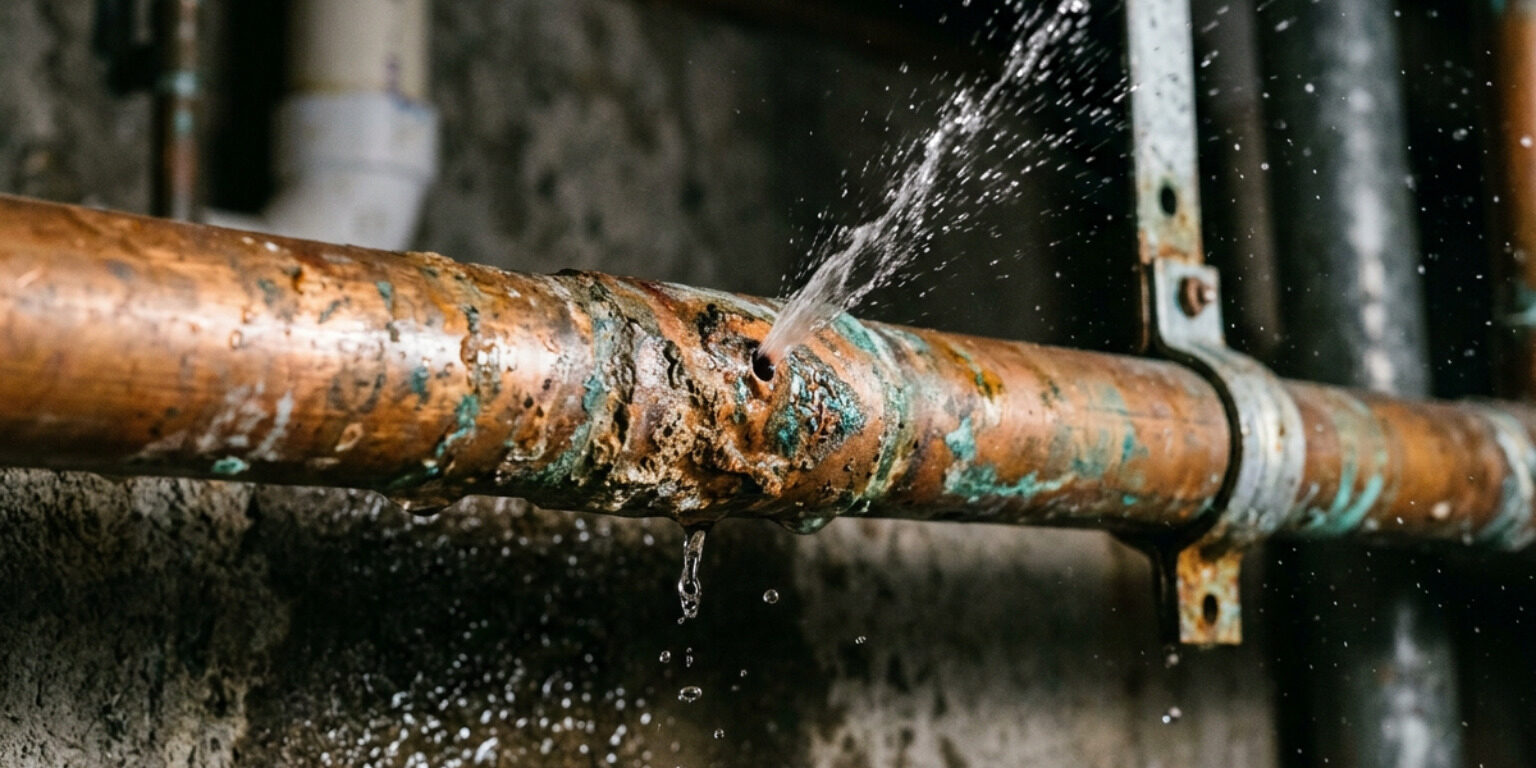
Pinhole leaks in copper pipes are small, slow, and easy to miss — but they can quietly cause thousands of dollars in water damage, mold growth, and structural repairs before you ever notice a drip.
Here is a quick summary of what you need to know:
- What they are: Tiny holes in copper pipe walls caused by pitting corrosion working from the inside out
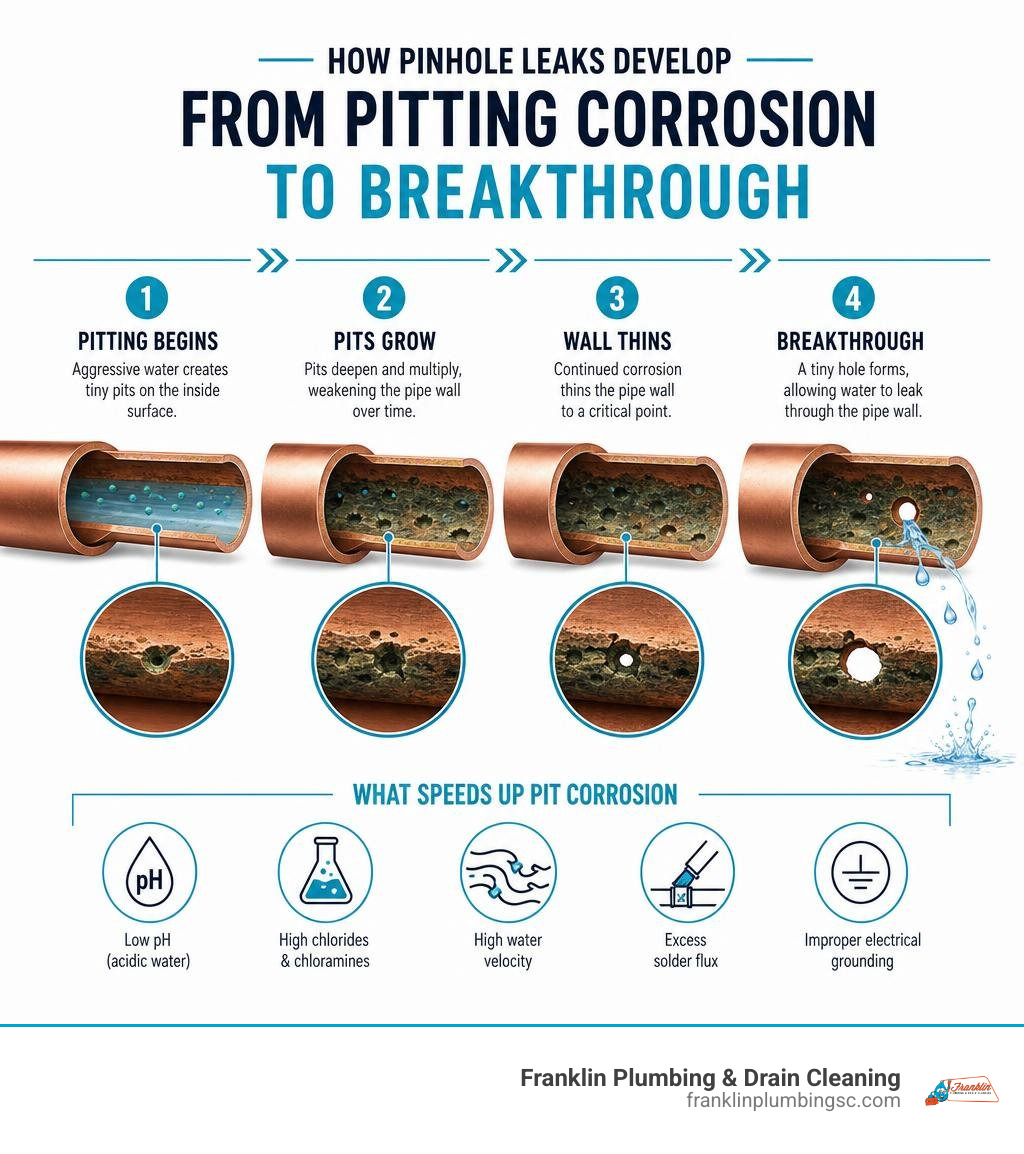
- Common causes: Aggressive water chemistry (low pH, high chlorides, chloramines), high water velocity, excess solder flux, and improper electrical grounding
- Warning signs: Blue-green stains on pipes, damp spots on walls or ceilings, musty odors, higher water bills, reduced water pressure
- Temporary fixes: Epoxy putty, pipe repair clamps (last weeks to months)
- Permanent fixes: Sweat soldering a new copper section, push-to-connect fittings, or full repiping with PEX
- When to repipe: Multiple leaks in different areas within a short period, or a home built in the 1980s or earlier showing recurring issues
Copper has been the go-to material for residential plumbing for decades. Since 1963, over 5.3 million miles of copper plumbing have been installed in roughly 80 percent of all U.S. buildings. It earned that reputation for good reason — copper is strong, lightweight, and naturally resistant to corrosion under normal conditions.
But “normal conditions” matter more than most homeowners realize.
Water chemistry, flow speed, installation quality, and even stray electrical current can all shorten a copper pipe’s life dramatically. Pipes that should last 20 to 50 years have been known to fail in just a few years under the wrong conditions. And because pinhole leaks release only a fine mist or a few drops at a time, they often soak into insulation and wall cavities for months before anyone notices.
This guide covers everything you need to know — from how pitting corrosion actually works, to detection methods, repair options, and when it makes more sense to replace your pipes entirely.
What Are Pinhole Leaks Copper Pipes?
A pinhole leak is not a sudden split or a frozen burst. Instead, it is the final breakthrough event of progressive pitting corrosion that has been eating away at the copper from the inside out. By the time you see a tiny water droplet forming on the outside of your pipe, a microscopic tunnel has already been drilled through the metal.
All residential copper plumbing must meet strict manufacturing standards, specifically the ASTM B88 specification. This standard guarantees that the copper tubing is at least 99.9 percent pure copper and silver combined, with a maximum of 0.04 percent phosphorus. Despite this high level of purity, copper is still a metal, and water is naturally corrosive to metals over time.
While copper pipes are expected to last anywhere from 20 to 50 years, adverse conditions can cause them to fail in as little as a few years. Extensive research from organizations like WSSC Water research on copper pipe pinhole leaks indicates that the vast majority of these failures occur in cold-water, horizontal copper piping. Their historical data showed that 80 percent of reported pinhole leaks occurred in homes built prior to 1970, though modern homes in areas like Columbia, SC and West Columbia, SC are certainly not immune.
The Microscopic Anatomy of Pitting Corrosion
To understand why pinhole leaks copper pipes develop, we have to look at what is happening on a microscopic level. Under normal conditions, copper pipes develop a thin, protective copper oxide film on their inner walls. This film acts as a shield, preventing the water and dissolved minerals from contacting the raw metal.
However, certain conditions can disrupt this protective barrier, leading to localized material loss. When the protective film is compromised in one tiny spot, a chemical reaction occurs. Copper ions and acidity begin to concentrate at the bottom of the exposed spot, creating a tiny, deep crater.
Corrosion scientists classify this pitting corrosion into three distinct types:
- Type I Pitting: This typically occurs in cold water with a high pH, high sulfate levels, and moderate to high hardness. It forms deep, narrow pits covered by a hard crust of calcium carbonate and copper byproducts.
- Type II Pitting: This is usually found in hot-water lines (above 140 degrees Fahrenheit) where the water is soft and has a lower pH. The pits are narrower and can cause rapid pipe failure.
- Type III Pitting: This occurs in cold, soft water with a high pH, leading to wide, shallow pits that gradually thin the pipe wall.
Because the corrosion is highly localized, a pipe can look perfectly healthy on the outside while a microscopic tunnel is actively drilling through the wall just inches away.
Why Pinhole Leaks Copper Pipes Differ From Burst Pipes
When a pipe bursts due to freezing or high pressure, the failure is immediate, loud, and impossible to ignore. You will know within seconds that you have a major plumbing emergency on your hands.
Pinhole leaks operate in complete silence. Because the opening is often no larger than the tip of a pin, the water does not gush out. Instead, it releases a slow seepage or a fine, pressurized mist. This water is easily absorbed by fiberglass insulation, drywall, and surrounding wooden studs.
Over months, this hidden moisture leads to:
- Mold and Mildew Growth: Damp, dark wall cavities are the perfect breeding ground for mold, which can negatively impact indoor air quality.
- Structural Damage: Wood framing rot can occur when studs remain saturated for long periods.
- Wasted Water: Even a tiny drip can waste hundreds of gallons of water over the course of a month, driving up your utility bills.
If you are trying to determine if your home is experiencing these subtle issues, understanding the signs of water line damage is a critical first step.
Primary Causes of Copper Pipe Corrosion
There is rarely a single culprit behind pinhole leaks copper pipes. Instead, these leaks are usually the result of a perfect storm involving water chemistry, flow dynamics, and installation quality. Keeping up with essential plumbing maintenance can help you stay ahead of these issues, but understanding the root causes is key to long-term prevention.
Water Chemistry and pH Levels
The chemical makeup of your water supply is one of the biggest factors in copper longevity. Municipal water systems treat water to make it safe to drink, but some of those treatments can be aggressive on metal plumbing.
- pH and Alkalinity: Copper is happiest when water is slightly basic, with a pH around 7.9. If the water is too acidic (low pH) or lacks buffering capacity (low alkalinity), it cannot form or maintain its protective oxide coating.
- Chloramines and Disinfectants: Many water utilities have transitioned from chlorine to chloramines for disinfection. Chloramines are highly effective at keeping water clean over long distances, but they are also more aggressive toward copper and can accelerate pitting.
- Chloride and Sulfate Levels: High concentrations of these dissolved minerals can interfere with stable scale formation, pushing corrosion into narrow, concentrated pits rather than allowing uniform, harmless wear.
Flow Velocity and Hydraulic Turbulence
Water is not static; it is constantly moving through your home at high speeds. If the water velocity is too high, it can physically wear away the protective oxide film on the inside of the copper pipe. This is known as erosion-corrosion.
Industry guidelines recommend keeping water velocity below 8 feet per second for cold water and below 5 feet per second for hot water. When pipes are undersized or when water pressure is too high, velocity increases. This is particularly problematic around elbows, tees, and joints where the water is forced to change direction quickly, creating turbulent whirlpools that scrub away the pipe’s protective lining. Recirculation loops and booster pumps also increase this risk by keeping water in constant, rapid motion.
Installation Practices and Electrical Grounding
Sometimes, the seeds of a pinhole leak are sown during the construction of the home. Poor plumbing practices are a very common cause of premature copper failure.
- Excess Solder Flux: During installation, plumbers use flux to clean the copper before soldering. If they apply too much flux and fail to flush the system properly afterward, the acidic residue settled inside the pipe will eat away at the copper, creating localized corrosion zones.
- Unreamed Pipe Ends: When copper pipe is cut, a small burr is left on the inside edge. If the installer fails to ream the pipe to smooth this edge, it creates constant turbulence in the water flow directly after the joint, leading to localized erosion.
- Stray DC Voltage and Grounding: In many older homes, the electrical system is grounded to the metal water pipes. If there is a grounding defect or stray direct current (DC) on the plumbing system, it can cause electrolysis. According to research on DC voltage induced pinhole leaks, even tiny amounts of measured DC voltage can force metal ions to migrate away from the pipe wall, rapidly creating pinholes.
- Galvanic Corrosion: This occurs when copper is joined directly to a dissimilar metal, like galvanized steel, without a proper dielectric union. The electrical potential difference between the metals causes the weaker metal to corrode rapidly.
How to Detect Pinhole Leaks Before Major Damage Occurs
Because pinhole leaks are so small, finding them requires a mix of vigilance, basic testing, and professional diagnostic tools.
Here are the early warning signs every homeowner in Columbia, SC and the surrounding communities should look for:
- Verdigris Stains: Keep an eye out for powdery, blue-green crusts or stains along your exposed copper pipes. While green discoloration is a normal sign of aging copper, crusty deposits away from joints usually indicate a tiny amount of water is seeping out and evaporating, leaving mineral deposits behind.
- Damp Spots and Swelling Drywall: Look for bubbling paint, peeling wallpaper, or small, damp patches on your walls and ceilings. These often point to a fine mist leak spraying from a pipe inside the wall cavity.
- Musty Odors: A persistent, earthy smell in a specific room or closet often indicates hidden moisture and mold growth behind the drywall.
- The Water Meter Check: To perform this simple DIY test, make sure all water-using appliances and faucets in your home are turned off. Locate your water meter and watch the low-flow indicator (often a small red or blue triangle). If it is spinning, or if the digital reading changes over a 30-minute period while all water is shut off, you have a hidden leak.
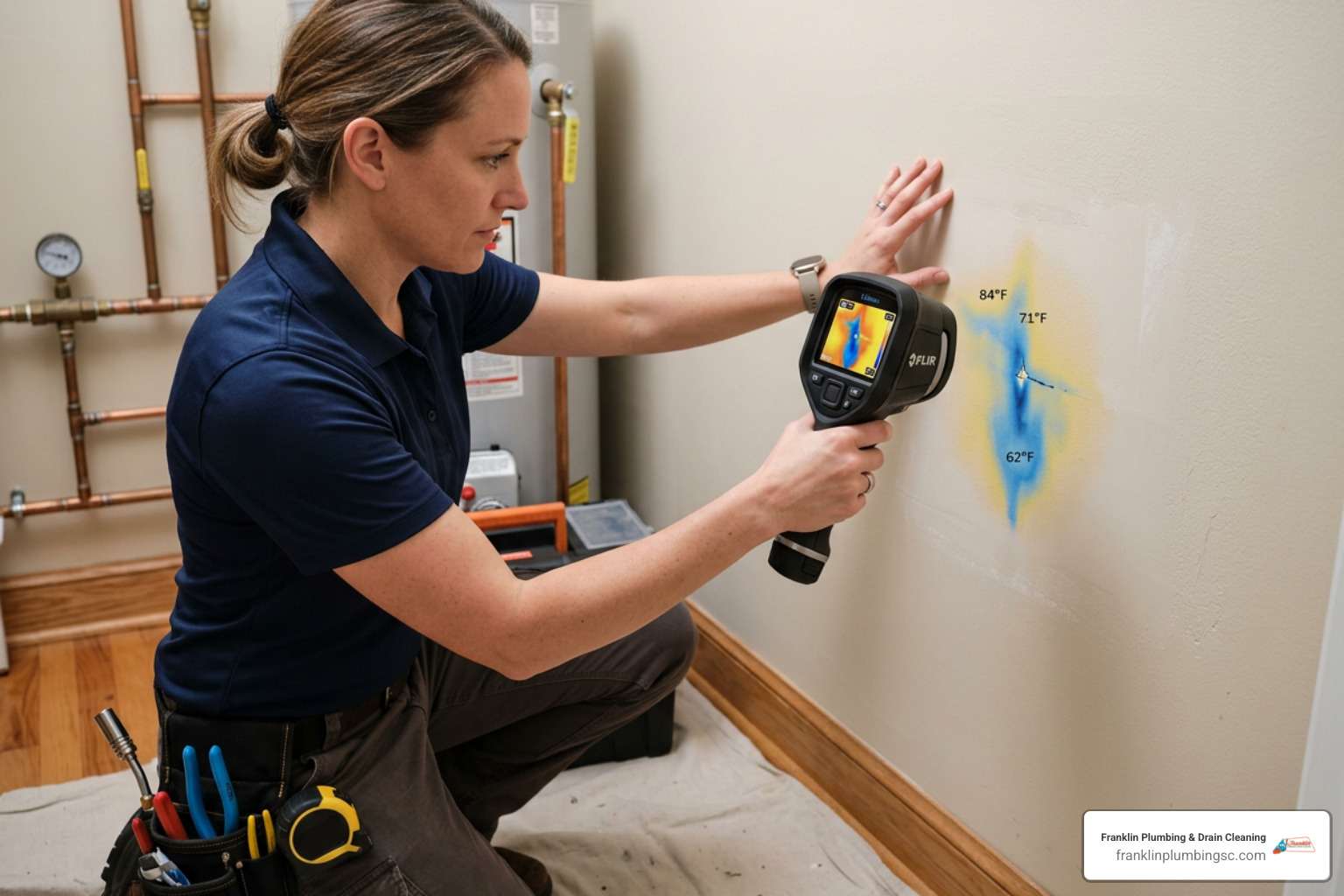
- Moisture Meters and Thermal Imaging: Professional plumbers use specialized moisture meters to detect high water content behind walls without tearing them open. Thermal imaging cameras are also highly effective; because leaking water is typically a different temperature than the surrounding drywall, it shows up clearly as a blue or red anomaly on a thermal screen.
Taking these steps is an excellent way of preventing pipe buildups and identifying hidden water loss before it compromises your home’s structure.
Repair and Replacement Options for Homeowners
When dealing with a pinhole leak, homeowners have several paths forward depending on the severity of the corrosion and the age of the plumbing system. If you are weighing your options, it helps to understand the pros and cons of choosing metal or nonmetal pipes for your home.
| Repair Method | Estimated Lifespan | Best Used For | Pros | Cons |
|---|---|---|---|---|
| Epoxy Putty | Weeks to months | Emergency, temporary patch | Very inexpensive, fast DIY fix | Temporary only, cannot withstand high pressure long-term |
| Pipe Repair Clamp | Several months to a year | Temporary hold until plumber arrives | Simple to install, reliable temporary fix | Will not stop systemic corrosion, temporary |
| Soldered Copper Patch | 20+ years (for that section) | Single, isolated leaks in healthy pipe | Permanent, highly reliable | Requires specialized tools and soldering skill |
| Push-to-Connect / PEX Section | 20+ years (for that section) | Quick permanent repair in tight spaces | No open flame needed, highly reliable | Higher material cost per fitting |
| Full Home PEX Repipe | 40 to 50+ years | Multiple leaks, systemic corrosion, old pipes | Solves the problem permanently, freeze-resistant | Higher initial investment, requires wall access |
Temporary DIY Fixes for Emergency Situations
If you discover a pinhole leak late at night or over the weekend, a temporary patch can protect your home until a professional plumber can perform a permanent fix.
- Shut Off the Water: Always turn off the main water supply valve and open the lowest faucets in your home to drain the remaining water from the lines.
- Dry the Pipe: Clean and dry the exterior of the copper pipe thoroughly. Putty and clamps will not adhere or seal properly on a wet surface.
- Apply Epoxy Putty: Knead a small amount of plumbing epoxy putty until it is a uniform color, press it firmly over the pinhole, and let it cure according to the manufacturer’s instructions (usually 30 to 60 minutes) before turning the water back on.
- Use a Pipe Repair Clamp: Alternatively, you can place a rubber gasket over the leak and secure a metal pipe clamp over it, tightening the bolts in a crisscross pattern to distribute the pressure evenly.
Note: These methods are strictly temporary Band-Aids. They should never be relied upon as long-term solutions, as the underlying corrosion will continue to spread.
Permanent Repairs and Professional Solutions
For a permanent repair, the damaged section of copper must be physically removed and replaced.
- Sweat Soldering: A plumber will cut out the corroded section of pipe, clean and ream the remaining ends, apply lead-free flux, and solder a new piece of copper in place using copper couplings. This requires specialized training to ensure a leak-free joint and to avoid fire hazards behind walls.
- Push-to-Connect Fittings and PEX: A modern, highly reliable permanent repair method involves cutting out the damaged copper and replacing it with a section of flexible PEX-a pipe using high-quality push-to-connect fittings like SharkBite Max. This is often the preferred method in tight, hard-to-reach spaces where using a torch is dangerous.
For leaks that occur underground or beneath your concrete slab, a more involved process like traditional pipe excavation may be required to access and replace the damaged line.
When to Consider a Full Home Repipe
If your home was built in the 1980s or earlier, or if you have experienced two or more pinhole leaks within a single year, you are likely dealing with systemic failure.
Because the water chemistry and pressure conditions are identical throughout your entire plumbing system, a pinhole leak in one room is usually a warning sign that the rest of your pipes are also paper-thin and on the verge of failing. Continuing to pay for individual spot repairs and drywall patches will quickly become more expensive than investing in a proactive, whole-house repipe.
When the time comes to update your home, understanding when to get plumbing repiping can save you from catastrophic water damage and protect your property value.
Preventive Measures to Protect Your Plumbing System
While you cannot change the age of your pipes, there are several highly effective steps you can take to slow down corrosion and protect your home’s plumbing. Choosing the ideal pipes for residential water lines is a great long-term strategy, but for existing copper systems, proactive maintenance is key.
How to Prevent Pinhole Leaks Copper Pipes
- Install a Water Softener or Filtration System: If your water is highly acidic or contains high levels of corrosive minerals, a whole-home water treatment system can help balance the pH and reduce the chemical reactions that cause pitting.
- Monitor and Regulate Water Pressure: Keep your home’s water pressure between 40 and 60 PSI. High water pressure increases flow velocity and causes hydraulic turbulence, which strips away the pipe’s protective inner lining. Installing a pressure reducing valve (PRV) can keep your pressure in a safe range.
- Flush Stagnant Lines: If you have guest bathrooms or plumbing branches that are rarely used, make a habit of running the water for a few minutes every week. Stagnant water allows corrosive elements and bacteria to settle, accelerating localized pitting.
- Schedule Annual Inspections: Having a licensed plumber inspect your visible plumbing once a year is the best way to catch verdigris stains, joint corrosion, and minor seeps before they turn into major emergencies.
Avoiding habits that damage plumbing — such as using harsh chemical drain cleaners, which are highly corrosive to copper — will also go a long way toward extending the lifespan of your pipes.
Frequently Asked Questions about Pinhole Leaks
What is a pinhole leak in a copper pipe?
A pinhole leak is a tiny hole that develops in the wall of a copper pipe, typically caused by pitting corrosion that eats through the metal from the inside out. They are usually no larger than the tip of a pin but can release a persistent, damaging mist.
What causes pinhole leaks in copper pipes?
They are caused by a combination of aggressive water chemistry (low pH, high chlorides, or chloramines), high water pressure and velocity, poor installation practices like excess solder flux, and stray electrical currents grounding through the plumbing.
How long do copper pipes typically last?
Under ideal conditions, residential copper pipes should last between 20 and 50 years. However, in homes with highly corrosive water or high water velocity, copper pipes can begin to fail in as little as a few years.
Can a water softener prevent pinhole leaks?
A water softener can help by removing harsh minerals that contribute to scale buildup, but softening alone does not guarantee protection. If your water has low pH or high chloramines, you may need additional filtration or pH-balancing systems to stop corrosion.
Does homeowner’s insurance cover pinhole leaks?
Most standard homeowner’s insurance policies cover the sudden and accidental water damage caused by a leaking pipe, but they rarely cover the cost of repairing or replacing the pipe itself, especially if the leak is deemed to be a result of wear and tear or lack of maintenance.
How do I know if I have a hidden pinhole leak?
Common signs include unexplained increases in your monthly water bill, musty odors, damp or discolored patches on your drywall, a dripping sound inside your walls, and a water meter that continues to spin when all faucets are turned off.
Is a single pinhole leak a sign that I need to repipe my home?
Not necessarily. A single leak in a relatively new, healthy system can often be repaired with a simple spot fix. However, if your pipes are over 30 years old or you have experienced multiple leaks, it is a strong indicator of systemic failure, and a full repipe is recommended.
What is the difference between a pinhole leak and a slab leak?
They are essentially the same chemical process, but a slab leak is a pinhole leak that occurs in the copper water lines running beneath your home’s concrete foundation slab, making it much harder to detect and repair.
Can electrical grounding issues cause copper pipe leaks?
Yes. If your home’s electrical system is improperly grounded to your copper pipes, stray direct current (DC) can travel through the metal. This causes electrolysis, which physically pulls metal molecules away from the pipe wall, leading to rapid pitting.
Why are plumbers switching from copper to PEX-a?
PEX-a is highly flexible, completely resistant to corrosion and scale buildup, and can expand up to three times its diameter, making it highly resistant to freezing. It is also faster to install and generally more cost-effective than copper.
Conclusion

Pinhole leaks may start small, but they are a clear warning sign that should never be ignored. Whether you are dealing with an isolated issue in a newer home or systemic corrosion in an older property, taking fast, decisive action is the only way to protect your home from costly mold remediation and structural repairs.
If you suspect you have a hidden leak, or if you want to assess the health of your home’s plumbing system, the licensed and experienced team at Franklin Plumbing & Drain Cleaning is here to help. We proudly serve homeowners in Columbia, SC, and surrounding areas including Lexington, SC, Irmo, SC, and Chapin, SC, with our 100% satisfaction guarantee.
Do not wait for a tiny drip to turn into a major headache. Schedule professional leak detection services with Franklin Plumbing & Drain Cleaning today to keep your home safe, dry, and protected.

professional
drain cleaning

highly
recommended

through
repairs

quality
work