8 Warning Signs of a Broken Sewer Line Under Your Home
Home »
When Small Plumbing Problems Signal Something Much Bigger Underground
The signs of a broken sewer line are easy to miss at first. A slow drain here. A faint smell near the toilet there. Most homeowners brush these off as minor annoyances, at least until a full sewage backup turns a Tuesday morning into a nightmare.
Here are the most common warning signs to watch for:
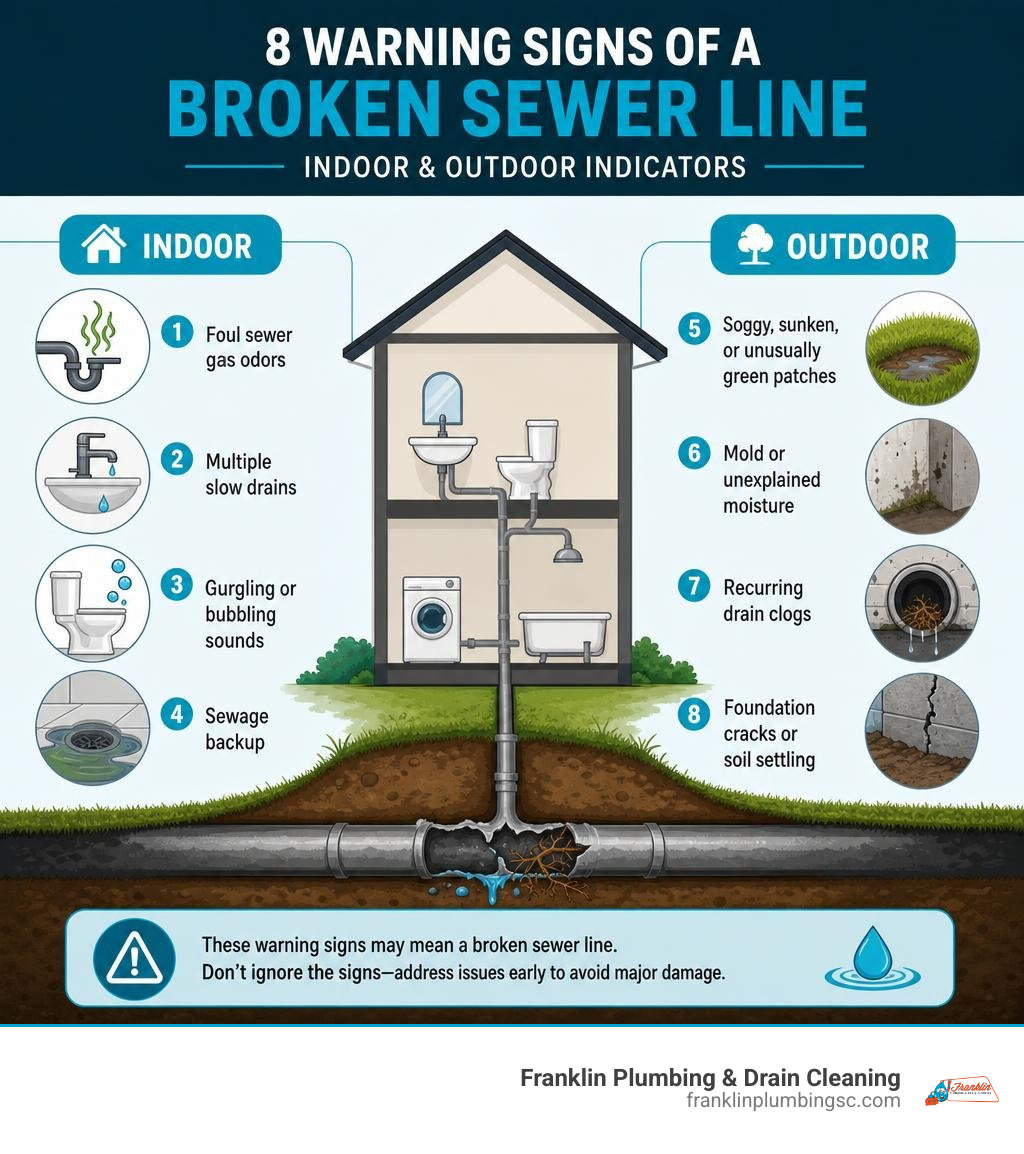
- Foul sewer gas odors coming from drains, toilets, or your yard
- Multiple slow drains throughout the house at the same time
- Gurgling or bubbling sounds from toilets or floor drains
- Sewage backup in lower-level fixtures or basement drains
- Soggy, sunken, or unusually green patches in your yard
- Mold or unexplained moisture on walls, floors, or ceilings
- Recurring drain clogs that come back weeks after clearing
- Foundation cracks or soil settling near your home’s base
A broken sewer line does not fix itself. Cracks widen. Roots grow. And what starts as a $300 camera inspection can quickly become a $10,000+ emergency if ignored.
Your home’s sewer lateral is one of the most important, yet most overlooked, systems in your house. This guide walks you through every major warning sign, what causes them, and what to do next.
Understanding Your Home Sewer Lateral
Before we dive into the symptoms of a broken pipe, let us look at the anatomy of your home plumbing. Every toilet flush, shower drain, and washing machine cycle in your home empties into a single pipe called the sewer lateral. This line runs underground from your home’s foundation and connects to the municipal main sewer line under the street.
As a homeowner in the Columbia, SC area, you are responsible for the maintenance and repair of this lateral line up to your property boundary.
The material of your sewer lateral plays a massive role in how it ages and when it might fail:
- Vitrified Clay Pipes: Common in homes built before 1970. They typically last 50 to 60 years. Over time, the joints between clay pipe sections naturally separate, leaving easy entry points for thirsty tree roots.
- Cast Iron Pipes: Popular in mid-century homes. These provide roughly 50 to 75 years of service. However, they are highly prone to internal corrosion, rust scaling, and eventual bottom-channel wear.
- Orangeburg Pipes: Made from wood pulp sealed with coal tar, these were used between the 1950s and 1970s. They have a brief lifespan of 30 to 50 years and are notorious for flattening, blistering, and completely collapsing under soil pressure.
- PVC or ABS Plastic Pipes: The modern standard since the 1980s. These plastic lines can last 50 to 100 years because they resist root intrusion and corrosion, though improper installation or severe ground shifting can still crack them.
Understanding these materials helps you spot the common signs of compromised sewer lines before a total collapse occurs. If you live in an older neighborhood in Forest Acres, SC or downtown Columbia, SC, your sewer lateral may already be running on borrowed time.
8 Critical Signs of Broken Sewer Line Issues
If you suspect your sewer lateral is failing, your home will usually try to tell you. Most homeowners notice several subtle clues before a major sewage backup occurs. Recognizing these indicators early can save you thousands of dollars in structural repairs and landscaping restoration. Let us take a detailed look at the primary outdoor and indoor signs of a broken sewer line.
To help you visualize where these problems occur, here is a breakdown of the eight critical signs:

Soggy Yard Patches: Clear Outdoor Signs of Broken Sewer Line Damage
One of the most obvious signs of a broken sewer line under your yard is persistent wetness. If it has not rained in Lexington, SC for a week, but you still have muddy puddles or soft, squishy spots in your grass, you likely have a leaking pipe beneath the surface.
As wastewater escapes through a crack or collapsed joint, it rises to the surface, saturating the soil. Over time, this constant underground flow can wash away the dirt supporting your lawn, leading to deep sinkholes, sunken pavers, and severe landscaping damage. If you step on a patch of grass and feel your foot sink several inches into the mud, do not ignore it.
Multiple Slow Drains: Indoor Signs of Broken Sewer Line Problems
We have all dealt with a stubborn bathroom sink that takes its time draining after we brush our teeth. Usually, that is just a clump of hair easily cleared with a zip-it tool. However, if your kitchen sink, guest shower, and laundry line are all draining slowly at the same exact time, the issue is not a local clog.
When multiple fixtures across your home struggle to empty, it indicates a main line blockage or a structural break deep in the sewer lateral. The wastewater has nowhere to go, causing it to back up into the lowest drains in your home, which are usually basement floor drains or walk-in showers.
Persistent Sewer Gas Odors
A properly functioning home sewer system is completely sealed. Sewer gases should travel up through your plumbing vents and escape safely through your roof. You should never smell raw sewage inside your home or in your yard.
If you smell a foul, rotten-egg odor coming from your drains, it means sewer gas is escaping through a crack in your drain lines or your P-traps have dried out due to poor venting. According to safety standards from the U.S. Environmental Protection Agency, sewer gas contains methane and hydrogen sulfide, meaning a persistent sewer gas smell is not just unpleasant but also a health hazard and a strong indicator of a structural pipe break that requires immediate professional evaluation.
Gurgling Toilets and Bubbling Drains
Does your toilet make a strange gurgling sound when you run the bathroom sink? Do you notice air bubbles popping up in the toilet bowl when your washing machine drains? These “phantom” sounds are classic signs of a restricted sewer line.
When a sewer pipe is cracked, collapsed, or heavily restricted by tree roots, air becomes trapped inside the system. As wastewater struggles to push past the obstruction, the trapped air is forced back up through the nearest plumbing fixtures, creating a distinct bubbling or gurgling noise.
Unusually Lush Green Patches of Grass
While a beautiful green lawn is usually something to celebrate, a single strip of grass that is noticeably greener, taller, and faster-growing than the rest of your yard is a major red flag.
Raw sewage acts as a highly effective, nitrogen-rich fertilizer. When a sewer pipe leaks underground, it constantly feeds the surrounding soil with moisture and nutrients. If you can trace the exact path of your underground sewer lateral just by looking at a bright green stripe of grass in your yard, you have an active sewer leak.
Mold and Mildew Growth Indoors
A cracked sewer pipe behind a wall or beneath your concrete slab will constantly release moisture into your home. This elevated humidity creates the perfect breeding ground for mold and mildew.
If you notice unexplained damp spots on your basement floor, water staining along the base of your walls, or a musty smell that does not go away, you could have a broken sewer pipe leaking under your house. Mold spores can trigger respiratory issues and skin irritation, making this both a structural hazard and a health risk.
Sudden Pest and Insect Infestations
Pests are always looking for easy access to moisture and food. A cracked or broken sewer line underground provides a perfect highway for rats, cockroaches, and sewer flies to enter your property.
Rats can squeeze through pipe openings as small as a quarter, traveling directly from the municipal sewer system into your home’s drain lines. If you are dealing with a sudden pest infestation that pest control services cannot seem to resolve, the root cause might be an open crack in your sewer lateral.
Foundation Cracks and Settling
Perhaps the most severe consequence of an ignored sewer leak is structural foundation damage. When a sewer line breaks directly beneath your home’s concrete slab, the escaping water slowly erodes the supporting soil.
Without proper soil support, your foundation will begin to settle, sink, and crack. You may notice cracks in your drywall, doors that no longer close properly, uneven flooring, or visible cracks in your home’s exterior brickwork. If soil erosion continues unchecked, it can compromise the structural integrity of your entire home.
Clog vs. Broken Pipe: How to Tell the Difference
It is easy to confuse a simple, localized drain clog with a broken sewer pipe. However, treating a broken pipe with standard drain cleaning methods is like putting a band-aid on a broken bone: it will not solve the underlying problem, and it could make things worse.
Here is a quick guide to help you distinguish between a simple clog and a broken sewer line:
| Symptom | Simple Drain Clog | Broken Sewer Line |
|---|---|---|
| Scope of Problem | Affects only a single fixture (e.g., just the kitchen sink). | Affects multiple fixtures simultaneously, especially on lower levels. |
| Odors | Minimal odor, or smell is localized strictly to the clogged drain. | Strong sewer gas or rotten-egg smell indoors or outdoors. |
| Frequency | Clears easily with a plunger or snake and rarely returns. | Clogs recur constantly within weeks or months of being cleared. |
| Yard Changes | No changes to your grass, soil, or landscaping. | Soggy grass, sinkholes, or unusually lush green patches. |
| Toilet Behavior | Toilet may overflow, but flushing does not affect other fixtures. | Toilets gurgle or back up when you run water in sinks or showers. |
If you find yourself calling a plumber every few months to clear the same drain, you are likely dealing with structural pipe damage rather than a simple buildup of grease or hair. To understand your options, read our guide on how to know when to replace your sewer line.
What Causes Sewer Lines to Break?
Sewer lines are buried deep underground, which keeps them protected from everyday wear and tear. However, they are still vulnerable to several environmental and structural forces:
- Tree Root Intrusion: This is the leading cause of sewer line failure in older areas like Chapin, SC and Irmo, SC. Tree roots can spread two to three times as wide as the tree is tall. Drawn to the warmth and moisture inside sewer pipes, roots enter through tiny joint cracks and grow rapidly, eventually filling and breaking the pipe.
- South Carolina Clay Soil: The heavy clay soil common across the Columbia, SC area expands when wet and contracts when dry. This constant shifting puts immense pressure on buried pipes, causing joints to separate or older pipes to crack. You can learn more about how local geological factors impact your plumbing in our article on the effects of South Carolina soil on your sewer lines.
- Natural Aging and Corrosion: Cast iron pipes rust from the inside out, while clay pipes become brittle and crack under the weight of the soil above them.
- Extreme Weather and Temperature Swings: Rapid changes in soil moisture and temperature can stress older pipe materials, leading to sudden cracks or complete structural collapses.
Modern Diagnostic and Repair Options
Decades ago, diagnosing and repairing a broken sewer line meant excavating your entire yard, destroying your landscaping, and tearing up your driveway. Fortunately, modern plumbing technology has made the process much faster, cleaner, and more affordable.
Sewer Camera Inspections
We no longer have to guess where a pipe is broken. By inserting a high-resolution, waterproof video camera into your sewer line cleanout, we can travel the entire length of your lateral. This allows us to see exactly what is causing the issue: whether it is root intrusion, a collapsed joint, or an Orangeburg pipe that has flattened. We can pinpoint the exact location and depth of the damage before we ever pick up a shovel.
Trenchless Sewer Repair
If your sewer lateral is damaged but still structurally intact, we can often repair it without digging up your yard using trenchless technology:
- Pipe Lining (CIPP): We insert a flexible, resin-saturated sleeve into the damaged pipe. Once in place, we inflate the sleeve, and the resin cures to form a smooth, seamless, and incredibly durable “pipe-within-a-pipe.” This adds 50 or more years of service life.
- Pipe Bursting: If the pipe is collapsed, we can pull a new HDPE plastic pipe directly through the old line using a hydraulic bursting head that breaks the old pipe apart as it replaces it.
These trenchless methods are highly efficient and preserve your beautiful South Carolina yard. When planning for these services, it is helpful to review our guide on budgeting for sewer repairs to understand the factors that influence your overall project costs.
Frequently Asked Questions About Sewer Line Damage
What are the most common signs of a broken sewer line?
The most common signs include multiple slow drains throughout your home, persistent sewer gas odors, gurgling toilets, soggy or unusually green patches of grass in your yard, mold growth indoors, and recurring drain backups.
How can I tell if my sewer line is clogged or broken?
A simple clog usually affects only one fixture and is easily cleared. A broken sewer line will cause multiple fixtures to back up simultaneously, cause recurring clogs shortly after cleaning, and may show outdoor symptoms like wet spots or lush green patches in your lawn.
What causes a sewer line to break under a house?
Sewer pipes under a house typically break due to natural aging, corrosion of cast iron, soil shifting beneath the foundation, or poor initial installation. This can lead to soil erosion and structural foundation settling if left unaddressed.
Are homeowners responsible for repairing sewer lines?
Yes, homeowners are responsible for the maintenance, repair, and replacement of the sewer lateral line that runs from their home’s foundation to the municipal sewer main, which is typically located near the property line or street.
How much does it cost to repair a broken sewer line?
The cost of repairing a sewer line varies widely depending on the depth of the pipe, the extent of the damage, and the repair method used. Trenchless pipe lining is often more cost-effective than traditional excavation because it eliminates the need for expensive landscape and driveway restoration.
What is trenchless sewer line repair?
Trenchless repair is a modern method of restoring or replacing damaged sewer pipes with minimal digging. Techniques like pipe lining (CIPP) and pipe bursting allow plumbers to insert a new pipe or liner through existing access points, preserving your yard and driveway.
How does a sewer camera inspection work?
A plumber inserts a flexible, high-resolution video camera attached to a fiber-optic cable into your sewer line cleanout. As the camera travels through the pipe, it transmits real-time footage to a monitor, allowing the technician to locate cracks, root intrusion, or collapses.
Can tree roots really break a sewer pipe?
Yes, tree roots are incredibly strong and are naturally drawn to the moisture and nutrients inside sewer lines. They can enter through tiny cracks or loose joints in clay and cast iron pipes, expanding over time until they completely block or shatter the pipe.
What are the health risks of a broken sewer line?
A broken sewer line can expose your family to harmful pathogens, bacteria (such as E. coli and Salmonella), and mold. Additionally, inhaling high concentrations of sewer gas can cause headaches, nausea, dizziness, and respiratory issues.
Can a broken sewer line cause foundation damage?
Yes, a leaking sewer line beneath your home can wash away the supporting soil, leading to foundation settlement, drywall cracks, uneven floors, and significant structural instability over time.
Conclusion
Ignoring the early signs of a broken sewer line is a recipe for property damage and expensive emergency repairs. Whether you are dealing with a gurgling toilet in Cayce, SC, a soggy lawn in Blythewood, SC, or slow drains in Lexington, SC, acting quickly is key to protecting your home.
By catching these issues early, you can often avoid major excavation and take advantage of modern, non-invasive trenchless repair methods. For more tips on keeping your plumbing in top shape, check out The Homeowner’s Sewer Line Maintenance Guide.
Whether you need a quick camera diagnostic, routine drain maintenance, or advanced trenchless pipe lining, the team of licensed and experienced technicians at Franklin Plumbing & Drain Cleaning is here to help. We back all of our residential and commercial plumbing services with a 100% satisfaction guarantee. Schedule your professional sewer repair in Columbia, SC with us today to resolve your sewer line issues before they become an emergency.

professional
drain cleaning

highly
recommended

through
repairs

quality
work