Cast Iron Sewer Pipes: Lifespan, Problems, and Replacement
Home »
Cast Iron Sewer Pipe Problems: What Every Homeowner Needs to Know
Cast iron sewer pipe problems are one of the most common, and most expensive, plumbing issues facing homeowners in older homes across the U.S.
If your home was built before 1975, there is a good chance your drain system is made of cast iron. And if those pipes are 40, 50, or 60+ years old, they may already be failing silently beneath your floors and walls.
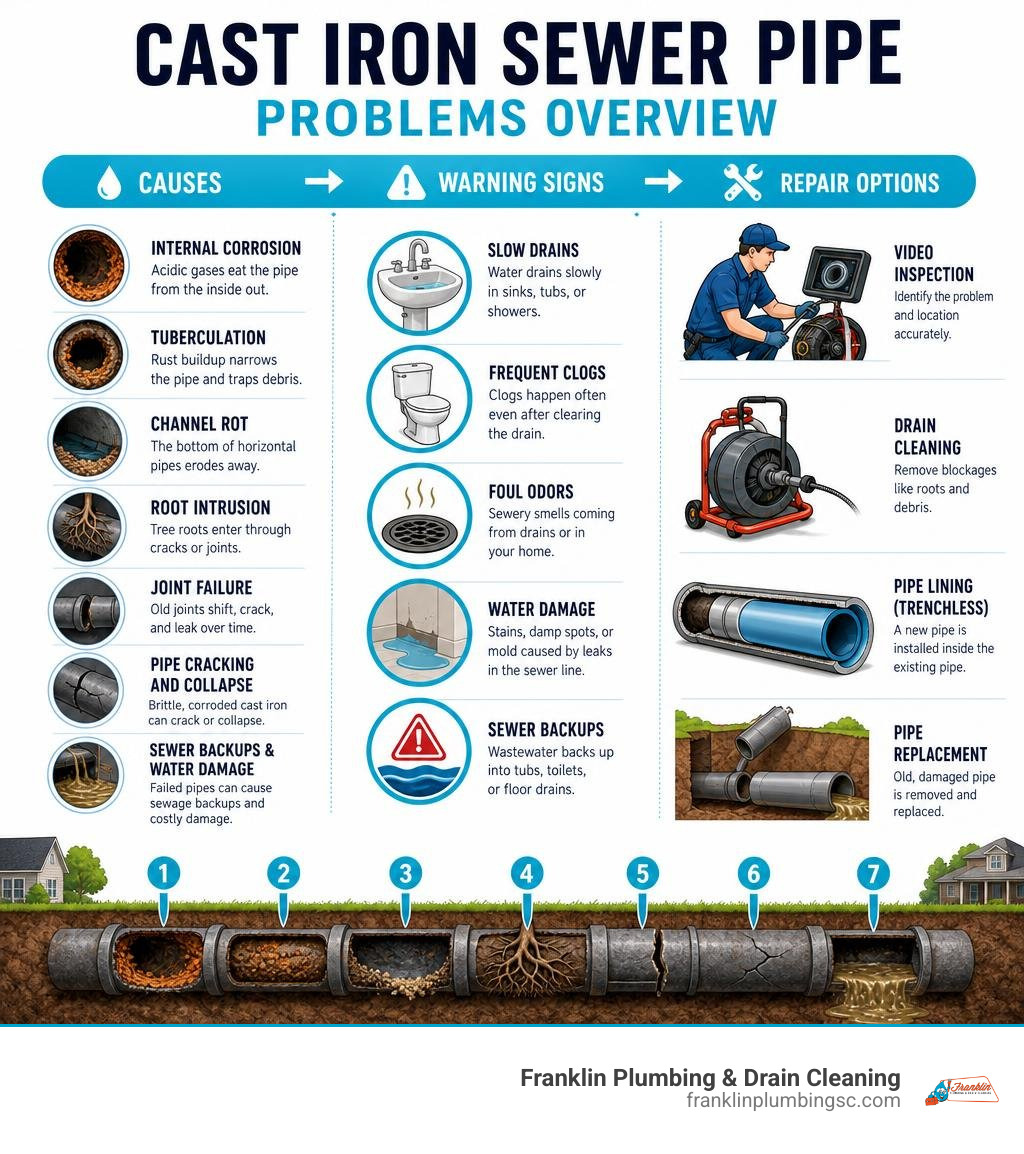
Here are the most common cast iron sewer pipe problems at a glance:
- Internal corrosion : hydrogen sulfide gas converts to sulfuric acid inside the pipe, eating it from the inside out
- Tuberculation : rust buildup narrows the pipe interior and traps debris, causing slow drains and backups
- Channel rot : the bottom of horizontal pipes erodes away from constant contact with wastewater
- Root intrusion : tree roots exploit cracked or offset joints, causing blockages and structural damage
- Joint failure : old lead-and-oakum or hub joints shift, crack, and leak over time
- Pipe cracking and collapse : brittle, corroded cast iron eventually cracks under soil pressure or physical stress
- Sewer backups and water damage : failed pipes cause sewage to back up into the home, leading to costly repairs
These problems often develop slowly and without obvious warning signs, until a backup or leak causes serious damage.
According to industry estimates, approximately 76 million American homes have cast iron pipes that will eventually need replacement, representing a potential $760 billion in damages and repairs nationwide. In many cases, deterioration begins as early as 25 years into a pipe’s life, even though the expected lifespan is often cited as 50 to 100 years depending on soil conditions and installation quality.
The good news is that early detection can save you thousands of dollars. Knowing what to look for, and when to call a licensed plumber, makes all the difference.
What Are Cast Iron Sewer Pipes and How Long Do They Last?
For much of the 20th century, cast iron was the gold standard for residential and commercial drain, waste, and vent systems. Valued for its incredible strength, fire resistance, and quiet operation, cast iron was the go-to choice before modern plastics like PVC and ABS became standard in the mid-1970s.
These heavy-duty pipe systems were manufactured by pouring molten iron into molds. Older installations typically utilized bell-and-spigot joints sealed with oakum and molten lead, while systems installed in the 1960s and 1970s often featured no-hub joints secured with rubber gaskets and stainless steel bands.
When discussing the lifespan of cast iron, the numbers can be deceiving. While some cast iron pipes can last for over 100 years under ideal conditions, the practical life expectancy in residential sewer applications is usually closer to 40 to 60 years. In some environments, significant deterioration can begin in as little as 25 years.
A major variable in this timeline is the surrounding soil. Sandy soil is relatively gentle on metal, allowing pipes to reach their maximum lifespan. Conversely, heavy clay soils, which are highly prevalent throughout South Carolina, present a much harsher environment. Clay soils expand and contract dramatically with moisture changes, putting immense physical stress on brittle metal pipes. Furthermore, clay retains moisture and corrosive elements against the pipe’s exterior, accelerating the rusting process. To understand how local ground conditions affect your plumbing, read about the effects of South Carolina soil on sewer lines.
Common Cast Iron Sewer Pipe Problems
Unlike modern plastic lines, cast iron is a ferrous material, meaning it is highly susceptible to rust and chemical degradation. When wastewater, household chemicals, and sewer gases interact with iron, several distinct types of structural failures occur. If you suspect your system is struggling, watch out for the common signs of compromised sewer lines.

How Tuberculation and Channel Rot Cause Cast Iron Sewer Pipe Problems
Two of the most destructive internal forces in cast iron pipes are tuberculation and channel rot.
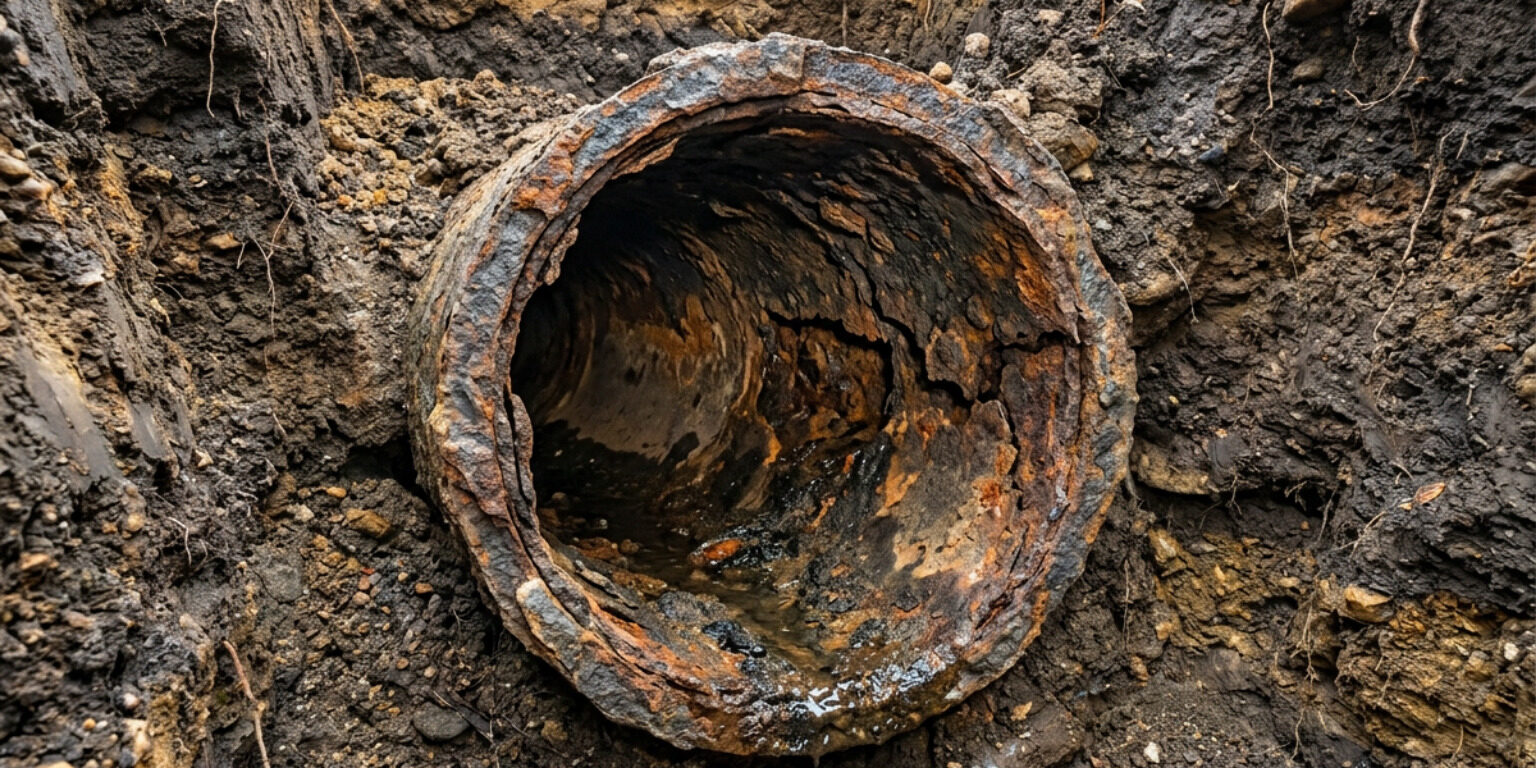
Tuberculation is the development of rough, red-brown rust mounds, or tubercles, on the inside walls of the pipe. As sewage flows, bacteria digest organic waste and release hydrogen sulfide gas. This gas rises to the top of horizontal pipes and combines with moisture to form sulfuric acid. This acid eats away at the metal, causing the iron to flake and swell. Over decades, these rust mounds grow larger, transforming a smooth 4-inch pipe into a restricted, jagged pathway that behaves more like a 2-inch pipe. Toilet paper, waste, and debris easily snag on these rough surfaces, causing persistent clogs.
Channel rot, on the other hand, attacks the bottom of horizontal pipes. Because wastewater constantly runs along the lower half of the pipe, this area is subjected to continuous chemical and physical wear. Over time, the metal thins until the bottom of the pipe completely rots away. This leaves a structural U-shape, where wastewater flows directly onto the dirt beneath your home. This can wash away the supporting soil, leading to pipe sagging, soil saturation, and eventually, foundation failure.
Structural Failures and Root Intrusion in Aging Systems
As cast iron ages, it becomes increasingly brittle. When clay soils shift or tree roots seek out moisture, the pipe cannot flex. Instead, it cracks.
Tree roots are incredibly persistent. Even a microscopic crack or a slightly loose joint is enough for a tiny root hair to enter. Once inside, the root feeds on the nutrient-rich wastewater, growing rapidly. These roots can quickly fill the entire diameter of the pipe, acting as a solid barrier that catches waste and causes total system blockages. As the roots expand, they exert enough pressure to completely shatter the weakened cast iron.
Warning Signs of Failing Cast Iron Sewer Pipes
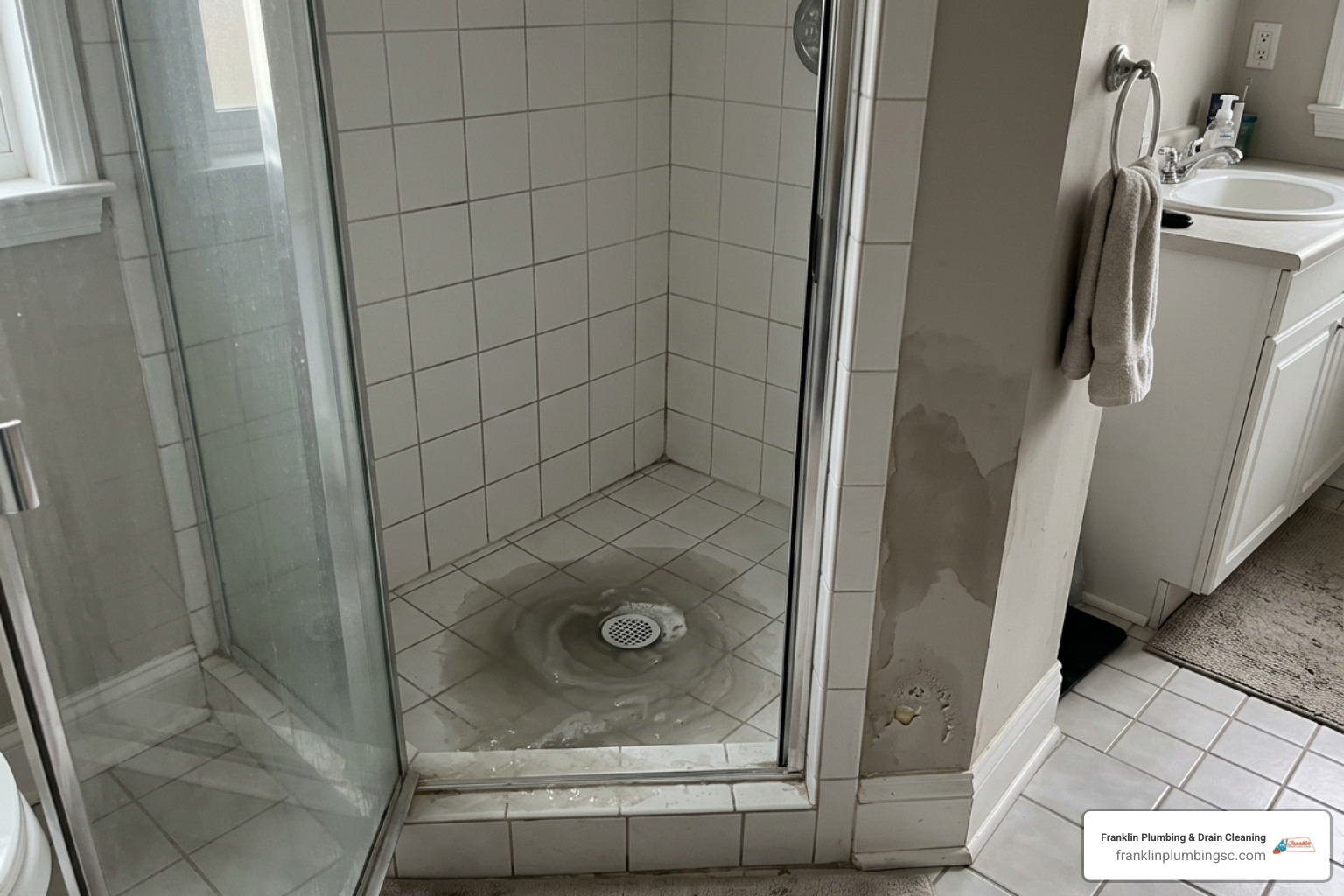
Because sewer pipes are buried underground or encased in concrete slabs, problems are often invisible until they reach a critical stage. However, your home will usually drop several clues that indicate cast iron sewer pipe problems are developing. Keeping an eye on these symptoms is one of our key tips for catching sewer line problems early.
- Slow Drains Throughout the Home : If a single sink is draining slowly, it is likely a localized clog. If every drain, toilet, and shower in your house is sluggish, the main sewer line is restricted by rust or roots.
- Sewer Gas Odors : A properly functioning sewer system is completely sealed. If you smell a persistent rotten-egg odor in your yard, basement, or bathrooms, sewer gas is escaping through cracks or holes in your pipes.
- Frequent Backups and Gurgling : If your toilets gurgle when you run the washing machine, or if sewage backs up into your tub when you flush, your main line is severely compromised.
- Unexplained Lush Green Patches : Sewage is an excellent fertilizer. If you notice a specific strip of grass in your yard that is suddenly much greener and faster-growing than the rest, a cracked sewer line is likely leaking nutrient-rich water into the soil.
- Pest Infestations : Cockroaches, sewer rats, and other pests are drawn to the moisture and waste leaking from broken pipes. If you have an unresolved pest issue despite regular exterminations, a broken sewer line under your slab could be the entry point.
- Foundation Cracks and Soil Sinkholes : When channel rot allows wastewater to escape under your home, the saturated soil can cause your concrete slab to sink or heave, leading to cracked walls and sticking doors.
Diagnostic Methods to Detect Cast Iron Sewer Pipe Problems Early
If you notice any of these warning signs, you should not wait for a complete backup. Professional diagnostic testing can pinpoint the exact location and severity of the issue.
The most common diagnostic tool is a high-definition sewer camera scope. A technician inserts a flexible, fiber-optic camera into your sewer cleanout, allowing us to inspect the entire length of the pipe in real time. We can easily see root intrusion, cracks, and major blockages. You can learn more about this process by exploring our sewer camera inspection services.
However, camera inspections have limitations. Thick rust mounds from tuberculation can easily hide holes and cracks from the camera’s view. To find these hidden leaks, we often perform hydrostatic testing. This involves sealing the sewer line at the edge of the home and filling the system with water. If the water level drops, it confirms the presence of a leak, even if the camera could not see it through the rust. If you are planning to purchase an older home, scheduling these inspections is critical.
Repair and Replacement Options for Cast Iron Pipes
When facing failing cast iron, homeowners generally have a choice between trenchless rehabilitation and traditional excavation. Upgrading your plumbing system offers numerous structural advantages, which we discuss in our guide on the benefits of replacing cast iron pipes with modern alternatives.
| Repair Method | Description | Pros | Cons | Ideal For |
|---|---|---|---|---|
| CIPP Lining (Trenchless) | An epoxy-saturated liner is pulled through the pipe and cured to create a new pipe within the old one. | Minimal yard damage, fast installation, no trenching. | Cannot be used if the pipe has collapsed or lost its circular shape. | Pipes with minor cracking or rust but good structural integrity. |
| Pipe Bursting (Trenchless) | A bursting head is pulled through the old pipe, shattering it while pulling a new HDPE pipe behind it. | Replaces the pipe entirely without digging a continuous trench. | Requires access pits, cannot navigate tight bends. | Long, straight runs of pipe under lawns or driveways. |
| Traditional Excavation | A trench is dug to physically remove the old cast iron and replace it with modern PVC. | 100% reliable, allows for correction of improper pipe slope. | Highly disruptive to landscaping, driveways, and flooring. | Collapsed pipes, severe channel rot, or back-pitched lines. |
Trenchless Repair vs. Traditional Excavation
Trenchless technologies like Cured-In-Place Pipe (CIPP) lining are highly appealing because they avoid the mess of digging up lawns, driveways, or concrete slabs. However, trenchless methods are not a magic bullet.
For CIPP lining to succeed, the existing cast iron pipe must have enough structural integrity to support the liner while it cures. If the pipe has completely collapsed, or if channel rot has destroyed the bottom arc of the pipe, there is nothing for the liner to adhere to. Additionally, heavily tuberculated pipes must undergo high-pressure descaling before lining, which can sometimes shatter already-thin metal. To understand when these methods are appropriate, read our detailed breakdown on why going trenchless isn’t always the best solution.
When trenchless options are ruled out, traditional excavation is the most reliable way to restore your system. This involves digging a trench, removing the old cast iron, and installing durable PVC. While disruptive, excavation allows plumbers to correct improper pipe slope and guarantee a permanent fix.
DIY Repairs vs. Professional Plumbing Services
While the internet is full of DIY guides suggesting epoxy patches or rubber transition couplings (often called Fernco or no-hub couplings) for quick fixes, sewer line work is rarely a safe or practical project for a homeowner.
Sewer pipes carry hazardous pathogens, bacteria, and toxic gases like hydrogen sulfide. Working on these systems without proper personal protective equipment (PPE) and professional training poses serious health risks. Furthermore, cast iron is incredibly heavy and brittle. Cutting into a vertical cast iron stack without proper bracing can cause the entire upper portion of the pipe to fall, crushing the worker or destroying your home’s framing.
Professional plumbers have the specialized tools, heavy excavation machinery, and licensing required to perform these repairs safely. Most municipalities also require permits and official inspections for any major sewer line alterations, which a licensed plumbing contractor must secure to ensure your home remains compliant with local building codes.
Frequently Asked Questions About Cast Iron Sewer Pipes
How long do cast iron sewer pipes typically last?
On average, residential cast iron sewer pipes last between 40 and 60 years. While some pipes in dry, sandy soils can last up to 100 years, homes built in areas with wet, acidic, or heavy clay soils often experience pipe failure much sooner, sometimes starting around 25 years of service.
What are the most common cast iron sewer pipe problems?
The most common problems include internal corrosion from sewer gases, tuberculation (rust scale buildup), channel rot (erosion of the pipe’s bottom), root intrusion through weakened joints, and cracks caused by shifting soils.
Can you repair a section of cast iron pipe with PVC?
Yes. Plumbers frequently replace damaged sections of cast iron with modern PVC pipe. This is done using specialized, rubber transition couplings encased in stainless steel bands, which securely connect the different pipe materials.
How do I know if my cast iron sewer pipe is failing?
Warning signs include multiple slow-draining fixtures, persistent sewer odors, frequent backups, gurgling toilets, unusually lush green patches in your lawn, pest infestations, and cracks in your home’s concrete slab or foundation.
Does homeowners insurance cover cast iron pipe replacement?
Generally, standard homeowners insurance policies do not cover the gradual wear and tear or aging of pipes. However, if a sudden, accidental pipe failure causes water damage to your home, the insurance policy may cover the cost of repairing the water damage and tearing out the floor to access the pipe, though the cost of the pipe repair itself is usually excluded.
What is channel rot in cast iron pipes?
Channel rot occurs when wastewater continuously flows along the bottom of a horizontal cast iron pipe. Over decades, the combination of moisture and corrosive chemicals eats away at the bottom of the pipe until it completely erodes, allowing sewage to escape directly into the soil.
Is trenchless pipe lining effective for cast iron?
Trenchless CIPP (Cured-In-Place Pipe) lining is highly effective, provided the original cast iron pipe is still structurally sound and has not collapsed. The pipe must first be thoroughly descaled to remove rust before the epoxy liner can be applied.
How much does it cost to replace cast iron sewer lines?
The cost of replacement varies widely depending on the length of the run, the depth of the pipe, and whether the line is located under a lawn or beneath a concrete slab. Trenchless lining or localized excavation is generally less expensive than a full, under-slab home repipe. Homeowners should request a professional estimate for accurate pricing.
Should I buy a house that has cast iron plumbing?
Having cast iron pipes should not immediately ruin a home purchase, but it does require careful due diligence. You should always hire a licensed plumber to perform a sewer camera inspection before closing. If the pipes are heavily corroded, you can use the repair estimates as leverage to negotiate a lower purchase price or require the seller to replace the lines.
Can chemical drain cleaners damage cast iron pipes?
Yes. Chemical drain cleaners often contain harsh acids or sodium hydroxide, which generate heat and chemical reactions to clear clogs. These chemicals can accelerate the corrosion of already-weakened cast iron, leading to leaks and structural failure. Professional drain cleaning or hydro jetting is a much safer alternative.
Conclusion
Dealing with cast iron sewer pipe problems can be incredibly stressful, but you do not have to navigate it alone. Identifying these issues early through professional testing is the best way to protect your home’s structural integrity and avoid catastrophic water damage.
At Franklin Plumbing & Drain Cleaning, we bring years of local experience to every job. Our licensed and highly trained technicians serve communities throughout the region, including Columbia, SC, West Columbia, SC, Blythewood, SC, Cayce, SC, Irmo, SC, and Lexington, SC. We back all of our sewer services with a 100% satisfaction guarantee, ensuring your plumbing system is restored safely, efficiently, and permanently.
If you suspect your older home has failing cast iron lines, do not wait for a major backup to occur. Contact our experienced team today to Schedule professional sewer repair in Columbia, SC and let us help you find the most reliable, cost-effective solution for your home.

professional
drain cleaning

highly
recommended

through
repairs

quality
work