DIY vs. Professional Leak Detection in Lexington, SC
Home »
Is DIY Leak Detection Worth It in Lexington, SC?
When it comes to DIY vs professional leak detection in Lexington, SC, here is the short answer:
| Situation | Best Choice |
|---|---|
| Visible dripping faucet or exposed pipe | DIY |
| Unexplained spike in water bill | Start DIY, then call a pro |
| Musty smell, damp walls, or mold | Call a professional |
| Suspected slab leak | Professional only |
| No visible leak but meter is moving | Professional only |
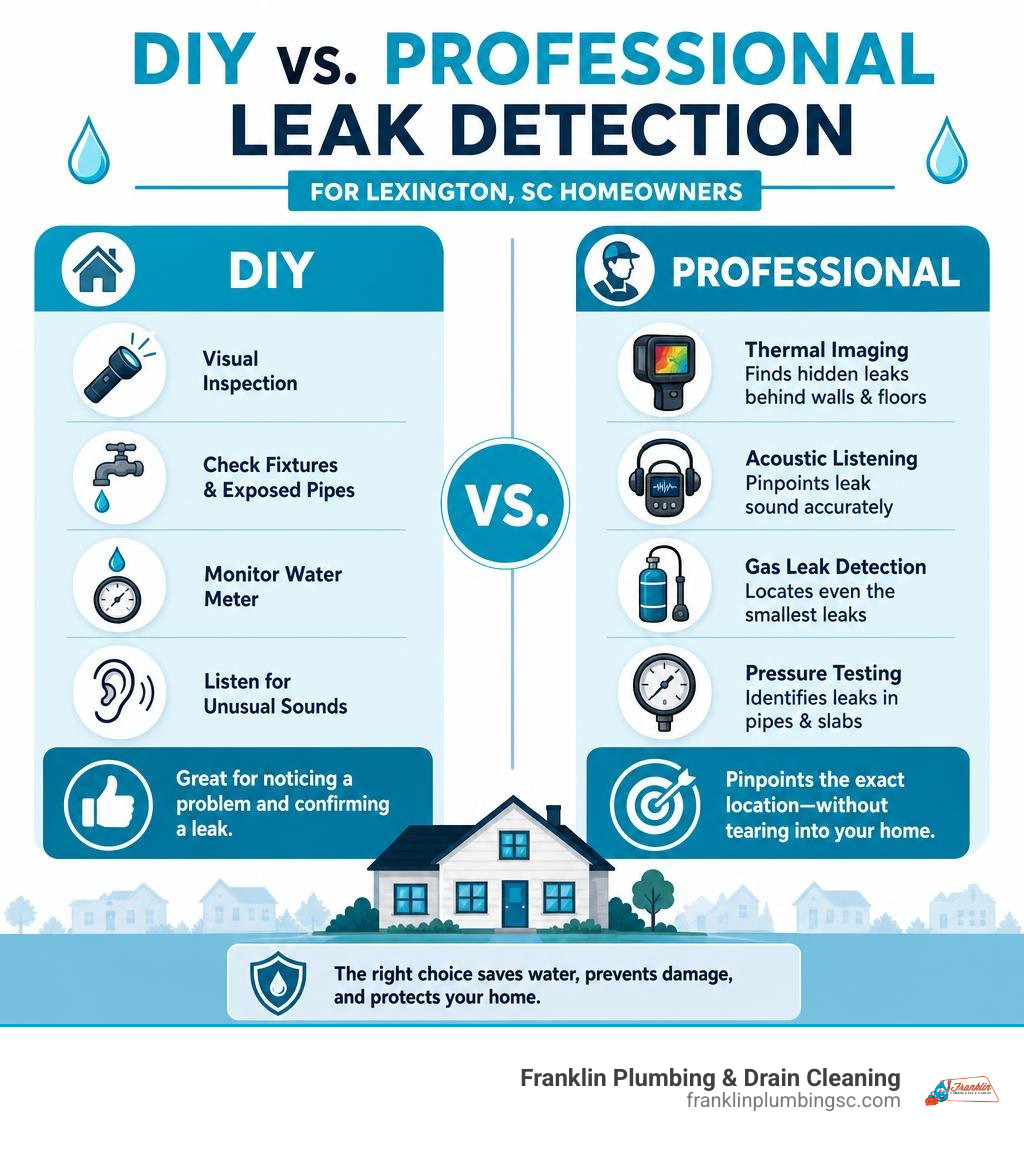
DIY methods work well for confirming a leak exists. But they rarely tell you where the leak actually is. Professional leak detection services use specialized tools that pinpoint hidden leaks without tearing open your walls or floors.
Here is why that matters: a small hidden leak can waste more than 10,000 gallons of water per year without a single visible drip. Left undetected, the resulting water damage can cost thousands of dollars to repair.
For Lexington, SC homeowners dealing with aging pipes, shifting soil, or unexplained water bills, knowing when to grab a flashlight and when to call a licensed plumber can save you a serious amount of money and stress.
This article breaks down exactly what each approach can and cannot do, so you can make the right call for your home.
Common Signs of Hidden Water Leaks in Lexington, SC Homes
Water leaks are rarely polite enough to spring up right where you can see them. Most plumbing in South Carolina homes is tucked away behind drywall, underneath floorboards, or deep within the concrete slab foundation. Because these pipes are out of sight, homeowners must rely on secondary clues to realize there is a problem.
The most common signs of a hidden water leak include:
- Unexplained Spikes in Water Bills: If your household water usage habits have not changed, but your monthly bill from the Joint Municipal Water and Sewer Commission or the City of Columbia Water Department is steadily climbing, water is escaping somewhere.
- Musty, Earthy Odors: When water pools in dark, unventilated spaces, it creates the perfect breeding ground for mildew. If you notice a persistent musty smell in a bathroom, kitchen, or laundry room that never goes away, a slow pipe leak is a likely culprit.
- Visible Mold and Mildew: Mold needs moisture to grow. If you see dark spots forming on walls, ceilings, or baseboards, especially in areas not directly exposed to steam, water is likely pooling behind the drywall.
- Damp Spots and Discolored Drywall: Water travels along the path of least resistance. It can drip from a second-story pipe, run down a wooden stud, and pool on your ceiling, leaving a telltale brown or yellow ring.
- A Sudden Drop in Water Pressure: If your shower head or kitchen faucet suddenly lacks its usual force, it could mean water is escaping through a cracked pipe before it ever reaches your fixtures.
If you notice any of these warning signs, checking your plumbing should be your top priority. Homeowners in the area can schedule plumbing help in Lexington, SC to get a clear picture of what is happening under their floors.
DIY vs professional leak detection Lexington SC
When trying to decide between troubleshooting a plumbing issue yourself or calling in the experts, it helps to understand what you can realistically accomplish with basic household tools. Homeowners often try a few simple tests before deciding whether to make an investment in professional services.

The Water Meter Test
This is the most reliable DIY test to confirm if you have a leak.
- Turn off every water-consuming appliance in your home, including washing machines, dishwashers, and ice makers. Make sure no one uses a sink or flushes a toilet during the test.
- Locate your outdoor water meter box, which is typically found near the street or sidewalk boundary of your property.
- Open the lid and look at the dial. Many meters have a small, triangular indicator (often red or blue) called a flow finder or leak indicator. If this triangle is spinning even though all water is shut off inside, you have an active leak.
- If there is no visible movement, write down the exact numbers on the odometer style display. Leave the water off for two hours, then check the reading again. If the numbers have increased, you have a slow, hidden leak.
The Toilet Dye Test
Toilets are a leading cause of silent water waste. A bad flapper valve can leak hundreds of gallons of water a day straight down the drain without making a sound.
- Remove the lid from your toilet tank.
- Drop a few drops of food coloring or a dye tablet into the tank water.
- Do not flush the toilet. Wait about twenty to thirty minutes.
- Check the toilet bowl. If the water in the bowl has changed color, your flapper valve is leaking and needs to be replaced.
Visual Inspections
You can also perform a visual sweep of your home. Check under sinks with a flashlight, look closely at the base of your water heater, and inspect the ground around your outdoor spigots.
While these tests are excellent for confirming that water is escaping, they cannot pinpoint the exact location of a pipe failure hidden deep inside a wall. A basic DIY check can tell you there is a problem, but it usually cannot show where the damaged pipe starts.
Limitations of DIY vs professional leak detection Lexington SC
The primary limitation of DIY leak detection is accuracy. Homeowners can easily buy basic moisture meters for a small fee, but these consumer-grade tools lack the precision needed to find the exact source of a leak.
Water is highly deceptive. Because it flows along structural beams, joists, and concrete pathways, the spot where a damp patch appears on your drywall is often several feet away from where the pipe is actually cracked. If you start cutting into your walls based on a visual guess, you risk causing unnecessary structural damage to your home, turning a minor plumbing issue into an expensive remodeling project.
Additionally, multiple small leaks can mask one another. A homeowner might find and patch a single visible leak under the sink, unaware that a second, larger leak is still active inside the wall cavity. This is why professional accuracy is so critical. With non-invasive leak detection, technicians can find the source of water loss without causing unnecessary structural damage.
When to Choose DIY vs professional leak detection Lexington SC
Deciding when to handle a plumbing issue yourself and when to call a professional comes down to the location of the leak and the complexity of your plumbing system.
You can safely choose the DIY route when:
- The leak is completely exposed, such as a dripping kitchen faucet, a loose slip-joint under the bathroom vanity, or a worn-out washing machine hose.
- You are dealing with a standard toilet run that can be fixed by swapping out a flapper valve.
- You need to perform initial testing, like the water meter or toilet dye tests, to confirm whether a leak exists before calling a plumber.
You should always call a professional when:
- The water meter test indicates a leak, but you cannot find any visible signs of water inside or outside your home.
- You suspect a slab leak, which is a pipe failure beneath your concrete foundation.
- You see mold growing on walls or ceilings, indicating water has been pooling behind the drywall for an extended period.
- Your home has complex plumbing systems, multiple stories, or older galvanized steel or polybutylene pipes that are prone to widespread failure.
When dealing with hidden issues, trying to fix things yourself without the proper training can easily backfire. A trusted local plumber can protect your property and make sure the job is done right the first time.
Advanced Technologies Used by Professionals
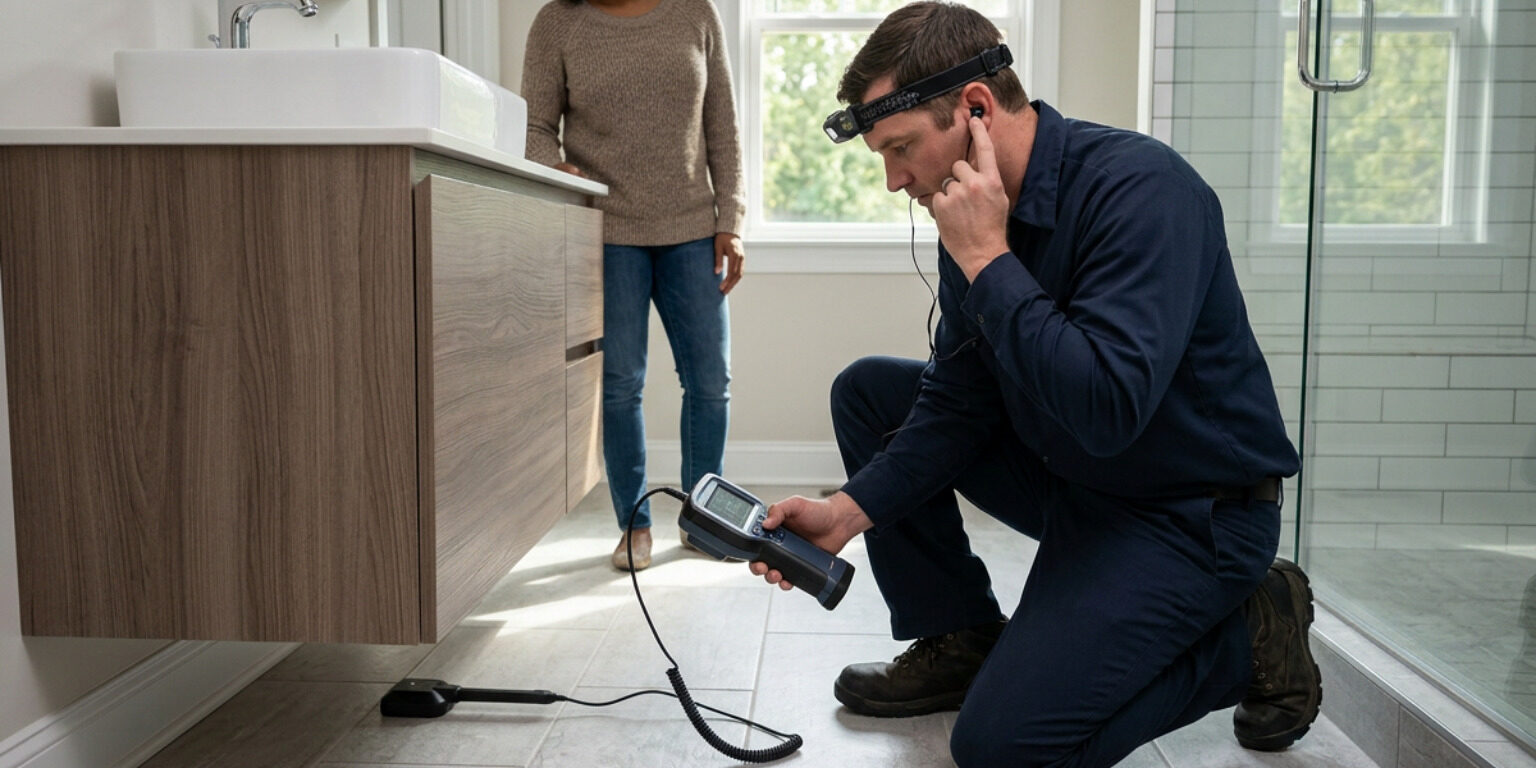
The reason professional leak detection has a 60% higher accuracy rate compared to DIY methods is the advanced technology that licensed plumbers bring to the job. Rather than guessing where a leak is and tearing holes in your walls, professionals use non-invasive tools to pinpoint the exact location of a broken pipe.
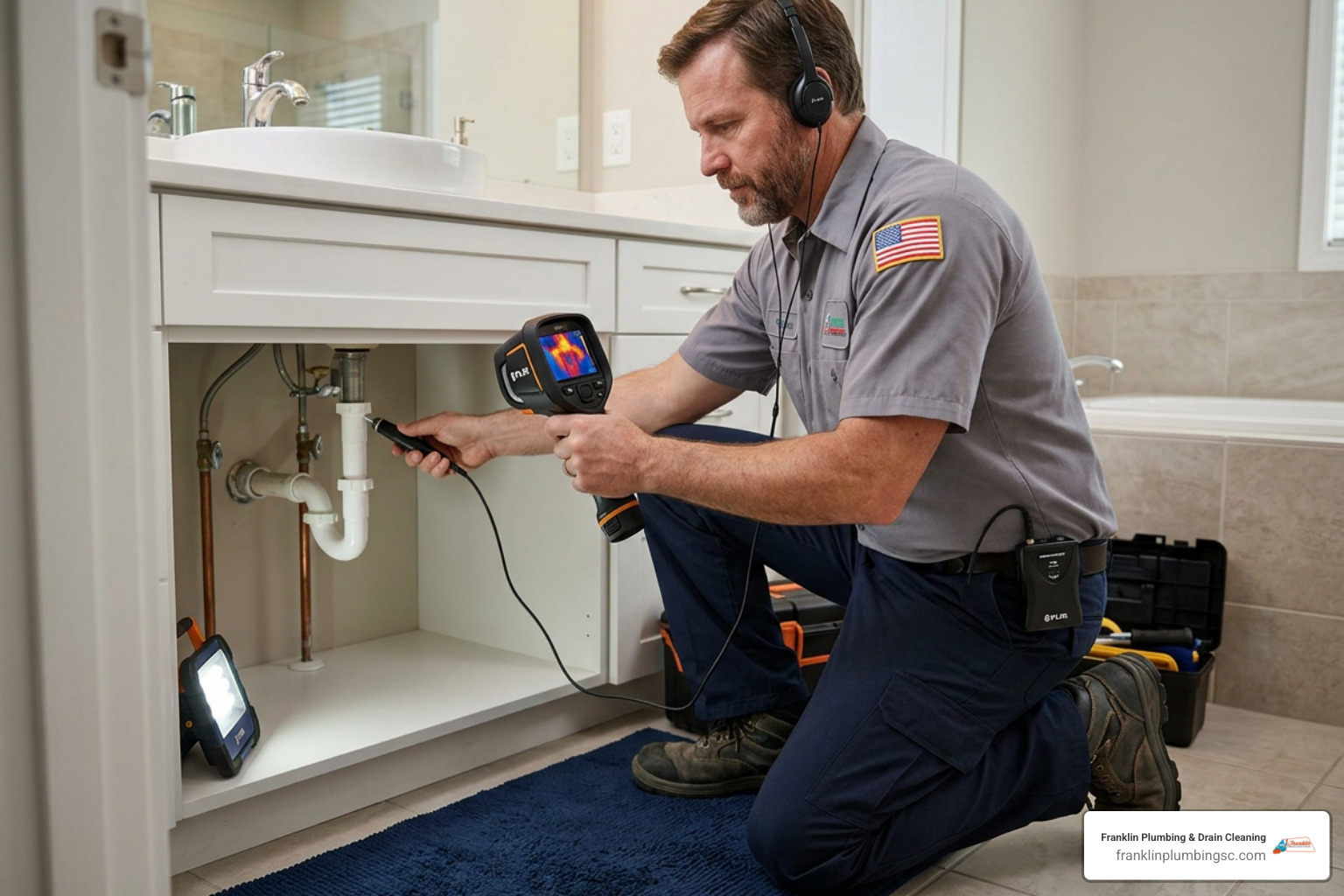
- Acoustic Leak Detectors: When a pressurized pipe leaks, the escaping water creates a distinct sound vibration as it pushes through the crack. Plumbers use highly sensitive ground microphones and acoustic sensors to listen through concrete slabs, soil, and drywall, allowing them to locate the exact spot of the pipe failure.
- Thermal Imaging Cameras: These infrared cameras detect subtle temperature differences on surfaces. Because leaking water cools or warms the surrounding building materials, a thermal imaging camera can reveal a clear map of moisture traveling behind walls or under floors without removing a single piece of drywall.
- Electronic Moisture Meters: Unlike basic consumer models, professional moisture meters can measure the exact moisture content of wood, plaster, and concrete, helping technicians track water migration back to its source.
- Video Pipe Inspection: Technicians can feed small, waterproof cameras directly into sewer and drain lines. This allows them to see the interior condition of your pipes in real time, identifying cracks, tree root intrusions, or collapsed joints.
- Hydrostatic Pressure Testing: By isolating sections of your plumbing system and applying controlled pressure, plumbers can determine if a specific line is holding water or losing pressure, confirming the presence of a leak in a targeted zone.
The Financial Impact of Undetected Leaks
Ignoring a suspected leak or delaying professional detection to save a quick buck is a costly mistake. Water damage behaves like a slow-motion natural disaster, quietly destroying wood, drywall, and personal property while driving up your monthly utility bills.
To help put this into perspective, let us look at the financial differences between finding a leak early versus letting it go undetected:
| Expense Category | Early Professional Detection | Delayed Detection & Repair |
|---|---|---|
| Detection & Inspection Cost | Moderate | High (requires structural search) |
| Plumbing Repair Costs | Low (minor pipe patch or joint swap) | High (extensive pipe replacement) |
| Water Bill Overages | Minimal | Hundreds of dollars in wasted water |
| Structural Drywall & Flooring Repair | None to minimal | Thousands of dollars in restoration |
| Mold Remediation | None | High (requires professional mold removal) |
| Total Estimated Cost | Low to Moderate | Extremely High |
Beyond the direct costs of plumbing repairs, undetected leaks can significantly damage your property value. When you go to sell your home, a standard home inspection will easily identify water stains, structural rot, or mold, forcing you to make expensive repairs before closing.
Additionally, insurance companies are increasingly strict about water damage claims. Most homeowners insurance policies cover sudden and accidental water damage, such as a pipe bursting unexpectedly. However, they rarely cover damage caused by slow, neglected leaks that went unresolved for months. Getting a professional inspection and repair receipt is often the only way to prove to your insurance provider that you took immediate, responsible action to protect your home.
Frequently Asked Questions About Leak Detection in Lexington, SC
How do I know if I have a hidden water leak?
The most reliable indicators are a sudden, unexplained increase in your water bills, damp spots on your ceilings or floors, a persistent musty smell, or the sound of running water when all your faucets are turned off. You can also perform a water meter test by shutting off all water in your home and checking if the meter dial continues to move.
Can I find a slab leak on my own?
It is extremely difficult to locate a slab leak without professional equipment. While you might notice warning signs like unusually warm spots on your tile floor, cracks in your foundation, or wet baseboards, pinpointing the exact location of a pipe break beneath several inches of concrete requires specialized acoustic listening devices and thermal imaging cameras.
How much does professional leak detection cost in Lexington, SC?
The cost of professional leak detection can vary depending on the size of your home, the complexity of your plumbing system, and the location of the suspected leak. Basic residential inspections are generally straightforward, but hard-to-reach areas or underground line testing can influence the final price. Homeowners should request a professional estimate for accurate pricing tailored to their specific situation.
Will professional leak detection damage my walls or floors?
No. Modern professional leak detection is completely non-invasive. Technicians use thermal cameras, acoustic sensors, and electronic moisture meters to locate leaks through walls and concrete without cutting or drilling. Any physical access points are only created after the leak has been accurately located, keeping structural repairs to an absolute minimum.
How long does a professional leak detection service take?
Most residential leak detection appointments are completed within one to three hours. The exact duration depends on the complexity of your home’s layout and how difficult the leak is to locate. Once the technician finds the source, they can typically provide a repair plan on the same day.
Can a small leak really impact my water bill?
Absolutely. A simple faucet drip can waste thousands of gallons of water over the course of a year. Larger hidden leaks, such as a running toilet or a cracked underground service line, can easily add hundreds of dollars to your monthly water bill if left unresolved.
What should I do immediately if I suspect a major leak?
If you suspect a major leak, locate your main water shutoff valve (usually found near your water meter or where the main water line enters your home) and turn it off completely. This will stop the flow of water and prevent further damage to your property while you wait for a professional plumbing team to arrive.
Does homeowners insurance cover leak detection and repairs?
Most insurance policies cover sudden, accidental pipe bursts and the resulting water damage restoration. However, they typically do not cover the cost of the plumbing repair itself, nor do they cover damage caused by slow, long-term leaks that were neglected by the homeowner. It is always best to check with your specific insurance provider.
How do I choose a reputable leak detection company in Lexington, SC?
Look for a company that employs licensed, insured, and experienced plumbing technicians. Check online reviews, ask if they offer a satisfaction guarantee, and make sure they use non-invasive detection technology. Avoid companies that suggest tearing open walls before performing diagnostic testing.
Are there local water conservation guidelines in Lexington, SC?
Yes. Local municipalities, including the Joint Municipal Water and Sewer Commission, encourage water conservation to protect the local environment and manage utility infrastructure. Resolving hidden leaks promptly helps homeowners comply with local conservation goals and avoids unnecessary strain on the municipal water supply.
Conclusion
When it comes to protecting your home from water damage, time is never on your side. While DIY tests like the water meter or toilet dye tests are excellent first steps to confirm a problem exists, they cannot replace the accuracy and safety of professional diagnostics. Attempting to hunt down a hidden pipe leak on your own often leads to guesswork, unnecessary drywall damage, and unresolved issues that continue to rot your home’s structure.
Working with licensed plumbers ensures that every leak is found and fixed correctly without turning your living room into a construction zone. If you are preparing to hire a plumbing team, it helps to know how to choose the right plumbing company and what to ask before scheduling service so you can make a confident, stress-free decision.
Whether you are dealing with a mysterious spike in your water bill, a musty odor you cannot shake, or a suspected slab leak, the team at Franklin Plumbing & Drain Cleaning is ready to help. Our licensed technicians bring advanced, non-invasive technology and a 100% satisfaction guarantee to every job. Protect your property and peace of mind by scheduling professional leak detection service today.

professional
drain cleaning

highly
recommended

through
repairs

quality
work