High Water Bill With No Visible Leak? Where to Look First
Home »

That Shocking Water Bill Probably Has a Hidden Cause
A high water bill with no visible leak is one of the most frustrating things a homeowner can deal with. Everything looks dry. No drips. No puddles. Yet your bill just jumped by $50, $100, or more.
Here’s the short answer — the most common culprits are:
- Silent toilet leak — water drains from tank to bowl without any sound or puddle
- Underground or slab leak — water escapes into soil or under your foundation
- Irrigation system issue — a stuck valve or broken sprinkler head running undetected
- Water softener malfunction — stuck in backwash mode, draining constantly
- Appliance leak — water heater, washing machine, or dishwasher leaking slowly
- Billing error — an estimated read that got corrected, or a recent rate increase
The important thing to know: leaks rarely fix themselves. According to the EPA, a single leaking toilet can waste up to 200 gallons of water per day. That adds up to over 6,000 gallons in a single month — and every drop runs through your meter and onto your bill.
The good news? You can track down most causes with a few simple tests before calling anyone. This guide walks you through exactly where to look and what to do.
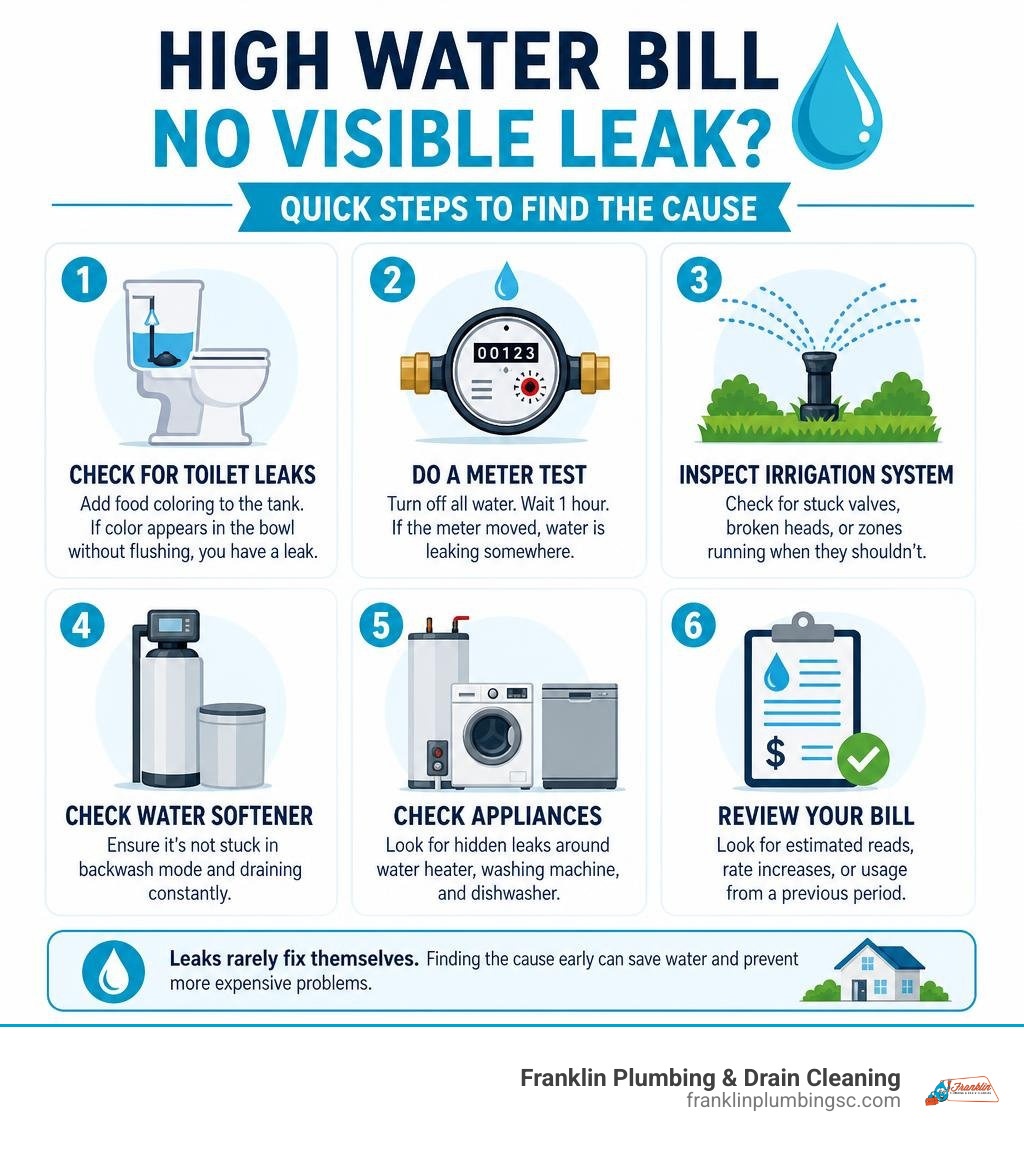
Steps to Take for a High Water Bill No Visible Leak
When you open your monthly utility bill and see an unexpected spike, your first reaction might be panic. We completely understand. However, taking a structured, step-by-step approach is the best way to determine whether you have a true plumbing emergency or a simple, easily fixable issue.
Before you start tearing open drywall or digging up your yard, you can run a couple of highly effective DIY tests using your home’s water meter. This process helps you narrow down whether water is actively escaping and where the leak is located. To keep your investigation organized, you can use this high-bill checklist to rule out common household water drains one by one.
Step 1: The Water Meter Test
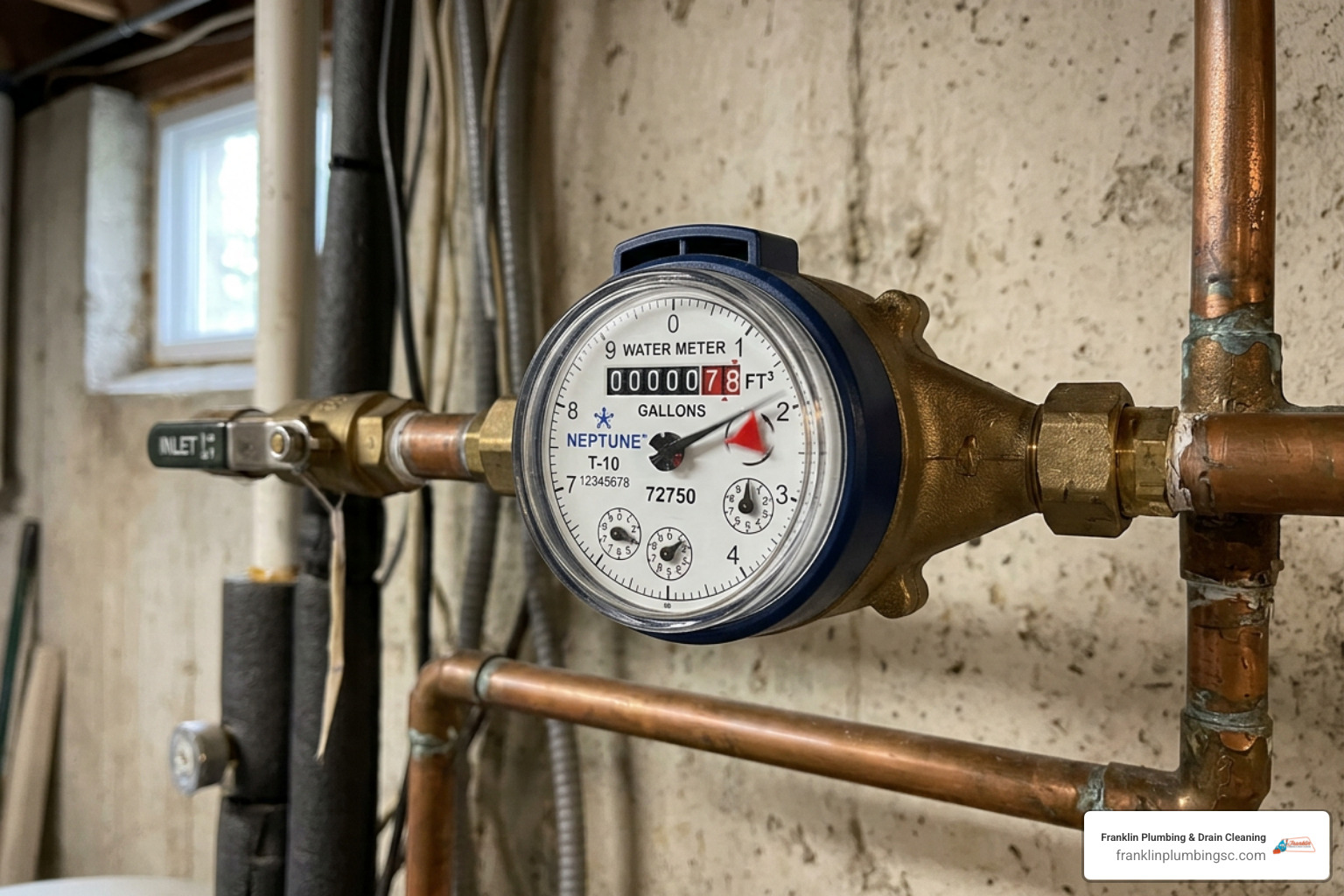
Your water meter is the ultimate source of truth. It records every single drop of water that enters your property. Performing a “no-use” meter test is the absolute best way to confirm an active leak.
Here is how to perform a simple 30-minute meter test:
- Turn off all water sources inside and outside your home. Make sure nobody is running the washing machine, flushing the toilet, using the dishwasher, or running a faucet.
- Locate your water meter. For most homes in Columbia, West Columbia, and Lexington, the water meter is located near the street curb inside a concrete or plastic box.
- Open the meter box lid and look at the dial.
- Mechanical Meters: Look for a small, brightly colored triangle or star-shaped wheel (often called the “leak indicator”). If this triangle is spinning—even slowly—while all water is turned off, you have an active leak.
- Digital Meters: Digital meters often display a small faucet icon or a flashing decimal point to indicate active flow. You can also write down the exact reading, wait 30 minutes (without using any water), and check if the number has increased.
- The 2-Hour Window: For incredibly tiny, slow-dripping leaks, write down the meter reading and leave the water off for two hours. If the reading changes, you have a slow leak.
Step 2: Isolate Indoor vs. Outdoor Water Lines
Once your meter test confirms that water is moving, your next goal is to figure out whether the leak is inside your home or buried outside in your yard.
To isolate the leak, locate your home’s main water shutoff valve. This valve is typically located where the main water line enters your house—often in a crawlspace, garage, utility closet, or near your water heater.
- Keep all faucets and appliances turned off.
- Turn the main indoor shutoff valve to the off position. This stops water from entering your home’s pipes but keeps the line from the meter to your house active.
- Go back to your water meter and look at the leak indicator:
- If the meter stops spinning: The leak is located inside your home (e.g., a toilet, faucet, water heater, or under-slab pipe).
- If the meter continues to spin: The leak is located outside your home, somewhere in the underground service line between the meter box and your home’s shutoff valve, or within your irrigation system.
Common Hidden Causes of Water Waste Inside the Home
Many homeowners assume that a major water leak will make a loud hissing sound or leave a giant puddle on the living room floor. In reality, some of the most expensive leaks we find are completely silent and invisible, draining directly into your home’s waste sewer system.
To help you visualize how quickly these “invisible” issues escalate, here is a breakdown of typical water waste volumes associated with common household leaks:
| Leak Type | Estimated Water Waste Volume | Impact on Your Monthly Bill |
|---|---|---|
| Dripping Faucet | 150 to 300 gallons per month | Minor spike ($5 to $10) |
| Silent Toilet Leak | 6,000+ gallons per month | Moderate to severe spike ($50 to $100+) |
| Pinhole Pipe Leak (0.15 GPM) | 6,480 gallons per month | Severe spike ($60 to $120+) |
| Stuck Irrigation Valve | 100,000+ gallons per month | Extreme spike ($500+) |
To prevent these issues from catching you off guard, it helps to follow a regular plumbing maintenance checklist so small problems are easier to spot before they turn into expensive surprises.
The Silent Toilet Leak: Why Your Toilet Causes a High Water Bill No Visible Leak
Without a doubt, the single most common cause of a high water bill with no visible leak is a running toilet. Because a toilet is designed to discharge overflow water directly down the drain, a toilet can leak thousands of gallons of water without spilling a single drop onto your bathroom floor.
This usually happens when the rubber flapper valve inside the toilet tank becomes worn, warped, or covered in mineral buildup. When the flapper fails to seal tightly against the flush valve, water continuously seeps from the tank down into the toilet bowl.
How to Perform the Toilet Dye Test:
- Remove the lid from your toilet tank.
- Drop 10 to 15 drops of food coloring (or a couple of dark-colored dye tablets) into the tank water.
- Do not flush the toilet.
- Wait 15 to 20 minutes.
- Check the toilet bowl. If you see colored water seeping into the bowl, your flapper is leaking and needs to be replaced.

Water Heaters and Appliance Failures
Other silent indoor culprits include major water-using appliances.
- Water Heaters: Keep an eye on your water heater’s Temperature and Pressure (T&P) relief valve. If this safety valve fails or if your water pressure is too high, it can slowly and constantly weep water down the discharge pipe into a floor drain or crawlspace. If you notice a sudden drop in hot water performance along with a high bill, this guide to what can cause low water pressure can help you understand whether another plumbing issue may be involved.
- Washing Machines & Dishwashers: A slow leak behind your washing machine or dishwasher can easily hide under flooring or behind drywall. Inspect the rubber hoses on your washing machine for cracks, bulging, or dampness, and consider upgrading to reinforced stainless-steel braided hoses.
Water Softeners and Treatment Equipment
If your home in Blythewood or Irmo utilizes a whole-home water softener or filtration system, it could be the hidden source of your high bill.
Water softeners must periodically flush their internal resin tanks through a “regeneration” or “backwash” cycle. This cycle normally runs late at night and lasts for about an hour, discharging wastewater into a nearby drain. However, if the control valve gets stuck due to sediment buildup or mechanical failure, the system can get trapped in a continuous backwash loop. This can waste hundreds of gallons of water per day, completely unnoticed, because the water goes straight down the drain line.
Hidden Outdoor and Underground Water Leaks
If your indoor isolation test proved that the leak is outside, or if you have ruled out every indoor fixture, it is time to look at your yard. Outdoor leaks can be incredibly deceptive because the sandy, well-draining soils common in parts of Cayce, Springdale, and South Congaree can absorb thousands of gallons of water without ever showing a puddle on the surface.

If you suspect a buried water line issue, our team at Franklin Plumbing & Drain Cleaning can pinpoint hidden leaks without destroying your landscaping.
Outdoor Irrigation Issues: Hidden Yard Waste and Your High Water Bill No Visible Leak
An automatic sprinkler system is fantastic for keeping your lawn beautiful during hot South Carolina summers, but it can also be a massive source of water waste. Outdoor irrigation can represent 50% to 70% of a home’s monthly water usage.
Common irrigation issues include:
- Broken Sprinkler Heads: A single cracked plastic sprinkler head can waste thousands of gallons over a single watering cycle.
- Weeping Zone Valves: If an irrigation zone valve fails to close completely, water will slowly and continuously leak through the lowest sprinkler head in that zone, even when the system is turned off.
- Line Breaks: Tree roots or lawn aeration equipment can easily puncture underground lateral lines, causing water to dump straight into the soil every time the system runs.
Main Service Line and Slab Leaks
The main water service line connects your home’s plumbing to the municipal water meter. If this line cracks or corrodes, you have a major issue on your hands.
A dime-sized leak in a main water line can dump more than 10,000 gallons of water per month directly into the surrounding soil. Similarly, if your home is built on a concrete slab foundation (common in newer developments in Lexington and Chapin), a pinhole leak in the copper pipes running beneath the concrete is known as a slab leak.
Signs of an underground or slab leak include:
- A single, unusually lush, green patch of grass in your yard during a dry spell.
- Soggy, muddy, or sunken spots in your lawn along the path of the water line.
- Warm spots on your tile or laminate flooring (indicating a hot water slab leak).
- The sound of rushing or hissing water behind your walls when no water is running.
If you want to reduce the risk of future leaks, it is also worth learning about everyday habits that can damage your plumbing.
Billing Errors, Rate Changes, and Estimated Readings
Sometimes, a high water bill has absolutely nothing to do with your plumbing. Before you panic about a hidden leak, take a close look at the line items on your utility statement.
- Estimated vs. Actual Readings: Most municipal water utilities read your meter once a month. However, if a meter reader cannot access your meter box (due to a parked car, overgrown bushes, or severe weather), the utility company may bill you based on an “estimated” reading. If they underestimate your usage for several months, they will eventually perform an “actual” reading and send you a large “catch-up” bill to balance the account.
- Rate Increases: Municipalities periodically adjust their utility rates to pay for local infrastructure maintenance. For instance, local water rate pages can help you see how water and sewer fees are structured in your area. If your city has recently adjusted its rates, your bill could be higher even if your physical consumption stayed exactly the same.
- Smart Meter Upgrades: Cities across the Midlands have transitioned to advanced infrastructure. For example, West Columbia’s smart water billing updates introduced real-time digital monitoring and automated leak detection alerts. If your neighborhood recently received smart meters, your new bill may simply be more accurate than your old, worn-out mechanical meter, which typically records less water as it ages.
Frequently Asked Questions About Hidden Water Leaks
How much does professional leak detection cost?
A professional leak detection service typically ranges from $125 to $400, depending on the complexity of your home’s layout.
Unlike traditional plumbers who might dig up your yard or cut into your drywall just to locate a pipe, professional leak detection specialists use advanced, non-invasive technology. This includes acoustic listening equipment to hear the high-frequency vibrations of escaping water, thermal imaging cameras to detect temperature changes behind walls, and tracer gas systems to pinpoint underground line breaks. Investing in professional detection saves you thousands of dollars by preventing unnecessary structural damage to your home.
When should I call the water utility versus a plumber?
As a general rule of thumb:
- Call the Water Utility if you suspect the water meter itself is faulty, if there is a water main break in your street, or if you notice water bubbling up near the municipal side of the meter box. The utility company is responsible for all pipes and equipment up to and including the meter.
- Call a Licensed Plumber if the leak is located anywhere downstream of the water meter (on the “customer side”). This includes your main service line in the yard, your irrigation system, and all indoor plumbing. Any leaks on your side of the meter are your financial responsibility to repair.
Can high water pressure cause a hidden leak?
Yes, absolutely. Standard residential plumbing systems are designed to handle water pressure between 40 and 60 PSI (pounds per square inch). If your home’s water pressure exceeds 80 PSI, the excessive force puts massive stress on your pipe joints, appliance hoses, and fixture seals.
Over time, this high pressure can cause toilet fill valves to weep, water heater T&P valves to drip, and pinhole leaks to develop in older copper lines. If you suspect your home has high water pressure, a plumber can easily install a Water Pressure Reducing Valve (PRV) to protect your system. You can also protect your system by avoiding common habits that are hard on your plumbing.
Conclusion
A high water bill with no visible leak is a mystery that requires prompt attention. By running a simple water meter test, checking your toilets with dye, and inspecting your outdoor irrigation zones, you can narrow down the cause of the water waste and take swift action.
If your DIY testing points to a buried service line leak, a slab leak, or a hidden pipe break behind your walls, do not wait for the damage to get worse. Our team of fully licensed, highly experienced technicians at Franklin Plumbing & Drain Cleaning is proud to serve homeowners throughout Columbia, West Columbia, Lexington, Irmo, Chapin, and the surrounding Midlands communities.
We stand behind our work with a 100% satisfaction guarantee, ensuring your plumbing system is restored to perfect working order quickly and professionally.
Ready to put an end to high water bills? Schedule a leak detection visit with our friendly team, and let us locate and repair your hidden leak with ease!

professional
drain cleaning

highly
recommended

through
repairs

quality
work