Sewer Line Repair or Replacement in West Columbia, SC?
Home »
When a Sewer Line Problem Hits, Should You Repair or Replace?
Sewer line replacement vs repair in West Columbia is one of the most important decisions a homeowner can face, and getting it wrong can cost thousands of dollars.
Here is the quick answer:
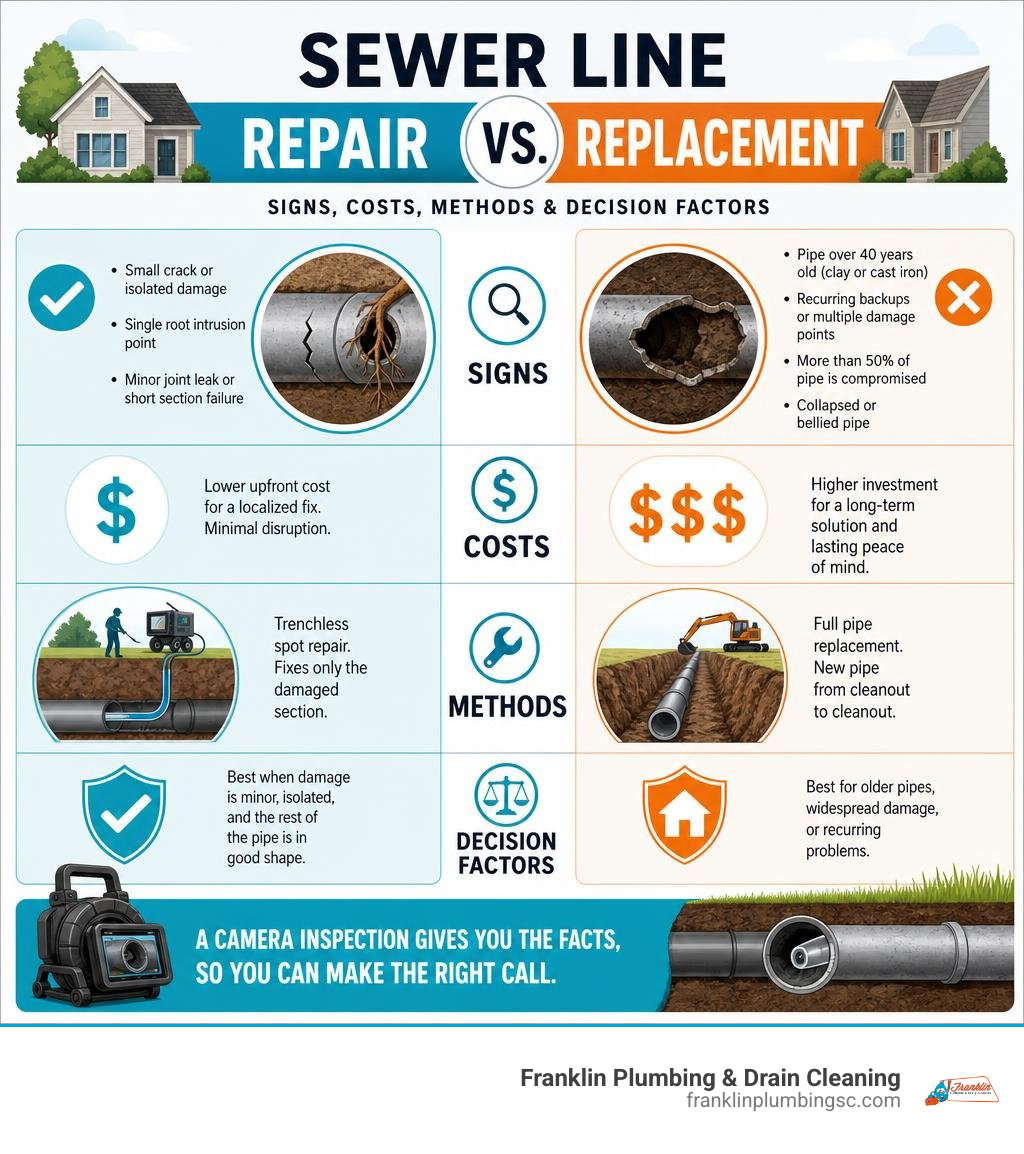
| Situation | Best Option |
|---|---|
| Small crack or isolated damage | Repair |
| Single root intrusion point | Repair |
| Pipe over 40 years old (clay or cast iron) | Replacement |
| Recurring backups or multiple damage points | Replacement |
| More than 50% of pipe is compromised | Replacement |
| Minor joint leak or short section failure | Repair |
| Collapsed or bellied pipe | Replacement |
Repair fixes a specific, localized problem. It costs less upfront and causes minimal disruption. Replacement installs an entirely new pipe and makes sense when damage is widespread, recurring, or the pipe material has simply reached the end of its life.
West Columbia, SC has a lot of older homes, many built before 1980, with original clay or cast-iron sewer pipes still in the ground. Add in the area’s heavy clay soil, which expands and contracts with moisture, and it is easy to see why sewer line problems are so common here.
The good news? A proper camera inspection can tell you exactly what you are dealing with, so you are not guessing, and you are not paying for more than you need.
Understanding Sewer Line Replacement vs Repair West Columbia
When you are facing a backed-up drain or a mysterious wet spot in your front yard, your immediate goal is to get your plumbing working again. However, as a homeowner, you must look at the bigger picture. Choosing between localized repair and full replacement is a choice between a short-term fix and a long-term investment in your home’s infrastructure.
A localized pipe repair is ideal when the rest of the sewer line is structurally sound. For example, if a single tree root has cracked a small section of an otherwise perfect PVC pipe, we can easily excavate that small area and replace the damaged segment. This targeted approach keeps costs down and preserves your lawn. You can explore our targeted sewer repair services in Columbia, SC to see how we handle these localized issues.
On the other hand, full sewer line replacement is necessary when the entire system is failing. If you have older clay pipes that are cracking at every joint, or cast-iron pipes that have rusted through along the bottom, repairing one leak today just means you will be calling us for another leak next month. Over time, paying for multiple spot repairs becomes far more expensive than replacing the entire line.
The decision between sewer line replacement vs repair West Columbia often comes down to the structural integrity of your system and the unique characteristics of South Carolina soil. Our local soil is notorious for shifting, which puts immense physical stress on buried pipes.
Key Indicators of Sewer Line Trouble in West Columbia, SC
Sewer line problems rarely happen without warning. Usually, your plumbing will drop several hints before a complete backup occurs. Recognizing these signs early can save you from a major household disaster.

Here are the most common sewer line warning signs:
- Frequent, stubborn clogs: If multiple drains in your home are backing up at the same time, the problem is not in your sink trap; it is in your main sewer line.
- Gurgling toilets: When you flush the toilet or run the washing machine, do you hear a strange gurgling sound coming from your drains? This happens when trapped air cannot escape due to a blockage in the sewer line.
- Foul sewer odors: A properly functioning sewer system keeps sewer gas contained. If you smell raw sewage in your yard, crawl space, or bathrooms, you likely have a cracked pipe.
- Unusually lush, green patches of grass: While we all want a beautiful lawn, a single patch of grass that is noticeably greener and faster-growing than the rest of your yard is a classic sign of a leaking sewer line. The sewage acts as a natural, albeit unpleasant, fertilizer.
- Standing water or soggy spots: If it has not rained recently but you have a wet, marshy spot in your yard, your sewer line may be pooling wastewater beneath the surface.
- Sewage backups: The most obvious and dreaded sign is wastewater backing up into your tubs, showers, or lowest drains.
If you are noticing any of these issues, it is highly recommended that you take a moment to read about the common signs of compromised sewer lines to help diagnose the severity of the situation before it turns into a midnight emergency.
How Professionals Diagnose Sewer Line Issues
We do not believe in guessing when it comes to your home’s underground plumbing. Decades ago, plumbers had to dig up large sections of a yard just to locate a leak. Today, we use advanced diagnostic tools to see exactly what is happening inside your pipes without disturbing your property.
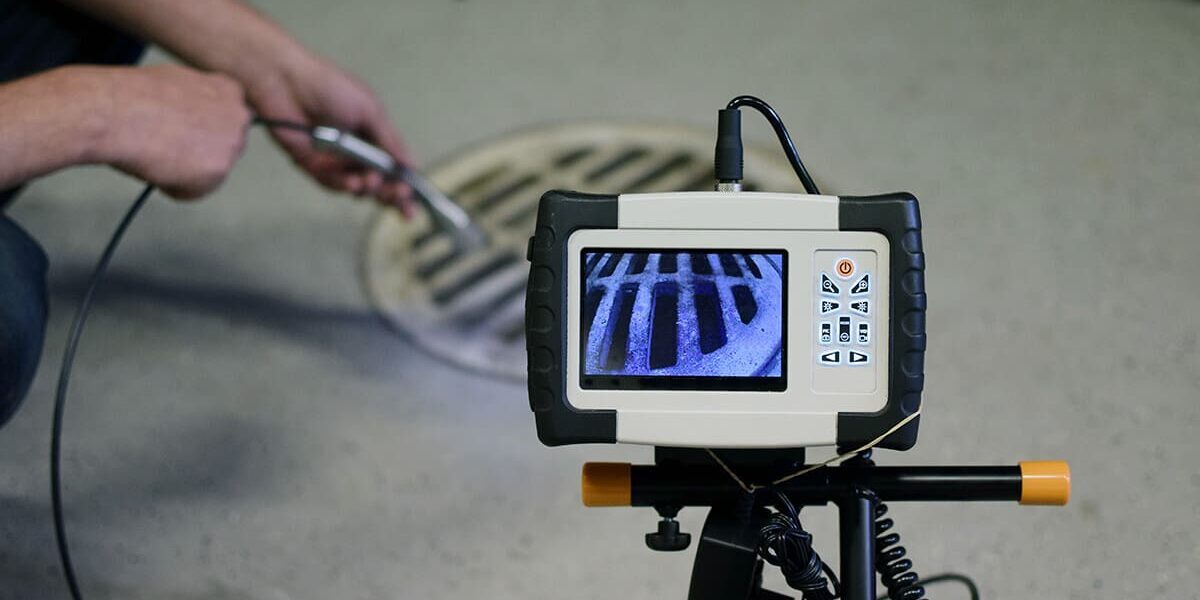
The most critical tool in our arsenal is the high-resolution waterproof sewer camera. We insert this camera through an existing cleanout opening and guide it through your entire sewer lateral. The camera sends a live video feed back to our monitor, allowing us to see every crack, root intrusion, offset joint, and buildup of grease or scale.
In addition to camera inspections, we sometimes use hydrostatic pressure testing to identify hidden leaks in the system. By sealing the line and filling it with water, we can measure if the system is holding pressure or losing water through cracks in the pipe.
By understanding the exact depth of your pipe, the extent of the damage, and how local soil movement has affected the line, we can present you with the most practical options. If you want to learn more about how we assess these underground systems, you can check out our comprehensive sewer and water line replacement services in Columbia, SC.
How to Decide: Sewer Line Replacement vs Repair West Columbia Options
When we review the camera footage with you, we look at several key factors to help you make the right choice:
- Pipe Material: If your West Columbia, SC home was built in the 1960s or 1970s, you might have clay or cast-iron pipes. Clay pipes are highly susceptible to root intrusion and cracking, while cast iron eventually corrodes and develops a rough interior that catches debris. Modern PVC pipes, however, are incredibly durable and resist root penetration.
- Age of the System: Most sewer pipes have a lifespan of 40 to 60 years. If your pipes are approaching or exceeding this age, investing in a repair is often a temporary band-aid. You can read our expert guide on how to know when to replace your sewer line to evaluate your system’s remaining lifespan.
- Extent of the Damage: If the damage is limited to a two-foot section where a tree root broke through, a repair is highly cost-effective. However, if the pipe has collapsed in multiple areas or has a significant “belly” (a sunken section where water pools), a full replacement is the only reliable solution.
Cost Factors for Sewer Line Replacement vs Repair West Columbia Projects
Budgeting for a major plumbing project is never fun, but understanding the cost factors can help you make an informed decision.
The overall cost of your project depends heavily on:
- The depth of the pipe: Deeper pipes require more excavation, safety equipment, and labor.
- The location of the line: If your sewer line runs under a beautifully manicured lawn, it will be easier to access than a line running beneath a concrete driveway, patio, or mature oak tree.
- The repair method: Trenchless methods often have a higher material cost but lower restoration and labor costs, while traditional excavation has lower material costs but higher labor and yard restoration costs.
To help you plan, we have put together a detailed resource on budgeting for sewer repairs and replacements to outline what you can expect during the planning phase.
Trenchless vs. Traditional Excavation Methods
Once we establish that your sewer line needs to be replaced or heavily repaired, the next big decision is choosing the installation method. Modern plumbing technology gives us options that our predecessors never had.
Trenchless Sewer Solutions
Trenchless sewer technology is a game-changer for homeowners who want to protect their landscaping, driveways, and mature trees. Instead of digging a long, deep trench across your yard, trenchless methods typically require only one or two small access pits.
The most common trenchless method is Cured-In-Place Pipe (CIPP) lining. During this process, we insert a flexible tube saturated with epoxy resin into your old pipe. Once in place, we inflate the tube, and the resin cures, creating a brand-new, seamless, and highly durable pipe inside your old, damaged one. Another trenchless option is pipe bursting, where a special tool pulls a brand-new HDPE pipe through the old one, breaking the old pipe apart as it goes.
To see which method fits your situation, read our comparison of trenchless or traditional water line replacement options.
However, trenchless technology is not a magic wand for every plumbing problem. In cases where a pipe has completely collapsed, backpitched, or developed a severe belly, a new liner cannot fix the physical shape of the pipe. In those situations, a liner would simply follow the sunken shape of the old pipe, leading to future clogs. You can learn more about these limitations by reading why trenchless isn’t always the best solution.
Some of the key benefits of trenchless solutions include:
- Landscaping preservation: No ruined flower beds, torn-up lawns, or cracked driveways.
- Speed: Most trenchless projects can be completed in a single day.
- Durability: Epoxy liners and HDPE pipes are highly resistant to future root intrusion and can last for over 50 years.
Traditional Excavation Methods
While trenchless options are highly popular, traditional excavation remains a reliable and sometimes necessary method for sewer line replacement.
Traditional excavation involves using a backhoe or manual digging to expose the entire length of the sewer line. This method is required when the existing pipe is completely collapsed, severely bellied, or buried too deeply for trenchless equipment to operate safely. It is also necessary when we must correct the slope of the pipe to ensure proper wastewater flow.
To understand exactly what this process looks like, you can read our detailed breakdown of the traditional pipe excavation replacement process.
Additionally, we have compiled an article explaining why traditional excavation is best in some situations to help you understand why our technicians might recommend this approach for your West Columbia, SC home.
Local Factors Affecting West Columbia, SC Sewer Lines
Every region has its own unique plumbing challenges, and West Columbia, SC is no exception. Understanding these local factors can help you make a more informed decision regarding your sewer system.
First and foremost is our local soil. The heavy clay soil found throughout our service areas expands significantly when wet and shrinks when dry. This constant movement puts immense physical pressure on buried pipes, leading to joint separation, cracks, and bellies. You can read more about how our local ground conditions affect your home’s plumbing in our guide on the effects of South Carolina soil on your sewer lines.
Second, West Columbia, SC is home to many beautiful, mature trees. While these trees provide wonderful shade during our hot summers, their roots are constantly searching for moisture and nutrients. A tiny hairline crack or loose joint in an old sewer pipe is an open invitation for tree roots, which will quickly grow inside the pipe and cause massive blockages.
Finally, homeowners often wonder if plumbing work must stop during the colder months. Fortunately, our mild South Carolina winters generally allow for year-round plumbing work. If you are facing a winter plumbing issue, you can read about sewer line replacement in winter conditions to see how we handle cold-weather installations.
Frequently Asked Questions About Sewer Line Services in West Columbia, SC
What is the average cost of sewer line replacement in West Columbia, SC?
The cost of sewer line replacement can vary widely based on the depth of the pipe, its length, and the installation method used. Traditional trench excavation usually costs a set rate per linear foot, while trenchless lining may have different pricing structures. Homeowners should always request a professional on-site estimate to get an accurate quote tailored to their specific property.
How long does a sewer line repair or replacement project take?
Most minor repairs or trenchless pipe lining projects can be completed in a single day. A full traditional sewer line replacement involving heavy excavation typically takes between one and three days, depending on the accessibility of the pipe and local inspection requirements.
What are the most common causes of sewer line damage in West Columbia, SC?
The primary culprits in our area are tree root intrusion, shifting clay soil that causes pipes to crack or sag, and the natural deterioration of older pipe materials like clay and cast iron.
Do I need a permit for sewer line replacement in West Columbia, SC?
Yes, replacing a sewer line requires a permit from the local building department to ensure all work complies with the South Carolina Plumbing Code. A professional plumbing contractor will handle the permitting and scheduling of municipal inspections as part of the service.
Can tree roots destroy a sewer line?
Yes, tree roots are incredibly strong. Once they find a small crack or loose joint in a sewer pipe, they will grow inside, expand, and eventually break the pipe completely, leading to severe blockages and structural collapse.
Is trenchless sewer repair better than traditional excavation?
Trenchless repair is often preferred because it preserves your yard, landscaping, and driveway while being completed much faster. However, if your pipe has completely collapsed or has a severe belly, traditional excavation is the only way to correct the physical structure of the line.
Why does my crawl space smell like sewage?
A sewer smell in your crawl space usually points to a cracked sewer line, a loose cleanout cap, or a leaking pipe joint beneath your home. This allows sewer gas and wastewater to escape, creating an unhealthy environment that requires immediate professional attention.
Should there be standing water in my sewer cleanout?
No, you should never see standing water in your sewer cleanout. If water is pooling there, it means you have a blockage or structural failure further down the main sewer line, which prevents wastewater from flowing freely to the municipal system.
Can sewer and water lines be run in the same trench?
According to building codes, sewer and water lines cannot be run in the same trench. This rule is designed for safety and environmental protection, preventing potential sewer leaks from contaminating your home’s clean water supply.
How can I prevent future sewer line backups?
You can prevent backups by scheduling regular camera inspections, avoiding flushing non-biodegradable items like wipes or paper towels, keeping cooking grease out of your drains, and installing root barriers if you have large trees near your sewer lateral.
Conclusion
Dealing with sewer line problems is understandably stressful. It disrupts your daily routine, threatens your landscaping, and raises concerns about unexpected expenses. However, taking a proactive approach and working with a trusted local partner can make the entire process smooth and worry-free.
To help ease your mind, we encourage you to read our thoughts on why sewer line repairs and replacement can be stressful and how our team works to minimize that burden for our neighbors.
Whether you need a quick localized repair, a comprehensive camera inspection, or a complete system upgrade, our licensed and experienced technicians are here to help. We stand behind our work with a 100% satisfaction guarantee, ensuring your home’s plumbing is restored to perfect working order.
If you are experiencing slow drains, gurgling toilets, or suspect it is time to replace an aging system, do not wait for a major backup to occur. Please contact Franklin Plumbing & Drain Cleaning to schedule professional sewer repair services in Columbia, SC today, and let us take the stress out of your plumbing needs.

professional
drain cleaning

highly
recommended

through
repairs

quality
work