Toilet Overflowing? How to Stop It Fast and What to Do Next
Home »
What to Do When Your Toilet Is Overflowing Right Now
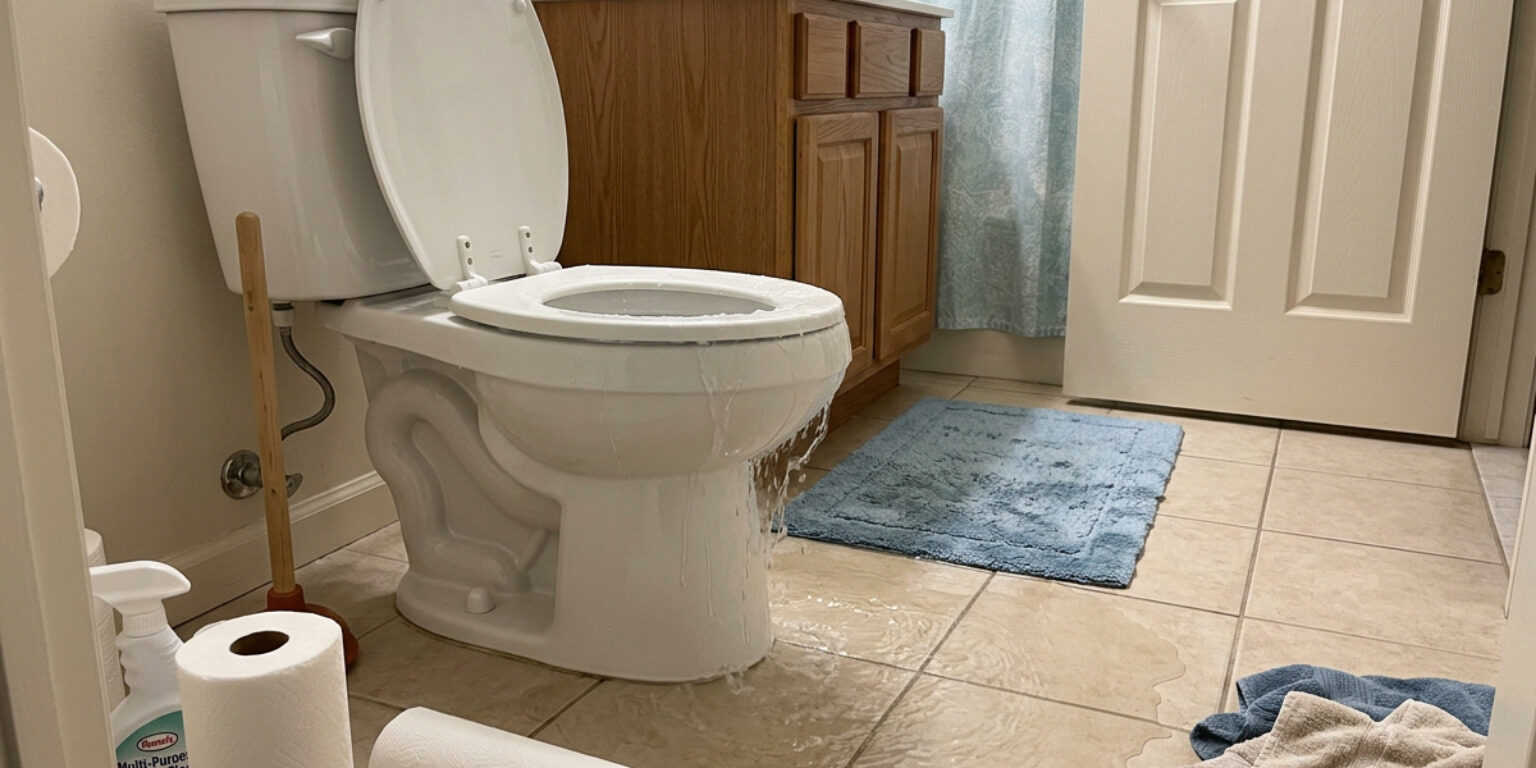
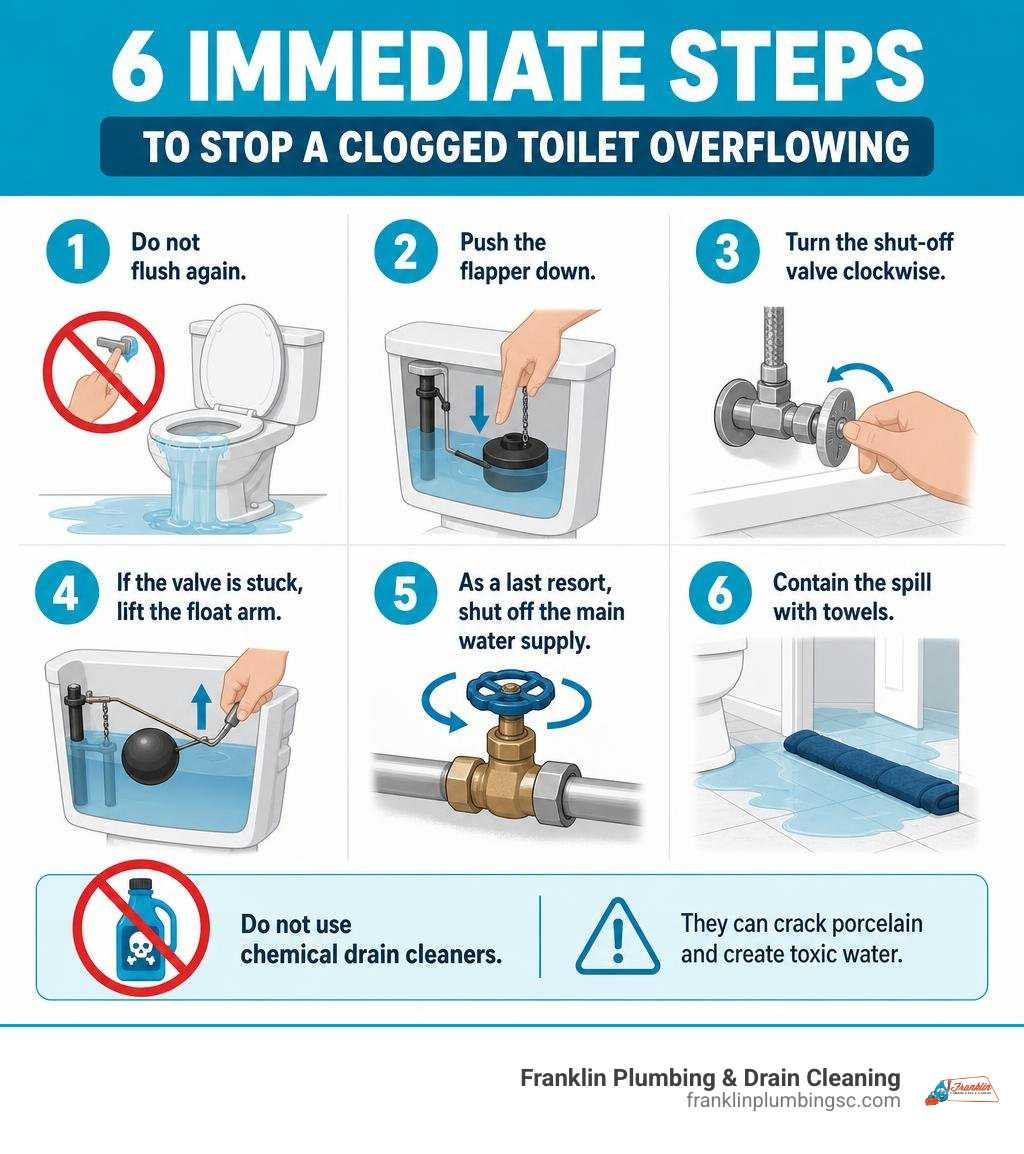
If you have a clogged toilet overflowing, take these steps immediately:
- Do not flush again. A second flush can make the overflow worse.
- Push the flapper down in the tank to stop water flowing into the bowl.
- Turn the shut-off valve clockwise behind the toilet, near the floor, to cut the water supply.
- If the valve is stuck, lift the float arm or float cup inside the tank to stop the fill.
- As a last resort, shut off the main water supply to your home.
- Contain the spill with towels along doorways to slow the spread.
- Do not use chemical drain cleaners. They can damage porcelain and leave hazardous water in the bowl.
There are few household emergencies that trigger instant panic like a clogged toilet overflowing, with water rising toward the rim and spilling onto the bathroom floor.
It happens fast. One moment it is a slow flush. Seconds later, water is spreading across the tile.
The damage can be serious. Toilet overflow water may contain harmful bacteria and pathogens, especially when waste is present. Mold can begin growing within 24 to 48 hours if the area is not dried and sanitized properly.
The good news is that most overflowing toilet situations can be stopped quickly, and many clogs can be cleared without calling a plumber if you act in the right order. If you are unsure about any step, encounter contaminated water, or suspect a deeper blockage, stop and contact a professional plumbing team.
This guide explains how to stop the water immediately, clear a clog safely, recognize when professional help is needed, and reduce the chance of another overflow.
Immediate Steps to Stop an Overflowing Toilet
When the water in your toilet bowl starts rising, you have only seconds to act before it spills over the rim. Knowing exactly where to look and what to do can help limit water damage.
1. Shut Off the Water Supply Valve
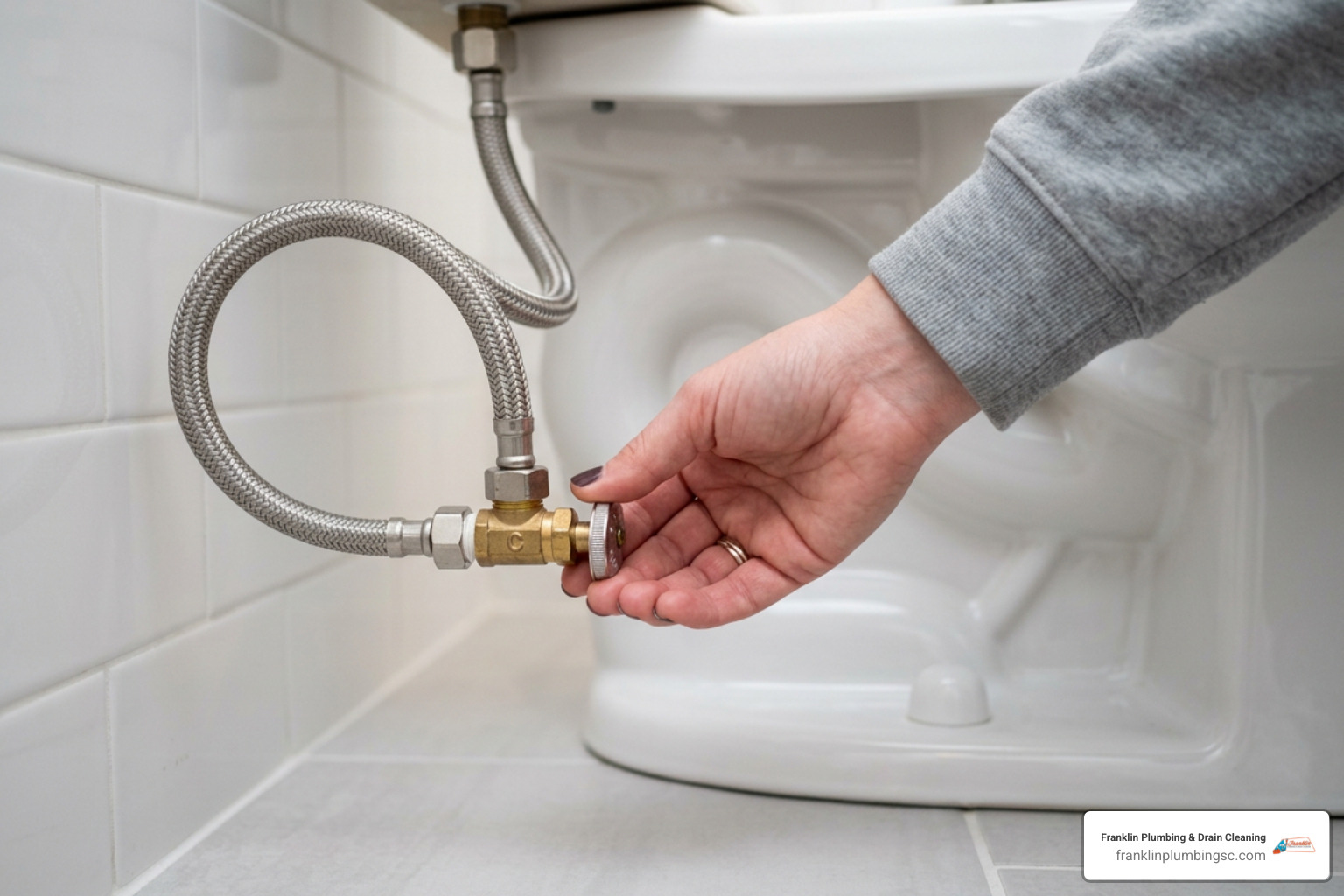
The most effective way to stop an overflowing toilet is to cut off its water supply. Look behind the toilet bowl, close to the floor. You will see a small valve connected to a metal or plastic supply line. Turn the valve clockwise until it stops. This cuts off water flowing into the toilet tank and helps prevent more water from entering the bowl.
2. Control the Tank Mechanics
If the supply valve is rusted, stuck, or difficult to turn, remove the toilet tank lid. Inside, you will find two quick ways to stop the flow:
- The flapper: This is the rubber seal at the bottom of the tank. If it is open, push it down manually to seal the drain hole. This prevents water from traveling from the tank into the bowl.
- The float cup or float ball: This device rises as the tank fills to shut off the water. Lift the float arm or cup manually and hold it up. This can stop incoming water while you assess the problem.
3. Contain the Spill Immediately
Once the water stops rising, contain the mess. Lay old towels, rags, or blankets around the base of the toilet and along the bathroom doorway. This helps slow water from reaching hallway carpet or hardwood floors.
For an overflow that will not stop, a stubborn clog, or a possible drain-line blockage, Franklin Plumbing’s professional drain cleaning services in Columbia, SC can help identify and clear the cause safely.
Why a Clogged, Overflowing Toilet Is a Major Risk
An overflowing toilet is more than a major inconvenience. It can create health and structural risks, so it is important to use appropriate safety precautions during cleanup.
The Biohazard of Contaminated Water
Plumbing and restoration professionals commonly classify water damage by contamination level. Water from an overflowing toilet that contains waste can carry bacteria, viruses, and other pathogens.
Avoid direct contact with contaminated water. Wear protective gear, keep children and pets out of the affected area, and call a professional restoration or plumbing team if the spill is extensive or reaches porous materials.
The Mold Growth Timeline
Mold can begin growing within 24 to 48 hours after a moisture event. Because bathroom grout is not completely waterproof, standing water can seep beneath flooring and into the subfloor, creating conditions for hidden mold, musty odors, and longer-term damage.
Structural Damage
When water sits on a bathroom floor, it follows the easiest path of escape. It can seep under baseboards, soak into drywall, and damage the wooden subfloor beneath tile. In multi-story homes in Columbia, SC, a second-floor toilet overflow can leak through the ceiling below and damage drywall, plaster, and electrical components.
How to Safely Clear a Clogged Toilet Filled with Water
Clearing a toilet that is filled to the brim requires a careful, strategic approach. Plunging a completely full toilet can splash contaminated water onto you and throughout the bathroom.
Bailing the Excess Water
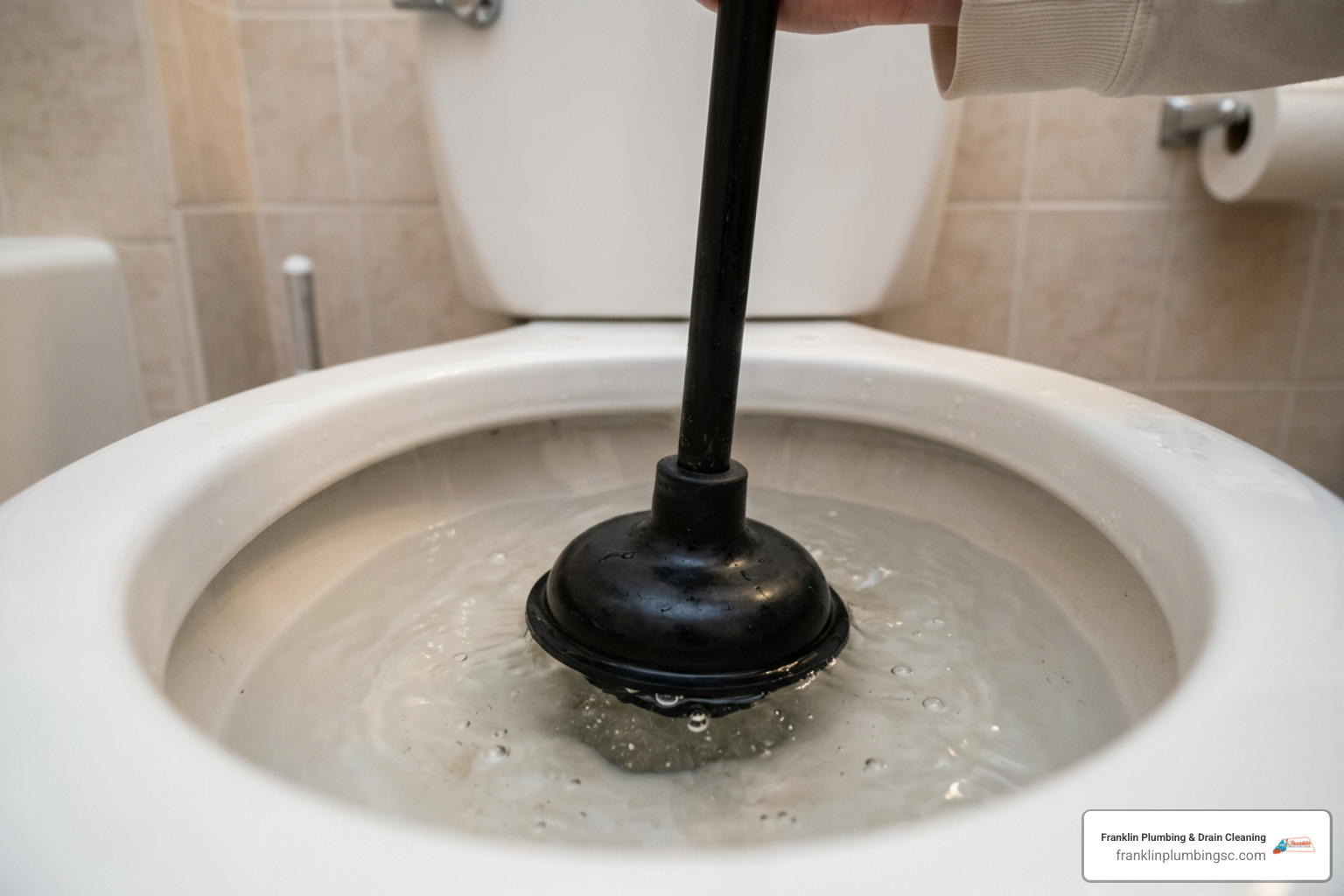
Before you pick up a plunger, lower the water level. Use a small disposable cup or a siphon pump to remove excess water from the bowl, placing it in a large bucket. Leave enough water to cover the rubber head of your plunger so it can form a proper seal.
Flange Plunger vs. Cup Plunger
Not all plungers are created equal. A standard cup plunger, the flat bell-shaped kind, is designed for flat surfaces such as sinks and bathtubs. For a toilet, use a flange plunger. Its extended rubber sleeve fits into the toilet drain opening and creates the tight seal needed to build pressure.
The Correct Plunging Technique
- Warm the plunger: Run the rubber head under hot water for a minute to soften it and improve the seal.
- Insert at an angle: Lower the plunger into the bowl at an angle so the cup fills with water rather than air. This reduces splashing.
- Establish a seal: Place the flange firmly into the drain opening.
- Push and pull: Push down gently to remove air, then pull up and push down with controlled, firm strokes. Continue for 15 to 20 seconds.
Best Tools for a Clogged, Overflowing Toilet
If a plunger does not clear the clog, there are several other DIY tools and methods you can consider. If you are uncomfortable using these tools, the clog is deep, or water starts backing up in other fixtures, contact a plumbing professional.
| Tool or method | Best used for |
|---|---|
| Flange plunger | Standard organic and toilet paper clogs |
| Toilet auger | Deep blockages and hard-object clogs |
| Dish soap and hot water | Lubricating minor organic blockages |
| Baking soda and vinegar | Light clogs when used cautiously |
The Toilet Auger (Closet Auger)
A toilet auger is a specialized plumbing snake designed for toilets. It features a long metal cable housed inside a rigid guide tube with a rubber sleeve at the bend to protect the porcelain from scratches.
To use it, pull the handle all the way up, insert the curved end into the toilet drain, and slowly turn the crank clockwise as you push down. When you feel resistance, rotate the handle to break up or hook the clog, then pull it back out.
Dish Soap and Hot Water
For minor organic clogs, dish soap can act as a lubricant. Pour about half a cup of liquid dish soap directly into the bowl and let it sit for 15 minutes. Follow with a gallon of hot tap water, never boiling water, which can crack porcelain. The water’s weight and the soap can help a minor clog move through the trap.
Baking Soda and Vinegar
This mixture may help with light organic buildup. Pour one cup of baking soda into the toilet bowl, followed slowly by two cups of white vinegar. Let it fizz for 30 minutes, then add hot tap water and see whether the water level begins to recede.
Why You Must Avoid Chemical Drain Cleaners
Chemical drain cleaner can settle in the toilet trap, generate heat, and damage porcelain. If it does not clear the clog, it also leaves hazardous chemical water in the bowl, making manual clearing more dangerous.
For more detail on the potential risks, see Franklin Plumbing’s article about why chemical drain cleaners can damage sewer lines.
Why Is My Toilet Overflowing but Not Clogged?
It can be confusing to watch a toilet overflow when nothing was recently flushed down it. If there is no physical blockage in the bowl, the problem may be mechanical or located deeper in your plumbing system.
1. Fill Valve Malfunction
The fill valve controls water flowing into the toilet tank after a flush. If the valve is worn out, damaged, or covered in mineral scale, it may fail to shut off completely. This can cause water to run continuously into the tank and through the overflow tube.
2. Improper Float Height
The float ball or float cup rises with the water level in the tank to signal the fill valve to shut off. If the float is set too high, the water level can rise past the top of the overflow tube. Adjusting the float screw to keep the water level about one inch below the top of the overflow tube may solve the issue.
3. Blocked Plumbing Vent Stack
Your plumbing system relies on vent pipes that exit through the roof. These vents allow air to enter the pipes, equalize pressure, and help water drain smoothly. If leaves, debris, or a nest blocks a vent stack, toilets may bubble, drain slowly, or overflow when other fixtures are used.
4. Sewer Line Backup
If the blockage is not in the toilet’s internal trap, it may be deeper in the main sewer line. When the main sewer line is blocked, wastewater has nowhere to go and may back up into the lowest drains in your home, often a downstairs toilet or shower drain.
Diagnosing a Main Sewer Line Backup vs. a Simple Toilet Clog
Differentiating between a localized toilet clog and a main sewer line backup is important for choosing the right next step.
- The scope of the issue: If only one toilet is draining slowly or overflowing, you may have a localized clog. If multiple drains, such as kitchen sinks, bathtubs, and other toilets, are backing up at the same time, you may have a main sewer line issue.
- Gurgling sounds: If you flush the toilet and hear gurgling from a bathroom sink or tub drain, air and water may be trapped in the system because of a main-line blockage.
- Water backing up in other fixtures: Running a washing machine or kitchen sink should not cause water to rise in the toilet. If it does, seek professional help promptly.
When several fixtures are affected, Franklin Plumbing’s broader residential and commercial plumbing services can help diagnose a main sewer line or venting problem before the backup causes further damage.
How to Clean and Sanitize After a Toilet Overflow
Once the clog is cleared and the water has receded, the hard work of cleaning and sanitizing begins. Because toilet overflow water is a Category 3 biohazard, you must take proper precautions.
1. Wear Personal Protective Equipment (PPE)
Before touching anything in the affected area, put on rubber gloves, protective eyewear, and closed-toe shoes. If you are dealing with a significant sewage spill, a face mask is also highly recommended to avoid breathing in airborne pathogens.
2. Contain and Discard Saturated Materials
Any porous materials that have absorbed contaminated water must be discarded. This includes bath mats, rugs, cardboard boxes, and heavily saturated drywall or baseboards. Non-porous surfaces like ceramic tile, linoleum, and porcelain can be thoroughly sanitized.
3. Apply Professional-Grade Disinfectants
Do not rely on standard household cleaners to tackle black water contamination. Use a professional-grade disinfectant or mix one cup of chlorine bleach with one gallon of hot water. Scrub all floors, baseboards, and walls that came into contact with the water. Allow the disinfectant to sit on the surfaces for at least 10 to 15 minutes before wiping it clean.
4. Dry the Area Completely
To prevent mold from taking hold, you must dry the bathroom as quickly as possible. Open windows, turn on the bathroom exhaust fan, and set up high-powered floor fans and a dehumidifier. Keep these running for at least 24 to 48 hours until the subfloor and walls are completely dry.
Long-Term Prevention and Maintenance Strategies
The best way to handle a clogged toilet overflowing is to reduce the chance of one happening in the first place. A few consistent household habits can help keep your plumbing system running smoothly.
Mindful Flushing Habits
Your toilet is designed to handle only two things: human waste and toilet paper. Everything else belongs in the trash can. Even products labeled “flushable” may not break down the way standard toilet paper does, which can contribute to blockages over time.
Consider a Dual-Flush Toilet
If you have an older toilet that clogs frequently, upgrading to a modern dual-flush toilet may help. These toilets provide a lower-volume flush for liquid waste and a higher-volume flush for solid waste, combining water efficiency with dependable flushing performance.
To reduce the risk of deeper backups, Franklin Plumbing’s sewer line maintenance guide for homeowners explains warning signs and maintenance habits that can protect your drain system.
Flushable Wipes vs. Standard Toilet Paper
Many homeowners do not realize the toll that flushable wipes can take on plumbing. Standard toilet paper is the safer choice.
| Feature | Flushable wipes | Standard toilet paper |
|---|---|---|
| Dissolves in water | Often remains intact | Breaks down more readily |
| Main material | May contain synthetic fibers | Wood pulp |
| Sewer line risk | Higher risk of snagging | Lower risk when used normally |
| Septic compatibility | Can create problems | Generally the safer option |
Frequently Asked Questions About Overflowing Toilets
FAQ 1: Why does my toilet overflow when I flush it?
A toilet may overflow during a flush because there is a blockage in the toilet trap or drain line. Water from the tank enters the bowl but cannot pass the obstruction, causing the bowl to fill and overflow.
FAQ 2: Can a toilet overflow on its own without being flushed?
Yes. A damaged fill valve or improperly adjusted float can allow water to keep running into the tank. Water may then flow through the overflow tube or, in some cases, spill from the tank.
FAQ 3: How do you stop a toilet from overflowing if the valve is stuck?
If the shut-off valve behind the toilet is stuck, remove the tank lid and lift the float arm or float cup manually to stop the fill valve. If that does not work, turn off the main water supply to the home.
FAQ 4: Is toilet overflow water considered a biohazard?
Overflow water that contains waste can carry harmful bacteria, viruses, and pathogens. Avoid direct contact, use protective gear, and seek professional help for extensive contamination.
FAQ 5: Can I use a chemical drain cleaner to clear a toilet clog?
No. Chemical drain cleaners can damage porcelain and pipes while leaving hazardous water in the toilet if they do not clear the clog.
FAQ 6: How long does it take for mold to grow after a toilet overflow?
Mold can begin growing on damp surfaces within 24 to 48 hours. Remove standing water, clean affected surfaces, and dry the area thoroughly with ventilation, fans, and a dehumidifier.
FAQ 7: Why is my toilet gurgling when I run the shower?
A gurgling toilet while other fixtures drain can indicate a main sewer line blockage or a plumbing vent problem. It is a warning sign that should be evaluated by a plumbing professional.
FAQ 8: What is the difference between a cup plunger and a flange plunger?
A cup plunger has a flat, bell-shaped bottom for flat surfaces such as sinks. A flange plunger has an additional rubber sleeve that fits into a toilet drain opening to create a tighter seal.
FAQ 9: How often should I perform sewer line maintenance?
The right maintenance schedule depends on the age of the home, the condition of the pipes, and whether tree roots are a concern. Ask a qualified plumber about an inspection schedule that fits your property.
FAQ 10: When should I call a professional plumber in Columbia, SC?
Call a professional plumber if plunging does not clear the clog, multiple drains back up at once, sewage odors are present, or the toilet overflows repeatedly.
Conclusion
A clogged toilet overflowing can turn an ordinary day into a stressful plumbing emergency in seconds. By shutting off the water supply, clearing the blockage safely, and thoroughly cleaning the affected area, you can help reduce water damage and protect your home.
If you are dealing with a stubborn clog, a suspected main sewer line backup, or repeated overflows in Columbia, SC, the licensed, experienced team at Franklin Plumbing & Drain Cleaning can provide dependable help backed by a 100% satisfaction guarantee.
For prompt help with a stubborn toilet clog or drain backup, contact our professional drain cleaning technicians at Franklin Plumbing & Drain Cleaning to schedule service.

professional
drain cleaning

highly
recommended

through
repairs

quality
work