No Hot Water in the House? 8 Things to Check First
Home »
Why No Hot Water in the House Is More Than Just an Inconvenience
No hot water in the house is one of those problems that hits you the moment your day begins. You step into the shower, turn the handle, and wait. The water stays cold. Suddenly, your whole morning routine is off the rails.
It’s frustrating. But it’s also more common than you might think.
In fact, no hot water calls make up a significant portion of after-hours plumbing emergencies across the country. The good news? Many causes are fixable quickly once you know what to look for.
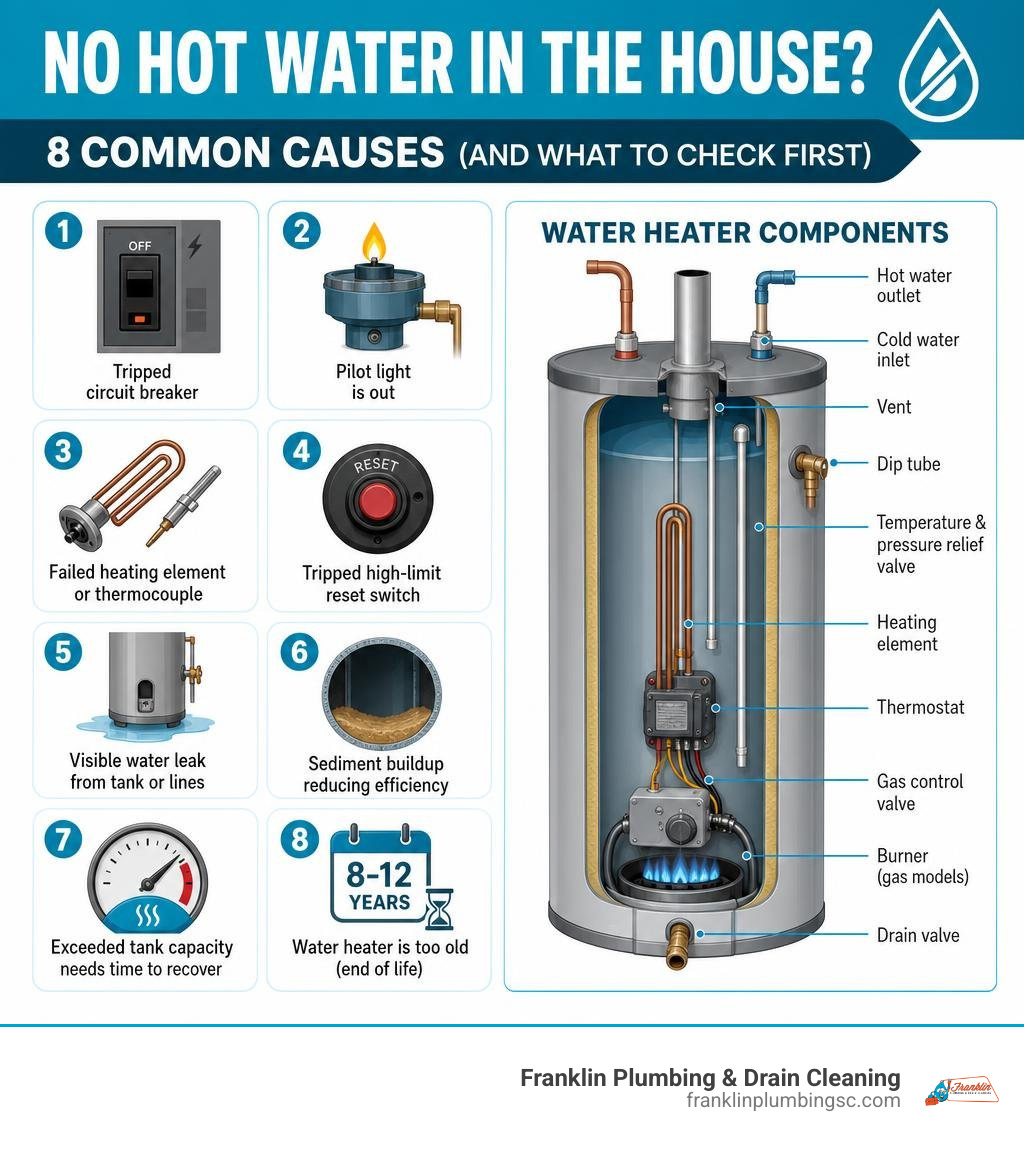
Here are the most common reasons you have no hot water right now:
- Tripped circuit breaker (electric water heaters)
- Pilot light is out (gas water heaters)
- Failed heating element or thermocouple
- Tripped high-limit reset switch
- Visible water leak from the tank or supply lines
- Sediment buildup reducing heating efficiency
- Exceeded tank capacity, meaning the tank just ran out and needs time to recover
- Water heater is too old and has reached end of life, typically 8 to 12 years for storage tanks
Before you call a plumber, a few simple checks can tell you a lot. This guide walks you through exactly what to look for, in order, so you can either fix the problem yourself or know exactly what to tell a professional.
No Hot Water in House? Start with These Quick Checks
When you realize there is no hot water in house taps, it is easy to panic and assume you need a costly replacement. However, taking a systematic approach to troubleshooting can save you time, stress, and money.
The first step is determining whether you are dealing with a localized issue or a systemic failure. Is the cold water only affecting one bathroom, or are all the faucets in your home running chilly? If only one shower is cold, the issue lies within that specific plumbing fixture rather than your central water heating system.
Next, think about recent household activity. Did someone just take a long shower while the washing machine was running? Storage tank systems hold a finite amount of hot water. If your household has exceeded its capacity, you simply have to wait for the tank to recover.
If your system keeps running out of hot water, the issue may be capacity, placement, or maintenance rather than a sudden breakdown. Homeowners comparing upgrade options can learn more about residential water heater types and how different systems manage household demand.
1. Check Other Faucets and Fixtures
Before you head down to the basement or utility closet, perform a quick multi fixture test. Go to the kitchen sink, the guest bathroom, and the laundry room. Turn on the hot water tap at each location and let it run for at least sixty seconds.
If you discover that you have hot water in the kitchen but your master shower is freezing, you do not have a broken water heater. Instead, you are likely dealing with a localized fixture issue.
The most common culprit behind a single cold fixture is a failed mixing valve or a worn out faucet cartridge. Modern faucets, especially single handle models, use internal cartridges to balance the flow of hot and cold water. When these components wear down, they can block hot water from entering the fixture entirely.
Another possibility is a phenomenon known as plumbing crossover. This occurs when a faulty valve allows cold water to bleed into the hot water line, cooling down the temperature before it reaches your tap. Identifying this early prevents you from troubleshooting a perfectly healthy water heater.
2. Evaluate Recent Hot Water Usage
If you confirm that the entire house is out of hot water, the next logical check is usage. Traditional storage tank water heaters hold a specific volume of water, usually between 30 and 50 gallons for an average household.
Once that heated water is depleted, the tank must refill with cold water and heat it from scratch. The time it takes to do this is known as the recovery rate, and it varies significantly depending on your fuel source:
- Gas water heaters: A standard 40 gallon gas water heater has a relatively fast recovery rate, typically taking about 30 to 40 minutes to heat a full tank of cold water.
- Electric water heaters: Electric models heat water using internal coils, which takes longer. A standard 40 gallon electric unit generally requires 60 to 80 minutes to fully recover.
If your household has just finished consecutive showers, run a load of dishes, or washed clothes in warm water, give your system about an hour to recover before assuming there is a mechanical failure.
3. Inspect the Water Heater for Visible Leaks
If usage is not the issue, it is time to inspect the physical water heater unit. Grab a flashlight and carefully examine the area around your water heater.
Look for any pooling water around the base of the tank. A puddle on the floor can indicate a few different issues:
- T&P valve leaks: The Temperature and Pressure relief valve is a safety device designed to release water if the internal pressure or temperature gets too high. If it is dripping, the valve may be faulty or the tank may be overheating.
- Supply line leaks: Check the plumbing connections at the top of the tank. Loose fittings or corroded pipes can drip water down the sides of the unit.
- Internal tank corrosion: If water is leaking directly from the bottom of the tank jacket, the internal glass lining has likely cracked due to age and corrosion. Unfortunately, a leaking tank shell cannot be repaired and requires an immediate replacement.
If you notice active leaking, turn off the water supply to the unit and seek professional assistance. Homeowners in Columbia, SC can rely on the Franklin Plumbing & Drain Cleaning team for prompt water heater repair in Columbia, SC to resolve leaks safely.
Troubleshooting Gas vs. Electric Water Heaters
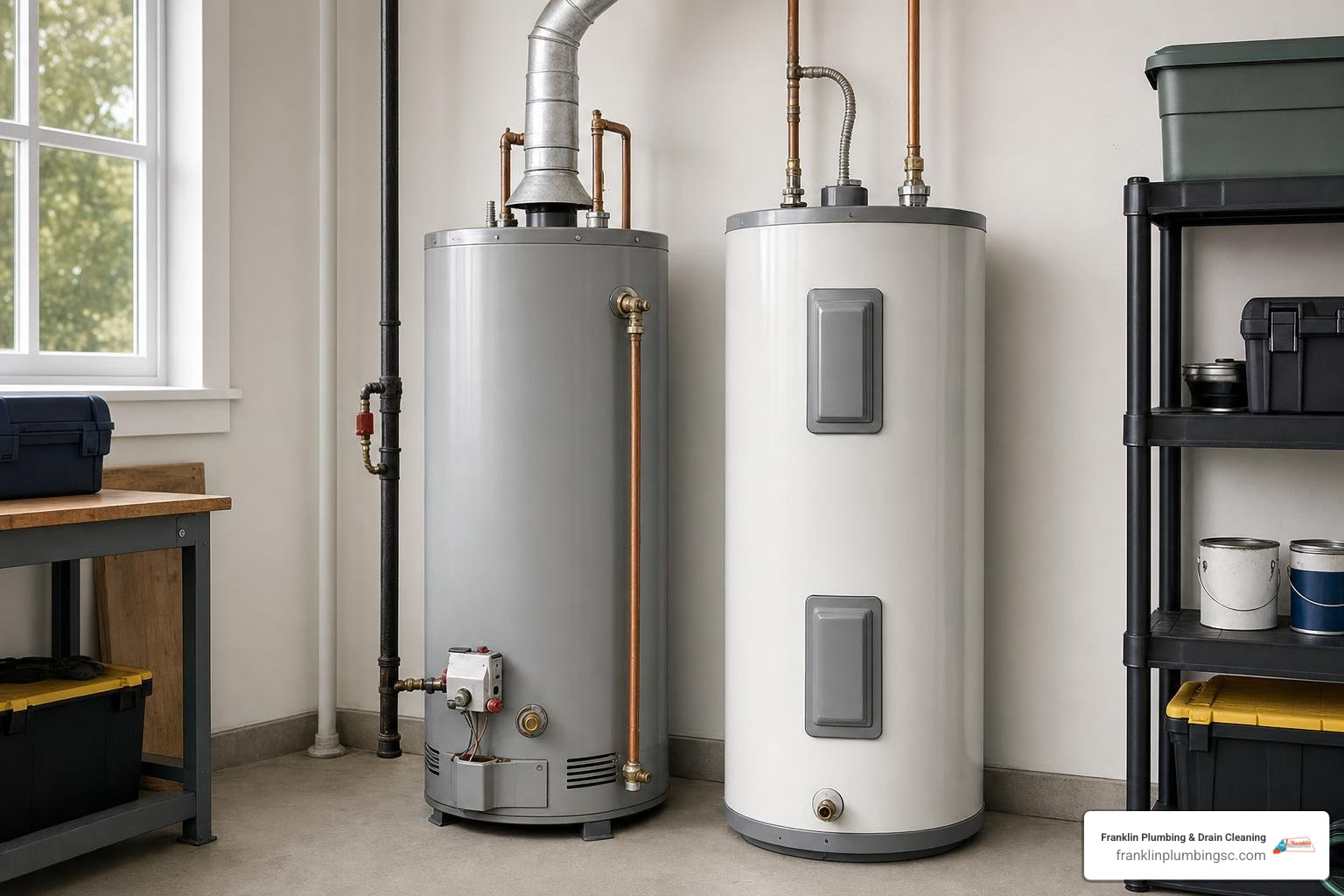
Because gas and electric water heaters rely on entirely different energy sources to heat your water, the troubleshooting steps for a sudden outage are completely different. Before performing any diagnostics, identify which type of system you have in your home.
Gas units typically have a burner chamber at the bottom, a pilot light or electronic igniter, and a metal vent pipe leading out the top. Electric units are completely sealed, usually have two metal access panels on the side covering the thermostats and heating elements, and connect directly to a high voltage electrical cable.
No matter which system you have, safety should always be your top priority. Routine water heater maintenance can also help reduce sediment buildup, improve performance, and catch small issues before they leave the whole house without hot water.
What to Do When There Is Suddenly No Hot Water in House Systems (Electric)
If your electric water heater has stopped working, the issue is almost always electrical. Follow these steps to safely diagnose the problem:
- Check the circuit breaker: Electric water heaters draw a significant amount of power and operate on a dedicated double pole breaker, usually 30 amps. Go to your home’s main electrical panel and locate the breaker labeled for the water heater. If it has tripped to the middle position, switch it completely off and then back on. If the breaker trips again immediately, do not keep resetting it. This indicates a serious electrical short or a failed heating element that requires professional attention.
- Reset the high-limit switch: Electric water heaters feature a built-in safety device called an Emergency Cut Off (ECO) switch, which trips if the water temperature inside the tank becomes dangerously hot. To reset it, turn off the power at the breaker panel first. Remove the upper access panel on the side of the water heater, pull back the insulation, and locate the red reset button. Push it firmly until you hear a click, then replace the panel and turn the breaker back on.
- Identify component failures: If the breaker is on and the reset button is engaged but you still have no hot water, one of your heating elements or thermostats has likely failed. Electric units use an upper and a lower heating element. If the upper element burns out, you will have no hot water at all. If the lower element fails, you will experience lukewarm water or a very short supply of hot water.
Gas Water Heater Troubleshooting Steps
Gas water heaters rely on a continuous supply of natural gas or propane and a functioning ignition system. If your gas unit is running cold, check these key areas:
- Check the pilot light: Older gas water heaters use a standing pilot light that burns continuously. If a draft blows this light out, the burner will not ignite. Look through the small viewing window at the bottom of the tank to see if the small blue flame is burning. If it is out, follow the manufacturer instructions printed on the side of the tank to safely relight it. Modern units may use an electronic spark or glow plug instead of a standing pilot, which will display flashing error codes on the gas control valve if ignition fails.
- Test the thermocouple: The thermocouple is a small metal sensor that sits next to the pilot flame. It acts as a safety device, detecting the heat of the flame and telling the gas valve that it is safe to release gas. If the thermocouple is dirty, bent, or broken, it will shut off the gas supply, and the pilot light will not stay lit when you release the control knob. Replacing a faulty thermocouple is a common repair for a trained professional.
- Verify the gas supply: Ensure that the main gas shutoff valve leading to your water heater is fully open. If you have other gas appliances in your home, such as a stove or furnace, check to see if they are working. If none of your gas appliances are functioning, there may be an outage or an issue with your main gas line.
Why You Might Have No Hot Water in One Area of the House
It can be incredibly confusing to experience a complete lack of hot water in one room while the rest of your home has plenty of hot water. When this happens, the problem is not your water heater. Instead, you are dealing with a localized plumbing issue.
In many cases, this is caused by a plumbing crossover issue, which we touched on earlier. If a single handle shower valve or faucet cartridge fails internally, cold water can bypass the cartridge and flow directly into the hot water line. This dilutes the hot water supply to that specific fixture or nearby rooms.
Another factor to consider is the physical layout of your plumbing system. In larger homes, hot water must travel a long distance from the heater to the furthest fixture. If you have a crawlspace, there may be a secondary shutoff valve that was accidentally closed, isolating hot water supply to a specific wing of the house.
The location of your water heater plays a major role in how quickly and efficiently hot water reaches your taps. If hot water takes too long to reach distant fixtures, the problem may relate to where the water heater tank is placed rather than the heater itself.
Why Is There No Hot Water in House Faucets but the Shower Works?
If your shower has plenty of hot water but your bathroom or kitchen sink faucets are running cold, the issue is almost certainly localized to those specific faucets.
The most common causes for this include:
- Clogged aerators or supply lines: Mineral deposits and sediment can build up inside the hot water supply lines or the faucet aerator, restricting the flow of hot water to that specific sink.
- Closed shutoff valves: Look beneath the sink and ensure that the hot water shutoff valve, usually the valve on the left, is turned fully counterclockwise to the open position.
- Failed faucet cartridge: Just like shower valves, individual sink faucets contain cartridges that can wear out, block the hot water inlet, and prevent hot water from mixing properly.
Repair vs. Replacement: When to Call a Professional Plumber
When your water heater stops working, you have to make a choice: do you repair the existing unit, or is it time for a full replacement? Making the right decision depends on the age of your system, the nature of the failure, and the overall cost of ownership.
Traditional storage tank water heaters generally last between 8 and 12 years. If your system is approaching or has passed the decade mark, investing in repairs may only delay the inevitable. On the other hand, tankless water heaters can last 20 years or more with proper maintenance because they have fewer moving parts and do not hold a constant volume of corrosive water.
To help you weigh your options, here is a quick comparison of traditional storage tanks and modern tankless systems:
| Feature | Storage Tank Water Heaters | Tankless Water Heaters |
|---|---|---|
| Average Lifespan | 8 to 12 Years | 20+ Years |
| Energy Efficiency | Standard efficiency (heats water continuously) | High efficiency (heats water only on demand) |
| Space Required | Large footprint (requires a dedicated closet or floor space) | Compact wall-mounted design |
| Hot Water Supply | Finite capacity (can run out during high demand) | Continuous supply |
| Common Failure Points | Tank corrosion, heating elements, pilot lights | Scale buildup, sensor errors |
A tank that is leaking from the shell, heavily corroded, or repeatedly failing often needs replacement rather than another temporary fix. In that situation, a tankless water heater installation may be a better long term option for homeowners who want reliable hot water and a more compact system.
Signs Your Water Heater Needs Immediate Repair
Many water heater issues do not require a full system replacement. If your system is relatively new, a targeted repair is often the most cost effective solution.
You should call a professional plumber for repairs if you notice:
- Strange noises: Popping, rumbling, or banging sounds coming from your tank indicate a heavy layer of sediment buildup at the bottom. As water boils beneath this sediment layer, steam bubbles burst, creating these noises. A professional tank flush can resolve this.
- Fluctuating temperatures: If your water goes from hot to cold randomly, you may have a failing thermostat or a broken dip tube. The dip tube directs incoming cold water to the bottom of the tank to be heated. If it cracks, cold water mixes with the hot water at the top of the tank, causing lukewarm temperatures.
- A single failed element: On electric models, replacing a single burnt out heating element is a quick repair that can fully restore your hot water.
When a Full Water Heater Replacement Is Necessary
In some situations, repairing your water heater is no longer a viable option. You will need to replace your system if you experience:
- A leaking tank: Once the internal steel tank corrodes and begins to leak, it cannot be welded or repaired. The unit must be replaced immediately to prevent water damage to your home.
- Advanced age: If your storage tank is over 10 years old and requires frequent repairs, replacing it is a smarter long term investment.
- Severe rust and corrosion: If you notice rusty colored hot water coming from your taps or heavy corrosion around the base of the tank, the system is nearing the end of its lifespan.
Frequently Asked Questions About Having No Hot Water
Why is there no hot water in my house suddenly?
A sudden loss of hot water is usually caused by a tripped circuit breaker, an extinguished pilot light on a gas unit, a failed heating element, or a tripped high-limit safety switch. If you have a tankless system, a sudden outage could be due to a system error code or a power interruption.
How long does it take for hot water to return after fixing the water heater?
Recovery times depend on your system type. A standard 40 gallon gas water heater takes about 30 to 40 minutes to heat a full tank, while an electric water heater of the same size takes 60 to 80 minutes. Tankless systems heat water on demand, so hot water returns almost instantly once the unit is fixed.
What should I do if I smell gas near my water heater in Columbia, SC?
If you smell a rotten-egg odor near your gas water heater, evacuate your home immediately. Do not turn on any lights, use your phone, or operate electrical switches, as this can create a spark. Once you are safely outside, call your local gas utility provider and emergency services.
Why do I have hot water in the kitchen but not the shower?
This issue is typically caused by a failed shower mixing valve or a worn out pressure-balancing cartridge. When these internal components fail, they block hot water from entering the shower head while other fixtures in the house continue to work perfectly.
How do I reset my electric water heater?
First, turn off the power at your main breaker panel. Remove the upper access panel on the side of the water heater, pull back the insulation, and locate the red high-limit reset button. Press it firmly until you hear a click, replace the cover, and turn the breaker back on.
Can sediment buildup cause a complete loss of hot water?
While sediment buildup rarely causes a complete, sudden loss of hot water, it can significantly reduce your system’s efficiency. Over time, mineral scale insulates the bottom heating element or gas burner, making it much harder to heat the water and eventually causing the heating elements to burn out completely.
How long do tankless water heaters last compared to storage tanks?
Tankless water heaters typically last 20 years or more with proper maintenance and annual flushing. Standard storage tank water heaters have a much shorter lifespan, generally lasting between 8 and 12 years due to constant exposure to water and internal corrosion.
Why did my hot water stop working after a power outage?
A power outage can trip the circuit breaker connected to your electric water heater or trigger a power surge that trips the high-limit safety switch. On gas models with electronic ignition, a power outage will prevent the system from sparking and lighting the burner.
Is it safe to relight a gas water heater pilot light myself?
Yes, it is generally safe to relight a pilot light if you follow the manufacturer instructions printed on the side of your tank. However, if you smell gas, or if the pilot light refuses to stay lit after multiple attempts, stop immediately and call a professional.
How much does it typically cost to repair vs. replace a water heater?
Repair and replacement costs vary widely depending on the type of water heater, the complexity of the installation, and local labor rates. A minor repair like replacing a thermocouple or heating element is generally less involved than a full system replacement, while replacement can provide long term efficiency and reliability. Homeowners should request a professional estimate for accurate pricing.
Conclusion
Experiencing no hot water in house systems can turn your day upside down, but identifying the cause does not have to be stressful. By systematically checking your fixtures, evaluating recent usage, and examining your system’s power or fuel source, you can often pinpoint the issue quickly.
While simple resets and visual inspections are safe to perform yourself, always remember that dealing with electrical wiring, natural gas lines, and high pressure plumbing systems carries inherent risks. If you are ever unsure about a troubleshooting step, or if you discover a leak coming from your tank, it is always safest to call in a licensed professional.
Whether you need fast water heater repairs, routine system maintenance, or a complete energy-efficient replacement, the team at Franklin Plumbing & Drain Cleaning is ready to help homeowners in Columbia, SC. For safe troubleshooting and reliable repairs, contact our professional water heater technicians.

professional
drain cleaning

highly
recommended

through
repairs

quality
work