Sewer Camera Inspection: What It Shows and Why It Matters
Home »

Why a Sewer Camera Inspection Could Save You Thousands
A sewer camera inspection is one of the smartest diagnostic tools available to homeowners and business owners today. If you’re dealing with slow drains, recurring backups, or mystery odors coming from your pipes, here’s what you need to know right away:
Quick Answer: What Is a Sewer Camera Inspection?
| Question | Answer |
|---|---|
| What is it? | A high-definition camera on a flexible cable sent inside your pipes to show what’s happening in real time |
| What does it find? | Root intrusion, cracks, grease buildup, collapsed sections, offset joints, foreign objects |
| Who needs it? | Homeowners with recurring clogs, buyers before purchasing a home, businesses doing preventative maintenance |
| How long does it take? | 30-60 minutes for most single-line inspections |
| Is it invasive? | No. No digging required in most cases |
| Typical cost range? | $100-$600 for residential inspections depending on line length and complexity |
Most plumbing problems hide where you can’t see them. Underground. Behind walls. Deep in pipes that run beneath your yard or slab. By the time you notice symptoms like gurgling toilets or water backing up into your tub, the damage may already be significant.
That’s exactly why sewer camera inspections have become a go-to tool for plumbers and property owners alike. Instead of guessing or digging up your yard, a technician can send a waterproof, high-definition camera directly into your sewer line and see the problem in real time.
At Franklin Plumbing & Drain Cleaning, we use this technology every day to give Columbia-area homeowners and businesses clear answers fast, without unnecessary disruption.
What is a Sewer Camera Inspection and How Does It Work?
At its core, a sewer camera inspection is a diagnostic procedure that takes the guesswork out of plumbing. Instead of relying on exploratory digging or simply running a drain snake down a line and hoping for the best, a professional plumber uses real-time visual technology to inspect the entire interior of your underground pipes.
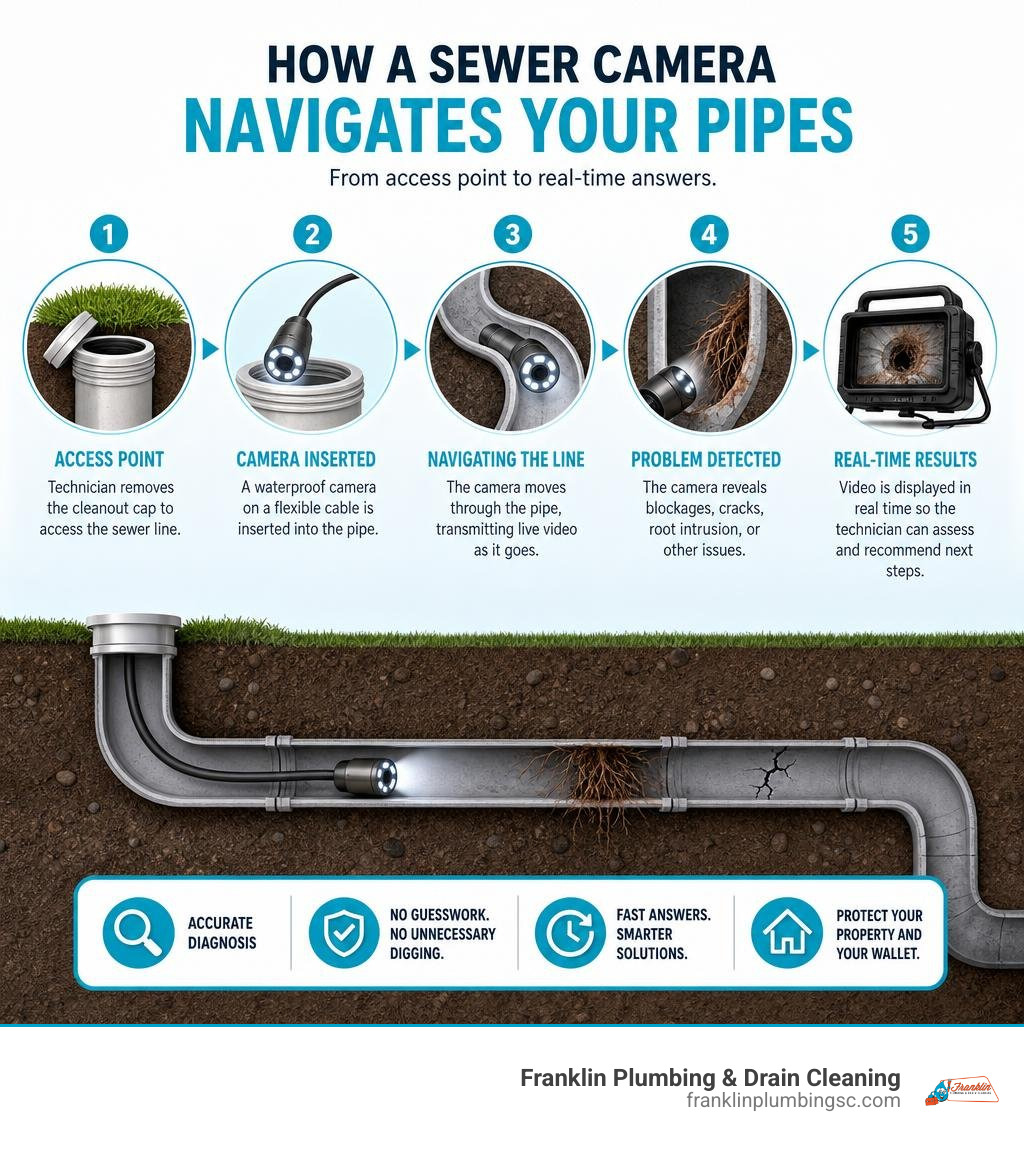
The process begins by identifying an accessible entry point into your plumbing system. This is typically a plumbing cleanout, which is a dedicated access pipe located outside your home, in a basement, or in a crawlspace. Once accessed, a technician carefully feeds a flexible, fiber-optic cable with a high-resolution camera attached to its tip through the pipe. As the camera travels down the line, it transmits live, high-definition video back to a portable monitor operated by the technician.
This real-time video feed allows us to examine the physical condition of your pipes from the inside out. Powerful LED lights surrounding the camera lens illuminate the dark, damp environment of the sewer line, ensuring that even minor hairline cracks, early-stage corrosion, and small obstructions are clearly visible.
The Technology Behind a Sewer Camera Inspection
Modern sewer cameras are highly sophisticated pieces of equipment designed to withstand the harsh environments found inside residential and commercial sewer lines. The camera head itself is constructed from durable materials like stainless steel and is protected by a scratch-resistant sapphire lens. It carries an IP68 waterproof rating, which means it can operate reliably while fully submerged in water and wastewater.
To get a clear picture of what is happening underground, professionals use tools like a high-definition pipeline inspection camera equipped with digital video recording (DVR) capabilities. This allows the technician to save the inspection footage directly to an SD card or external drive.
These inspection systems are powered by high-capacity lithium batteries (often ranging from 4500 mAh to 8500 mAh). This provides anywhere from 6 to 14 hours of continuous operation in the field, ensuring that technicians can complete even complex, multi-line diagnostic jobs on a single charge without interruption.
How Technicians Navigate Your Drainage System
Navigating a complex drainage network requires both specialized equipment and technical skill. The camera head is pushed through the pipe using a semi-rigid, fiberglass push rod. This cable must strike a perfect balance: it needs to be flexible enough to navigate sharp bends, P-traps, and 90-degree turns, yet rigid enough to be pushed hundreds of feet into a horizontal line without buckling or coiling.
As the camera reel unwinds, an on-screen footage counter tracks exactly how far the camera has traveled inside the pipe. This distance tracking is incredibly valuable. If the technician spots a major structural defect on the real-time monitor, they can look at the footage counter and know precisely how many feet from the entry point the issue is located. This eliminates any guesswork when planning targeted repairs.
Common Plumbing Problems Detected by Video Inspections
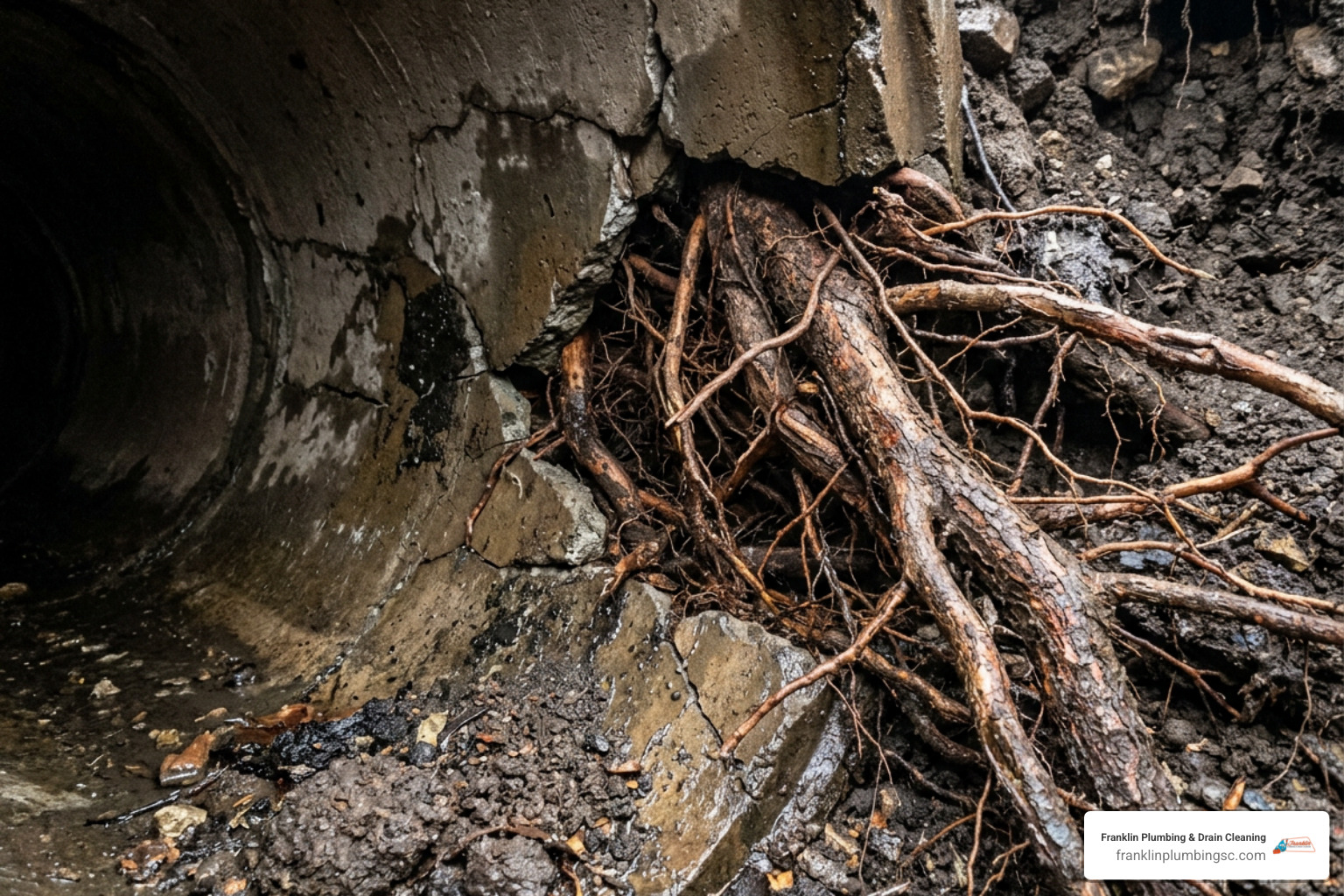
A sewer camera is the ultimate truth-teller when it comes to the health of your plumbing system. It reveals exactly what is causing your drains to run slowly or back up. Some of the most common issues uncovered during an inspection include:
- Tree Root Intrusion: Tree roots are drawn to the warmth and moisture inside sewer lines. They can enter through tiny cracks or loose joints, quickly growing into massive blockages that trap debris and cause severe backups.
- Cracked or Broken Pipes: Shifting soil, age, and external pressure can cause pipes to crack, fracture, or break entirely.
- Offset Pipe Joints: When the ground shifts, individual sections of pipe can become misaligned. This creates an “offset” joint where waste can catch, leading to blockages and water leaks into the surrounding soil.
- Pipe Bellies: A pipe belly is a sunken section of the sewer line caused by soil settling. Gravity-fed waste pools in these low spots, leading to chronic clogs and standing water.
- Severe Corrosion: Older pipe materials degrade over time. A camera can show whether the pipe walls are thinning, scaling, or collapsing.
If you suspect your system is struggling, keeping an eye out for the common signs of compromised sewer lines can help you take action before a minor leak becomes a major plumbing emergency.
Identifying Structural Damage and Pipe Material Failures
Different pipe materials fail in different ways, and a camera inspection is the best way to identify what your sewer line is made of and how well it is holding up. Older homes in Columbia, SC, and surrounding areas often feature outdated pipe materials, including:
- Terracotta Clay: Highly susceptible to cracking and extremely vulnerable to tree root intrusion at the joints.
- Cast Iron: Prone to internal rusting, scaling, and eventual bottom-channel wear, where the bottom of the pipe completely corrodes away.
- Orangeburg (Bituminized Fiber): Made of wood pulp and coal tar, these pipes behave like wet cardboard over time, flattening and collapsing under the weight of the earth.
Understanding your pipe material is critical because the effects of South Carolina soil on your sewer lines can accelerate structural damage. The sandy clay soils common in our region expand and contract with moisture changes, putting immense physical stress on aging underground pipes.
Spotting Blockages, Grease Buildup, and Foreign Objects
Not all sewer line issues are structural. Many are caused by what goes down the drains. Over years of use, grease, hair, soap scum, and scale build up on the inner walls of your pipes, narrowing the passage and slowing water flow.
A camera inspection can easily differentiate between a soft blockage (like grease buildup) and a hard blockage (such as a flushed foreign object or a collapsed pipe). This distinction is incredibly important because it determines the correct cleaning method. For example, grease buildup is best treated with professional hydrojetting, while a structural collapse will require pipe repair or replacement.
By catching sewer line problems early, you can address minor build-ups before they turn into complete sewer backups that damage your flooring, drywall, and personal property.
When to Schedule a Sewer Camera Inspection for Your Property
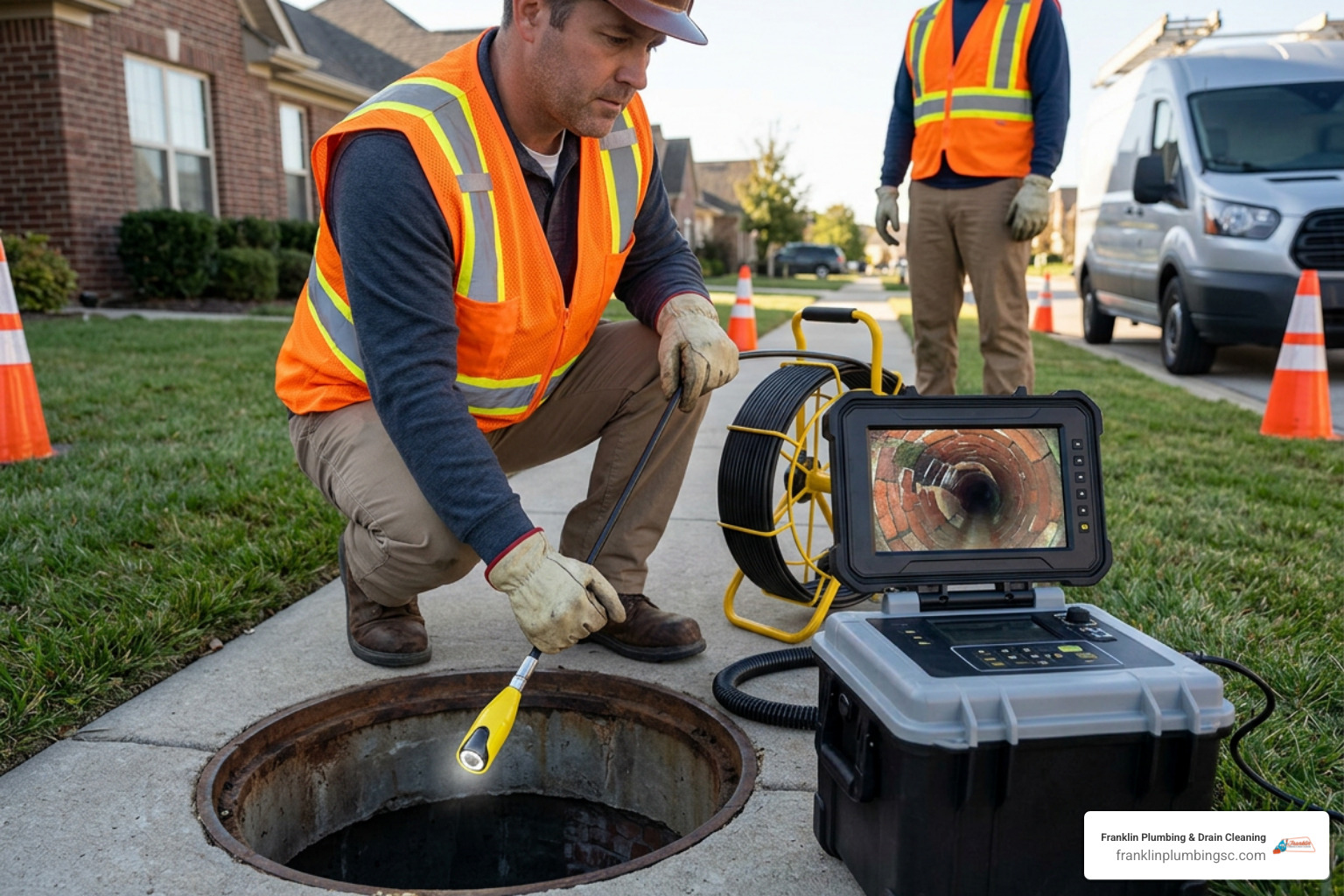
It is easy to adopt an “out of sight, out of mind” attitude toward your sewer line. However, scheduling a camera inspection at the right time can save you from messy cleanups and expensive repairs. You should schedule an inspection if you experience any of the following warning signs:
- Multiple Slow Drains: If only one sink is slow, it is likely a localized clog. If your kitchen, bathrooms, and laundry drains are all sluggish, the issue is deep in your main sewer line.
- Recurring Backups: If you have to clear your main drain multiple times a year, a camera inspection is needed to find the root cause of the recurring blockage.
- Soggy Patches in the Yard: Unusually lush, green, or soggy areas in your lawn often indicate a cracked sewer line leaking nutrient-rich wastewater underground.
- Foul Odors: Persistent sewer gas smells inside your home or around your yard suggest a crack or break in your drainage venting or main line.
For proactive property owners, following a structured homeowner’s sewer line maintenance guide is an excellent way to keep your entire system running smoothly year after year.
Residential vs Commercial Sewer Line Inspections
While the basic technology remains the same, there are significant differences between residential and commercial sewer inspections. Residential lines are typically shorter, simpler, and run directly from the home to the municipal main or a septic tank.
Commercial sewer lines, however, face much higher demands. Businesses like restaurants, schools, and apartment complexes deal with heavy daily usage, grease trap runoff, and complex multi-story drainage networks. For these properties, regular camera inspections are an essential part of preventative maintenance. They help business owners avoid sudden, costly closures due to sewer backups, ensure compliance with local health codes, and support long-term capital planning for property maintenance.
Why You Need a Sewer Camera Inspection Before Buying a Home
Buying a home is one of the largest financial investments you will ever make. While a standard home inspector will check that the toilets flush and the faucets run, they do not inspect the underground sewer line.
Skipping a sewer scope during a real estate transaction is a major risk. If the home has a collapsed pipe or severe root intrusion under the yard or driveway, you could inherit a repair bill costing thousands of dollars immediately after closing.
Investing in a pre-purchase sewer camera inspection provides peace of mind and valuable negotiation leverage. If defects are found, you can request that the seller repair the line before closing or credit you the cost of the repair. It is a simple step that helps get sewer maintenance and repair myths uncovered before you sign on the dotted line.
The Benefits of Camera Inspections vs Traditional Methods
Historically, diagnosing an underground pipe issue was a destructive, expensive process. Plumbers had to rely on “exploratory digging,” which involved tearing up lawns, driveways, and landscaping just to find where a pipe was leaking or collapsed. Today, video technology has completely changed how we handle diagnostics.
| Diagnostic Feature | Sewer Camera Inspection | Traditional Exploratory Digging |
|---|---|---|
| Property Damage | None. Non-invasive cleanout access is used | High. Requires digging trenches in yards or driveways |
| Accuracy | 100% visual precision with exact depth and location | Variable. Relies on estimation and trial-and-error digging |
| Time Required | 30 to 60 minutes for a complete diagnosis | Days of excavation and backfilling |
| Cost | Minimal diagnostic fee | Highly expensive due to labor and property restoration |
| Documentation | HD video footage and photos provided to the client | None. Just a pile of dirt |
Choosing a camera inspection means choosing a faster, cleaner, and more affordable path to solving your plumbing problems. If repairs do turn out to be necessary, having a clear visual map of the issue makes planning sewer line repair in Columbia, SC a straightforward process.
Precise Location Tracking with 512Hz Sonde Locators
One of the greatest advantages of modern sewer cameras is their ability to pinpoint the exact location of underground defects. Many professional-grade systems, such as a self-leveling drain camera with 512Hz transmitter, feature a built-in sonde transmitter inside the camera head.
As the camera travels through the pipe, this sonde emits a continuous 512Hz radio signal. Up on the surface, the technician uses a handheld receiver to track this signal. This allows us to determine the camera’s exact location and depth down to the inch.
Instead of digging up your entire yard to replace a sewer line, we can locate the exact spot where a pipe is broken, mark the grass, and perform a highly targeted spot repair. This saves you time, preserves your landscaping, and significantly reduces labor costs.
Post-Repair Verification and Documentation
A sewer camera is not just a diagnostic tool; it is also a tool for quality assurance. After a plumbing team clears a severe blockage or completes a pipe repair, running the camera through the line a second time verifies that the work was done perfectly.
This post-repair verification provides valuable peace of mind. It proves that the root intrusion has been completely removed, the new pipe sections are properly aligned, and the water flow is fully restored.
Furthermore, having saved video documentation is incredibly useful for insurance claims, real estate records, or municipal permits, giving you clear proof of the health of your home’s infrastructure.
What to Expect: Process, Timeframe, and Cost Factors
Knowing what to expect during a professional sewer camera inspection can make the process smooth and stress-free. When our licensed technicians arrive at your property, they will follow a clean, structured process:
- Locate the Cleanout: We find the best cleanout access point to ensure a smooth, direct run into your main line.
- Insert the Camera: We feed the high-definition camera into the pipe, adjusting the LED lighting for optimal visibility.
- Perform the Scan: We carefully navigate the camera through the system, watching the real-time monitor for structural issues, blockages, or scale.
- Pinpoint and Mark: If we find a problem, we use our electronic locator to mark the surface location and depth.
- Review the Findings: We show you the live or recorded footage, walk you through our findings, and discuss your repair or maintenance options.
How Long Does a Typical Inspection Take?
A standard sewer camera inspection of a single residential line is remarkably quick. For a line that is easily accessible and in relatively good condition, the actual camera run can take as little as 10 to 15 minutes.
However, the total appointment time typically ranges from 30 to 60 minutes. This additional time allows the technician to set up the equipment, locate the cleanout, perform surface tracking if a defect is found, and review the video footage with you.
If the line is completely blocked by standing water, thick grease, or collapsed debris, the camera may not be able to pass. In these cases, we may need to clear the line using a drain snake or hydrojetter before we can complete a full visual inspection.
Understanding the Cost Factors of Sewer Diagnostics
While a sewer camera inspection is highly affordable, the exact price of the service can vary based on several key factors:
- Accessibility of the Line: If your home has an easily accessible outdoor cleanout, the job is fast and straightforward. If the technician has to pull a toilet or climb onto your roof to access a vent stack, the increased labor will affect the cost.
- Length and Condition of the Pipe: Shorter, simpler residential runs are less expensive to inspect than long, complex commercial lines that require heavy-duty push cables and advanced tracking.
- Line Clearness: If the pipe is filled with thick, murky wastewater, it may require hydrojetting first so the camera can actually see the pipe walls, which adds to the overall service cost.
Because these variables exist, homeowners should request a professional estimate for accurate pricing tailored to their specific property and plumbing setup.
Frequently Asked Questions about Sewer Camera Inspections
What is a sewer camera inspection?
A sewer camera inspection is a non-invasive diagnostic service where a flexible, high-definition camera is fed into your underground drainage pipes. It transmits real-time video to a monitor, allowing plumbers to visually inspect the interior condition of your pipes without any digging.
How much does a sewer camera inspection cost?
Sewer camera inspection pricing can vary depending on several factors, including the length of the line, pipe accessibility, and whether the line must be cleared first. On average, standard residential inspections range from $100 to $600. For an accurate price, it is best to request a professional estimate.
Can a sewer camera detect leaks?
A sewer camera cannot directly detect active water leaks, but it excels at showing the physical defects that cause them. It clearly reveals cracks, broken joints, pipe corrosion, and separations where water is likely escaping into the surrounding soil.
Will a camera inspection clear a clogged sewer line?
No, a camera inspection is strictly a diagnostic tool and will not clear a clog. However, it is an essential first step. It shows technicians exactly what is causing the clog so they can choose the most effective clearing method, such as hydrojetting or professional drain snaking.
How deep can a sewer camera go?
Most residential sewer cameras have push cables ranging from 100 to 300 feet in length, which is more than enough to reach from a home to the municipal main sewer line. Specialized commercial systems can extend up to 500 feet or more for deep, complex systems.
Do I need a cleanout for a sewer camera inspection?
While having an easily accessible cleanout is ideal, it is not always mandatory. If your property does not have a cleanout, technicians can often access the sewer line by temporarily removing a toilet or feeding the camera through a roof vent stack.
Can a sewer camera see through dirty water?
Sewer cameras cannot see through thick, muddy, or heavily soiled water. If your sewer line is completely backed up with standing, murky wastewater, the technician will typically need to clear the blockage first so the water can drain before performing a clear visual inspection.
How long does a sewer camera inspection take?
A standard residential camera inspection typically takes between 30 and 60 minutes. This includes equipment setup, navigating the camera down the line, locating any trouble spots, and reviewing the recorded video footage with the property owner.
Can a sewer camera detect collapsed pipes?
Yes, a sewer camera is highly effective at identifying collapsed pipes. If a pipe has suffered structural failure, the camera will show the collapsed section blocking the line, or the push rod will be physically unable to pass, indicating a major structural obstruction.
Should I get a sewer camera inspection before buying a house?
Absolutely. A pre-purchase sewer camera inspection is highly recommended for home buyers. It reveals hidden, underground plumbing issues—such as cracked pipes or root intrusion—before you close on the property, protecting you from unexpected and expensive repair bills.
Conclusion
Your underground sewer line is one of the most critical parts of your property’s infrastructure. Keeping it clean and structurally sound is essential for avoiding messy plumbing emergencies. Regular preventative maintenance, backed by advanced diagnostic technology, is the best way to ensure your system continues to run smoothly for years to come.
Whether you are dealing with chronic drain issues, preparing to buy a new home, or simply want the peace of mind that comes with a healthy plumbing system, professional diagnostics are the key. Contact the licensed, experienced team at Franklin Plumbing & Drain Cleaning today to schedule a professional sewer camera inspection and protect your home or business from unexpected pipe failures.

professional
drain cleaning

highly
recommended

through
repairs

quality
work