Water Heater Installation in Columbia, SC: Full Guide
Home »
When to Choose Professional Water Heater Installation in Columbia, SC
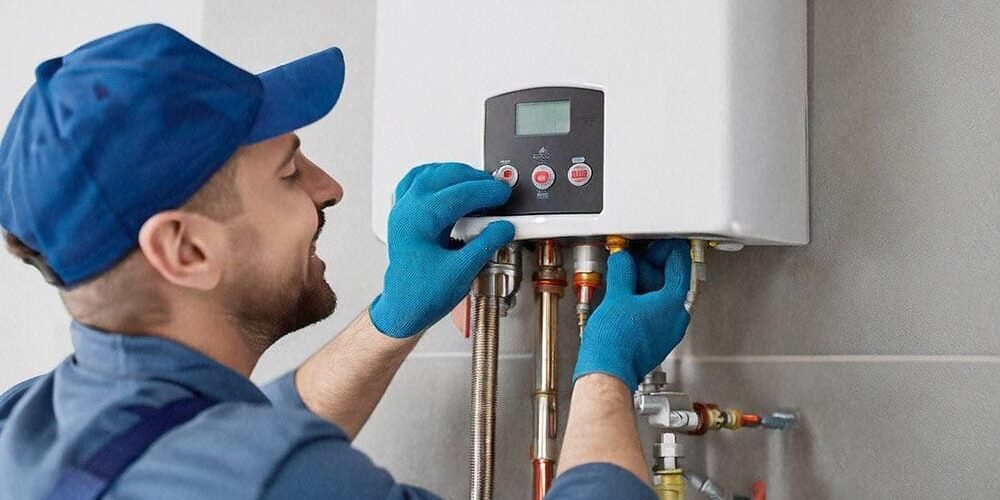
Water heater installation in Columbia, SC is one of the most common and most urgent home service needs in the Midlands. Whether your current unit is leaking, running out of hot water too fast, or simply too old to trust, the right installation can restore comfort and cut energy costs for years to come.
Here’s what Columbia homeowners need to know at a glance:
| Question | Quick Answer |
|---|---|
| When should I replace my water heater? | At 8-10+ years old, or if you notice leaks, rust, or rising energy bills |
| How long does installation take? | Typically 2 to 4 hours for a standard unit |
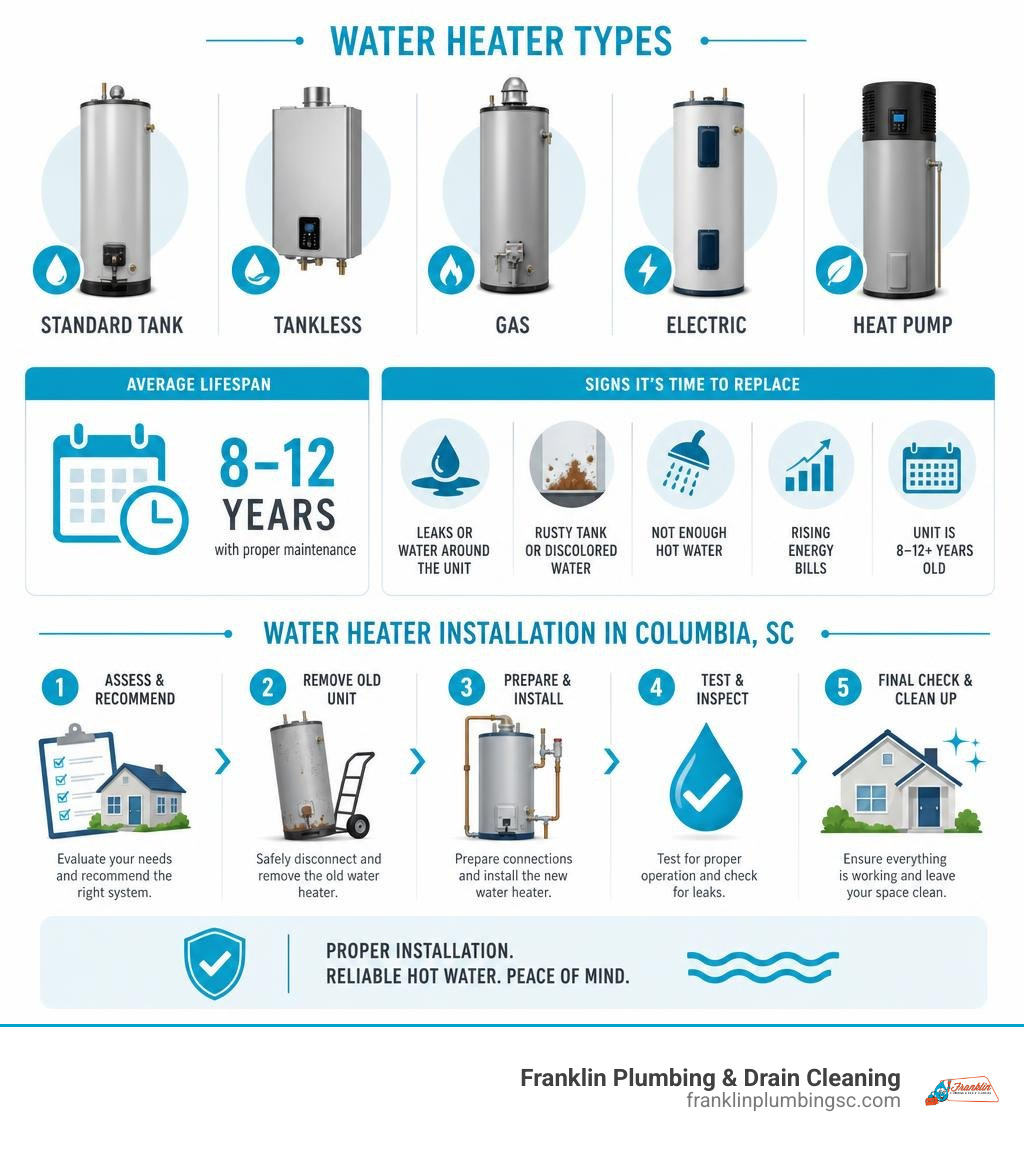
| What types are available? | Tank, tankless, gas, electric, heat pump |
| Do plumbers remove the old unit? | Yes, most professional plumbers haul away the old water heater |
| Is a permit required in Columbia, SC? | Yes, most water heater installations require a local permit |
| Same-day service available? | Yes, many Columbia plumbers offer same-day and emergency installs |
Hot water isn’t a luxury. It’s essential for showers, dishes, laundry, and basic daily routines. When your water heater fails, everything stops.
The problem is that most homeowners wait too long. Units over 10 years old are 60% more likely to leak or fail without warning. And in Columbia, hard water minerals accelerate wear even further, reducing system efficiency by up to 25%.
This guide covers everything you need to make a smart decision, from choosing the right type and size, to understanding local codes, water quality, and what a professional installation actually involves.
It is easy to take hot water for granted until you turn on the shower and get greeted by an icy blast. Often, your plumbing system will give you subtle warnings before it stops working entirely. Knowing when to invest in a brand new unit rather than pouring money into temporary fixes can save you from a major household disaster.
The typical water heater lifespan is between 8 and 12 years for traditional tank models. If your unit is approaching or has surpassed this decade mark, you are operating on borrowed time. As systems age, their internal components degrade, making them far less efficient and significantly more prone to sudden breakdowns. In fact, if your system is over 10 years old, you are 60% more likely to experience a sudden tank failure or severe leak.
When a tank begins to fail, system leaks are often the first physical sign. Water pooling around the base of your unit is a clear indicator of internal fractures. Because of the constant thermal expansion and contraction that occurs as water heats and cools, the steel tank eventually develops microscopic cracks. Once these cracks form, a complete rupture is often not far behind.
Another major warning sign is rusty water coming from your hot water taps. If your cold water runs clear but your hot water has a reddish or brown tint, the inside of your tank is likely corroding. This corrosion eventually eats through the metal, leading to catastrophic water damage in your home. If you notice these warning signs, it is highly recommended to read about the clear signs your water heater needs replacement to prevent an unexpected flood.
Recognizing Signs of Water Heater Failure
While a complete lack of hot water is an obvious problem, other signs of failure are more subtle. For instance, you might notice your shower water is consistently lukewarm, or that the hot water runs out much faster than it used to. This often happens because the lower heating element in an electric unit has burned out, or because thick layers of sediment have settled at the bottom of the tank, acting as a barrier between the burner and the water.
You should also pay close attention to any unusual sounds coming from your utility closet. Rumbling, popping, or banging noises are common indicators of heavy sediment accumulation. As water gets trapped beneath the hardened mineral crust at the bottom of the tank, it boils and steam pockets escape, creating loud knocking sounds. This sediment buildup forces your system to run longer and work much harder to heat the water, which rapidly accelerates the aging process of the tank.
If you notice these noises or experience inconsistent temperatures, scheduling a professional inspection can help you determine if you can get away with a repair or if it is time for a brand new system. For older units experiencing major component failures, choosing a professional replacement is often the most cost-effective long-term path compared to repeated visits for professional water heater repair in Columbia, SC.
The Risks of Delaying Water Heater Installation Columbia SC
Delaying a necessary water heater replacement is a gamble that rarely pays off. When a pressurized water tank ruptures, it does not just slowly drip; it can release dozens of gallons of water into your home within minutes. This can lead to extensive water damage to your floors, drywall, and personal belongings, resulting in thousands of dollars in restoration costs.
Furthermore, standing water and hidden dampness in utility closets or crawlspaces create the perfect breeding ground for mold growth. Mold can begin to develop within 24 to 48 hours of a water leak, presenting serious health risks to your family and requiring professional remediation.
By proactively replacing an old, struggling water heater, you avoid the stress of dealing with an emergency plumbing situation. If you do find yourself facing a sudden midnight flood, you will need to call for emergency plumbing services in St. Andrews, SC, or surrounding areas to shut down the water supply and mitigate the damage immediately.
Comparing Water Heater Types for Columbia Homes
If you have decided that it is time for a new water heater, you will need to choose the style that best fits your household’s daily habits, fuel sources, and energy goals. Modern plumbing technology offers several highly efficient options, each with its own set of advantages.
Choosing the right system involves looking at the energy ratings, fuel types (such as natural gas, propane, or electricity), and overall system capacity. To help you visualize the core differences, here is a quick comparison of the two most popular options:
| Feature | Traditional Tank Water Heaters | Tankless Water Heaters |
|---|---|---|
| Upfront Cost | Lower initial investment | Higher initial investment |
| Lifespan | 8 to 12 years | 20+ years |
| Space Required | Large footprint (requires a dedicated closet or space) | Compact, wall-mounted design |
| Hot Water Supply | Limited to tank size (can run out) | Continuous, on-demand supply |
| Energy Efficiency | Moderate (experiences standby heat loss) | High (only heats water when active) |
| Maintenance | Annual flushing recommended | Annual flushing and descaling required |
To dive deeper into how these systems compare and to explore all your options, you can read our comprehensive guide on the best types of water heaters for residential use.
Traditional Storage Tank Water Heaters
Traditional storage tank water heaters remain the most common choice for many homeowners in the Midlands because they are budget-friendly and highly reliable. These systems work by maintaining a dedicated reservoir of hot water (typically 40 to 50 gallons) at a constant temperature, ensuring it is ready the moment you open a tap.
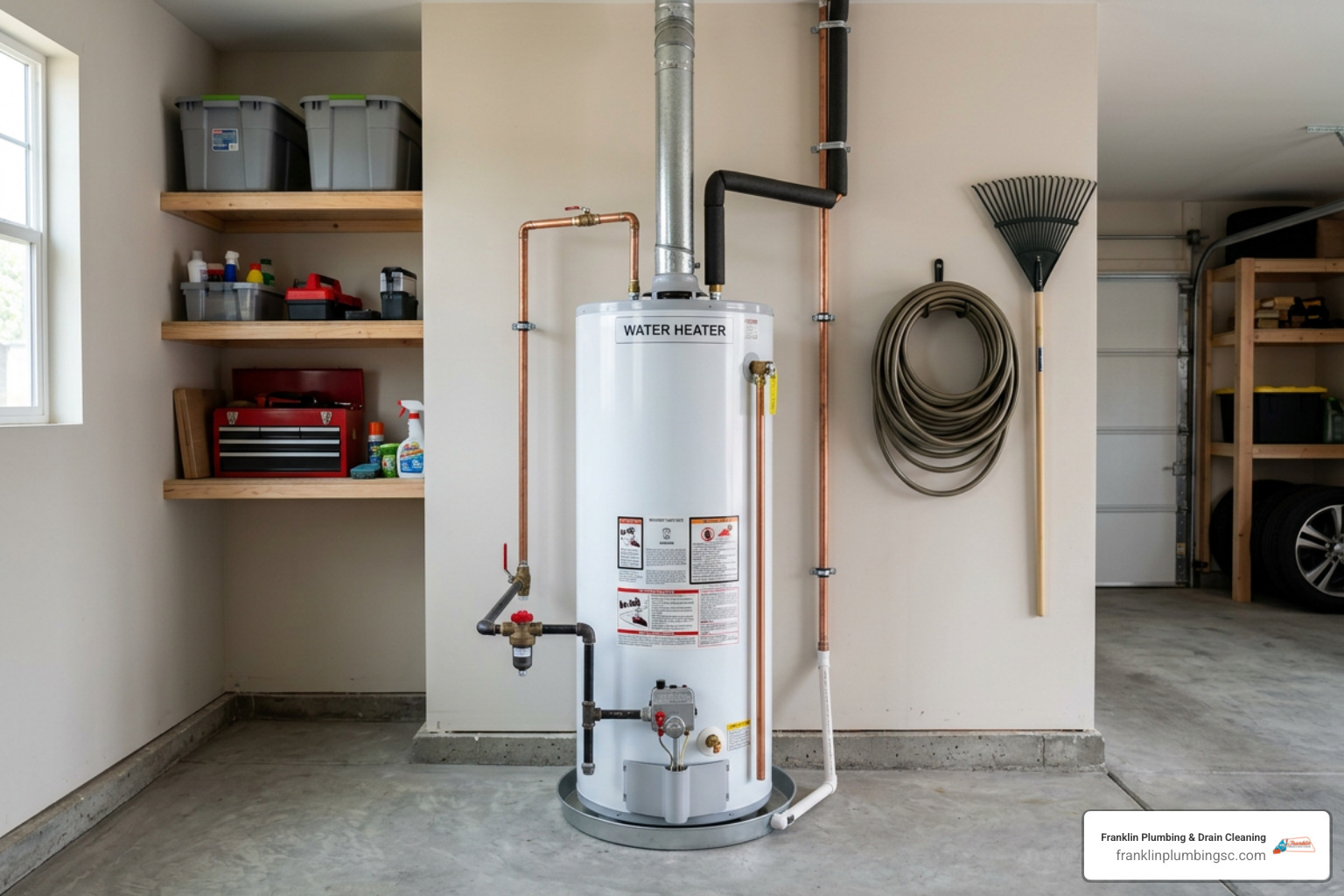
These units are available in both gas models and electric units. Gas models generally heat water much faster than electric models, making them excellent for busy households with high hot water demands. Electric models, while slightly slower to recover, are incredibly simple to install and do not require complex venting systems.
The primary drawback of a storage tank system is standby heat loss. Because the tank must keep the water hot 24 hours a day, even when you are asleep or at work, it continuously consumes energy. However, modern tanks are built with significantly better insulation than older models, helping to minimize this energy waste.
Tankless Water Heater Installation Columbia SC
For homeowners looking to maximize their energy savings and enjoy a continuous supply of hot water, investing in a tankless system is an exceptional upgrade. Unlike traditional units, tankless systems do not store hot water. Instead, they use high-powered burners or electric elements to heat the water instantly as it flows through the unit on-demand.
This on-demand heating process eliminates standby energy loss entirely, which can lead to substantial utility savings over time. Additionally, because there is no bulky tank, these compact units mount directly to the wall, freeing up valuable closet or garage space in your home.
By upgrading to energy-efficient tankless water heaters, you can enjoy back-to-back showers without ever running out of hot water. However, it is important to understand that these advanced systems are highly sophisticated. To keep your expectations realistic, it is wise to learn why tankless systems can still experience issues if they are not properly maintained or if they are exposed to harsh water conditions.
Heat Pump and Hybrid Systems
Another highly efficient option gaining popularity in South Carolina is the heat pump, or hybrid, water heater. Rather than generating heat directly through electric resistance elements, these advanced systems pull heat from the surrounding air and transfer it into the water tank.
Because transferring heat requires significantly less electricity consumption than creating it, hybrid water heaters are incredibly environmentally friendly and can reduce your water heating bills by up to 60% according to the U.S. Department of Energy. These systems perform exceptionally well in Columbia’s warm and humid climate, as they naturally dehumidify and cool the surrounding utility space while heating your water. While they require a larger upfront investment and need to be installed in spaces with adequate air volume, the long-term utility savings are unmatched.
Planning and Executing Your Water Heater Installation
A successful water heater installation requires careful planning long before the tools come out. Properly sizing the unit is critical; a system that is too small will leave your family shivering mid-shower, while an oversized unit will needlessly inflate your energy bills. Plumbers calculate your home’s peak water usage to determine the ideal gallon capacity for tank models or the necessary flow rate for tankless systems.
Placement is another vital factor. You must carefully consider where to place your water heater tank to ensure optimal performance, proper ventilation, and easy access for future maintenance.
Furthermore, professional plumbing work in Columbia, SC, must comply with strict local building codes and permit requirements. These regulations exist to ensure proper gas line connections, safe electrical wiring, correct venting of toxic combustion gases, and the installation of safety devices like thermal expansion tanks and temperature and pressure relief valves.
Impact of Columbia’s Water Quality on System Performance
One local factor that many homeowners overlook is Columbia’s water quality. Depending on your exact neighborhood, your water supply may contain varying levels of dissolved minerals like calcium and magnesium. When heated, these minerals crystallize and settle out of the water, creating a hard mineral scale.
Over time, this scale accumulates on heating elements and coats the bottom of traditional tanks. This mineral barrier acts as an insulator, forcing the heating elements to run hotter and longer to warm the water. This hard water scale can reduce your water heater’s operating efficiency by up to 25%, driving up your monthly utility costs and causing the metal tank to overheat and fail prematurely.
To combat this, many homeowners choose to install water softeners alongside their new water heaters. If you live in areas prone to mineral buildup, reaching out for professional water heater services in Cayce, SC, or West Columbia, SC, can help you find the right filtration or softening solutions to protect your plumbing investments.
What to Expect During the Professional Installation Process
When you hire a licensed plumbing contractor to replace your water heater, the entire process is handled safely and efficiently. A professional installation typically begins with a thorough site evaluation to confirm that the existing gas, water, and electrical connections are up to par.
Once the assessment is complete, the technicians will safely shut off the water and fuel supplies, drain the old tank completely, and carefully disconnect and remove the old unit. The new system is then positioned, leveled, and securely connected to your home’s water lines, gas lines or electrical panels, and venting systems.
After completing the hookups, the plumbing team will fill the system, run comprehensive system testing to check for leaks, and perform safety inspections on all relief valves and venting paths. Relying on a professional team for comprehensive plumbing services ensures that your system is fully code-compliant and operating at peak performance. Homeowners looking for reliable plumbing solutions in Forest Acres, SC, or Irmo, SC, can rest easy knowing that every detail of the installation is handled with precision.
Post-Installation Maintenance and Care
To protect your investment and ensure your new system enjoys a long, trouble-free lifespan, establishing a regular maintenance routine is essential. The most important maintenance task is performing an annual flushing of the tank. Flushing drains out the accumulated sediment before it can harden into scale, keeping your heating efficiency high and your utility bills low.
Additionally, traditional tanks rely on an internal sacrificial anode rod to protect the steel tank from rusting. This rod attracts corrosive elements in the water, actively rusting so that your tank does not. You should have this rod inspected every two to three years and replaced once it has depleted.
For a complete breakdown of how to keep your new system running like new, refer to our expert guide on how to maintain your water heater. Taking these simple steps will greatly extend your system’s longevity and prevent unexpected breakdowns.
Frequently Asked Questions About Water Heater Installation
How long does a professional water heater installation take?
A standard, professional installation for a traditional storage tank water heater typically takes between 2 to 4 hours. This timeline includes draining and removing the old unit, positioning the new tank, making all water, gas, or electrical connections, and testing the system. Replacing a system with a tankless unit may take longer if gas lines or venting systems need to be upgraded.
What is the typical lifespan of a traditional tank water heater?
Most traditional tank water heaters last between 8 to 12 years. Factors such as local water hardness, usage demands, and how often the tank is flushed will heavily influence the system’s overall longevity.
How does hard water affect my new water heater?
Hard water contains dissolved minerals that create scale buildup inside your water heater. This mineral layer coats the heating elements and the bottom of the tank, acting as an insulator that reduces heating efficiency by up to 25% and causes the system to overheat and wear out prematurely.
Do local plumbers handle the disposal of the old water heater?
Yes, professional plumbing companies handle the complete removal and eco-friendly disposal of your old water heater as part of their standard installation service, ensuring the old unit is recycled or disposed of in compliance with local environmental regulations.
Are there local permits required for water heater installation in Columbia, SC?
Yes, local building codes in Columbia, SC, and surrounding municipalities require a plumbing permit for water heater installations. This ensures that the installation is officially inspected and meets all safety standards for gas connections, electrical wiring, and venting.
What are the main benefits of upgrading to a tankless water heater?
Upgrading to a tankless system provides an endless supply of hot water on-demand, eliminates standby energy loss to lower your utility bills, and saves valuable home space due to its compact, wall-mounted design. Tankless units also boast a lifespan of up to 20 years or more.
How often should a tankless water heater be flushed?
Most manufacturers recommend having a tankless water heater professionally flushed and descaled once every year. If you have a whole-house water softener installed, you may be able to extend this maintenance window to once every two years.
Can I convert from an electric water heater to a gas model?
Yes, you can convert from electric to gas, but it requires professional installation of a new gas line, proper venting through your roof or exterior wall, and access to a reliable gas supply. A licensed plumber can evaluate your home to see if a fuel conversion is feasible.
What should I do if my water heater starts leaking?
If your water heater is actively leaking, immediately turn off the power supply at your circuit breaker for electric models, or turn the gas control valve to the off position for gas models. Next, close the cold water shut-off valve located on top of the unit to stop the flow of water, and contact a licensed plumber right away.
How do I choose the right size water heater for my household?
To size a traditional tank, plumbers calculate your household’s peak hour demand to determine if a 40, 50, or 75-gallon tank is required. For tankless systems, sizing is based on the maximum flow rate needed to run multiple hot water fixtures simultaneously.
Conclusion
Investing in a professional water heater installation is one of the best ways to protect your home’s plumbing system, lower your monthly energy bills, and ensure your family enjoys constant, reliable comfort. Whether you choose a dependable traditional storage tank or decide to upgrade to an ultra-efficient tankless system, having the job completed by licensed experts is key to long-term performance and safety.
At Franklin Plumbing & Drain Cleaning, we are proud to serve homeowners across the Midlands, including Columbia, SC, West Columbia, SC, Lexington, SC, Irmo, SC, and Chapin, SC. Our team of fully licensed, background-checked, and highly experienced technicians is dedicated to providing top-tier craftsmanship backed by our 100% satisfaction guarantee.
If you are ready to experience the comfort of endless hot water and lower your energy costs, let our experienced team help you find the perfect system. Schedule a tankless water heater installation with Franklin Plumbing & Drain Cleaning today to get started.

professional
drain cleaning

highly
recommended

through
repairs

quality
work