7 Signs Your Water Heater Needs to Be Replaced Soon
Home »
Why Knowing the Signs You Need a New Water Heater Can Save You Thousands
Knowing the signs you need new water heater equipment before it fails completely can be the difference between a planned upgrade and a four-figure emergency.
Most water heaters don’t quit without warning. They send signals for months, sometimes years. The problem is that most homeowners don’t recognize those signals until they’re standing in a cold shower or, worse, dealing with a flooded garage.
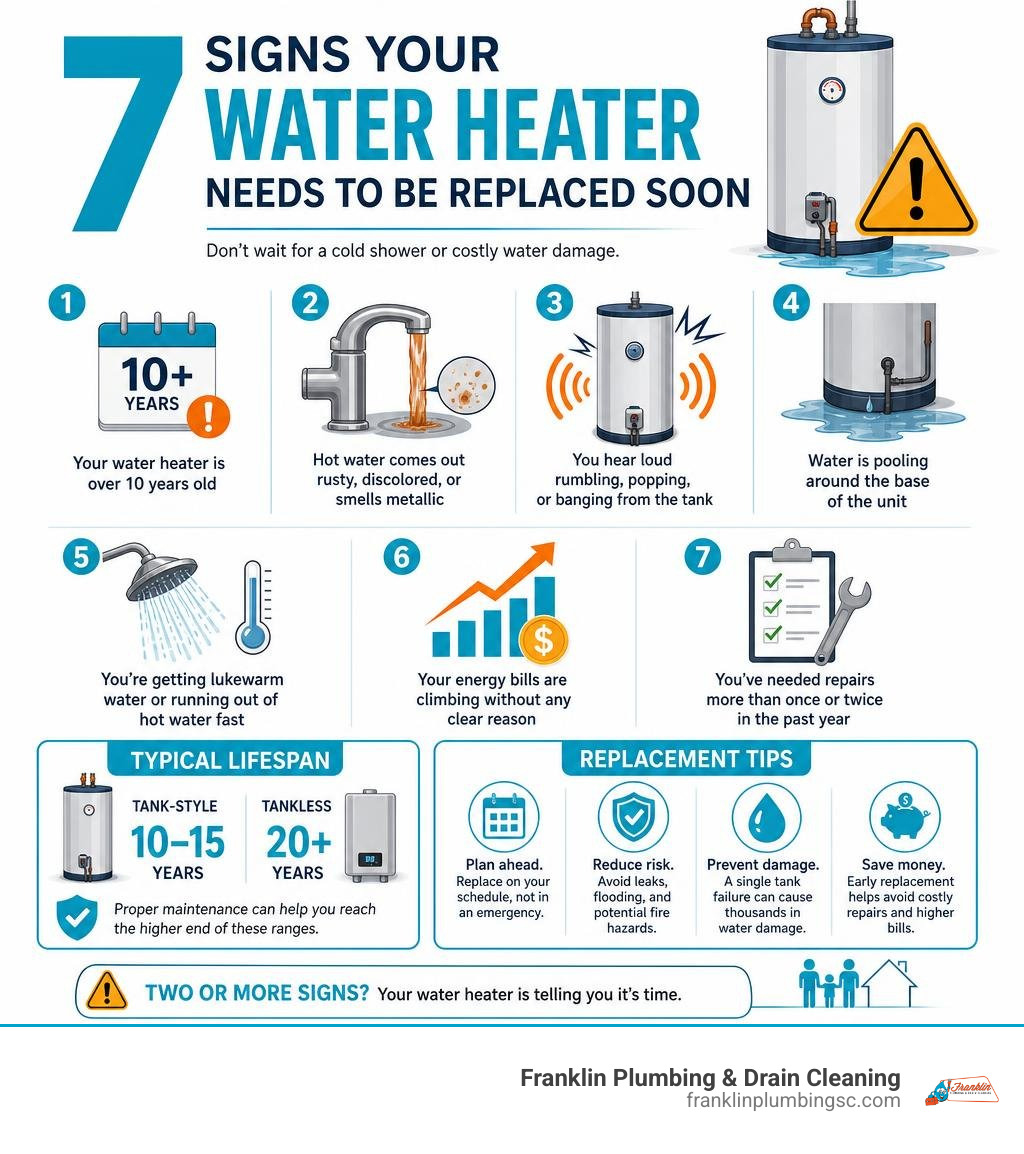
Here’s a quick summary of the warning signs to watch for:
- Your water heater is over 10 years old
- Hot water comes out rusty, discolored, or smells metallic
- You hear loud rumbling, popping, or banging from the tank
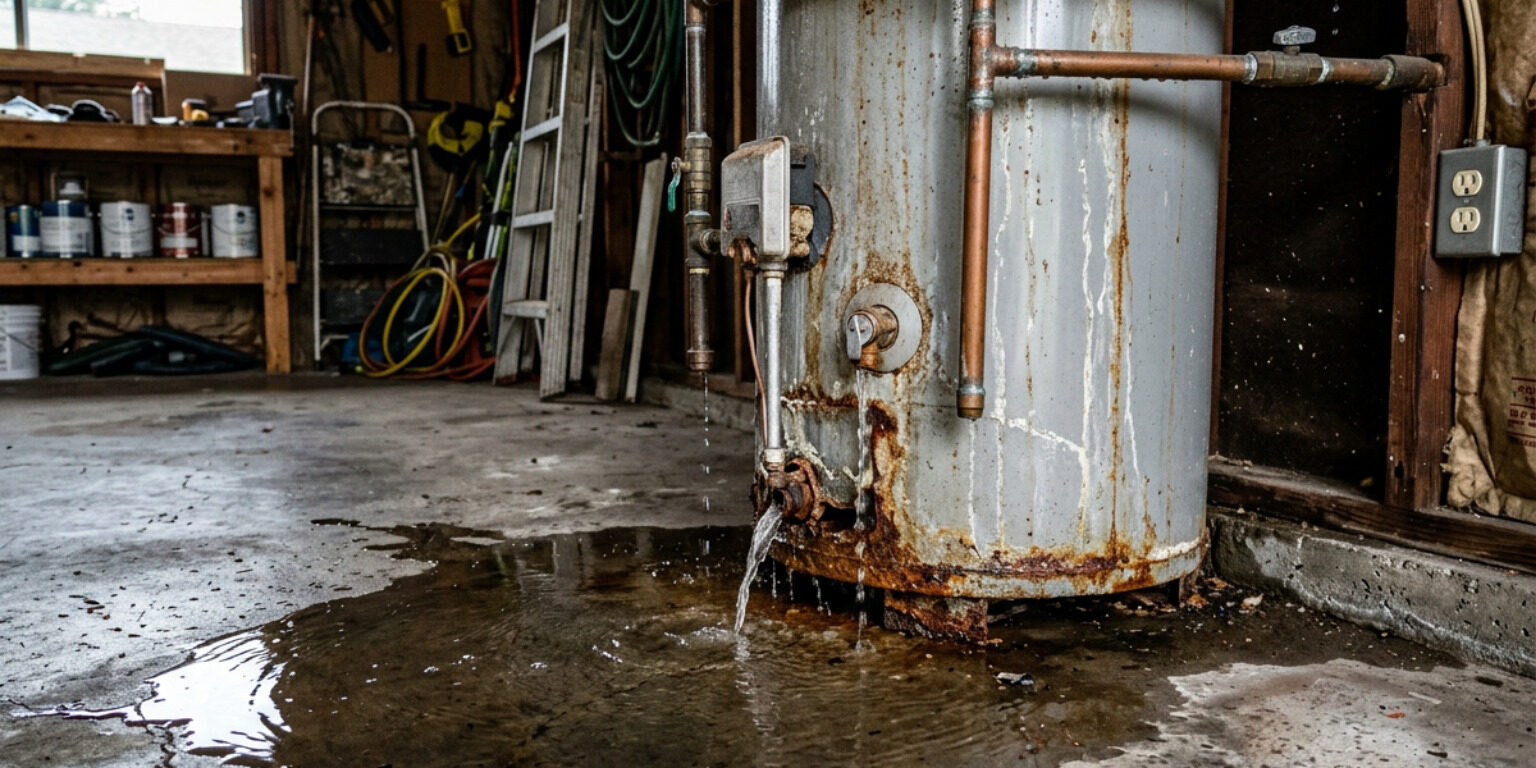
- Water is pooling around the base of the unit
- You’re getting lukewarm water or running out of hot water fast
- Your energy bills are climbing without any clear reason
- You’ve needed repairs more than once or twice in the past year
Any one of these signs deserves attention. Two or more showing up at the same time? That’s your water heater telling you it’s time.
Tank-style water heaters typically last 10 to 15 years. Tankless models can reach 20 years or more with proper maintenance. But age alone isn’t the only factor. Sediment buildup, a depleted anode rod, or a small internal crack can shorten that lifespan significantly.
The stakes are real. Water heater failures cause an estimated 4,200 residential fires annually in the U.S., and a single tank rupture can result in $4,000 to $7,000 in water damage and cleanup costs.
The good news: if you catch the signs early, you can replace your unit on your own schedule, not in a panic.
1. Your Water Heater is Past Its Expected Lifespan
Like any household appliance, water heaters have a finite shelf life. If you have a traditional tank water heater, you can expect it to work reliably for about 10 to 15 years. Tankless systems are more durable, often lasting 20 years or more because they do not constantly hold water under high pressure.
However, the clock starts ticking from the day the unit is manufactured, not the day it is installed. If you are not sure how old your system is, you can easily find out by looking at the manufacturer label, also known as the data plate, located on the side of the tank.
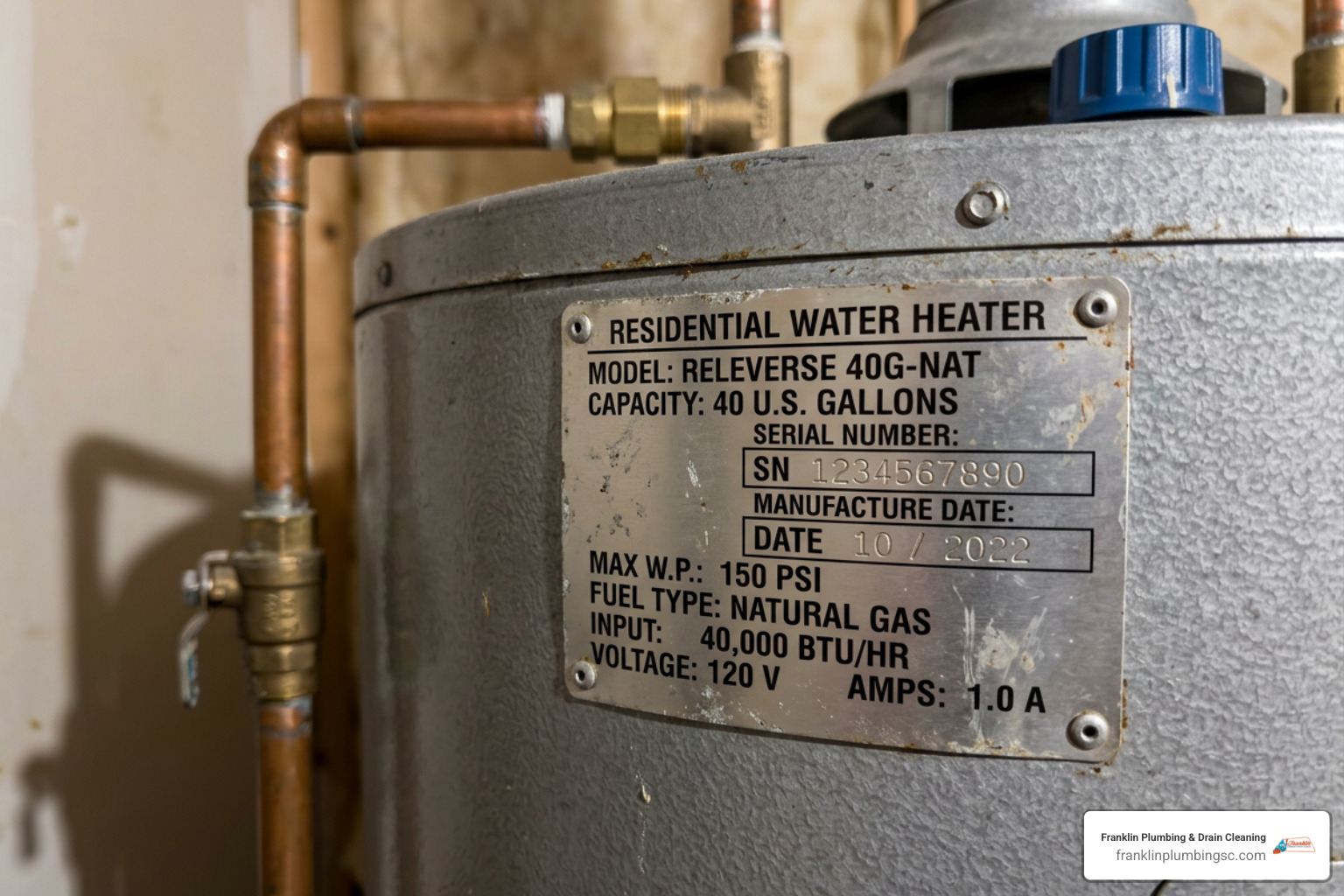
To decode the serial number and determine the manufacturing date, look at the first few characters. For most major brands, the first letter represents the month (A for January, B for February, and so on), while the next two digits represent the year. For example, a serial number starting with “F14” means the unit was manufactured in June 2014. As of June 2026, that water heater is 12 years old and is rapidly approaching the end of its reliable service life.
According to official ENERGY STAR guidelines on water heater replacement, homeowners should strongly consider replacing any storage water heater that is more than 10 years old. Waiting for the system to burst before acting can lead to costly emergency plumbing rates and extensive property damage. Planning your upgrade ahead of time allows you to research your options, such as switching to a modern tankless model or choosing the best types of water heaters for your household size and budget.
2. Rusty or Discolored Hot Water
When you turn on the hot water faucet in your bathroom or kitchen, the water should run crystal clear. If it comes out looking brown, rusty, or slightly yellow, it is a major warning sign.

To determine if the problem is coming from your water heater or your main plumbing lines, run the cold water for a minute. If the cold water is clear but the hot water is rusty, the problem is localized inside your water heater tank. This discoloration is caused by internal corrosion.
Every tank-style water heater is equipped with a sacrificial anode rod. This rod is made of magnesium or aluminum and is designed to attract corrosive elements in the water, rusting away so that the steel tank itself does not corrode. However, these rods only last about three to five years. Once the anode rod is completely depleted, the corrosive elements start attacking the steel walls of the tank.
Once the tank itself begins to rust from the inside out, there is no way to repair it. It is only a matter of time before the rusted metal thins out and develops a major leak. Learning how to maintain your water heater by checking and replacing the anode rod every few years can prevent this early death, but if the rust has already spread to your hot water supply, replacement is usually your only safe option.
3. Loud Rumbling, Popping, or Banging Noises
As water heaters age, they inevitably accumulate sediment at the bottom of the tank. This is especially true in areas with moderate to high water hardness. Calcium, magnesium, and other minerals settle out of the water and form a thick layer of scale at the bottom of the tank.
When the burner or heating element fires up, it has to heat this layer of sediment before it can heat the water. This causes several major issues:
- Trapped Steam: Water gets trapped underneath the hardened sediment layer. As it boils, it turns to steam and escapes, creating loud popping, rumbling, or banging sounds.
- Tank Bottom Warping: The constant, intense heat trapped beneath the sediment can cause the steel at the bottom of the tank to overheat, warp, and weaken.
- Reduced Heating Efficiency: The sediment acts as an insulator, forcing your system to run longer and work much harder to heat the water.
If you hear these noises, you can try flushing the tank to remove the sediment. However, if the sediment has been baking on the bottom of the tank for years, it can harden into a concrete-like crust. In older units, flushing this heavy sediment can actually dislodge a plug that was keeping a hairline crack from leaking, turning a noisy water heater into a flooded room. If flushing does not resolve the noise, it is time to call for professional water heater repair in Columbia, SC to evaluate whether a full replacement is required.
4. Water Pooling Around the Base of the Tank
Finding water pooling around the base of your water heater is an urgent issue that requires immediate attention. Before you panic, it is important to distinguish between a minor fitting leak and a catastrophic tank fracture.
To diagnose the source of the leak, dry the area completely with a towel and monitor the unit closely for 30 minutes.
- Fitting Leaks: If water is dripping from the cold water inlet, the hot water outlet, or the temperature and pressure relief valve, the issue is often a loose connection or a faulty valve. These are usually easy, inexpensive repairs.
- Condensation: Sometimes, heavy hot water usage on a cold day can cause temporary condensation to drip down the sides of the tank. This is normal and will dry up on its own.
- Tank Fractures: If the water is slowly seeping directly from the bottom seam of the tank or from beneath the outer metal shell, the internal glass lining of the tank has cracked.
Metal expands when heated and contracts when it cools. Over thousands of heating cycles, this constant thermal expansion and contraction can cause microscopic fractures in the tank. Once the inner steel shell cracks, it cannot be welded or patched. You must turn off the power or gas supply, shut off the cold water inlet valve, and call for emergency water heater repair in Lexington, SC to replace the system before the crack opens up completely and floods your home.
5. Inconsistent Temperatures and Signs You Need New Water Heater
If your showers are starting warm but turning icy cold within minutes, or if the water never seems to get hot enough, your water heater is struggling to keep up with demand.
In electric models, inconsistent temperatures are often caused by a failed heating element or a faulty thermostat. Most electric units have an upper and a lower heating element. If the lower element burns out, the water at the bottom of the tank remains cold, leaving you with only a fraction of your normal hot water supply. In gas models, a failing gas valve, a dirty burner, or a broken thermocouple can cause the flame to go out, resulting in lukewarm water.
However, if you have replaced the heating elements or thermostats and still find yourself running out of hot water, sediment buildup may have reduced the actual physical capacity of your tank. A tank filled with several inches of sediment simply cannot hold as much water as it used to. When you are experiencing these performance drops, understanding when to replace your water heater can prevent you from wasting money on temporary repairs for a dying system.
6. Rising Energy Bills and Decreased Efficiency
Water heating is the second largest energy expense in most homes, typically accounting for 14 to 18 percent of your average utility bills. Because your water heater works silently in the background, it is easy to ignore, until you notice your gas or electric bills creeping up month after month without any change in your household usage.
As a water heater ages and accumulates sediment, its energy factor decreases. The system has to run much longer to heat the same amount of water, consuming more energy and suffering from increased standby heat loss.
Upgrading to a modern, energy-efficient system can pay for itself over time. For example, an ENERGY STAR certified electric heat pump water heater can save a household of four more than $330 per year on electric bills compared to a standard electric model, translating to over $3,530 in savings over its lifetime. Additionally, you may qualify for local utility rebates for high-efficiency water heaters that can significantly lower the upfront cost of your new installation.
7. Frequent Repairs and Structural Corrosion
If you feel like you have your plumber on speed dial because your water heater keeps breaking down, it is time to look at the math. A good rule of thumb is the 50 percent rule: if a single repair estimate costs 50 percent or more of the price of a brand-new water heater, or if the cumulative cost of repairs over the last year exceeds that mark, replacement is the smarter financial move.
You should also inspect the physical exterior of your unit. If you see visible rust, flaking metal, or corrosion around the seams, the burner chamber, or the bottom of the tank, the structural integrity of the system has been compromised.
Corrosion weakens the steel, making it unable to safely withstand the high pressure of your home’s plumbing system. While tankless water heaters do not have a large storage tank to rust out, they can still suffer from internal mineral scaling that damages the heat exchanger. If you are experiencing repeated breakdowns, it is helpful to learn about the common issues with tankless water heaters so you can make an informed decision between repairing your current unit or upgrading to a fresh, reliable system.
Repair vs. Replace: Making the Right Decision
Deciding whether to repair or replace your water heater does not have to be a guessing game. Use the comparison table below to weigh your options based on the age of your unit, the estimated repair costs, and the overall condition of your system.
| Factor | Consider Repair | Consider Replacement |
|---|---|---|
| System Age | Under 8 years old | Over 10 years old (tank) or 15 years old (tankless) |
| Repair Cost | Less than 50% of replacement cost | More than 50% of replacement cost |
| Leaking Status | Leak is from a loose fitting or valve | Leak is from the bottom seam of the tank |
| Water Quality | Clear water, temporary sediment | Constant rusty or discolored hot water |
| System Efficiency | Stable energy bills | Unexplained rise in monthly utility bills |
| Safety Concerns | None, system operates cleanly | Scorching water, tripping breakers, gas odors |
When planning a replacement, you should also consider where your new system will be installed. Proper placement can maximize performance and prevent future water damage. Take some time to review where to place your water heater tank to ensure your new unit is set up for maximum efficiency and accessibility.
Frequently Asked Questions About Signs You Need New Water Heater
FAQ 1: How long do tank-style and tankless water heaters typically last?
A traditional tank-style water heater typically lasts between 10 and 15 years under normal operating conditions. Tankless water heaters are more durable and can easily last 20 years or more because they only heat water on demand, reducing the constant wear and tear associated with holding hot water under pressure.
FAQ 2: What are the most common signs you need new water heater units?
The most common warning signs include water pooling around the base of the tank, rusty or discolored hot water, loud popping or rumbling noises, inconsistent water temperatures, and a system age of over 10 years.
FAQ 3: How do I identify the physical signs you need new water heater equipment?
Perform a physical inspection of the unit. Look for heavy rust or green corrosion on the brass fittings, flaking metal around the bottom seam of the tank, or signs of moisture and dampness on the outer metal jacket.
FAQ 4: How can I determine the age of my water heater using the serial number?
Find the manufacturer data plate on the side of the tank and locate the serial number. For most brands, the first letter represents the month of manufacture, and the next two digits represent the year. A serial number starting with “D15” would indicate April 2015.
FAQ 5: What causes rusty or discolored hot water?
Rusty hot water is typically caused by internal corrosion of the steel tank. This happens when the sacrificial anode rod has completely depleted, leaving the interior walls of the tank unprotected from the corrosive elements in your water.
FAQ 6: Why is water leaking from the bottom of my water heater?
A leak from the bottom of the tank usually indicates that the internal glass lining of the steel shell has fractured due to years of thermal expansion and contraction. This cannot be repaired and requires immediate replacement.
FAQ 7: What do rumbling or popping noises from the tank mean?
These noises indicate that a thick layer of mineral sediment has built up at the bottom of the tank. Water becomes trapped beneath this sediment layer, boils, and escapes, producing loud popping or banging sounds.
FAQ 8: Is it worth repairing a water heater that is over 10 years old?
Generally, no. If a tank-style water heater is over 10 years old and requires a major repair, investing money in it is usually a temporary fix. It is more cost-effective to replace the unit with a modern, energy-efficient model.
FAQ 9: What maintenance steps can extend a water heater’s lifespan?
To maximize the life of your water heater, flush the tank annually to remove sediment, inspect and replace the sacrificial anode rod every three to five years, and keep the temperature set to a maximum of 120 degrees Fahrenheit.
FAQ 10: What are the risks of delaying water heater replacement until catastrophic failure?
Delaying replacement can result in a sudden tank rupture, causing thousands of dollars in water damage, structural rot, and toxic mold growth. It can also lead to electrical hazards or fire risks, forcing you to pay emergency plumbing rates for a rushed installation.
Conclusion
If your water heater is showing any of these warning signs, do not wait for a major flood to take action. Replacing your aging or failing unit before it breaks down completely gives you the peace of mind that comes with a reliable, efficient hot water supply.
At Franklin Plumbing & Drain Cleaning, we are proud to serve homeowners throughout Columbia, SC, and surrounding areas like Lexington, SC, Irmo, SC, and Cayce, SC. Our licensed plumbers are dedicated to helping you find the perfect water heater for your home, backed by our 100 percent satisfaction guarantee. Whether you want to install a standard tank model or schedule professional tankless water heater services, our experienced team is ready to deliver the high-quality, trustworthy service you deserve.

professional
drain cleaning

highly
recommended

through
repairs

quality
work