Gas vs. Electric Water Heater: Which Saves More Long-Term?
Home »
The Gas vs. Electric Water Heater Decision That Affects Every Hot Shower
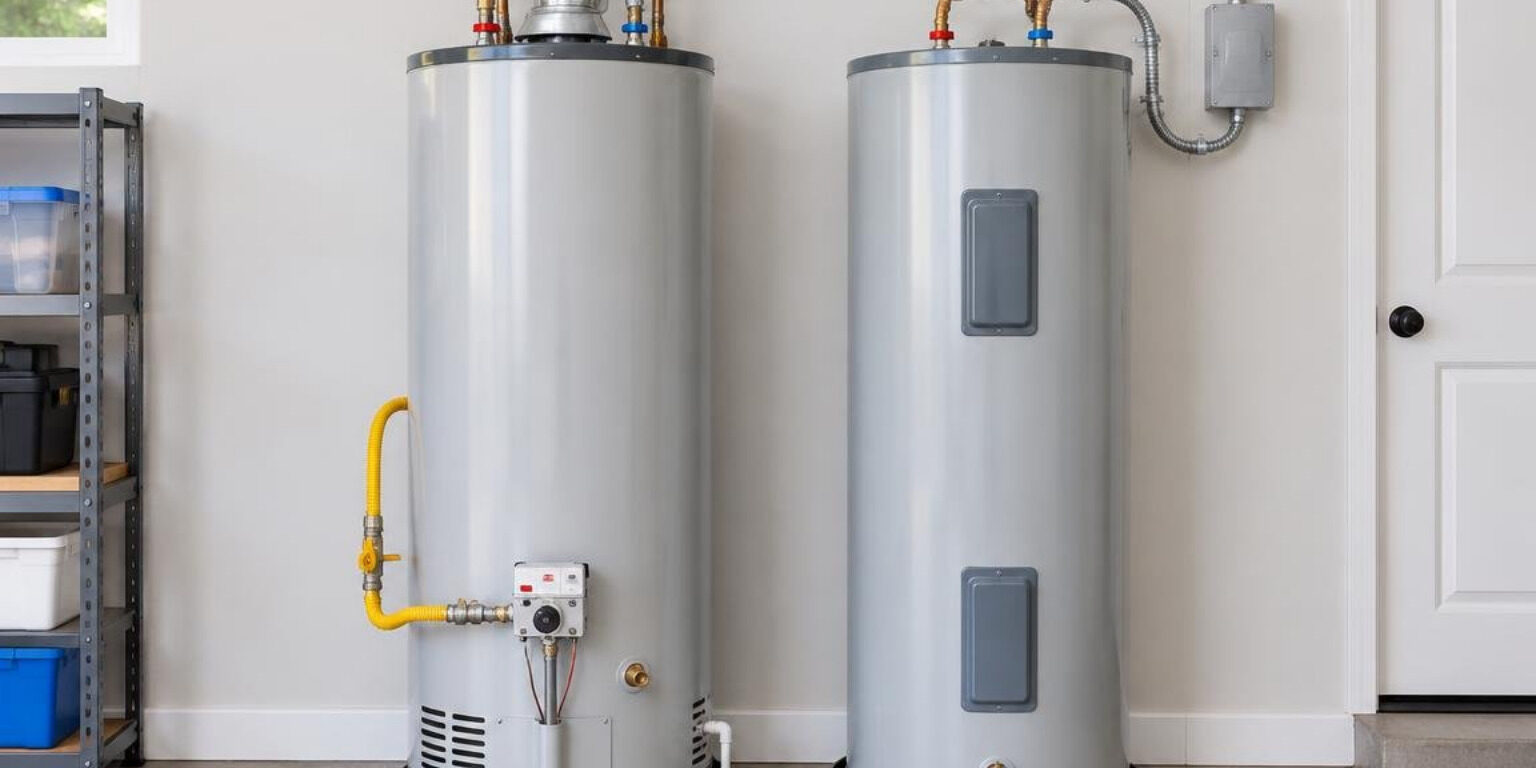
Choosing between a gas vs. electric water heater is one of the most significant decisions you will make for your home’s long-term comfort, daily convenience, and monthly utility budget. This single appliance is responsible for delivering the warm water needed for your morning showers, running the dishwasher, and cleaning your laundry. The choice you make impacts how quickly your system recovers after heavy use, what you will pay on your utility bills each month, and how many years the system will last before needing a replacement.
To help you make an immediate assessment, here is a quick breakdown of which system fits specific household needs:
| Your Situation | Best Choice |
|---|---|
| You already have an active gas line | Gas water heater |
| Your home is completely all-electric | Electric water heater |
| You want the lowest possible monthly bills | Heat pump water heater |
| You have a large family with high hot water demand | Gas water heater |
| You want the lowest upfront purchase cost | Electric water heater |
| You experience frequent electrical power outages | Gas water heater |
| You want the longest possible equipment lifespan | Electric water heater |
Neither system is a universal winner for every household. The ideal choice for your property depends heavily on your home’s existing utility infrastructure, the size of your family, local utility rates, and your long-term energy goals.
Water heating is typically the second-largest energy expense in the average American home, trailing only heating and cooling systems. Because this appliance consumes a significant portion of your monthly energy budget, making an informed decision is critical. A well-chosen system will provide reliable comfort and manageable operating costs for the next 10 to 15 years.
In this comprehensive guide, we will explore how each water heater type operates, compare their upfront and long-term costs, analyze their performance under heavy demand, and help you determine when it makes the most sense to switch systems.
Understanding the Gas vs Electric Water Heater: How They Work
To make the best decision for your home, it is essential to understand the fundamental operational differences between these two systems. While both types are designed to deliver hot water to your plumbing fixtures, they rely on entirely different fuel sources, heating mechanisms, and energy transfer methods.
A traditional storage tank water heater keeps a large volume of water hot and ready for use at all times. However, the specific method used to heat that water changes how the unit is constructed, how it must be installed, and how it performs during periods of high demand.
Heating Methods of a Gas vs Electric Water Heater
The core difference between these systems lies in how they generate heat.
Gas water heaters rely on a combustion process. A burner at the bottom of the tank ignites natural gas or liquid propane. The flame heats the tank, while hot exhaust gases travel through a central flue and transfer heat to the surrounding water before venting safely outside. Because combustion requires oxygen, these units need a dependable air supply and a properly designed exhaust path.
Electric water heaters use resistance elements that extend directly into the water inside the tank. When the thermostat detects a temperature drop, electricity flows to the elements, which heat the stored water without a combustion process or venting. This direct method is highly efficient at converting electricity into heat.
If household size is part of the decision, our guide to choosing the right water heater size can help you compare capacity with typical hot water demand.
Infrastructure Requirements for a Gas vs Electric Water Heater
Before choosing a gas vs. electric water heater, look closely at the infrastructure already available in your utility space.
Gas units require an active gas line and a proper venting system. Traditional atmospheric-vented models use a metal chimney to draft exhaust through the roof. Power-vented models use an electric fan to push exhaust through a side wall and require a nearby standard 120-volt electrical outlet. If your home does not already have a gas line at the water heater location, adding one can be a significant project.
Electric units require no venting, making them easier to place in tight closets or crawlspaces. However, they have substantial electrical demands. A standard tank model needs a dedicated 240-volt, 30-amp circuit from the main electrical panel. If your home has an older panel with limited capacity, an electrical service upgrade may be necessary before installation.
Cost Comparison: Upfront Installation vs. Long-Term Savings
When comparing a gas vs. electric water heater, the financial trade-offs usually fall into two categories: what you pay for purchase and installation today, and what you may spend on utilities over the system’s service life.
Here is a general breakdown of how upfront costs, operating costs, and efficiency ratings compare across the three most common configurations:
| Water Heater Type | Upfront Equipment Cost | Installation Complexity | Average Efficiency (UEF) | Monthly Operating Cost |
|---|---|---|---|---|
| Standard Gas Tank | Moderate | Moderate to High (Requires Venting) | 0.58 to 0.70 | Lower in many regions |
| Standard Electric Tank | Budget-friendly | Low to Moderate (Requires 240V Circuit) | 0.90 to 0.95 | Higher in many regions |
| Heat Pump (Hybrid) | Higher upfront investment | Moderate (Requires Drainage & Airspace) | 2.00 to 4.00 | Lowest overall |
Purchase and Installation Costs
On an equipment-only basis, electric water heaters are generally more budget-friendly to purchase than comparable gas tank units. However, installation requirements can change the total investment substantially.
Installing a gas unit is more complex because of the gas connections and venting requirements. If you are replacing an existing unit with the same fuel type, labor requirements are usually more straightforward.
The math changes if you switch fuel types. Converting from gas to electric can require capping the gas line, sealing the old vent, and running a new 240-volt circuit from the electrical panel. Switching from electric to gas can require a new gas line and a venting route through the roof or exterior wall. For a code-conscious assessment of your home’s options, schedule water heater installation in Columbia, SC with a licensed plumbing team.
Before replacing an aging tank, review these signs that a water heater may need replacement so you can distinguish normal maintenance needs from a system that is nearing the end of its service life.
Monthly Operating Costs and Energy Efficiency
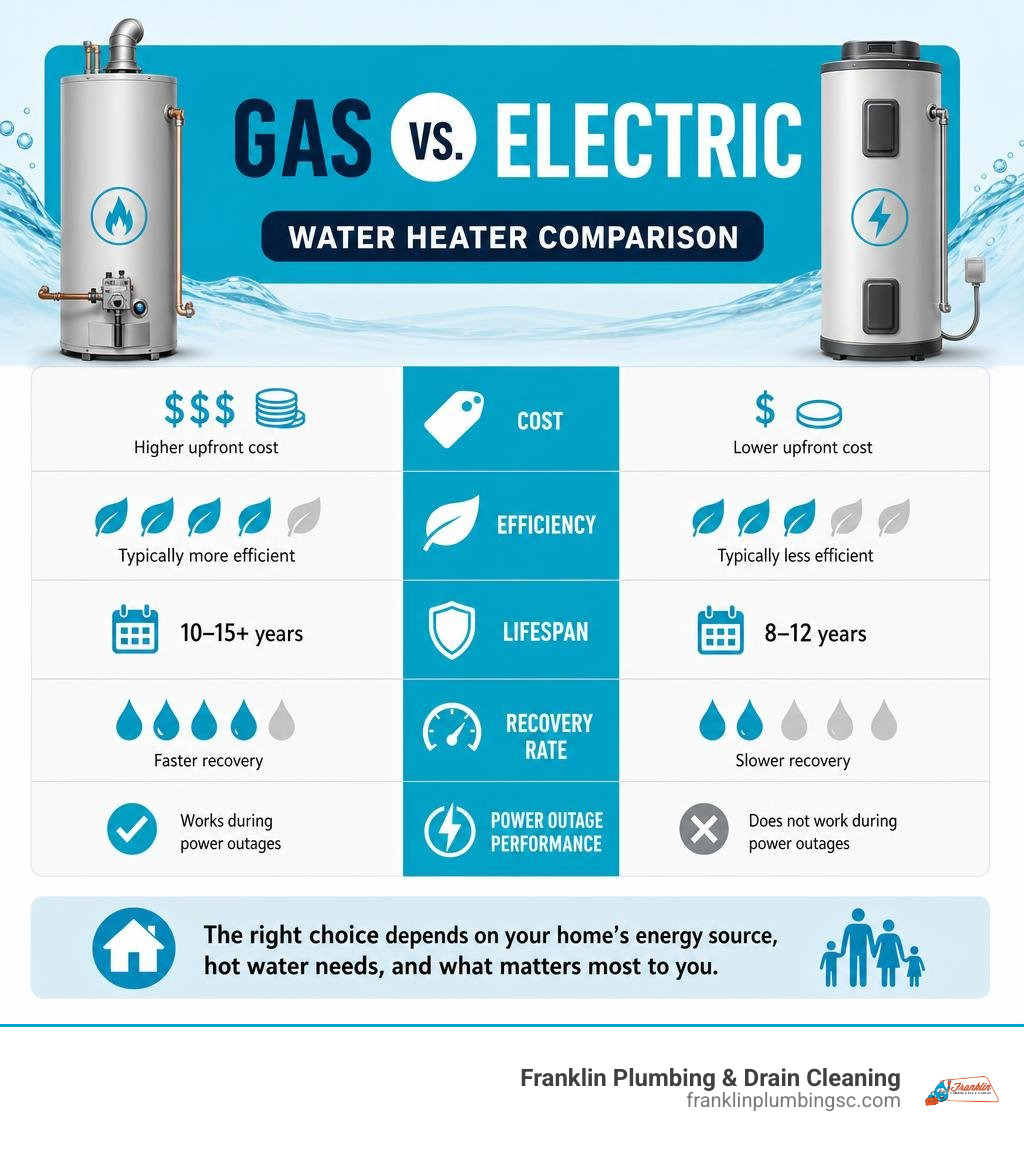
Although electric heaters are often less expensive to buy and install, gas heaters can be less expensive to operate month to month where natural gas costs less than electricity per unit of energy.
Standard electric resistance heaters convert nearly all of their electricity directly into hot water, giving them a high Uniform Energy Factor (UEF). Gas models lose some energy through venting, resulting in a lower UEF rating. Still, local fuel rates can make a gas model the lower-cost option to operate.
The best long-term choice depends on local utility rates, your household’s hot water use, available space, and whether a high-efficiency heat pump model is practical for your home.
Performance, Lifespan, and Maintenance Trade-Offs
Beyond the financial considerations, you need a water heater that can keep up with your family’s daily routines. Nobody wants to run out of hot water halfway through a morning shower.
Recovery Rates and Hot Water Demand
The recovery rate is the amount of water a heater can raise by 90 degrees Fahrenheit in one hour. This rating determines how quickly your system recovers after a heavy draw, such as back-to-back showers or running the washing machine.
Gas water heaters are typically faster at recovery. A standard gas tank may recover roughly 20 to 25 gallons per hour, while some high-performance models recover more. Standard electric tank units generally recover more slowly, often around 18 to 20 gallons per hour.
Because of this faster recovery speed, a 40-gallon gas water heater can often keep pace with a larger electric tank. If you have a large family or several people taking showers back to back, a gas system may provide more reliable hot water availability.
Lifespan and Maintenance Requirements
No plumbing appliance lasts forever, but regular care can extend its useful life by several years.
Electric water heaters often last 10 to 15 years, while gas water heaters may have a somewhat shorter average lifespan because combustion places additional thermal stress on the tank. Actual lifespan depends on water quality, installation quality, maintenance, and usage.
Both systems can develop sediment buildup, especially in areas with hard water. Minerals settle at the bottom of the tank, creating an insulating layer that makes the system work harder. Flush the tank annually and have the sacrificial anode rod checked periodically. If you notice popping sounds, rusty water, leaks, or declining hot water performance, a qualified plumber can identify the cause safely.
Alternative Options: Heat Pumps and Tankless Systems
If you want to move beyond standard tank designs, hybrid heat pumps and tankless systems are two practical alternatives.
Hybrid heat pump water heaters work like a refrigerator in reverse. Rather than generating all heat through resistance elements, they pull warmth from the surrounding air and transfer it into the water. This process can make them far more efficient than conventional electric tanks, although they require adequate airspace and drainage.

For homes with limited space or high demand, tankless water heater installation options can provide hot water on demand without storing a full tank. These compact systems can last more than 20 years with proper annual maintenance, but a licensed professional should size and install them to match your home’s gas, electrical, and plumbing requirements.
Frequently Asked Questions
1. Is a gas or electric water heater cheaper to run?
In most areas, a gas water heater is cheaper to run month-to-month because natural gas costs less than electricity per unit of energy. However, if you install a highly efficient heat pump water heater, it can easily beat the operating costs of a standard gas tank.
2. What is the average lifespan of a gas vs electric water heater?
Electric water heaters typically last 10 to 15 years, while gas water heaters have a shorter lifespan of 6 to 12 years. The direct flame of a gas burner causes more wear and tear on the tank over time compared to electric heating elements.
3. Do gas water heaters work during a power outage?
Older gas water heaters with a standing pilot light and mechanical gas valve will work during a power outage. However, modern high-efficiency gas models that use electronic ignition or power-vented blowers require electricity to operate and will shut down during a blackout.
4. How much does it cost to switch from gas to electric?
Switching from a gas to an electric water heater typically requires capping the old gas line, sealing the vent pipe, and hiring an electrician to run a new 240-volt dedicated circuit from your panel. Costs can vary depending on the complexity of your electrical panel and the distance to the water heater.
5. What are the space requirements for a heat pump water heater?
Because heat pump water heaters pull heat from the surrounding air, they need plenty of space to breathe. They typically require 700 to 1,000 cubic feet of unconditioned or conditioned air space, making garages, unfinished basements, or large utility rooms ideal locations.
6. Is a tankless water heater worth the investment?
Yes, especially for households with high hot water demand or limited space. While they have higher upfront installation costs, tankless units last up to 20 years and cut energy use by eliminating the standby heat loss associated with keeping a large tank hot all day.
7. How often should a water heater be flushed?
You should flush your water heater tank at least once a year. If you live in an area with hard water, flushing the tank twice a year will prevent mineral sediment from building up, protecting your heating elements and extending the lifespan of the tank.
8. What is the Uniform Energy Factor (UEF)?
The Uniform Energy Factor is the standard metric used to measure the overall energy efficiency of a residential water heater. A higher UEF number means the unit is more efficient at converting its fuel source into hot water with minimal energy loss.
9. Can I install a water heater myself?
We strongly advise against DIY water heater installation. Working with high-voltage electricity, pressurized gas lines, and carbon monoxide venting carries severe safety risks. Professional installation ensures your system meets local building codes and keeps your manufacturer warranty valid.
10. When should I call for professional water heater repair in Columbia, SC?
You should call for professional service if you notice rusty water, water pooling around the base of the tank, strange popping or rumbling noises, or if your showers are turning cold quickly. Addressing these warning signs early can save you from a costly tank rupture.
Conclusion
The choice between a gas vs. electric water heater ultimately comes down to your home’s existing infrastructure, your budget, and your daily hot water needs. If you already have an active gas line and a busy household, a gas water heater remains a fast-recovering option. If you prioritize a lower purchase price, simpler maintenance, and a potentially longer system lifespan, a standard electric unit can be highly reliable. For the strongest long-term energy savings, a hybrid heat pump system may be the better fit.
No matter which system you choose, proper sizing and expert installation are essential to dependable performance. A licensed plumbing team can help you evaluate your fuel source, electrical capacity, venting needs, household demand, and available installation space.
Whether you need a new installation, seasonal maintenance, or help diagnosing a hot water issue, the team at Franklin Plumbing & Drain Cleaning is ready to help. Contact our professional water heater technicians to schedule service and get clear guidance on the right solution for your home.

professional
drain cleaning

highly
recommended

through
repairs

quality
work