How Long Do Sump Pumps Last? Signs It’s Time for a Replacement
Home »
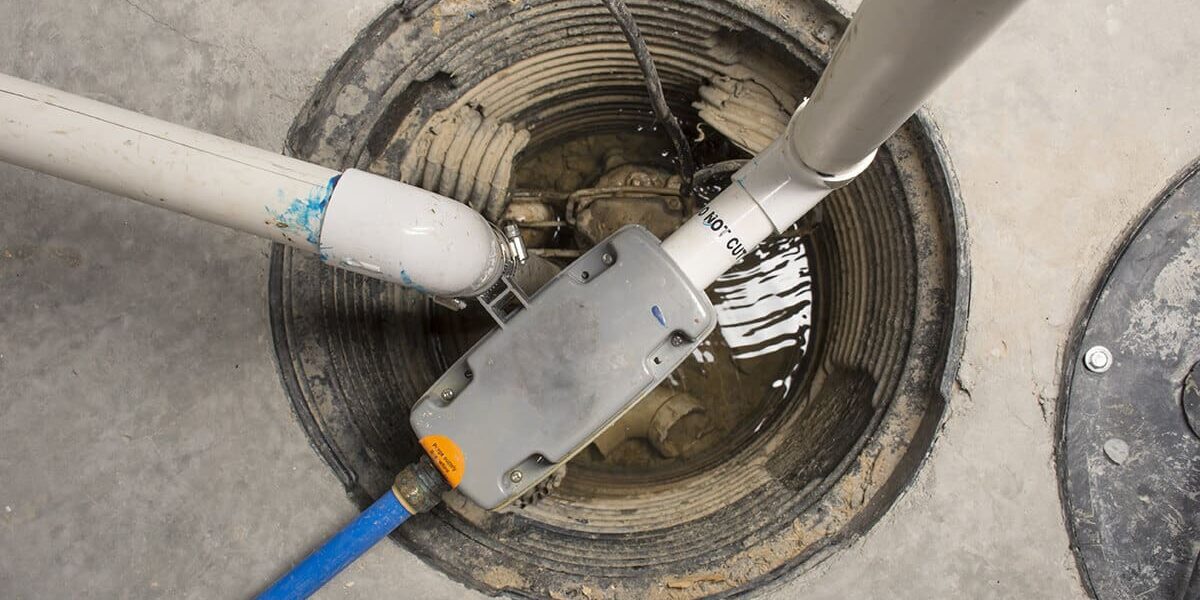
Know When Sump Pump Replacement Cannot Wait
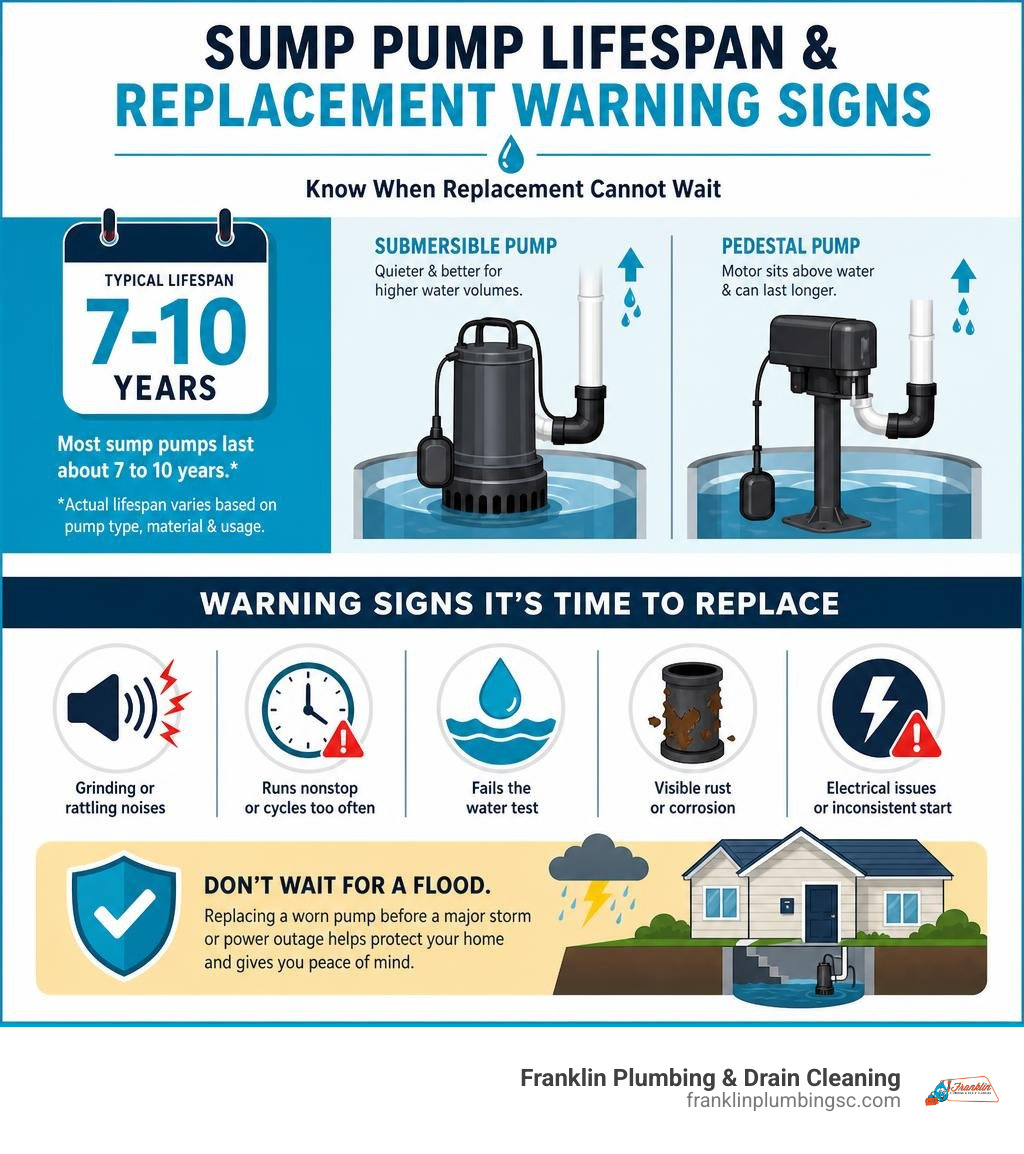
Most sump pumps last about 7 to 10 years, though the real lifespan depends on the pump type, material, and how often it runs. Plan a sump pump replacement if yours is older, makes grinding or rattling sounds, runs nonstop, cycles too often, or fails a simple water test.
A quick check can help you avoid a flooded basement:
- Pour water into the pit until the float rises.
- Confirm the pump starts, removes water, and shuts off normally.
- Check that water flows away from the foundation, not back into the basin.
Submersible pumps are usually quieter and better for higher water volumes, while pedestal pumps can last longer because their motors sit above the water. Replacing a worn pump before a major Columbia, SC-area storm is far safer than finding out it has failed during a power outage or heavy rain.
Our team will explain the lifespan factors that help determine when your sump pump is nearing the end.
Expected Lifespan: How Long Does a Sump Pump Typically Last?
A residential sump pump generally lasts between 5 and 15 years, with the typical unit operating reliably for 7 to 10 years before internal components wear down. How long your specific unit protects your crawl space or basement depends heavily on regional ground saturation, the overall depth of the local water table, and how frequently the motor cycles on and off during severe weather.
Homes built in areas with dense clay soils or low-lying drainage zones often experience high duty cycles. When a pump runs every few minutes during a heavy storm, mechanical friction and thermal build-up accelerate internal wear. If you also notice sewer odors, slow drains, or moisture issues around older plumbing, related guidance on cast iron sewer pipe problems can help you understand how hidden pipe damage may contribute to broader water concerns.
Submersible vs Pedestal Pump Longevity
The configuration of your pumping system plays a major role in overall equipment longevity. The two primary designs found in residential properties are submersible pumps and pedestal pumps, and each manages physical wear quite differently:
- Submersible sump pumps: These units rest completely submerged at the bottom of the sump basin. Water surrounding the motor housing acts as a natural cooling agent during intense operation, which helps manage thermal spikes. However, continuous exposure to water, silt, and dissolved minerals causes seals, O-rings, and internal bearings to degrade over time. Submersible units provide quiet operation and high gallons-per-minute evacuation capacity, carrying an expected working life of 5 to 15 years.
- Pedestal sump pumps: Featuring an elevated motor mounted on a vertical column well above the basin lid, pedestal pumps keep electrical assemblies completely dry. Because only the impeller base and intake sit in water, pedestal units face far less corrosion on the primary motor housing. These units can operate for 20 to 30 years under normal conditions. The trade-off comes in higher operating noise and lower total pumping capacity during torrential downpours.
Cast Iron vs Thermoplastic Pump Durability
The material used to construct the pump housing dictates how well the motor sheds heat and resists mechanical stress under continuous loads.
| Feature | Cast Iron Sump Pumps | Thermoplastic Sump Pumps |
|---|---|---|
| Typical lifespan | 10 to 15 years | 5 to 7 years |
| Heat dissipation | Superior, with the housing drawing heat away from the motor | Poor, with trapped motor heat internally |
| Corrosion and chemical resistance | High, with heavy-duty resistance to pitting | Moderate, with rust immunity but cracking risk |
| Impeller durability | Heavy cast iron or bronze | Molded plastic |
| Long-term ownership value | Lower cost per year of operation | Higher lifetime cost due to frequent replacement |
Thermoplastic pumps are lightweight and budget-friendly upfront, but plastic serves as a thermal insulator. During prolonged storms, heat builds up inside the housing, degrading the motor windings and shortening pump life. Cast iron units act as a natural heat sink, transferring thermal energy into the surrounding water. This superior cooling dynamic allows cast iron models to survive intense run cycles year after year, delivering a significantly lower cost of ownership over their working lifespan.
Critical Warning Signs Your Sump Pump Is Failing
Waiting for a pool of standing water in your basement is the most expensive way to discover a broken pump. Catching equipment failure early gives you ample time to schedule replacements before seasonal storms hit the Midlands.
Strange Noises, Grinding, and Excessive Vibration
A properly operating submersible sump pump produces a steady, low-frequency hum. If your basin begins emitting loud squeals, metal-on-metal grinding, or aggressive rattling, internal damage has occurred:
- Grinding sounds: Usually indicate that the motor bearings have seized or worn thin, forcing the drive shaft out of alignment.
- Vibration and thumping: Occur when gravel or debris enters the intake and bends or chips the impeller blades. An unbalanced impeller creates intense vibration that rapidly cracks mechanical seals.
- Loud banging on shutoff: Suggests water hammer in the vertical discharge pipe, typically caused by a failing or missing check valve flap.
Continuous Running, Frequent Cycling, and Float Switch Failure
Mechanical switch malfunctions account for a major portion of all urgent response calls. Sump pumps rely on a float switch to detect rising water levels in the basin.
When switches wear down, they can stick against the basin wall, forcing the pump to run continuously until the motor overheats and burns out. On the other hand, if your pump turns on and off every few seconds, you likely have a faulty check valve. Discharged water flows straight back down into the basin, lifting the float immediately after the cycle finishes.
Visible Rust, Motor Burnout, and Age Over 7 Years
Visual inspections often reveal clear evidence of degradation. Heavy mineral scale, white calcium buildup, or dark red iron bacteria accumulation indicate that water chemistry is degrading the pump housing.
If your pump is approaching 7 to 10 years of age, internal components are reaching the end of their design life. Proactive replacement saves you from structural water damage and foundation moisture problems. When planning comprehensive home maintenance, you can also look into dependable water heater repair in Columbia, SC to ensure your entire plumbing network remains dependable.
Sump Pump Replacement Cost and Key Factors
The overall investment required for updating your water removal system depends on unit horsepower, housing material, pit condition, and labor parameters. Planning a standard replacement during regular business hours is far more economical than responding after a late-night basement flood.
Pump Unit Selection, Horsepower, and Material Choices
The capacity of your new pump must match your home’s structural drainage load:
- 1/3 horsepower units: Suitable for average homes with standard water tables and short vertical discharge runs under 10 feet of head height.
- 1/2 horsepower units: The industry standard for moderate to heavy drainage requirements, handling higher vertical lifts and long lateral discharge runs away from the foundation.
- 3/4 to 1 horsepower units: Designed for severe ground water inflow, deep basement footings, or high water tables that experience intense hydrostatic pressure.
Selecting durable cast iron or stainless steel components requires a slightly higher initial investment than basic plastic units, but the added durability prevents unexpected motor burnout when rainfall peaks. Homeowners dealing with repeated backups or drainage concerns may also benefit from professional sump pump services that evaluate the pump, basin, discharge line, and backup options together.
Labor Factors, Urgent Calls, and Add-on Upgrades
Labor needs are driven by the complexity of your current plumbing connections. A straightforward drop-in replacement into an existing, clean pit requires less time than cutting into old galvanized pipes or restructuring discharge lines.
Urgent response calls during active severe weather can involve quicker scheduling, while planned daytime service keeps the process more predictable. During any system update, several add-on components should be evaluated:
- New check valve: A critical backflow preventer that stops gallons of water from draining back into the pit after every single cycle.
- Battery backup system: A secondary 12-volt pump powered by a dedicated marine battery that kicks in automatically during power outages or primary pump failure.
- Basin and sealed lid upgrade: Replaces cracked pits and prevents radon gas, moisture, and pests from migrating into living spaces.
If an unexpected storm causes a flooded crawl space or basement collapse, call a licensed plumber who can respond urgently to help minimize water damage and stabilize your home’s foundation.
Choosing Between DIY and Hiring a Licensed Plumber
Deciding whether to replace your own unit or hire an experienced professional comes down to plumbing experience, available tools, and the condition of existing discharge piping.
DIY vs Professional Sump Pump Replacement
A simple, direct replacement of a submersible pump into a clean basin with existing PVC unions can be completed by handy homeowners. However, when installation requires rerouting discharge lines, cutting concrete, wiring new dedicated electrical outlets, or installing dual-pump backup systems, hiring a licensed plumber is the safer option.
Professional installation ensures full compliance with local building codes, proper discharge distance from your foundation footings, and correctly sized electrical loads. It also eliminates the risk of water leaks around mechanical unions. You can explore our full range of residential plumbing services to see how professional care protects your property.
Step-by-Step Submersible Sump Pump Replacement Process
If you are replacing a standard unit yourself, follow this step-by-step sequence carefully to avoid airlocks and motor damage:
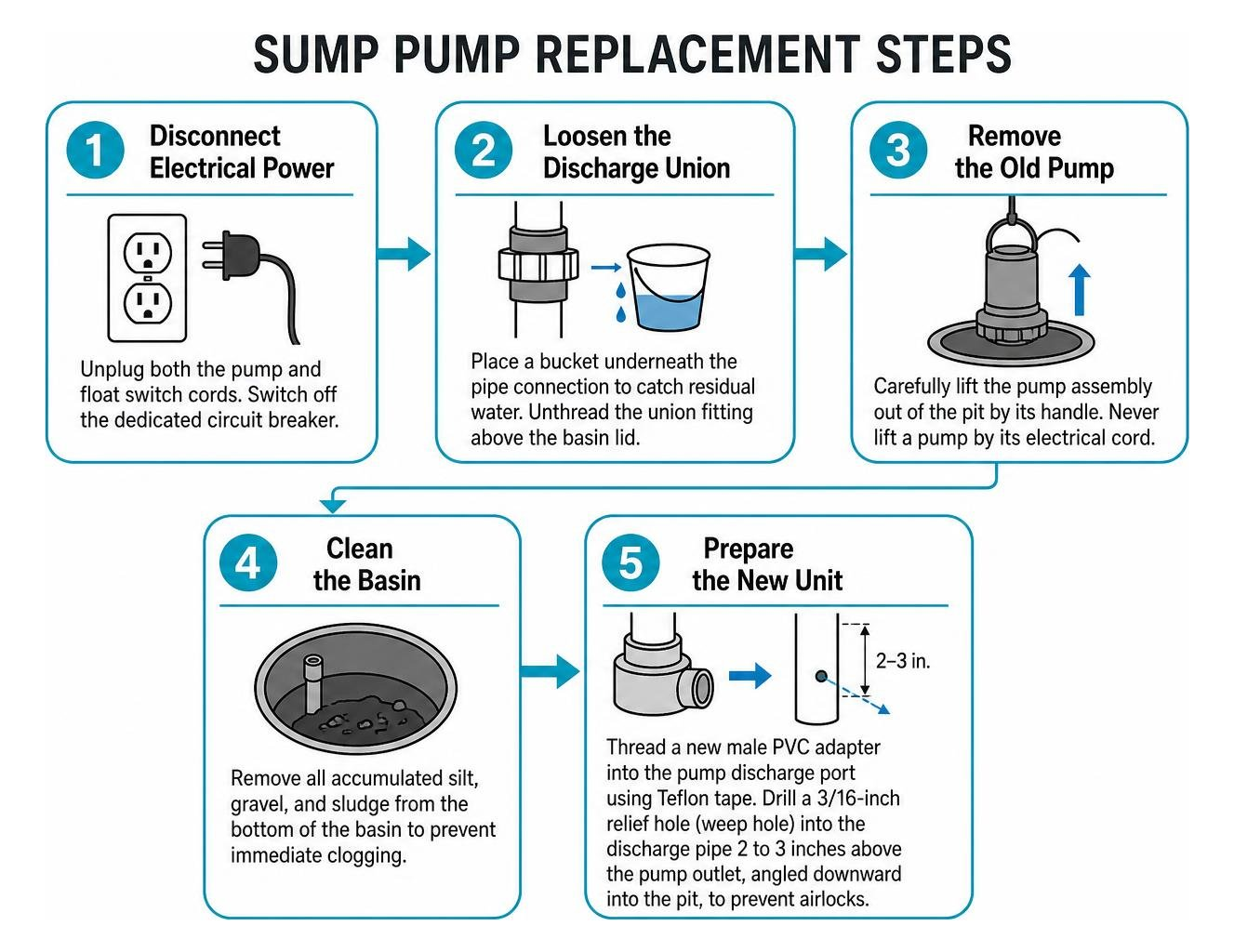
- Disconnect electrical power: Unplug both the pump and the float switch cords from the electrical receptacle. Switch off the dedicated circuit breaker for added safety.
- Loosen the discharge union: Place a bucket underneath the pipe connection to catch residual water. Use channel locks to unthread the union fitting located above the basin lid.
- Remove the old pump: Carefully lift the pump assembly out of the pit by its handle. Never lift a pump by its electrical cord, as this damages internal watertight seals.
- Clean the basin: Remove all accumulated silt, gravel, and sludge from the bottom of the basin to prevent immediate clogging of the new pump intake.
- Prepare the new unit: Thread a new male PVC adapter into the pump discharge port using Teflon tape. Drill a 3/16-inch relief hole into the discharge pipe roughly 2 to 3 inches above the pump outlet, angled downward into the pit, to prevent airlocks.
- Install the check valve: Mount a new silent check valve onto the vertical discharge pipe, ensuring the directional flow arrow points upward away from the pump.
- Position and align: Lower the new pump into the center of the pit. Ensure the mechanical float switch moves freely through its entire arc without touching the basin walls or electrical cords.
- Reconnect and test: Tighten the union fitting hand-tight, plug the unit into a dedicated GFCI outlet, and perform a full wet test by pouring a 5-gallon bucket of clean water into the basin.
For comprehensive maintenance or complex upgrades across your property, our team can inspect sump pumps, drains, and older plumbing together. If you are also evaluating exterior drainage or underground issues, our guide to trenchless vs traditional sewer repair in Lexington, SC explains how repair methods differ when buried lines need attention.
Frequently Asked Questions
How much does it cost to replace a sump pump in Columbia, SC?
Replacing a residential sump pump in the local area generally involves equipment fees combined with standard hourly plumbing labor. Total costs depend on whether you select a cast iron or thermoplastic pump, the required motor horsepower, and whether additional discharge piping or electrical work is necessary.
How long does a standard submersible sump pump last?
A standard submersible sump pump typically operates reliably for 7 to 10 years. Units subjected to constant ground water cycling or harsh mineral buildup may wear out closer to the 5-year mark, while high-grade cast iron pumps that receive routine maintenance can last up to 15 years.
Should I replace the check valve when replacing the sump pump?
Yes, you should always replace the check valve whenever you install a new pump. Check valves contain internal mechanical springs and rubber flaps that degrade over time. Installing a new check valve takes only a few minutes while the discharge pipe is already disconnected and prevents premature pump motor burnout.
What is the difference between cast iron and plastic sump pumps?
Cast iron pumps feature heavy metal housings that pull thermal heat away from the electric motor, allowing them to withstand long, demanding run cycles. Plastic or thermoplastic pumps cost less upfront but insulate motor heat, resulting in faster component degradation and a shorter operating life.
Why does my sump pump run continuously during heavy rain?
A pump runs continuously if the local water table rises rapidly, if the float switch gets mechanically stuck against the pit wall, or if the unit lacks enough horsepower to keep up with incoming volume. A broken check valve can also cause continuous cycling by allowing discharged water to drain back into the pit.
Can I replace a sump pump myself without hiring a plumber?
Homeowners with basic plumbing knowledge can perform a simple drop-in swap if the existing electrical connections, basin, and PVC discharge pipes are in good condition. If your installation requires new electrical circuits, extensive pipe routing, or battery backup integration, hiring a licensed plumber is recommended.
How do I test if my sump pump is working properly?
Slowly pour roughly five gallons of water into the sump basin until the float switch lifts. The motor should engage smoothly, evacuate the water within 10 to 15 seconds, shut off cleanly, and discharge the water outside away from your home’s foundation without backflow.
What size horsepower sump pump do I need for my home?
A 1/3 horsepower pump is sufficient for standard residential basements with low water volume and short discharge lifts. A 1/2 horsepower pump is recommended for deeper basements, areas with high water tables, or systems that push water across long horizontal distances outside.
Is a battery backup sump pump really necessary?
A battery backup system is strongly recommended because severe thunderstorms often cause regional electrical grid failures at the exact moment ground water levels peak. A backup pump operates on dedicated DC battery power, keeping your property protected even when primary power is lost.
How quickly can a failed sump pump cause basement flooding?
During an intense storm, an inoperable pump can allow water to breach a crawl space or basement floor within 30 to 60 minutes. Saturated soil creates hydrostatic pressure that forces moisture through microscopic concrete cracks, making proactive equipment replacement essential.
Conclusion
Your sump pump serves as your home’s vital defense against structural moisture, standing crawl space water, and sudden foundation flooding. Monitoring equipment age, listening for abnormal motor sounds, and performing regular bucket tests ensure that small mechanical flaws are resolved before heavy storm systems arrive.
If your installation requires specialized tools, electrical modifications, or major drainage adjustments, contact our licensed professionals to ensure the work is done safely and correctly. Franklin Plumbing & Drain Cleaning backs all work with a 100% satisfaction guarantee and reliable service across Columbia, West Columbia, Blythewood, Cayce, Forest Acres, Irmo, and Lexington. If you are ready to replace a failing pump before the next major storm, contact our professional sump pump technicians today to schedule service.

professional
drain cleaning

highly
recommended

through
repairs

quality
work