How Long Do Water Heaters Last? Lifespan by Type
Home »
Your Water Heater Has an Expiration Date: What You Need to Know
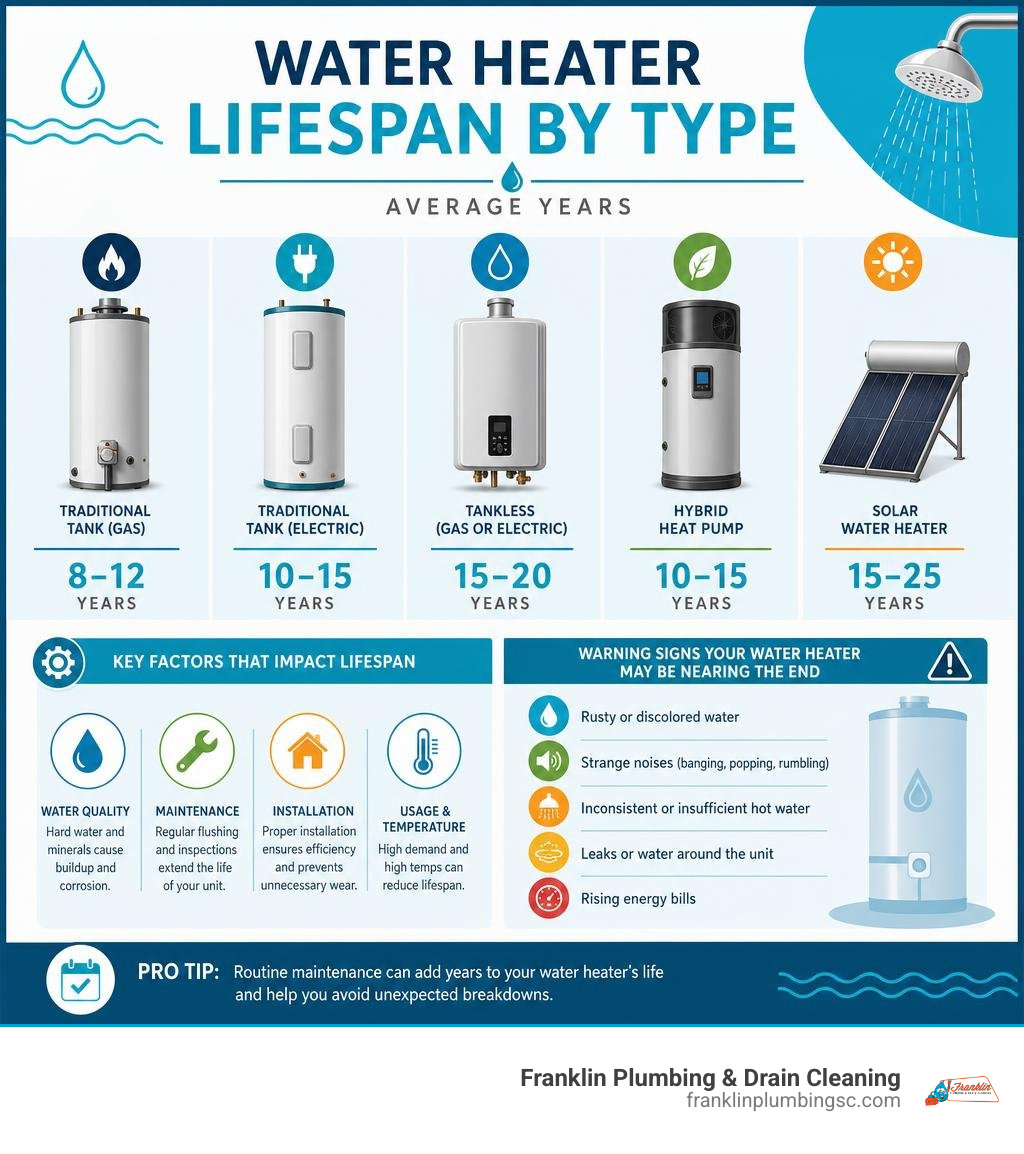
How long do water heaters last? Here is the short answer:
| Water Heater Type | Average Lifespan |
|---|---|
| Traditional tank (gas) | 8-12 years |
| Traditional tank (electric) | 10-15 years |
| Tankless (gas or electric) | 15-20 years |
| Hybrid heat pump | 10-15 years |
| Solar water heater | 15-25 years |
Most homeowners do not think about their water heater until the morning shower runs cold. It is one of those appliances that quietly works every day, heating water for showers, laundry, dishes, and more, until it suddenly does not.
The average tank water heater lasts 8 to 12 years. Tankless models can last 15 to 20 years with proper care. The actual range is wider, though. Some units fail in five years, while others keep running for 20 years or more when water conditions and maintenance are favorable.
Where your water heater falls within that range depends on a few key factors: the type of unit, local water quality, maintenance history, and installation quality.
This guide explains what affects water heater lifespan so you can make a practical decision, whether you are monitoring an older unit, weighing repair against replacement, or trying to get more years from your current system.
How Long Do Water Heaters Last by Type?
When comparing options for your home, you will notice that water heater designs are not all built the same way. The technology used to heat your water has a major effect on how many years of service you can expect.
Homeowners comparing storage tanks, heat pumps, and on-demand equipment can get a clearer sense of the differences by exploring the types of residential water heaters. Each system manages heat, water storage, and component wear differently, which affects its expected lifespan.
Traditional Tank Water Heaters
Traditional storage tank water heaters remain a common option in Columbia, SC, and nearby communities such as West Columbia, SC, and Cayce, SC. These systems keep a large volume of water, usually 40 to 50 gallons, heated to a set temperature. Because they continually hold and reheat water, they experience consistent pressure and thermal stress.
Gas tank water heaters typically last between 8 and 12 years. Heat from the burner causes the tank metal to expand and contract over time. That thermal cycling, combined with the corrosive effects of hot water, can eventually weaken the tank.
Electric tank water heaters generally last slightly longer, averaging 10 to 15 years. Their submerged heating elements can burn out or collect mineral buildup, but they do not apply the same concentrated heat to the bottom of the tank as a gas burner.
Tankless Water Heaters
Tankless water heaters heat water on demand. When a hot-water fixture turns on, cold water flows through a heat exchanger that raises the temperature as needed. Because there is no large tank of stored water, tankless units avoid the tank-corrosion risk that causes many conventional systems to fail.
This design allows tankless units to last 15 to 20 years and, in some cases, longer with professional maintenance. Mineral buildup can still affect the heat exchanger, especially in hard-water homes, so periodic service remains important. Homeowners considering an upgrade can see what is involved with professional tankless water heater installation before choosing an on-demand system.
Tankless systems still need occasional attention. Understanding common tankless water heater problems can help homeowners recognize when maintenance or repair is needed before a small issue becomes more disruptive.
Hybrid Heat Pump Water Heaters
Hybrid water heaters combine standard electric heating elements with an air-source heat pump. The unit pulls heat from the surrounding air and transfers it to the water tank, making it highly energy efficient.
Because hybrid water heaters still use a storage tank, their average lifespan is similar to standard electric tanks, at about 10 to 15 years. The compressor assembly adds mechanical complexity, so professional maintenance is important for helping the system reach its expected service life.
Key Factors That Influence Water Heater Longevity
Manufacturer averages provide a baseline, but how long do water heaters last in real homes depends on the conditions around them. Several factors can either extend a system’s useful life or shorten it substantially.
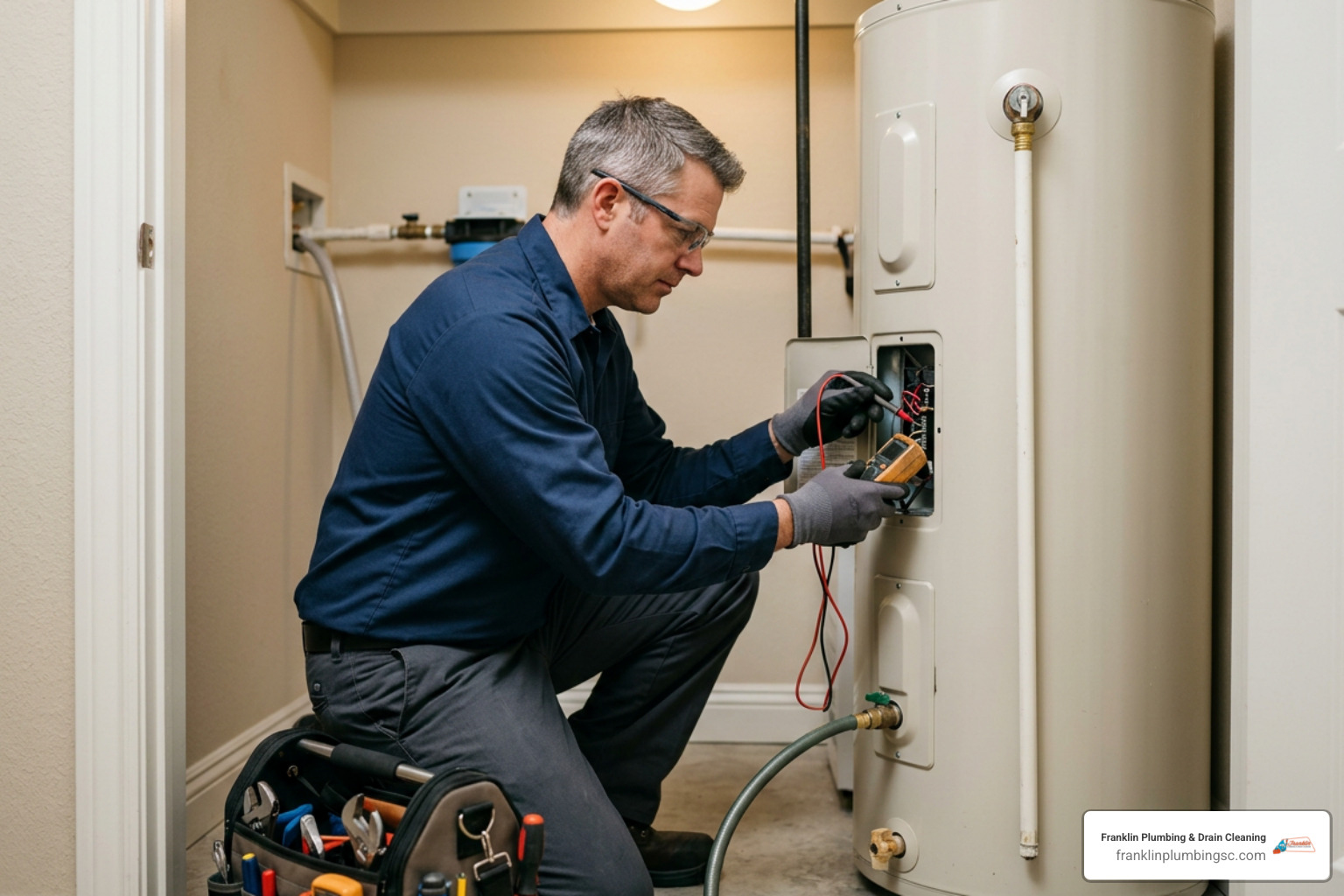
Routine maintenance is one of the most practical ways to reduce surprise breakdowns and protect efficiency. Our guide to water heater maintenance explains the core steps that help limit sediment buildup and identify developing issues early.
Installation location also affects performance and serviceability. For example, keeping enough clearance for inspection and maintenance can make it easier to address small concerns before they shorten the unit’s life. See the factors to consider when choosing a location for a water heater tank.
Water Quality and Hard Water Scaling
Water quality is a major variable in water heater life expectancy. In South Carolina communities such as Lexington, SC, and Chapin, SC, municipal and well water can contain varying levels of minerals, including calcium and magnesium.
When hard water is heated, these minerals can form calcium carbonate scale. The scale settles on the bottom of storage tanks or clings to the heat exchangers in tankless units.
- In tank models: A thick layer of sediment acts as insulation between the burner and the water. The burner must run longer and hotter, which can overheat the tank bottom and damage its protective lining.
- In tankless models: Mineral scale can restrict the narrow passages inside the heat exchanger, reducing water flow and causing the system to overheat or operate less efficiently.
Maintenance Frequency and Anode Rods
Every storage tank water heater includes a sacrificial anode rod. This component is typically made of magnesium or aluminum and is designed to corrode before the steel tank walls do.
Once the anode rod is depleted, often within three to five years depending on water conditions, the tank becomes more vulnerable to corrosion. Replacing a worn anode rod can help extend the life of an otherwise healthy water heater.
Along with checking the anode rod, flushing a tank annually helps remove accumulated sediment, maintain efficiency, and reduce the risk of premature tank failure.
Water Pressure and Temperature Settings
High water pressure can quietly damage plumbing appliances. If your home’s incoming water pressure exceeds 80 PSI, it places constant stress on the water heater tank and connections. A pressure-reducing valve can help protect the water heater and other plumbing components.
Temperature settings also matter. Many water heaters are set near 140 degrees Fahrenheit, but 120 degrees Fahrenheit is often sufficient for household use. Lowering the setting can reduce thermal-expansion stress, slow mineral-scale buildup, and help lower energy use. If you are unsure how to adjust a water heater safely, contact a qualified plumbing professional.
Warning Signs Your Water Heater Is Failing
Water heaters rarely fail without showing a few warning signs first. Recognizing them early may help you avoid water damage in a basement, garage, or utility closet.
How to Estimate Your Water Heater’s Age From the Serial Number
If you moved into a home in Irmo, SC, or Blythewood, SC, and do not know when the water heater was installed, start with the manufacturer’s data plate.
Locate the serial number on the side of the tank. Manufacturers use different coding systems, so do not assume every label follows the same pattern. Some codes use an initial letter for the month and the next digits for the year, while others use a different format. If the label is faded or unclear, a qualified plumber or the manufacturer can help confirm the production date.
Signs That Your Water Heater May Need Replacement
Some symptoms point to replaceable parts, while others suggest that the tank itself is nearing the end of its life. Homeowners who are deciding whether to repair or replace a unit can review the warning signs that indicate it may be time to replace a water heater.
Watch for these critical warning signs:
- Rusty or discolored water: If hot water looks brown, red, or rusty while cold water runs clear, the inside of the tank may be corroding.
- Popping or rumbling noises: Loud banging, popping, or rumbling can mean water is boiling beneath a layer of sediment at the bottom of the tank. This buildup can reduce efficiency and damage the tank.
- Active leaks around the base: Standing water near the unit deserves prompt attention. A leaking valve may be repairable, but a leak from the tank body itself usually requires replacement.
- Inconsistent hot water: Shorter showers or fluctuating temperatures may indicate failing heating elements, burners, or an internal dip tube.
Repair vs. Replace: Making the Right Decision
When a water heater starts acting up, homeowners need to decide whether to repair it or invest in a replacement.
A simple rule of thumb can help guide the conversation:
- The 50% rule: If repairing your current water heater costs more than half the price of a comparable replacement, replacement is often the more sensible long-term choice.
- The one-third rule: For units that are eight years old or older, a repair that costs more than one-third of replacement may not be worthwhile if additional failures are likely.
When to Repair Your Water Heater
Many water heater problems are caused by individual components that can be replaced. If a tank is under eight years old and the tank body is in good condition, a professional repair may be a practical option.
Common replaceable components include:
- Thermostats and heating elements: On electric models, these parts can wear out but are often replaceable.
- The temperature and pressure relief valve: This safety valve releases excess pressure. If it begins dripping, a plumber can evaluate whether it needs replacement.
- The anode rod: If the tank is otherwise sound, replacing a depleted anode rod can be an effective preventive measure.
For help diagnosing a water heater problem or planning the next step, explore our plumbing and water heater service options. A qualified technician can determine whether the issue is isolated to a serviceable part or points to a failing tank.
When to Replace Your Water Heater
There are times when repairing a water heater simply delays a more reliable solution. If a system is more than 10 years old and has several failing parts, replacement may be the safer and more economical choice.
According to ENERGY STAR guidance on replacing water heaters, newer high-efficiency models can reduce energy use compared with aging equipment. A professional assessment can help you compare the condition of your current unit with the benefits of a replacement.
Frequently Asked Questions About Water Heater Lifespan
How long do water heaters last on average?
On average, traditional tank water heaters last 8 to 12 years for gas models and 10 to 15 years for electric models. Tankless water heaters typically last 15 to 20 years, while solar and hybrid models range from 10 to 25 years depending on maintenance.
Does hard water shorten water heater lifespan?
Yes, hard water can shorten a water heater’s lifespan by 40% to 60%. Mineral scale builds up on heating elements and tank bottoms, causing the system to overheat, lose energy efficiency, and eventually crack or fail prematurely.
How often should I flush my water heater?
You should have your storage tank water heater flushed at least once a year. If you live in an area with highly hard water, flushing the system every six months will help prevent heavy sediment buildup and maintain optimal performance.
What are the signs of a failing water heater?
The most common signs of a failing water heater include rusty hot water, loud popping or rumbling noises from the tank, water pooling around the base of the unit, and inconsistent water temperatures during use.
Is it worth repairing a 10 year old water heater?
Generally, no. At 10 years of age, a traditional tank water heater is at the end of its typical design life. Investing in significant repairs on an old unit is risky, as other components are likely to fail soon after.
How long do tankless water heaters last compared to tank models?
Tankless water heaters last nearly twice as long as traditional tank models. While a tank heater averages 8 to 12 years, a well-maintained tankless system easily lasts 15 to 20 years because it does not store corrosive standing water.
How do I find the age of my water heater?
You can find the age by checking the serial number on the manufacturer’s data label. The first letter usually corresponds to the month of manufacture, and the first two numbers represent the year the unit was built.
Can a water heater last 20 years?
Yes, but this is highly unusual for traditional tank models unless you have exceptionally soft water and perform meticulous annual maintenance. However, tankless water heaters regularly reach the 20-year mark with basic care.
What is the 50% rule for water heater repair?
The 50% rule states that if the cost to repair your current water heater is more than half the price of installing a new unit, you should replace the system instead of repairing it.
Does a water softener extend water heater life?
Yes, installing a water softener can significantly extend your water heater’s life. By removing calcium and magnesium minerals before they enter the water heater, you prevent scale buildup and protect internal components from damage.
Conclusion
Your water heater is an important part of your home, but it will not last forever. By watching for warning signs, keeping up with annual maintenance, and knowing when repair no longer makes sense, you can protect your home’s comfort and reduce the risk of an unexpected loss of hot water.
Whether you need an inspection, a system flush, or guidance on selecting a replacement, the team at Franklin Plumbing & Drain Cleaning helps homeowners throughout Columbia, SC, and nearby communities, including Lexington, SC, Irmo, SC, and Chapin, SC. Our licensed, experienced technicians focus on clear recommendations and respectful service, backed by a 100% satisfaction guarantee.
For dependable guidance on your next step, contact our professional water heater technicians at Franklin Plumbing & Drain Cleaning to schedule water heater service.

professional
drain cleaning

highly
recommended

through
repairs

quality
work