Sewer Smell in Your House? When It’s a Real Emergency
Home »
A Sewer Smell in Your House Could Be a Plumbing Emergency
This guide addresses the sewer smell in house emergency concern homeowners face when sewer gas appears to be escaping past a plumbing seal. The odor may come from a dry drain, failed toilet seal, blocked vent, or damaged sewer line. If it is strong, spreads through several rooms, or occurs with a backup, stop using water and contact a plumber.
Use this quick guide to assess the situation:
| Situation | Emergency Level |
|---|---|
| Strong smell in multiple rooms | Call a plumber immediately |
| Anyone in the home feels dizzy, nauseous, or has a headache | Emergency: ventilate and evacuate |
| Smell gets stronger when you use water | Urgent: stop water use and call now |
| Gurgling drains + sewage smell together | Same-day professional inspection needed |
| Smell only from one rarely used drain | Try running water first, monitor closely |
| Visible sewage backup anywhere in the home | Biohazard emergency: call restoration and plumber now |
Sewer gas may contain hydrogen sulfide, methane, and ammonia. Hydrogen sulfide can irritate the eyes and airways, while methane is combustible. Avoid flames, smoking, and anything that could create a spark near a suspected buildup.
A single faint odor from an unused guest-bathroom drain can sometimes be resolved by restoring the water seal. A smell that keeps returning, appears after fixtures run, or comes with gurgling and slow drainage is different. Those patterns can indicate that the plumbing system is losing its protective seal or that the main line is not moving wastewater correctly.
Pay attention to where and when the smell occurs. An odor limited to one unused room points to a different starting point than a smell that is strongest near several drains. This distinction helps a plumbing team inspect the most likely components first.
The first few minutes matter. Ventilate the area if it is safe, keep children and pets away from any sewage, and watch for slow drains, gurgling, or visible wastewater. Those clues help distinguish a dry P-trap from a larger drainage problem.
Why a Sewer Smell in House Emergency Requires Immediate Action
A sudden rotten-egg odor in a home in Columbia, SC, or West Columbia, SC, is more than an inconvenience. It can mean sewer gases are bypassing the plumbing barriers that normally keep them out of living spaces. Persistent odor, a smell that worsens when fixtures run, or a sewage backup deserves prompt professional attention.
Hydrogen sulfide is commonly associated with the odor, and it can cause eye, throat, and respiratory irritation as well as headaches or nausea. Methane is odorless but combustible. OSHA’s hydrogen sulfide guidance explains why a suspected buildup should be treated seriously. Do not use candles, smoke, or try to mask the odor with harsh chemicals.
If wastewater has entered the home, avoid direct contact and keep children and pets away. Stop water use, ventilate if safe, and arrange plumbing and cleanup help. Contaminated water can affect flooring, drywall, insulation, and other porous materials, so fast action can help limit the scope of damage.
Heavy South Carolina rain can add stress to municipal systems and residential drainage lines. That does not mean every post-storm odor is a municipal issue, but it is a reason to pay attention to changes in drainage. If the smell begins after rain, remains persistent, or occurs alongside slow drains or backups, stop using water and have the system evaluated.
How to Identify a Sewer Smell in House Emergency
The strongest odor location can provide a useful clue:
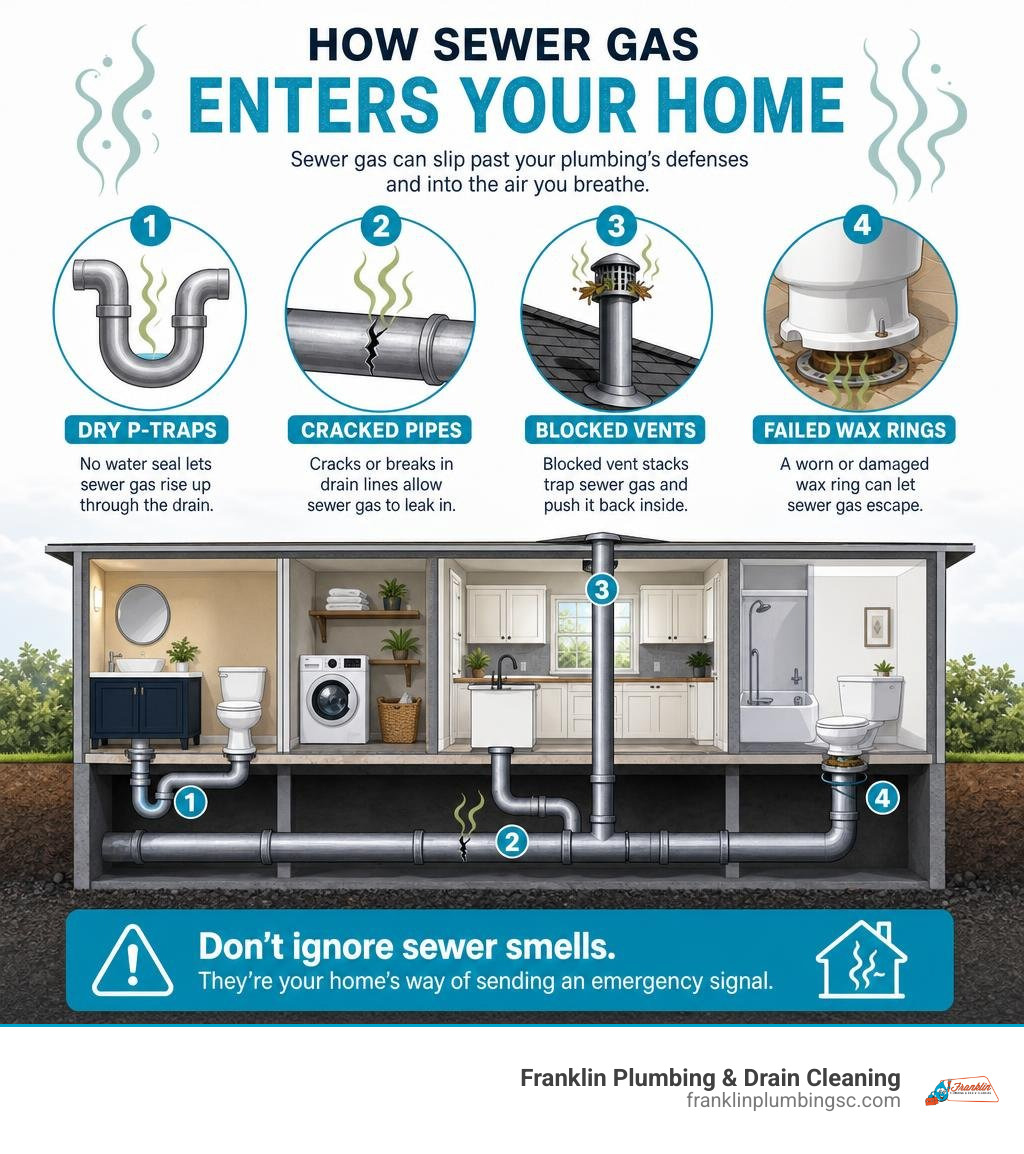
- Bathrooms and showers: A dry trap or drain buildup is common.
- Toilet base: A failed wax ring may allow gas to escape.
- Floor drains: Rarely used drains can lose their water seal.
- Ejector-pump basins: A damaged lid seal can release odor indoors.
Persistent odor with staining, damp areas, or unexplained water damage can also indicate a hidden pipe issue. Our article on signs of a hidden water leak can help you recognize when a plumbing problem may be developing out of sight.
The Health and Safety Risks of Sewer Gas Exposure
Sewer gas can affect indoor air quality, and a sewage backup adds contamination concerns. Hydrogen sulfide and ammonia can irritate the respiratory system, while methane can displace oxygen and ignite. If anyone develops symptoms or the odor is overwhelming, leave the area and contact qualified professionals rather than trying to locate the leak yourself.
Even when symptoms are mild, do not assume the odor will simply disappear. Intermittent smells can be caused by changing pressure in the drain system, so a professional assessment is sensible when the issue repeats.
Common Causes of Sewer Odors in Residential Plumbing
Drainage systems rely on water seals, intact pipes, and open vents to keep sewer gases outside. When one of those safeguards fails, odor can enter the home. Identifying the likely cause helps homeowners take a sensible first step without overlooking signs that need professional repair.
Dry P-Traps and Evaporated Water Seals
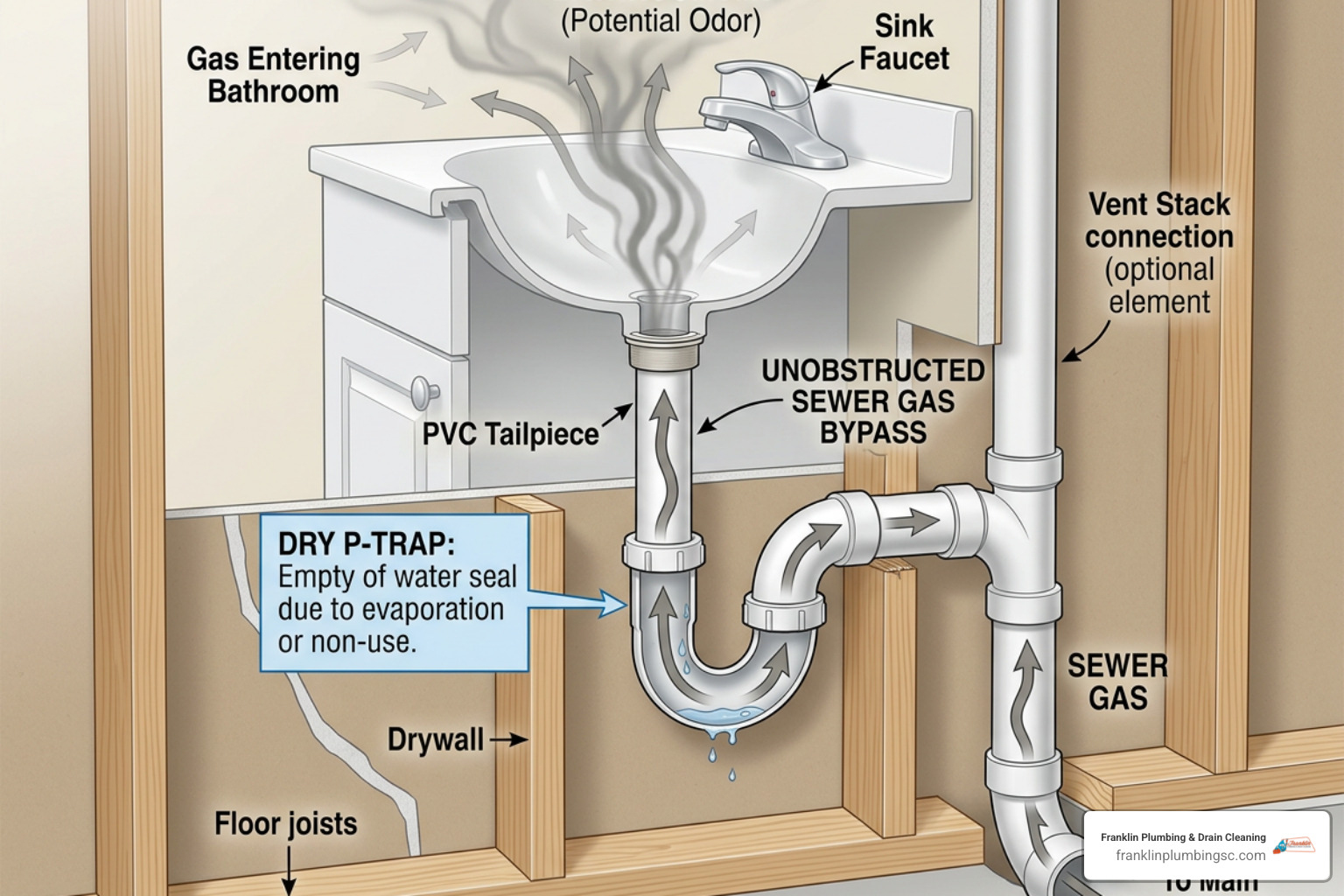
A P-trap holds water in a curved pipe beneath a sink, shower, or floor drain. That water blocks sewer gas. If a fixture sits unused for weeks, the water can evaporate, especially in guest bathrooms or basement drains in Cayce, SC, and Forest Acres, SC.
Running water for about 60 seconds can refill a dry trap. For a rarely used drain, a small amount of food-grade mineral oil can help slow evaporation. If the smell returns quickly, the trap may be siphoning, the fixture may have a leak, or there may be another drainage issue that needs inspection.
Damaged Sewer Lines and Cracked Pipes
Persistent odors that do not improve after refilling traps may point to a damaged drain or sewer line. Older cast-iron and clay lines can be affected by corrosion, settling, and root intrusion. A crack below the yard or slab can allow gas into the soil and home.
Recurring clogs can add strain to a drainage system. Our guide to how pipe clogs and blockages can damage plumbing explains why early attention matters. Other warning signs, such as repeated backups, slow drains throughout the home, or unusually green yard patches, may indicate a compromised line.
When those signs point to a repair need, our sewer line repair services in Columbia, SC can identify the cause and recommend an appropriate solution. Camera inspection is often useful because it shows whether the concern is roots, a break, buildup, or another obstruction.
Blocked Plumbing Vents and Roof Stacks
Vent stacks release sewer gases outside and balance pressure inside the drainage system. Leaves, nests, and storm debris can block them. A blocked vent can pull water from nearby P-traps when a toilet flushes or a tub drains, often causing gurgling before odor enters the home. Roof work and vent clearing can involve fall risk, so homeowners should call a professional if they are unsure.
A technician can also determine whether the vent is actually the source. Similar noises and odors may come from a partial drain blockage, which is why guessing from one symptom alone is not always reliable.
What to Do Immediately When You Smell Sewage
A strong sewage odor or visible backup calls for a calm, safety-first response. Do not keep testing fixtures to see whether the problem clears. Continuing to send water into a blocked main line can force contaminated wastewater out through the lowest drain in the home.
Immediate Steps to Take During a Sewer Smell in House Emergency
- Stop all water use. Do not flush, run faucets, shower, or use appliances that drain water.
- Turn off your HVAC system. This can limit the spread of odors through the home.
- Ventilate if safe. Open exterior doors and windows without using fans or ignition sources near a suspected gas buildup.
- Move vulnerable people and pets away. Leave the home if the odor is overwhelming or anyone feels unwell.
- Document visible damage. Photos can help with a service call and insurance claim.
If you can identify one unused sink, shower, or floor drain as the source and there is no backup, refilling the P-trap may be reasonable. Stop and call a professional if that does not resolve the odor, if multiple fixtures are affected, or if you are not comfortable working around plumbing components.
When calling for service, note whether the odor follows a shower, toilet flush, washing-machine cycle, or rainfall. These details can help the team narrow down whether the issue involves one fixture, a vent, or the main sewer line.
What NOT to Do When Dealing with Sewer Gas
Do not pour chemical drain cleaner or bleach into a suspected sewer problem. These products can damage plumbing or create unsafe reactions, and they do not fix a broken line or failed seal. Our article about how chemical drain cleaners can damage a sewer line explains the risk.
Do not use a standard shop vacuum on sewage, and do not ignore recurring odors. Specialized equipment and professional diagnosis are appropriate when sewage, gas buildup, or a main-line issue may be involved.
How Professional Plumbers Diagnose and Resolve Sewer Gas Leaks
Finding a sewer-gas source often requires professional tools because the problem may be underground, behind a wall, or below a slab. A careful diagnosis helps prevent unnecessary digging and targets the actual source of the odor.
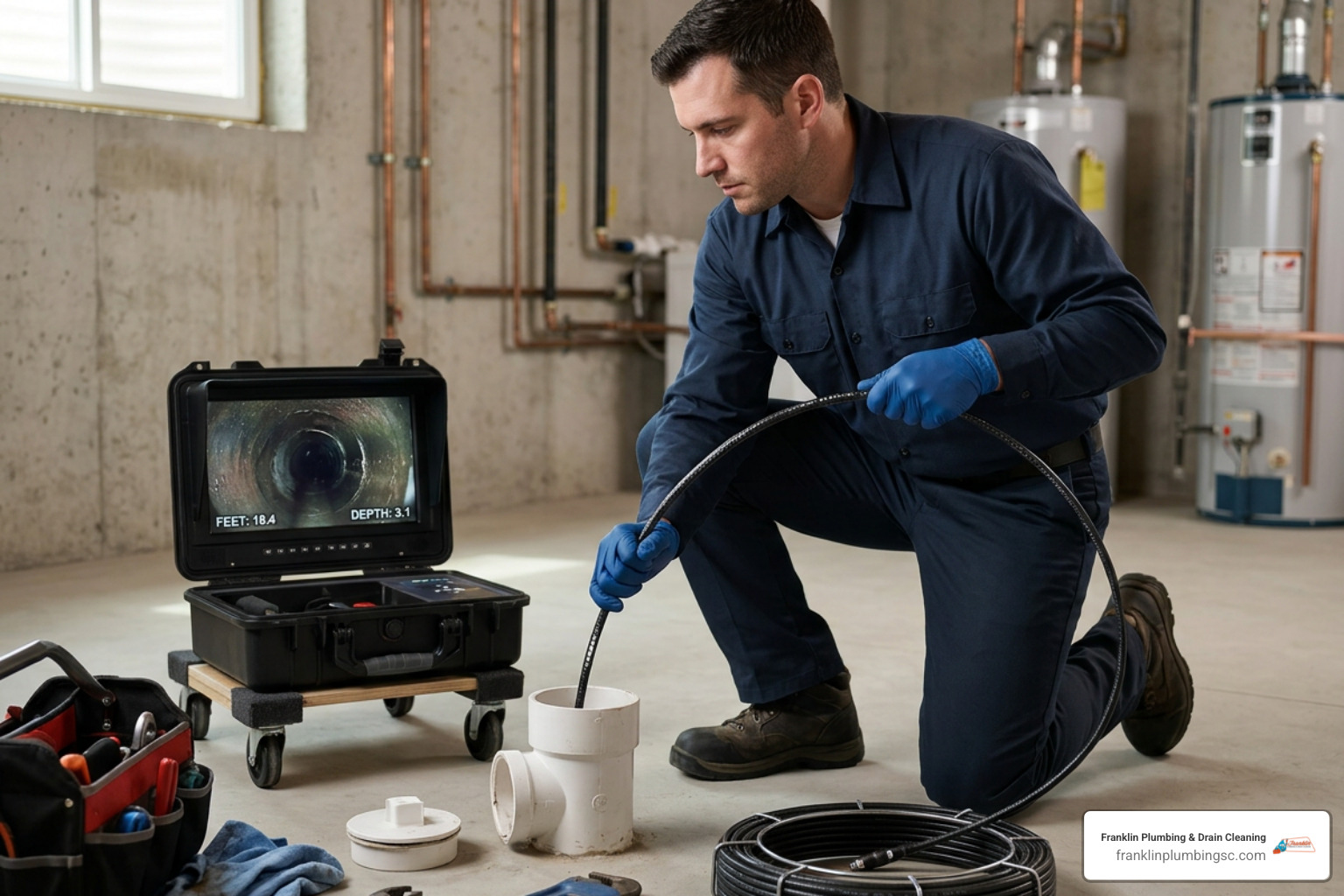
A sewer camera inspection can show roots, cracks, collapsed sections, grease buildup, and other obstructions inside the line. If needed, a professional smoke test can help locate a failed wax ring, cracked pipe, or vent leak.
After identifying the cause, the team can recommend a targeted repair, from sealing a fixture connection to repairing or replacing a damaged sewer line. This approach addresses the source rather than simply masking the smell and gives homeowners clearer information about the next step.
Professional testing is especially useful when the odor comes and goes. A small crack or seal failure may only release noticeable odor when water use or changing air pressure affects the system.
Frequently Asked Questions about Sewer Smells in the Home
Why does my house suddenly smell like sewer?
A dry P-trap, failed toilet seal, blocked vent, or developing sewer-line clog can let sewer gas enter the home.
Is sewer gas dangerous to breathe?
It can irritate the eyes and respiratory system. Leave the area and seek professional help if the odor is strong or anyone feels unwell.
Why does the sewer smell get worse after it rains?
Heavy rain can stress drain lines and municipal systems, exposing existing plumbing problems or forcing odors through weak seals.
Can a dry P-trap cause a sewer smell in the house?
Yes. Run water into an unused sink, shower, or floor drain to restore the water seal. Call a plumber if the odor returns.
How do I know if my toilet wax ring is leaking sewer gas?
Odor around the toilet base, a wobbling fixture, staining, or moisture near the floor can indicate a failed wax ring.
Why are sewer smells more common in the winter?
Dry indoor air can speed up P-trap evaporation, and cold-weather debris or ice may contribute to vent problems.
Can I use bleach to get rid of a sewer smell?
No. Bleach may mask odor briefly but will not repair the cause and can react with other drain chemicals.
What does a gurgling drain mean?
Gurgling can indicate a venting problem or developing clog that is disrupting normal air pressure in the drains.
Who should I call first for a sewer smell emergency in Columbia, SC?
Call a licensed plumber for persistent odor, backups, or suspected sewer-line damage. Arrange professional cleanup as well if sewage has entered the home.
How can I prevent future sewer smells in my home?
Use seldom-used fixtures regularly, keep drains maintained, and schedule professional service when recurring slow drains or odors appear. An annual plumbing inspection can also help identify early warning signs before a larger backup develops.
For any DIY step, stop if there is sewage, strong odor, repeated drainage trouble, or uncertainty about the repair. Plumbing problems can require specialized equipment and should be evaluated by a qualified professional.
Conclusion
A sewer smell in house emergency should not be ignored. A dry trap may be simple to address, but strong, recurring, or widespread odor can signal a sewer-line, vent, or fixture-seal problem.
Franklin Plumbing & Drain Cleaning provides professional sewer repair, drain cleaning, and plumbing inspection services throughout the Columbia, SC, area. For help with a persistent odor or suspected sewer issue, contact our professional sewer repair technicians.

professional
drain cleaning

highly
recommended

through
repairs

quality
work