Underground Water Line Repair: Signs You Need Help
Home »
When Your Water Is Disappearing Underground
An underground water pipe leak is one of the most frustrating problems a homeowner can face. The damage is happening right beneath your feet, but you often can’t see it, hear it, or stop it without knowing exactly where to look.
Here’s the quick answer if you need it fast:
How to deal with an underground water pipe leak:
- Confirm the leak, turn off all water in your home and watch your meter for movement
- Isolate the source, close the main shutoff and recheck the meter to separate indoor vs. outdoor leaks
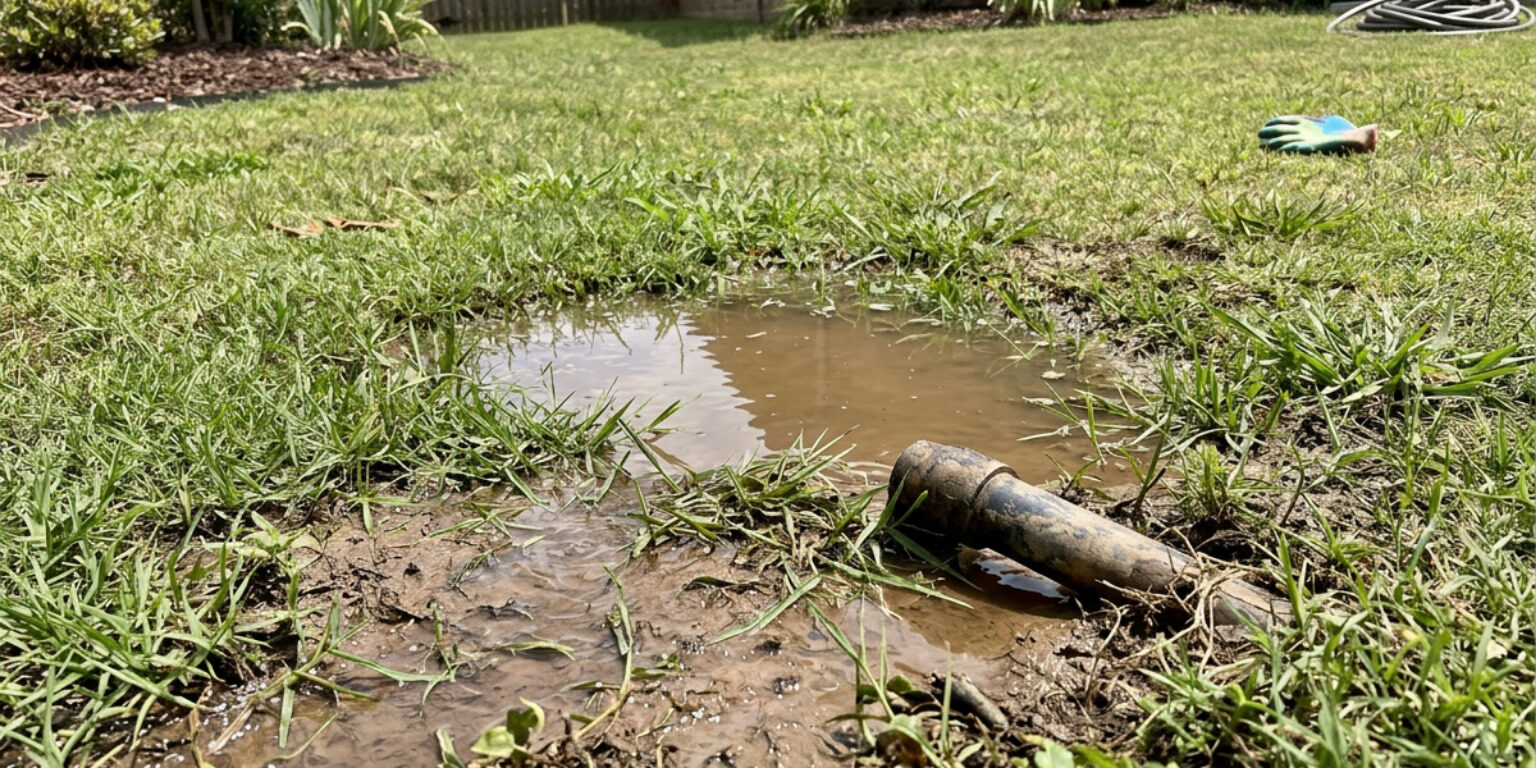
- Look for surface clues, soggy patches, dead grass, sinkholes, or unexplained water bill spikes
- Call a professional, acoustic detection, thermal imaging, and ground-penetrating radar can pinpoint the leak without digging up your yard
- Choose your repair method, trenchless pipe repair or targeted excavation depending on pipe condition and location
The scale of this problem is hard to overstate. A leak no bigger than a dime can waste 10,000 gallons of water per month, adding over $100 to your monthly bill. In one documented case, a single building with a hidden underground leak consumed 43,000 gallons in just two weeks, with barely any water actually being used inside.
And it’s not just a personal problem. Water utilities worldwide lose an estimated 126 billion cubic meters of water every year to leaks and distribution losses.
The good news? Modern detection tools and repair methods mean you no longer have to tear up your entire yard to fix the problem. This guide walks you through everything, from spotting the first warning signs to choosing the right repair for your situation.

Common Signs of an Underground Water Pipe Leak
Because main water lines are buried several feet below the surface, detecting a break is not always as simple as spotting a puddle. In places like Columbia, SC, where soils can vary from heavy red clay to sandy loam, water behaves differently when it escapes a pipe. Sometimes it rises to the surface; other times, it drains deep into the earth, completely out of sight.
Learning the subtle warning signs of a hidden water leak can save you thousands of dollars in water bills and structural repairs.
Unexplained Spikes in Your Water Bill
The most common indicator of a subterranean line break is a sudden, unexplained jump in your monthly water utility bill. If your family’s water usage habits have not changed, yet your bill shows a massive spike, you likely have water constantly escaping the system.
When a pipe cracks, the pressure within the line forces water out 24 hours a day, 7 days a week. This continuous flow registers on your water meter. If you suspect a problem, keeping a close eye on your meter is your first line of defense. A high water bill with no visible leak can also point to a hidden line problem, and the linked article explains what to check before scheduling service.
Physical Changes in Your Yard and Foundation
When water escapes an underground pipe, it eventually has to go somewhere. Depending on the depth of the pipe and the compaction of the surrounding soil, you may notice several distinct physical changes on your property:
- Soggy or Overly Green Grass: If a specific patch of your lawn is consistently muddy, spongy, or significantly greener and faster-growing than the surrounding turf, water may be bubbling up from a broken line.
- Potholes and Sinkholes: As water flows outward from a damaged pipe, it washes away the supporting soil beneath your grass, driveway, or sidewalk. This erosion can cause the ground to cave in, forming dangerous sinkholes.
- Cracked Hardscaping and Foundations: If the leaking line runs beneath your driveway, patio, or home foundation, the constant moisture can cause the soil to swell or wash away entirely. This shifting leads to cracked concrete, uneven driveways, and structural foundation damage.

How to Confirm a Leak Before Calling the Professionals
Before you call in the experts, you can perform a few simple tests to confirm whether you actually have an underground water pipe leak or if the issue is just an indoor fixture left running. This systematic approach ensures you do not waste time or money on unnecessary service calls.
| Step | Action | What It Proves | Next Step |
|---|---|---|---|
| 1. The Meter Test | Turn off all indoor water and watch the meter. | Confirms whether water is actively escaping the system. | If the meter moves, proceed to Step 2. |
| 2. The Isolation Test | Close the main home shutoff valve and check the meter again. | Isolates the leak to either the outdoor service line or indoor plumbing. | If the meter still moves, the leak is outdoors. |
| 3. Visual Inspection | Walk the path of the water line looking for soft spots or sinkholes. | Helps pinpoint the general area of the underground break. | Call for professional acoustic and thermal locating. |
Step 1: The No-Use Water Meter Test
Your water meter is an incredibly sensitive instrument designed to measure every drop of water entering your property. To conduct a no-use test:
- Turn off every water-consuming appliance and fixture inside and outside your home, including washing machines, dishwashers, ice makers, and irrigation systems.
- Locate your water meter box, which is typically found near the street or property boundary in communities like Lexington, SC or Irmo, SC.
- Open the meter lid and look at the dial. Many modern digital meters have a small flow indicator icon, often shaped like a small faucet, droplet, or triangle, that spins when water is moving.
- If you have an older analog meter, write down the exact numbers on the register. Leave the water off for 30 minutes, then check the register again. If the numbers have changed, water is escaping somewhere on your property.
Step 2: Isolating the Underground Water Pipe Leak
Once you have confirmed that water is running, you need to determine if the leak is located inside your home or in the buried service line outside.
Locate your home’s main water shutoff valve. This is usually located where the main water line enters the house, often in a crawlspace, basement, or utility closet. Close this valve completely to cut off all water to the interior plumbing.
Go back out to the water meter and look at the flow indicator. If the meter has stopped moving, the leak is located inside your home, perhaps a running toilet, a dripping faucet, or a broken pipe behind a wall.
However, if the meter continues to register water flow even though the main house valve is shut tight, the leak is located in the buried service line between the meter box and your home.
Advanced Technologies Used to Locate Subsurface Leaks
In the past, finding a buried water line leak involved a lot of guesswork and destructive trenching. Plumbers would dig up yards and driveways simply trying to find the broken section of pipe. Today, the Franklin Plumbing & Drain Cleaning team uses highly advanced, non-invasive technologies to pinpoint the exact location of the break before the team ever touches a shovel.
Acoustic Leak Detection and Correlators
When water escapes from a pressurized underground pipe, it creates a distinct sound. The water spraying through the crack vibrates the pipe wall, and this vibration travels along the pipe. It also creates a low-frequency rumbling sound in the surrounding soil.
The Franklin Plumbing & Drain Cleaning team uses highly sensitive ground microphones and acoustic listening rods as part of its professional leak detection service to amplify these sounds. By placing these sensors on access points like meter valves, hose bibs, or directly on the ground surface, technicians can listen for the characteristic hiss of escaping water.
For complex or long pipelines, the team uses leak correlators. These devices place two sensors at different access points along the pipe. The correlator measures the exact time it takes for the leak sound to reach each sensor. Because the speed of sound through different pipe materials is known, the system can calculate the exact distance of the leak from each sensor with incredible precision.
Thermal Imaging and Ground Penetrating Radar (GPR)
In addition to sound, the team also uses visual technology to “see” underground anomalies:
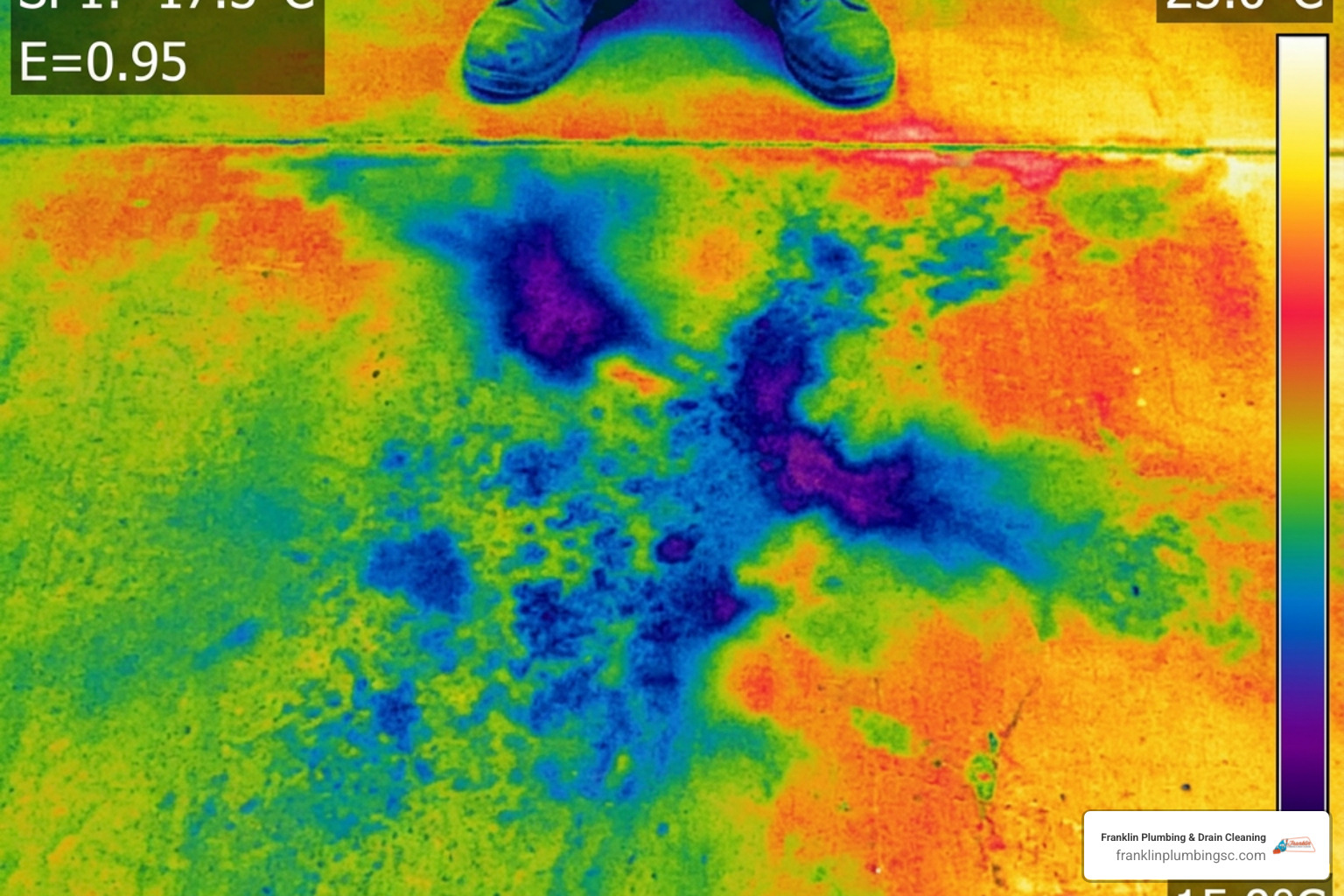
- Thermal Imaging: Water escaping from an underground pipe alters the temperature of the surrounding soil or concrete slab. By using high-resolution thermal imaging cameras, technicians can detect minute temperature differentials on the surface of a floor or lawn, revealing the exact path of the moisture plume.
- Ground Penetrating Radar (GPR): GPR sends high-frequency electromagnetic radar pulses into the ground. When these pulses hit objects or materials with different densities, such as a void created by water erosion or a saturated pocket of soil, they bounce back. This allows us to map the subsurface structure and locate the pipe break without digging.
Repairing an Underground Water Pipe Leak: Trenchless vs. Traditional
Once the team has pinpointed the exact location of your underground water pipe leak, the repair team must choose the most effective way to repair it. The choice generally comes down to traditional excavation or modern trenchless technology.
A comparison of trenchless and traditional water line replacement explains why the right approach depends on the pipe’s condition, location, and access needs.
Traditional Excavation and Targeted Repairs
Water line repair in Columbia, SC may involve physically digging a trench to expose the damaged section of pipe. While the repair team works to minimize disruption, some situations require excavation. This is particularly true if the pipe has collapsed completely, if it has suffered extensive root intrusion, or if the soil has shifted dramatically.
When performing excavation in South Carolina, safety and legal compliance are paramount. The team contacts local utility marking services to map out underground gas, electric, and fiber optic lines before any digging begins.
Additionally, the team adheres strictly to local municipal guidelines, such as the Cayce, SC water service guidelines, which govern how private service lines must connect to public water mains.
Trenchless Solutions for an Underground Water Pipe Leak
Whenever possible, the team may recommend non-invasive, trenchless repair methods. These techniques allow the team to fix or replace your buried water line with minimal disruption to your mature landscaping, concrete driveways, or beautiful patios.
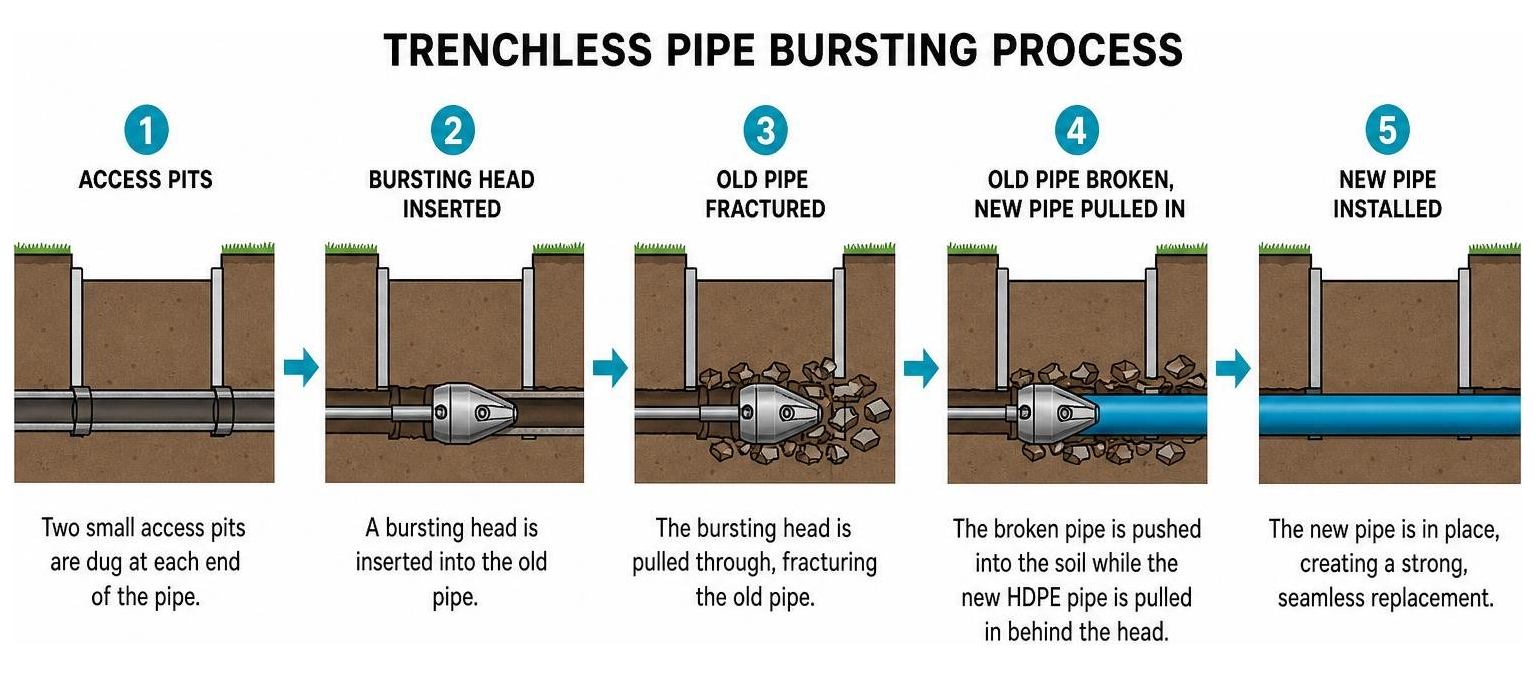
The two most common trenchless methods include:
- Pipe Bursting: This method is used to completely replace an old, worn-out pipe. The repair team digs two small access pits at either end of the line. A heavy-duty steel bursting head is pulled through the old pipe, fracturing it and pushing the pieces into the surrounding soil. At the same time, a brand-new, seamless high-density polyethylene (HDPE) pipe is pulled in directly behind the bursting head.
- Pipe Relining: Also known as cured-in-place pipe (CIPP) lining, this process involves inserting a flexible, resin-saturated sleeve into the damaged pipe. Once in place, the sleeve is inflated, pressing the resin against the inner walls of the old pipe. The resin cures and hardens over a few hours, creating a smooth, durable, jointless “pipe-within-a-pipe” that seals all cracks and leaks.
Preventing Future Underground Pipe Failures
While the Franklin Plumbing & Drain Cleaning team is ready to help resolve an active leak, the best pipe failure is the one that never happens. Taking proactive steps to protect your underground infrastructure can extend the life of your plumbing system by decades.
Root intrusion, shifting soil, corrosion, and pressure problems are among the common causes of water line damage homeowners face most often.
Choosing the Right Pipe Materials
The type of pipe material buried in your yard plays a huge role in how well your system resists leaks, corrosion, and root intrusion. Older homes in areas like Forest Acres, SC or Chapin, SC may still have galvanized iron or early plastic lines, which are highly prone to failure.
When replacing or installing new lines, plumbing professionals may recommend modern, highly durable materials. Copper is incredibly strong and naturally resistant to bacteria and corrosion, though it can be more expensive. High-density polyethylene (HDPE) and cross-linked polyethylene (PEX) are excellent, flexible choices that resist ground movement, freeze-thaw cycles, and chemical degradation.
The ideal pipes for residential water lines vary by soil conditions, water chemistry, installation requirements, and the age of the existing line.
Pressure Regulation and Maintenance
High water pressure is a silent killer for residential plumbing systems. While a high-pressure shower feels great, excessive pressure puts constant stress on your pipes, joints, and valves, leading to premature wear and sudden pipe bursts.
The team may recommend installing a high-quality water pressure regulator on your main line to keep your home’s water pressure within a safe range, typically between 40 and 60 PSI.
Additionally, installing thermal expansion tanks near your water heater can absorb excess pressure caused by heating water, preventing dangerous pressure spikes from traveling back down into your buried service lines.
Frequently Asked Questions About Underground Leaks
How do I know if my underground water pipe is leaking?
The most common symptoms include a sudden, unexplained spike in your monthly water bill, areas of your lawn that remain spongy or wet even during dry weather, a noticeable drop in household water pressure, or the sound of water running when all indoor fixtures are completely turned off.
Can a slab leak cause structural damage to my home?
Yes. A slab leak occurs when a pipe breaks beneath your concrete foundation. Over time, the escaping water can wash away the supporting soil beneath the concrete, causing the foundation to settle, crack, or shift. This can lead to warped floors, cracked drywall, and compromised structural integrity.
How much does it cost to repair an underground water pipe leak?
The total cost of repair can vary significantly depending on several factors, including the depth of the pipe, the location of the leak, whether it lies beneath concrete or soil, and the repair method used. Homeowners should request a professional estimate for accurate pricing tailored to their specific property.
Will my homeowners insurance cover underground leak detection and repair?
Insurance coverage typically depends on the cause of the leak and the specific terms of your policy. Many standard policies cover sudden, accidental water damage to the home’s interior, but they may not cover the cost of repairing the buried service line itself unless you have added specific “service line coverage” to your policy.
How do professionals find leaks under concrete driveways?
Professionals use non-invasive acoustic sensors and ground microphones to listen for the high-frequency vibrations created by escaping water. Technicians also use thermal imaging cameras to detect temperature anomalies caused by moisture pooling beneath the concrete, allowing technicians to pinpoint the leak without drilling unnecessary holes.
What is non-revenue water and why does it matter to me?
Non-revenue water is water that has been treated by a utility company but is lost through leaks, theft, or metering inaccuracies before it ever reaches a customer. This lost water represents a massive financial and environmental waste, and utilities must eventually raise water rates for consumers to cover these operational losses.
How long does it take to locate and repair a buried water line leak?
In most cases, locating the exact source of an underground leak takes between one and three hours. Once pinpointed, the actual repair or replacement can usually be completed in a single day, especially when using advanced trenchless repair methods that eliminate the need for extensive excavation.
Can tree roots cause underground water pipe leaks?
Absolutely. Tree roots are naturally drawn to the warmth and moisture of underground pipes. Even a microscopic crack or loose joint can allow tiny root hairs to enter the pipe. Once inside, the roots grow rapidly, clogging the line and eventually expanding until they split or collapse the pipe entirely.
When is a water leak considered an emergency?
A water leak is considered an emergency when it threatens the structural integrity of your home, causes active flooding, or forces you to shut off your main water supply, leaving your household without running water. If you find yourself in this situation, you should contact an emergency plumber immediately.
Is trenchless pipe repair always an option for underground leaks?
While trenchless repair is highly versatile, it is not always possible. If a pipe has completely collapsed, shifted drastically out of alignment, or suffered severe structural damage over a long distance, traditional excavation may be required to clear the path and manually lay a new line.
Conclusion
Dealing with a suspected underground water pipe leak can feel overwhelming, but you do not have to navigate it alone. Ignoring the signs of a subsurface break will only lead to higher utility bills, wasted water, and potentially catastrophic damage to your landscaping and home foundation.
With advanced acoustic locating tools, thermal imaging, and trenchless repair options, the team can find and fix your buried water line issues quickly, accurately, and with minimal disruption to your property. Whether you are in Columbia, SC, Lexington, SC, Irmo, SC, or any of the surrounding areas, our licensed and experienced technicians are ready to restore your plumbing system to perfect working order.
If you suspect you have a hidden line break, do not wait for the damage to spread. The licensed, experienced team at Franklin Plumbing & Drain Cleaning provides efficient, non-invasive solutions backed by a 100% satisfaction guarantee. To protect your property and stop wasting water, contact our professional leak detection technicians today.

professional
drain cleaning

highly
recommended

through
repairs

quality
work