Water Heater Installation Cost in Columbia, SC: 2026 Guide
Home »
What Does Water Heater Installation Cost in Columbia, SC?
Water heater installation cost in Columbia, SC varies based on the type of system, the condition of your plumbing, and whether your home needs code upgrades before the new unit can be installed.
Here’s a quick way to think about the project before you request an estimate:
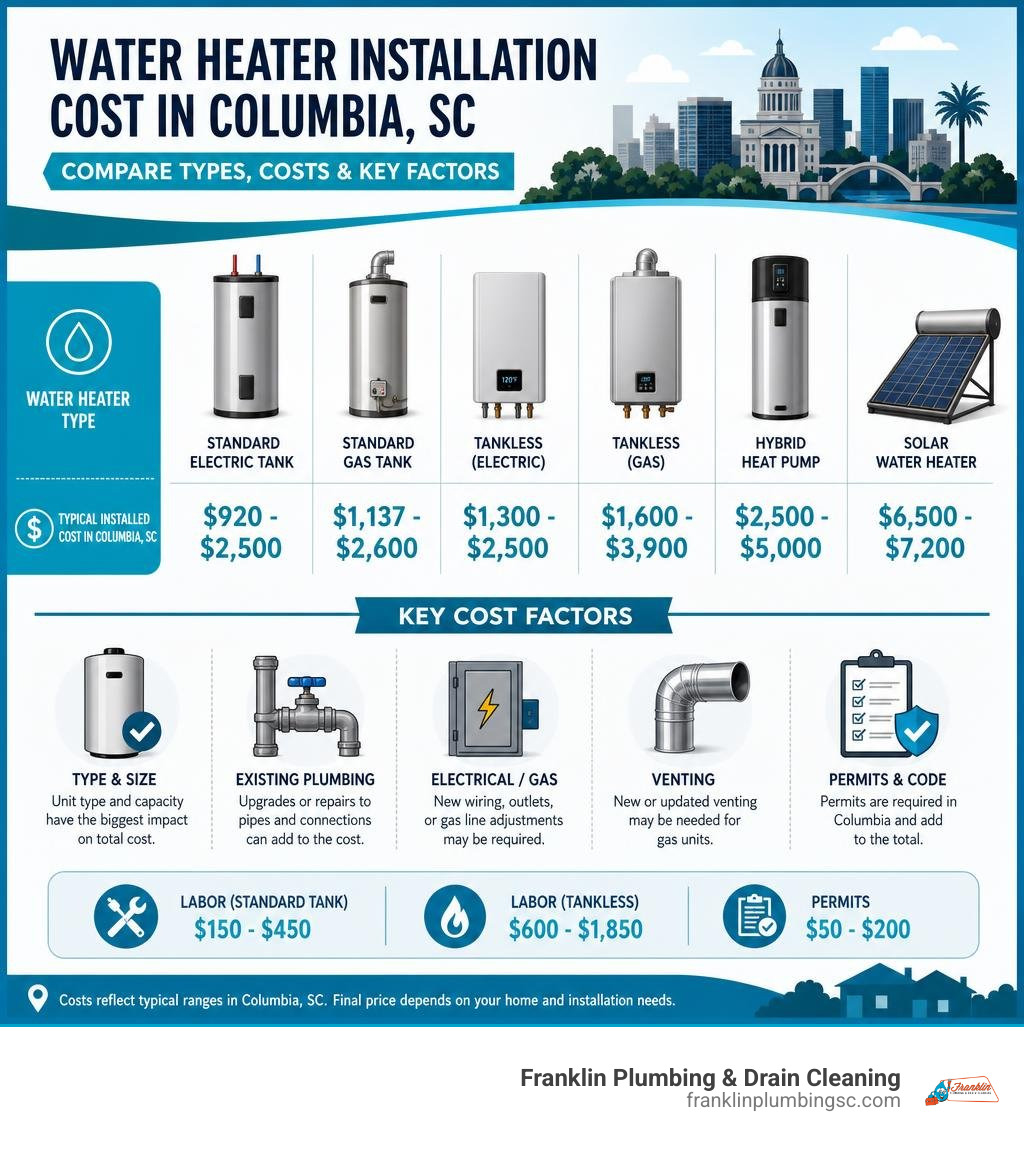
| Water Heater Type | Typical Cost Level |
|---|---|
| Standard Electric Tank | Lower upfront cost |
| Standard Gas Tank | Lower to moderate upfront cost |
| Tankless Electric | Moderate upfront cost |
| Tankless Gas | Moderate to higher upfront cost |
| Hybrid Heat Pump | Higher upfront cost, lower operating cost |
| Solar Water Heater | Highest upfront cost |
Labor, permits, access to the installation area, fuel type, venting, and electrical requirements all affect the final quote. A simple tank replacement is usually less involved than converting to a tankless system, adding new venting, upgrading a circuit, or correcting older plumbing that no longer meets code.
Your final number depends on a few key factors: the type and size of unit you choose, the condition of your existing plumbing and electrical setup, and whether your home needs any code upgrades before a new unit can be installed.
If your water heater is failing, running out of hot water faster than it used to, or pushing past the 10-year mark, you’re likely already feeling the pressure to make a decision fast. This guide walks you through everything you need to know before scheduling an installation, from permit requirements and hidden costs in older Columbia homes, to energy-efficient options that may lower long-term operating costs.
What Influences Water Heater Installation Cost in Columbia, SC?
When planning for a new water heater, it is helpful to understand that the final invoice is not just the price of the unit itself. In Columbia, SC, several factors determine where your estimate will land.
Local labor rates represent a significant portion of the total cost. Professional plumbers in the Midlands charge based on the complexity of the job. A straightforward, like-for-like replacement in an easily accessible garage or utility room takes less time and labor. However, if your water heater is tucked away in a tight crawlspace in Lexington, SC, or up in an attic in Irmo, SC, the extra labor required to safely navigate and install the unit will increase the price.
Local installation costs can also change when structural modifications are needed. Running new gas lines, upgrading electrical circuits, correcting old shutoff valves, or installing advanced venting systems can quickly add to your project total. Permit fees and local municipal inspections also play a role in the final price, ensuring that the installation complies with all safety codes.
Comparing Costs by Water Heater Type
The type of water heater you select is the largest cost driver. Each technology has its own installation requirements, upfront equipment cost level, and long-term savings potential. Homeowners can choose from several options depending on household size, fuel availability, and energy goals.
For homeowners still comparing models, our breakdown of the best types of water heaters for residential use explains how tank, tankless, and high-efficiency systems differ in everyday use.
Standard Tank Water Heater Installation Cost in Columbia, SC
Conventional tank water heaters remain the most popular choice in the Midlands due to their lower upfront purchase price. These systems keep a dedicated volume of water constantly heated and ready for use.
- Electric Tanks: Typically the most affordable units to purchase and install. They do not require venting systems, making placement highly flexible.
- Gas Tanks: Usually involve a moderate installation cost. While the equipment is often slightly more expensive than electric models, gas units heat water faster and generally cost less to run monthly.
Venting is a major consideration for gas tanks. Traditional atmospheric venting relies on a metal chimney to draft exhaust gases out of the home naturally. If your home requires a direct vent or power vent system to safely route exhaust through a side wall, the installation will be more involved.
Tankless Water Heater Installation Cost in Columbia, SC
Tankless systems heat water on demand rather than storing it. This means you get an endless supply of hot water and lower energy bills, though the initial setup costs are higher.
If you are interested in making the switch, our tankless water heater service team can help determine whether your home has the right gas, electrical, and venting setup for an efficient installation.
An electric tankless system typically has a moderate installed cost depending on the gallons-per-minute capacity. Gas tankless systems, which are popular for larger families, often cost more to install because they need proper fuel supply and exhaust venting.
The higher cost for gas tankless units is often due to the infrastructure upgrades required. These systems may require larger gas lines to handle the high burner demand and specialized venting to safely manage hot exhaust. To protect your investment, routine care matters because tankless water heaters still need maintenance to prevent scale buildup, performance issues, and avoidable repairs.
Hybrid Heat Pump Water Heaters
Hybrid heat pump water heaters pull heat from the surrounding air and transfer it to the water tank. This technology is efficient compared with standard electric tanks.
The typical installation cost for a hybrid system is usually higher than a standard tank replacement, but the operating costs can be lower over time. Because these units rely on ambient air heat, they work exceptionally well in warm South Carolina climates. They also naturally dehumidify the space where they are installed, which can be a helpful bonus for damp crawlspaces or garages in Cayce, SC, or West Columbia, SC.
Additional Cost Factors and Code Requirements in Columbia, SC
Installing a water heater is a highly regulated process. Because these systems involve high pressures, electrical connections, and flammable gases, local municipalities enforce strict building codes to keep your family safe.
Local Permits and Code Compliance
In Columbia, SC, and surrounding areas like Forest Acres, SC, municipal permits are required for most water heater replacements. Skipping a permit might seem convenient, but it can create safety, code, insurance, and resale problems if the installation is not properly inspected.
Modern plumbing codes, including the South Carolina Plumbing Code, require specific safety features:
- Thermal Expansion Tanks: If your home has a closed water system, which is common in municipal water areas like Dentsville, SC, and St Andrews, SC, an expansion tank must be installed to absorb excess pressure as water heats up.
- Temperature and Pressure Relief Valves: These safety valves need dedicated discharge piping to reduce scalding and pressure-related risks in the event of an over-pressure release.
- Combustion Air: Gas units must have adequate access to fresh air for safe combustion, which may require upgraded vents or grilles.
Older Home Challenges and System Upgrades
If you live in an older, historic home in downtown Columbia, SC, or established neighborhoods in Chapin, SC, you may face unique installation challenges.
Older plumbing systems often feature galvanized steel pipes that have rusted internally. When our team installs a new water heater, those old pipes may need to be replaced with modern copper or PEX lines to prevent immediate clogging or chemical reactions. Older electrical panels may also lack the capacity to support a modern electric or hybrid water heater, requiring an electrical upgrade before installation.
Where you decide to position your new unit also matters. Placement affects venting, access, drainage, maintenance, and future repairs, so it should be considered before the work begins. Our article on where to place your water heater tank explains how location can influence performance, safety, and service access.
Long-Term Operating Costs and Energy Rebates
While upfront costs are important, the ongoing cost to run your water heater will impact your household budget for the next decade. Choosing an energy-efficient model can reduce monthly utility use and may make the higher installation cost worthwhile over time.
Impact of Columbia’s Electricity Rates
Electric storage tanks can cost more to operate than many homeowners expect, especially in larger households with heavy hot water demand. Usage patterns, tank size, temperature settings, insulation, and utility rates all influence the monthly cost.
By comparison, natural gas units are often cost-effective in our area when a home already has gas service. If gas is not an option for your home, upgrading to a hybrid heat pump water heater can be an efficient way to keep electric water heating costs lower.
Available Rebates and Incentives in 2026
To help offset the initial cost of energy-efficient upgrades, Columbia, SC, homeowners may be able to use rebates or tax incentives for qualifying equipment. Availability can change based on utility program rules, income requirements, and federal eligibility guidelines, so homeowners should confirm current incentive details before choosing a system. The ENERGY STAR water heater resource is a useful place to compare qualifying high-efficiency options before making a final decision.
Common incentive categories include:
- Utility rebates: Local utility programs may offer rebates for qualifying high-efficiency water heaters.
- Federal electrification rebates: Some low-to-moderate-income households may qualify for rebate support for heat pump water heater installations.
- Federal tax credits: Qualifying energy-efficient water heater installations may be eligible for a federal tax credit.
Sizing and Selecting the Right Water Heater
Choosing a water heater that is too small means cold showers, while choosing one that is too large means paying to heat water you do not need. Sizing should be based on your household’s peak water demand.
For standard tank water heaters, use this general guide:
- 1 to 2 people: smaller household tank capacity
- 3 to 4 people: mid-size household tank capacity
- 5+ people: larger household tank capacity
For tankless systems, sizing is measured in gallons per minute. In Columbia, SC, the incoming groundwater temperature affects how hard the unit must work to deliver comfortable hot water. A typical shower requires steady flow, so the right system depends on how many showers, appliances, or fixtures you want to run at the same time.
If you are trying to decide whether it is time to repair your current unit or buy a new one, our guide on when to replace your water heater covers age, performance problems, leaking, and other signs that replacement may be the better long-term choice.
Why Professional Installation Beats DIY
It can be tempting to try to install a water heater yourself to save on labor costs, but this is a project best left to licensed professionals.
Working with water heaters involves dealing with high-voltage electricity, pressurized water, and explosive gases like natural gas or propane. A single mistake can lead to catastrophic water damage, electrical fires, or carbon monoxide poisoning.
Additionally, many manufacturers may limit or void equipment warranty coverage if the water heater is not installed by a licensed plumber. When you hire a professional team, you protect your investment, ensure code compliance, and gain peace of mind knowing the job was done safely.
If you want to keep your new system running smoothly for years to come, follow a consistent maintenance schedule. Our tips on how to maintain your water heater explain flushing, inspection, and routine care steps that help prevent sediment buildup and performance issues.
If your project involves other plumbing concerns at the same time, our broader professional plumbing services can help address water lines, drains, gas lines, and related system issues before they complicate the installation.
Frequently Asked Questions About Water Heater Installation
How much does it cost to install a water heater in Columbia, SC?
A standard water heater installation in Columbia, SC, varies by system type, home setup, labor complexity, and code requirements. Tank replacements usually cost less than tankless, hybrid, or major conversion projects.
Do I need a permit to replace a water heater in Columbia, SC?
Yes. Local building codes require permits for most water heater replacements in Columbia, SC, and surrounding areas like Lexington, SC, or West Columbia, SC. This helps confirm the installation is inspected and meets safety standards.
What is the average lifespan of a water heater in South Carolina?
Standard tank water heaters typically last about 8 to 12 years. Tankless water heaters can last longer with proper annual maintenance, flushing, and scale control.
Is a gas or electric water heater cheaper to operate in Columbia, SC?
Gas water heaters are often cheaper to operate when a home already has gas service. Electric hybrid heat pump units can also be cost-effective because they use less electricity than standard electric storage tanks.
What are the benefits of upgrading to a tankless water heater?
Tankless water heaters provide hot water on demand, take up less space, and reduce standby energy loss because they do not keep a full tank heated all day.
How long does a professional water heater installation take?
A standard tank-to-tank replacement can often be completed the same day. Converting to tankless or correcting gas, electrical, or venting issues can take longer.
What rebates are available for energy-efficient water heaters in 2026?
Some Columbia, SC, homeowners may qualify for utility rebates, federal electrification rebates, or federal tax credits on qualifying energy-efficient water heaters. Always confirm current program rules before buying equipment.
Why is my water heater making strange noises?
Popping or rumbling noises are often caused by sediment buildup at the bottom of the tank. Flushing or professional inspection can help determine whether maintenance or replacement is needed.
Do I need an expansion tank for my water heater in Columbia, SC?
You may need an expansion tank if your home has a closed water system with a backflow preventer or pressure-reducing valve. A licensed plumber can confirm what your system requires.
Can I install a water heater myself to save on labor costs?
DIY installation is not recommended because water heaters involve gas lines, carbon monoxide venting, pressure, and high-voltage electricity. Professional installation helps protect safety, code compliance, and warranty coverage.
Conclusion
Whether you need a quick tank replacement, a high-efficiency hybrid upgrade, or a space-saving tankless system, getting the job done right the first time is essential. At Franklin Plumbing & Drain Cleaning, we provide licensed, professional plumbing services throughout the Midlands, including West Columbia, SC, Lexington, SC, Irmo, SC, and Arcadia Lakes, SC. We stand behind our work with a 100% satisfaction guarantee.
If you are ready to upgrade your home comfort or need a professional assessment of your current system, Franklin Plumbing & Drain Cleaning is here to help you choose the right solution for your home and budget. You can contact our professional water heater technicians to schedule service or request guidance from our local team.

professional
drain cleaning

highly
recommended

through
repairs

quality
work