Burst Pipe at Home? Your First 10 Minutes Matter Most
Home »

When a Pipe Bursts at Home, the First 10 Minutes Can Save You Thousands
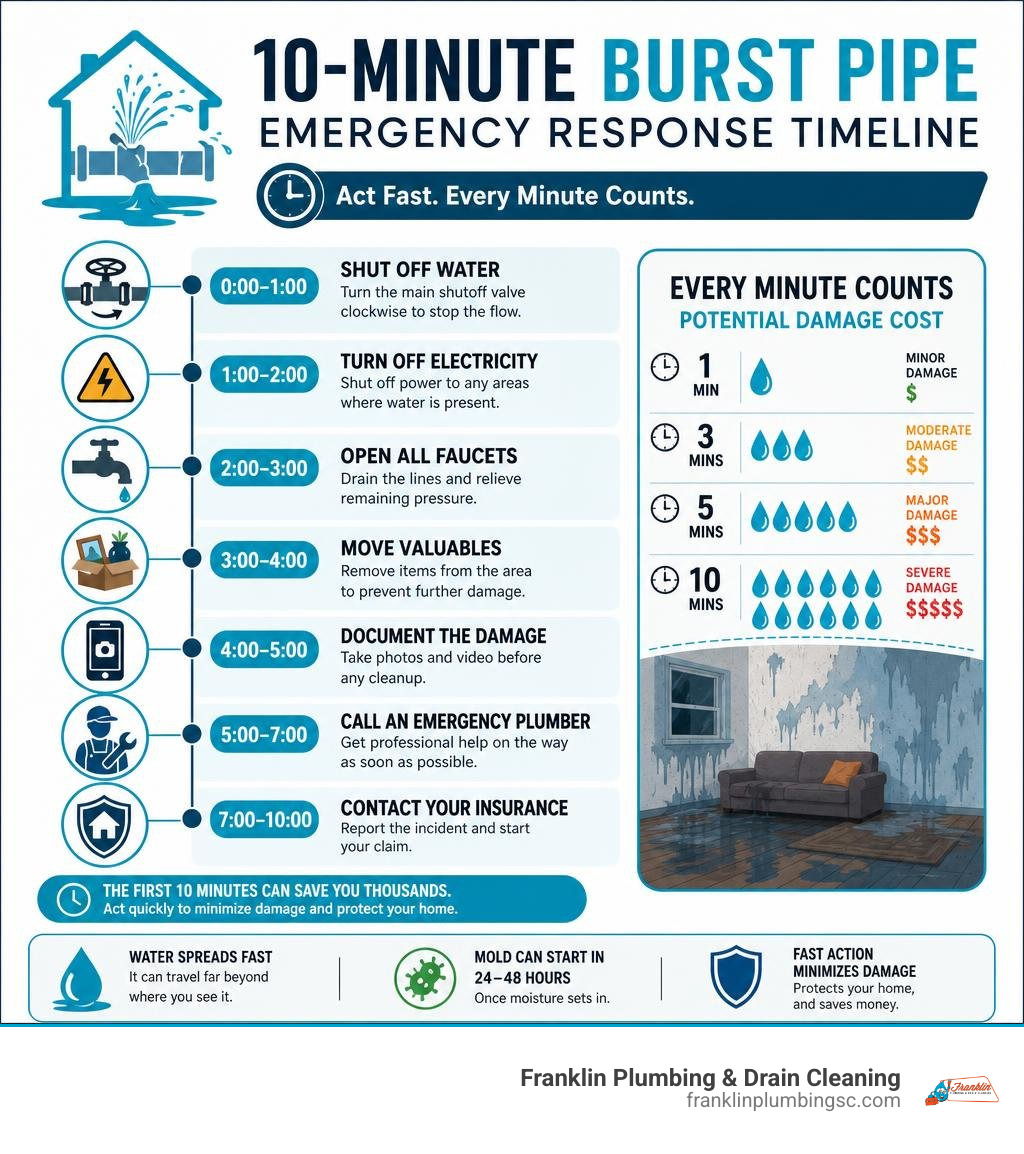
Knowing burst pipe what to do in those first critical minutes is the difference between a manageable repair and a catastrophic claim. A burst pipe releases 2 to 8 gallons of water per minute, so hundreds of gallons can flood your home before a plumber ever arrives.
If you have a burst pipe right now, here’s what to do immediately:
- Shut off the main water supply: turn the main shutoff valve clockwise to stop water flow
- Turn off electricity to any areas where water is present or spreading
- Open all faucets to drain the lines and relieve remaining pressure
- Move valuables away from the flooded area
- Document the damage with photos and video before you clean anything up
- Call a licensed emergency plumber right away
- Contact your homeowners insurance provider to start your claim
Every minute you wait, more water soaks into your floors, walls, and insulation. And mold can begin growing in as little as 24 to 48 hours once moisture settles in.
Whether you heard a sudden pop in the wall, came home to standing water, or noticed your ceiling sagging, this guide walks you through exactly what to do, step by step.
Burst Pipe What to Do to Minimize Water Damage
When you find yourself standing in a puddle of water inside your living room, panic is a natural reaction. However, immediate water mitigation is your best defense against long-term structural issues. The moment water starts escaping a pressurized plumbing line, it begins tracking along floorboards, soaking into drywall, and dripping through ceilings.
To limit the devastation, you must act as your own first responder before the emergency plumber arrives. Containment is key. While you wait for professional help, focus on moving electronics, furniture, and family heirlooms out of the path of the water. If the water is pooling on carpet, placing small squares of aluminum foil under the legs of heavy wooden furniture can prevent the wood stains from permanently ruining your flooring.
If you have a wet-dry vacuum, you can begin extracting standing water, but only if it is entirely safe to do so. Never step into standing water to clear it out if there is any chance that electrical systems are compromised.
Step 1: Shut Off the Main Water Supply
The single most important action in your 10-minute emergency plan is locating and closing the main water shutoff valve. This stops the endless flow of water entering your home from the municipal water main or your private well.
Depending on the construction of your home in Columbia, SC, or surrounding areas like Lexington, SC, your main shutoff valve can be in a few common places:
- In homes with a crawl space or basement: The valve is typically located on an interior wall close to where the main water line enters the foundation, often within three feet of the front wall.
- In slab-foundation homes: Look in your utility closet, garage, near your water heater, or under the kitchen sink.
- Outside near the street: You may have an outdoor shutoff valve located inside a ground-level concrete or plastic meter box near your property line. You might need a meter key or a pair of pliers to turn this valve.
Once you find the valve, turn it clockwise (to the right) to close it. If it is a lever-style ball valve, pull the lever 90 degrees so that it is perpendicular to the pipe. To confirm the water is successfully shut off, try turning on a nearby faucet. If the water slows to a drip and stops, you have successfully isolated the system.
Step 2: Turn Off the Electricity Safely
Water and electricity are a lethal combination. If water is leaking near your electrical panel, outlets, light fixtures, or major appliances, you must cut the power immediately.
Locate your main electrical panel or breaker box. If the area in front of the panel is completely dry, stand to the side and switch off the individual breakers for the affected rooms. If you are unsure which rooms are affected, or if water has spread extensively, it is safest to flip the main breaker switch to shut off power to the entire house.
If you must walk through standing water to reach your electrical panel, or if the panel itself is wet, do not touch it. Evacuate the home immediately and contact your utility provider or an emergency professional to cut the power from the outside. Always use a battery-powered flashlight rather than your phone light if you are navigating dark, wet areas.
Step 3: Drain the Lines and Relieve Pressure
Even after you shut off the main water valve, there are still gallons of pressurized water trapped inside your home’s pipes. If you do not drain this water, it will continue to leak out of the burst section.
To relieve this pressure, perform a controlled faucet draining. Go to the lowest faucet in your home, often an outdoor hose bib, a basement utility sink, or a laundry tap, and turn it on completely. Then, go to the highest faucet in your home and turn it on as well. This allows air into the system, helping the remaining water drain out of the lowest point safely instead of pooling inside your walls.
Be sure to flush all the toilets in your home to empty their tanks. Finally, turn off your water heater. If your plumbing system drains completely while your water heater is still running, the heating elements inside the tank can burn out, leading to expensive equipment damage.
Identifying the Warning Signs of a Hidden Water Leak
Not all burst pipes announce themselves with a dramatic flood. In fact, many pipe failures start as hidden leaks that slowly saturate your home over weeks or months before they are discovered. Knowing how to spot these early warning signs can save you from a major emergency.
If you suspect your home has an active but unseen leak, look out for the signs of a hidden water leak such as bubbling paint, soft spots on your baseboards, musty odors, and unexplained spikes in your monthly utility bills.
Recognizing a Burst Pipe What to Do When Leaks Are Hidden
When a pipe bursts behind drywall or beneath your flooring, the water will eventually make its presence known. You might notice a ceiling bulging downward under the weight of trapped water, or dark, damp stains spreading across your walls.
If you see a sagging, water-logged ceiling, do not leave it alone. The drywall can collapse entirely, causing massive structural damage. A controlled release is often the best approach: place a large bucket underneath the bulge and carefully puncture the lowest point of the sag with a screwdriver or a small drill bit to drain the trapped water safely.
Because finding the exact source of a wall or under-floor leak without destroying your home requires specialized equipment, it is best to call for professional leak detection services to pinpoint the problem area using thermal imaging and acoustic sensors.
How to Spot Low Water Pressure and Discolored Water
If you turn on your kitchen faucet and notice a sudden, dramatic drop in water pressure, it could mean that water is escaping through a major break elsewhere in your line. Similarly, if your water suddenly looks rusty, brown, or discolored, it is a strong indicator of internal pipe corrosion.
Corroded pipes thin out over time, making them highly susceptible to cracking under normal system pressure. If you notice persistent pressure issues or discolored water at your plumbing fixtures, it is time to have a professional evaluate the health of your water lines.
The True Cost of Water Damage and Pipe Failures
The financial impact of a burst pipe can escalate rapidly. Water damage and freezing claims are among the most common homeowner insurance claims filed each year, and the total impact can vary widely based on how long the water runs, what materials are affected, and how quickly cleanup begins.
When a pipe bursts, the plumbing repair itself is often only one part of the recovery. Much of the disruption comes from water damage restoration, mold remediation, flooring repairs, drywall replacement, and structural drying. Costs can rise quickly if the water has sat long enough to warp hardwood floors, ruin subflooring, or compromise framing.
If your home has older metal lines that are starting to fail, investing in professional water line repair is essential to prevent one burst pipe from turning into a pattern of repeat emergencies. A licensed plumber can determine whether a targeted repair is enough or whether aging supply lines need a more complete replacement plan.
The best way to control expenses is to stop the water quickly, document the damage, and call experienced plumbing professionals before hidden moisture spreads into nearby rooms.
Navigating Homeowners Insurance and Documenting Damage
When dealing with a burst pipe, your homeowners insurance policy can be a lifesaver, but you must follow the correct procedures to ensure your claim is approved. Standard homeowners insurance typically covers sudden and accidental water damage, such as a pipe that bursts unexpectedly due to freezing or age. However, policies generally do not cover damage caused by long-term, unresolved leaks or homeowner neglect.
To protect your claim, documentation must begin before any cleanup starts. Take detailed photos and videos of the burst pipe, the standing water, and all damaged belongings, including furniture, electronics, and drywall. Keep a detailed inventory of every ruined item and save all receipts for emergency plumbing repairs, water extraction services, and even temporary lodging if you are forced to leave your home during repairs.
If water damage reveals a broader supply-line problem, Franklin Plumbing & Drain Cleaning‘s team can inspect the affected plumbing, repair the damaged section, and help reduce the risk of repeat water damage in your home.
How Pipe Materials Affect Repair and Prevention Strategies
The material your plumbing system is built from plays a massive role in how easily it can burst and how a plumber will approach repairing it. Different materials have unique physical properties, lifespans, and failure patterns.
When the break is part of a larger drain or underground issue, professional sewer line repair can help protect your home’s foundation from hidden water damage, soil movement, and recurring backups. That kind of work requires the right diagnostic equipment and an experienced team, especially when the damaged line is difficult to access.
Copper, PEX, and Galvanized Steel Burst Pipe What to Do Prevention
Understanding the materials behind your walls helps you make informed choices about your plumbing system:
- Copper: Long considered the gold standard of plumbing, copper is durable but rigid. When water freezes inside a copper pipe, the metal cannot expand. The pressure builds up until the pipe splits cleanly along its seam. Repairing copper requires specialized soldering equipment and open-flame torches, which must be handled with extreme care near dry framing.
- PEX (Cross-linked Polyethylene): PEX is highly flexible and has excellent freeze resistance. It can expand up to nine percent to accommodate freezing ice before shrinking back to its original shape. While PEX is much less likely to burst than metal, failures can still occur at rigid brass fittings and connections. PEX repairs are typically faster and less invasive because the material can be easily snaked through walls.
- Galvanized Steel: Common in homes built before the 1960s, galvanized steel pipes corrode from the inside out. As rust builds up, it narrows the pipe, restricts water flow, and weakens the metal walls until they crack. A burst in a galvanized pipe is rarely an isolated incident; it is usually a sign of systemic corrosion.
If your home has a mixture of older galvanized steel and newer materials, you may also need to monitor your drain lines. Corrosion and shifting soil can affect your wastewater system, making a professional sewer line evaluation necessary to protect your home’s foundation from hidden underground water damage.
Preparing Your Plumbing System for Freezing Weather
In South Carolina, we do not experience prolonged sub-zero temperatures very often, but sudden cold snaps can easily catch local homeowners off guard. Taking a few proactive steps before winter arrives can keep your pipes from freezing and bursting.
First, install foam pipe insulation on any exposed water lines in unheated areas of your home, such as crawl spaces, basements, attics, and garages. Second, when temperatures are forecasted to drop below 20 degrees, leave your sink cabinet doors open to allow warm indoor air to circulate around the pipes. Finally, let your faucets drip slowly to keep water moving, which prevents ice blockages from forming.
If you are planning to travel during the winter months, never turn your heating system completely off. Keep your thermostat set to at least 55 degrees to ensure your indoor plumbing remains warm enough to prevent freezing.
To make sure your entire home is ready for seasonal shifts, take the time to prepare your plumbing system for weather changes before the first major cold front arrives.
How to Handle Sewer Line Freezing in Older Homes
Older homes with open crawl spaces are particularly vulnerable to freezing plumbing. While supply lines are under constant pressure, sewer and drain lines can also freeze if they are exposed to cold winds or if they have slow, persistent leaks that allow water to pool and freeze inside the pipe.
If you are dealing with frozen drain lines in an older property, you must take care not to crack the delicate, aging pipe materials while attempting to clear them. Understanding how sewer line freezing affects older homes is crucial for protecting older properties from catastrophic sewer backups during winter weather.
Frequently Asked Questions About Burst Pipes
How long does it take for mold to grow after a pipe bursts?
Mold can begin growing in as little as 24 to 48 hours after a pipe bursts. Mold spores thrive in high-moisture environments where the relative humidity exceeds 60 percent. To prevent mold from taking hold, begin extracting water, removing saturated materials, and running drying equipment as quickly as possible.
Does homeowners insurance cover water damage from frozen pipes?
Yes, standard homeowners insurance policies typically cover water damage from frozen pipes, provided the damage was sudden and accidental. However, if the insurance adjuster finds that the home was not heated properly or that a known leak was ignored, they may deny the claim due to maintenance neglect.
Where is the main water shutoff valve usually located?
The main water shutoff valve is usually located in a basement or crawl space near where the main water line enters the foundation. In slab homes, it is often found in a utility closet, garage, or near the water heater. In warmer climates, it may also be outside in a meter box near the street.
Can I temporarily patch a burst pipe myself?
A temporary patch, such as a rubber pipe clamp or silicone repair tape, can slow a minor leak on a straight section of pipe for a short time. These fixes are not permanent and can fail under normal water pressure, so a licensed plumber should complete the repair.
Why do pipes burst in the winter?
Pipes burst in the winter because water expands when it freezes. When water freezes inside a pipe, it creates an ice blockage. As pressure builds between the ice plug and closed faucets, the pipe wall can split.
What are the first signs of a burst pipe?
The first signs of a burst pipe include a sudden drop in water pressure, damp spots or water stains on walls and ceilings, musty odors, rust-colored water, and the sound of running water behind walls when no faucets are on. A sudden increase in your water bill can also be a warning sign.
How many gallons of water can a burst pipe release?
A burst pipe can release several gallons of water per minute, depending on your home’s water pressure and the size of the break. That is why shutting off the main water supply immediately is the most important first step.
Should I turn off my water heater if a pipe bursts?
Yes, you should turn off your water heater if a pipe bursts and you have shut off the main water supply. If the plumbing system drains while the water heater is still running, it can damage the unit.
How do I dry out my home after a plumbing flood?
To dry out your home safely, first ensure the electricity is shut off in wet areas. Remove standing water with pumps or wet-dry vacuums only when it is safe, discard unsalvageable saturated materials, and use air movers and dehumidifiers to dry the area thoroughly.
When should I replace my entire plumbing system instead of repairing it?
Consider whole-home repiping if your home has older galvanized steel pipes, recurring leaks in different areas, or a plumbing system that is nearing the end of its service life. Frequent isolated repairs can become less practical than a planned replacement.
Conclusion
A burst pipe is one of the most stressful emergencies a homeowner can experience, but taking quick, decisive action in the first ten minutes can save your home from extensive, costly damage. By shutting off your water main, safely managing your electrical system, and draining your lines, you can gain control of the situation before help arrives.
When you need reliable, fast, and professional emergency plumbing services in Columbia, SC, West Columbia, SC, Irmo, SC, Lexington, SC, or the surrounding area, the licensed team at Franklin Plumbing & Drain Cleaning is ready to help. We back our work with a 100% satisfaction guarantee to give you complete peace of mind.
Do not let a plumbing emergency disrupt your home any longer. Please contact our professional burst pipe repair technicians to restore your home’s plumbing system safely and quickly.

professional
drain cleaning

highly
recommended

through
repairs

quality
work