Frozen Pipes in South Carolina? Prevention and Thaw Steps
Home »
Frozen Pipes in South Carolina: What Every Homeowner Should Know First
Frozen pipes prevention is something most Columbia, SC homeowners do not think about until it is too late, and that one cold night can turn into thousands of dollars in water damage. When temperatures drop unexpectedly, unprepared plumbing systems are highly vulnerable to freezing, cracking, and bursting.
Here is a quick answer if you are short on time:
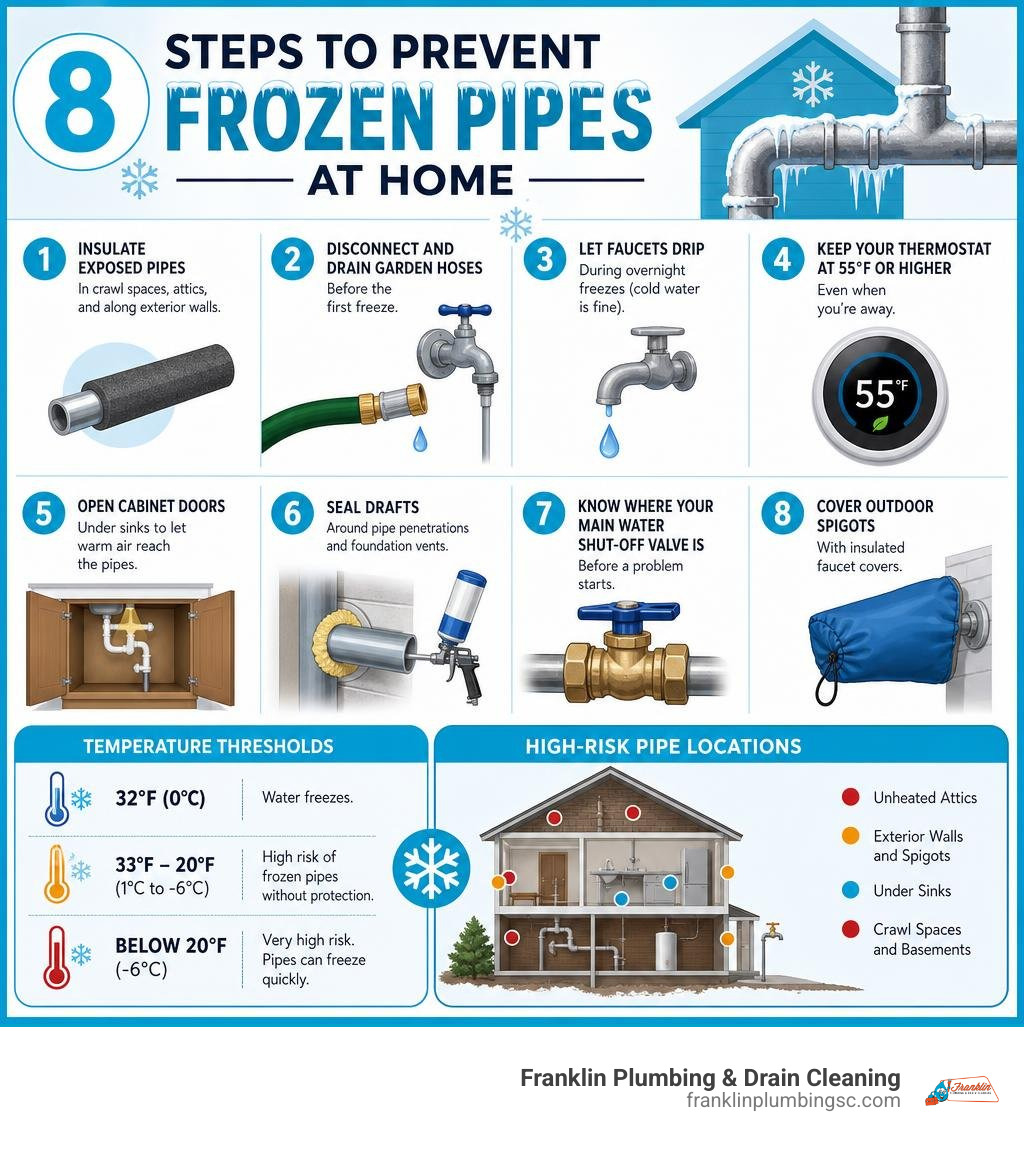
How to prevent frozen pipes: fast summary
- Insulate exposed pipes in crawl spaces, attics, and along exterior walls
- Disconnect and drain garden hoses before the first freeze
- Let faucets drip during overnight freezes (cold water is fine)
- Keep your thermostat at 55°F or higher, even when you are away
- Open cabinet doors under sinks to let warm air reach the pipes
- Seal drafts around pipe penetrations and foundation vents
- Know where your main water shut-off valve is before a problem starts
- Cover outdoor spigots with insulated faucet covers
South Carolina does not get brutal winters every year, but that is actually part of the problem. Because hard freezes here are infrequent, many homes were built without the heavy pipe insulation that northern climates demand. When temperatures do drop below freezing, pipes in unheated crawl spaces and attics are caught off guard.
Water is unusual in that it expands as it freezes. That expansion puts enormous pressure on whatever is containing it, including copper, PVC, or any other pipe material. That pressure does not care how strong the pipe is. It will find a weak point and cause a rupture.
The good news is that most frozen pipe emergencies are completely preventable with a few low-cost steps taken before cold weather arrives. By understanding how your plumbing system behaves in cold weather, you can protect your property and avoid costly emergency repairs.
Why Water Pipes Freeze and the Danger to Your Home
When cold weather hits places like West Columbia, SC or Lexington, SC, water inside your plumbing system can drop to freezing temperatures. As water turns to ice, it undergoes a physical transformation that is both fascinating and destructive: it expands. This expansion increases the volume of the water by about nine percent.
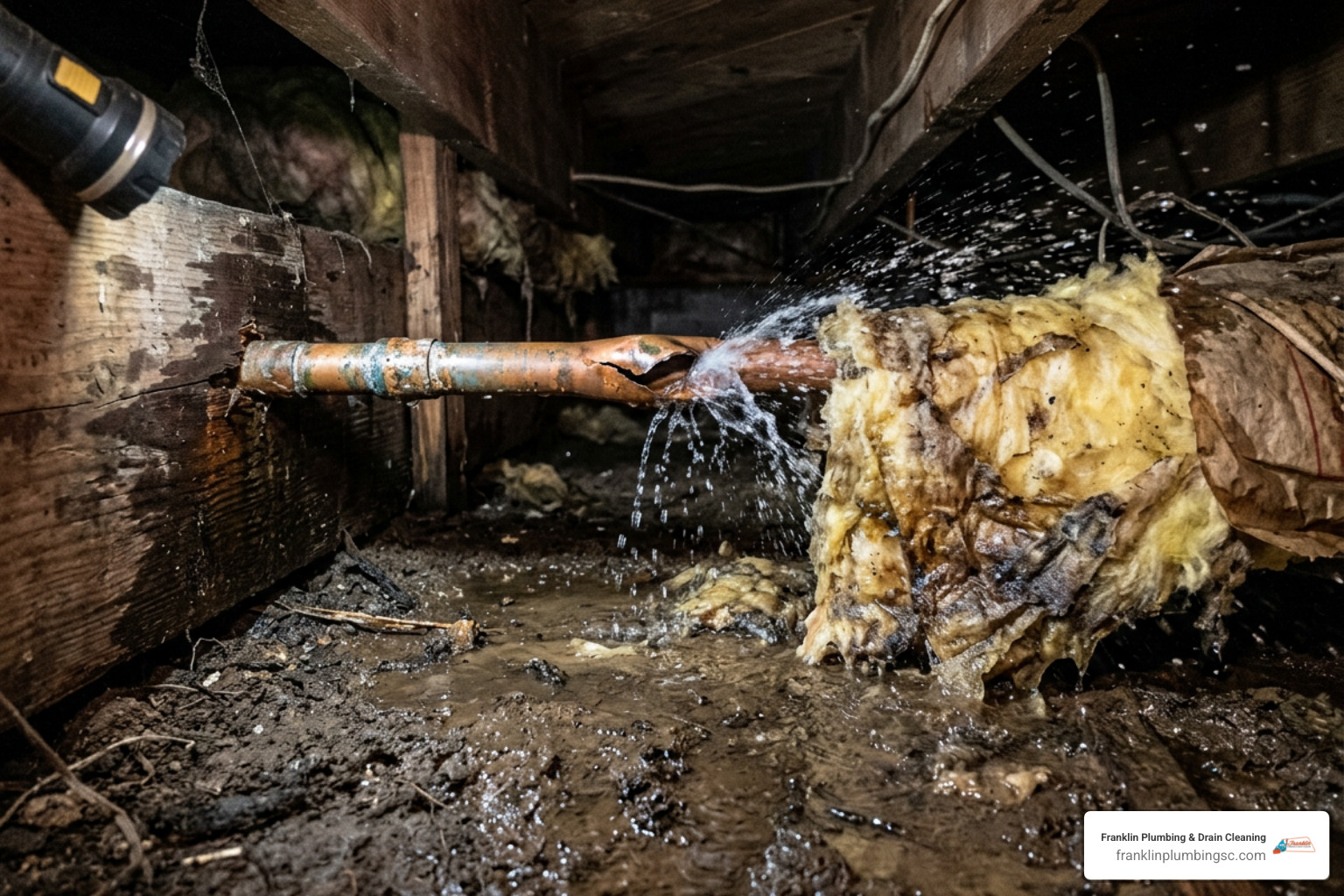
When ice forms inside a pipe, it does not just expand outward against the pipe walls. It also creates a massive amount of pressure between the ice blockage and the closed faucet. This hydraulic pressure buildup is what actually causes the pipe to rupture. The break rarely occurs at the exact spot where the ice block is located; instead, it happens downstream where the pressure becomes too great for the pipe material to bear.
When a pipe bursts, it can release hundreds of gallons of water per hour into your home. This leads to catastrophic structural damage, ruined drywall, buckled hardwood floors, destroyed electronics, and rapid mold growth. To understand the wider scope of how winter weather hazards impact residential properties, you can read the Red Cross guide on winter emergencies to help keep your household safe.
Identifying High-Risk Pipe Locations
Not all plumbing lines in your home are equally vulnerable. The pipes most at risk of freezing are those exposed to outdoor elements or located in unheated areas. In South Carolina, these vulnerable zones typically include:
- Exterior Walls: Kitchen and bathroom pipes that run along outside walls often lack adequate insulation, leaving them vulnerable to cold drafts.
- Crawl Spaces: Many homes in Irmo, SC and Chapin, SC are built on crawl spaces. If these spaces have open foundation vents, freezing winds can sweep through and freeze water lines within hours.
- Unheated Attics and Garages: Plumbing lines running to attic HVAC systems or garage utility sinks are highly exposed to temperature drops.
To ensure your entire system is ready for the seasonal transition, we recommend reviewing our comprehensive guide on preparing your plumbing system for winter before the first cold snap arrives.
The Temperature Danger Zone for South Carolina Plumbing
At what point should you start worrying about your plumbing? While water freezes at 32 degrees Fahrenheit, your indoor pipes are generally safe until the outdoor temperature drops a bit lower.
The true danger zone for residential plumbing is when outdoor temperatures reach 22 degrees Fahrenheit or below for more than four to six consecutive hours. At this threshold, uninsulated pipes in crawl spaces or along exterior walls will quickly drop to freezing temperatures.
If you live in a coastal or southern part of the state where homes may have less cold-weather protection, even a light freeze can create plumbing concerns. During a sudden cold snap, keeping vulnerable faucets at a slow drip can help keep water moving and reduce the chance of ice forming in exposed lines.
Essential Steps for Frozen Pipes Prevention
The key to avoiding a plumbing disaster is early preparation. Taking a few proactive steps in the autumn can save you from an expensive emergency call in January or February. Start by sealing up any drafts that allow freezing air to blow directly onto your plumbing lines. Look for gaps around cable lines, dryer vents, and outdoor electrical outlets, and seal them with expanding foam or outdoor-grade caulk.
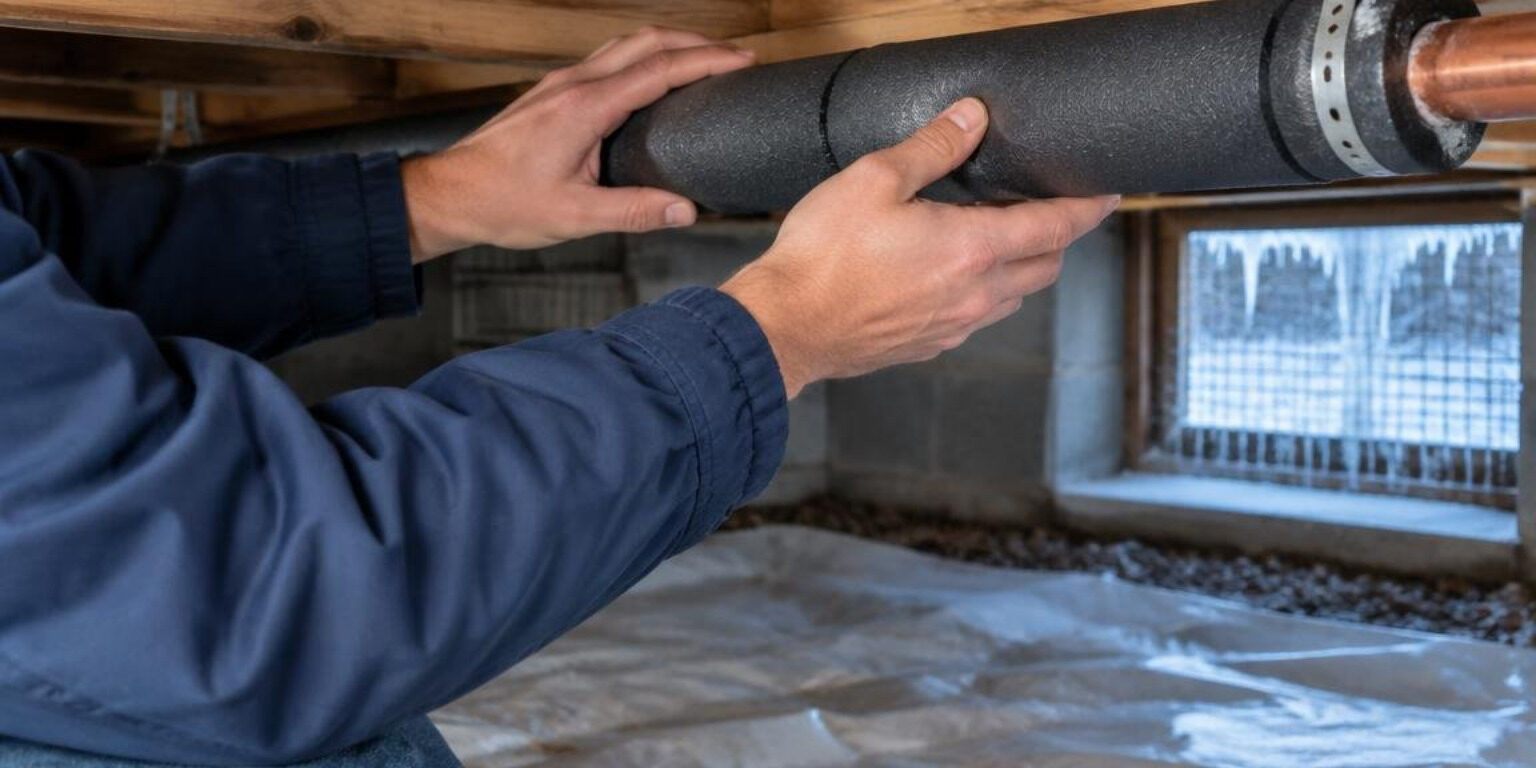
Next, insulate any exposed water lines in your basement, attic, or crawl space. Self-sealing foam pipe sleeves are highly effective and easy to install yourself. Proper pipe insulation acts as a protective barrier, slowing down the rate of heat loss from the water inside your pipes to the surrounding cold air.
Outdoor Faucet and Hose Winterization
Outdoor plumbing fixtures are your home’s first point of contact with freezing air. If you leave a garden hose connected to an outdoor spigot during a freeze, water trapped inside the hose will freeze and expand back into the spigot, cracking the valve body inside your wall.
Follow this simple checklist to protect your outdoor fixtures:
- Disconnect All Hoses: Remove, drain, and store all garden hoses in a garage or shed.
- Drain the Lines: If your home has interior shut-off valves for outdoor spigots, close those valves and open the outdoor faucets to let any remaining water drain out completely. Leave the outdoor faucet open so any remaining moisture can expand safely.
- Install Faucet Covers: Place insulated foam dome covers over all outdoor spigots to protect them from freezing winds.
- Winterize Irrigation Systems: Drain or blow out your lawn sprinkler system to prevent underground pipes from cracking.
For a complete breakdown of tasks to secure your home before the cold weather sets in, refer to our winter plumbing checklist to make sure you do not miss any critical steps.
Indoor Habits for Frozen Pipes Prevention
When a hard freeze is forecast for the Columbia, SC area, your daily habits can make the difference between dry floors and a flooded home. Adjusting how you manage your heating and air circulation can keep your pipes safe:
- Maintain Consistent Heat: Keep your thermostat set to the same temperature during both day and night. While turning down the heat at night saves energy, it increases the risk of your pipes freezing during the coldest hours of the morning.
- Let the Faucets Drip: Running a very slow trickle of water from faucets served by exposed pipes keeps water moving, making it much harder for ice to form. A pencil-thin stream of cold water is all it takes.
- Open Cabinet Doors: Open kitchen and bathroom cabinet doors to allow warm air from your heating system to circulate around the plumbing under your sinks.
- Keep Garage Doors Closed: If you have water lines running through your garage, keep the garage door closed as much as possible to trap heat inside.
For more helpful advice on keeping your home safe during seasonal transitions, check out our guide on preparing for weather changes to stay ahead of the weather.
Pipe Protection Materials and Tools Compared
There are several products on the market designed to protect your home from freezing temperatures. Choosing the right material depends on where the pipe is located and how cold the area gets.
| Insulation Material | Best Used For | Installation Difficulty | Relative Cost |
|---|---|---|---|
| Foam Pipe Sleeves | Crawl spaces, basements, and attics | Very Easy | Low |
| Fiberglass Pipe Wrap | Large diameter pipes or tight spaces | Moderate | Low |
| Self-Regulating Heat Tape | High-risk pipes in unheated areas | Moderate to Advanced | Medium |
| Outdoor Faucet Covers | Exterior hose bibs and spigots | Very Easy | Low |
Commercial Insulation vs. DIY Alternatives
In a pinch, some homeowners turn to DIY alternatives like wrapping pool noodles around their pipes. While pool noodles might look similar to commercial foam sleeves, they are not designed for plumbing insulation. Pool noodles lack the proper density to prevent heat transfer and do not possess fire-retardant properties, which can pose a safety hazard if placed near water heaters or electrical lines.
Commercial closed-cell foam or elastomeric rubber insulation is highly recommended. It is specifically engineered to resist moisture absorption, retard flame spread, and provide consistent thermal protection. For temporary emergency insulation, wrapping pipes in layers of dry newspaper and securing them with plastic wrap can work for a short period, but this should be replaced with proper commercial insulation as soon as possible.
Professional Upgrades for Long-Term Frozen Pipes Prevention
If you have a pipe that freezes every winter despite your best DIY efforts, it may be time for a permanent professional upgrade. A licensed plumber can relocate vulnerable water lines deeper into your home’s heated envelope or install commercial-grade self-regulating heat cables.
Other smart long-term upgrades include crawl space encapsulation, which seals out freezing drafts entirely, and upgrading older pipe materials to PEX, which is more flexible and resilient against freeze damage than rigid copper or PVC.
Additionally, if you experience drainage issues during cold snaps, utilizing professional drain jetting in freezing temperatures can keep your sewer lines clear and prevent frozen wastewater backups.
What to Do Immediately If You Suspect a Frozen Pipe
If you turn on a faucet on a freezing morning and only a trickle of water comes out, or if you notice a complete loss of water pressure, you likely have a frozen pipe. You must act quickly to prevent the pipe from bursting.
First, turn on other faucets in the house to determine if the freeze is localized or if it affects the entire home. If only one faucet is affected, leave that faucet open. As you begin to thaw the pipe, the open faucet will allow water to flow and relieve the pressure buildup that causes ruptures.
Next, locate your main water shut-off valve. If a pipe has already cracked, it may start spraying water as soon as the ice melts. Turning off the water at the main valve can help prevent major flooding when the thaw begins.
Locating Your Main Water Shut-Off Valve
Every member of your household should know exactly where the main water shut-off valve is located and how to operate it.
- Inside the Home: The shut-off valve is typically located where the main water line enters the house. Look in your crawl space, basement, utility closet, or near your water heater.
- Outside the Home: In many South Carolina communities, the shut-off valve is located near the street in a concrete or plastic box labeled “Water.” You may need a meter key or a crescent wrench to turn the valve.
Once you find your valve, mark it with bright fluorescent tape or a tag so you can locate it quickly in the dark during an emergency.
Safe Thawing Steps to Avoid Bursting
If you can locate the frozen section of the pipe, you can attempt to thaw it safely using gentle, controlled heat. Always start thawing from the faucet end of the pipe and work your way back toward the frozen blockage. This allows melting water to escape through the open faucet.
Safe thawing methods include:
- An electric hair dryer set to medium heat.
- An electric heating pad wrapped around the pipe.
- Towels soaked in hot water wrapped around the frozen section.
What you must NEVER use:
- Never use a propane torch, blowtorch, or any open flame. This poses a major fire hazard and can boil the water inside the pipe, causing it to explode.
- Never use kerosene or gasoline space heaters near exposed plumbing.
If you are unsure where the freeze is located, see a crack, or cannot restore water flow safely, schedule professional water line repair in Columbia, SC. A licensed plumbing team can assess the damage and make the repair without putting your home at greater risk.
For homes with older plumbing systems, freezing issues can sometimes extend underground. If you suspect your main sewer line is affected, our article on sewer line freezing in older homes explains how to recognize and manage main-line blockages safely.
The Cost of Prevention vs. Emergency Burst Pipe Repairs
When it comes to plumbing maintenance, an ounce of prevention is worth a pound of cure. Taking steps to protect your pipes is highly cost-effective compared to the alternative.
- Prevention: Foam pipe insulation, faucet covers, and draft-sealing materials are practical ways to reduce your risk before a cold snap. A professional inspection or insulation upgrade can also help protect vulnerable lines.
- Emergency Repairs: If a pipe bursts, you may need plumbing repairs, water-damage restoration, drywall repair, and flooring replacement. The total can vary widely depending on the location and severity of the damage.
If recurring freezes, low water pressure, or visible leaks point to a larger plumbing issue, explore our plumbing services in Columbia, SC before the next cold spell. Our team can help identify the right next step for your home.
If your pipes experience severe damage during the winter, you may face major repairs. Knowing whether a sewer line replacement in winter is possible can help you plan your recovery and restore your home’s plumbing system quickly.
Frequently Asked Questions about Frozen Pipes
What temperature do pipes freeze in a house in South Carolina?
Pipes can begin to freeze when outdoor temperatures drop to 32 degrees Fahrenheit or below. However, the risk increases dramatically when outdoor temperatures fall to 22 degrees Fahrenheit or below for several hours, especially if your indoor thermostat is set low or if pipes are exposed to drafts in crawl spaces.
Is it better to drip hot or cold water to prevent freezing?
Dripping cold water is highly effective and sufficient to prevent freezing. If you have a faucet that mixes both hot and cold water, running a single drip that draws from both lines is ideal. Hot water lines can actually freeze faster than cold water lines in certain conditions due to a phenomenon known as the Mpemba effect, so protecting both lines is important.
Does pipe insulation actually work?
Yes, pipe insulation is highly effective, but it is a passive barrier. It works by slowing down the transfer of heat from your pipes to the surrounding cold air. While it provides excellent protection during brief cold snaps, insulated pipes can still freeze during prolonged, multi-day sub-zero events if they are not paired with other active prevention habits like dripping faucets.
Will opening cabinets prevent frozen pipes?
Yes, opening cabinet doors under your kitchen and bathroom sinks allows warm air from your home’s heating system to circulate around the plumbing. This is especially helpful for sinks located on exterior walls, which are often isolated from room heat.
How can I tell if a pipe is frozen before it bursts?
Common warning signs of a frozen pipe include a sudden drop in water pressure, only a trickle of water coming from a faucet, visible frost on exposed pipes, bulging metal or plastic pipe sections, or unusual sounds like gurgling when you turn on a tap.
Does homeowners insurance cover burst pipes?
Most standard homeowners insurance policies cover sudden and accidental water damage caused by burst pipes. However, many policies contain negligence clauses. If the insurance adjuster finds that you failed to maintain heat in the home or neglected basic winterization steps, your claim could be denied.
Can outdoor hoses cause indoor pipes to freeze?
Yes, leaving a garden hose connected to an outdoor spigot traps water inside the faucet assembly. When that trapped water freezes, it expands inside the valve and can crack the pipe inside your home’s wall, leading to a major leak when the system thaws.
How long does it take for pipes to freeze in Columbia, SC?
In the Columbia, SC area, pipes can freeze in as little as four to six hours once outdoor temperatures drop below 22 degrees Fahrenheit, especially if your home has open foundation vents or uninsulated crawl spaces that allow freezing winds to blow directly on the water lines.
What should I do if my water meter freezes?
If you suspect your water meter is frozen, do not attempt to thaw it yourself. Contact your local water utility company immediately. They are responsible for the water meter and will send a technician to handle the issue safely.
Is it safe to use a space heater to thaw pipes?
Using an unattended space heater near plumbing is a serious fire hazard. If you use a space heater to warm an unheated crawl space or utility room, you must supervise it at all times and keep it at least three feet away from any flammable materials. Safe alternatives like hair dryers or hot towels are highly recommended.
Keep Your Plumbing Safe This Winter
Whether you need fast plumbing repairs, seasonal winterization maintenance, or a complete system upgrade, our team is ready to help. If you run into a frozen pipe emergency or want to secure your home against the next cold snap, Franklin Plumbing & Drain Cleaning is ready to help. Contact our professional frozen pipe technicians to schedule service with experienced, licensed professionals and get the peace of mind that comes with our 100% satisfaction guarantee.

professional
drain cleaning

highly
recommended

through
repairs

quality
work