Gas Leak Warning Signs Columbia Homeowners Should Know
Home »
Recognizing the Warning Signs and Health Dangers of Gas Leaks
Indoor and Outdoor Symptoms of Escaping Fuel Gas
To prevent and manage residential gas leaks, homeowners must adopt a proactive safety plan: install certified methane alarms, schedule professional piping inspections every two to three years, know emergency shutoff procedures, and immediately evacuate and report any signs of line compromise. Natural gas is an efficient, reliable fuel source for home heating, water heating, and cooking. Over 79 million residential and commercial properties nationwide rely on continuous pipeline networks. In its raw form, methane is completely invisible and odorless. Utility providers deliberately inject a chemical additive called mercaptan into the supply. Mercaptan produces a distinct sulfur or rotten-egg odor that serves as an immediate sensory warning.
A sulfur scent is not the only warning sign. Escaping gas under pressure often creates physical indicators inside and outside your living space:
- Audible Hissing or Whistling: A faint, continuous hissing or whistling sound near an appliance connection, water heater, furnace, or exposed pipe manifold indicates pressurized fuel escaping through a loose fitting or cracked joint.
- Discolored Burner Flames: Burners on gas stoves, water heaters, and heating systems should produce a sharp, stable blue flame. A lazy yellow, orange, or fluttering flame indicates incomplete combustion, improper fuel-air mixtures, or localized pressure drops caused by supply defects.
- Dying Lawn Patches and Discolored Vegetation: When buried exterior lines leak, underground methane displaces the oxygen within the surrounding soil. This suffocates root structures and causes localized patches of grass, shrubs, or garden beds directly above the pipe run to turn yellow and die.
- Subterranean Bubbling and Blowing Dirt: Escaping underground gas can force its way through damp ground or standing rainwater puddles, creating visible continuous bubbling or blowing fine dirt and dust into the air.
- Spike in Utility Bills: An unexpected surge in fuel charges during warm weather without a corresponding increase in appliance usage can point to a slow, continuous line compromise behind structural walls or underground.
Failing to recognize these symptoms early can escalate minor pipe damage into a major safety event. Property owners can better understand how quickly small structural fractures can jeopardize household safety by reviewing the dangers of gas line damage and leaks.
Health Risks, Asphyxiation, and Carbon Monoxide Differences
Understanding the clear distinction between an unburned natural gas leak and a carbon monoxide (CO) hazard is vital for every homeowner. Unburned natural gas consists primarily of methane, which acts as a physical asphyxiant. When methane accumulates within an enclosed space, it displaces breathable ambient oxygen. Inhaling high concentrations of natural gas starves body tissues of oxygen, producing rapid dizziness, fatigue, severe headaches, and nausea.
Carbon monoxide is a toxic, odorless, colorless byproduct created when fuel-burning appliances experience incomplete combustion due to faulty burners, cracked heat exchangers, or blocked ventilation flues. Unlike raw fuel gas, carbon monoxide binds directly to the hemoglobin in the bloodstream, preventing normal oxygen delivery to vital organs.
| Characteristic / Detail | Natural Gas Leak (Raw Methane) | Carbon Monoxide (CO Hazard) |
|---|---|---|
| Origin | Escaping unburned fuel from piping or fittings | Byproduct of incomplete fuel combustion |
| Odor & Appearance | Distinct rotten-egg smell (added mercaptan) | Completely odorless, colorless, and invisible |
| Primary Danger | Fire, explosion, and oxygen displacement | Internal chemical poisoning and cellular hypoxia |
| Common Physical Symptoms | Dizziness, headache, nausea, fatigue | Throbbing headache, confusion, vomiting, chest pain |
| Detection Method | Senses, electronic sniffers, methane alarms | Dedicated electromechanical CO detectors |
| Governing Safety Standard | NFPA 715 (Standard for Fuel Gas Detectors) | NFPA 720 / UL 2034 (Standard for CO Detectors) |
Sensory detection has biological limits. Physical conditions like sinus infections, allergies, medication side effects, and respiratory illnesses can diminish normal olfactory sensitivity. Prolonged exposure to low-level mercaptan can also trigger olfactory fatigue, desensitizing the nose.
New unconditioned steel pipes, high system pressures, internal rust, and moisture can also cause odor fade. During odor fade, the chemical odorant strips away through adsorption, absorption, or oxidation, allowing gas to escape without its normal scent. Modern safety guidelines from the National Fire Protection Association recommend installing dedicated, UL-listed residential methane detectors alongside standard smoke and carbon monoxide alarms.
Immediate Action Plan: What to Do During a Gas Line Emergency
Emergency Evacuation and Ignition Prevention Protocols
When you notice a sulfur odor, hear pipe hissing, or suspect an active gas leak, treat the situation as an immediate emergency. Natural gas mixes readily with the surrounding atmosphere, creating an explosive fuel-to-air envelope that can ignite from a tiny electrical spark.
- Evacuate the Structure Immediately: Ensure all family members and pets leave the property right away. Do not pause to pack belongings, retrieve valuables, or search for the source of the leak.
- Leave Exit Doors Ajar: As you leave, keep doors open behind you to encourage natural air circulation and reduce explosive indoor gas concentrations.
- Do Not Touch Electrical Switches: Never flip light switches, unplug cords, or operate household appliances. Toggling an electrical switch creates a tiny internal contact arc capable of igniting an air-gas mixture.
- Avoid Using Phones Indoors: Do not use landlines or mobile phones inside the home. Static electricity or internal phone battery relays can produce micro-sparks.
- Do Not Start Vehicles or Power Equipment: Never start a car, lawnmower, or motorized tool parked inside an attached garage or near an exterior gas meter.
- Avoid Open Flames: Extinguish open candles before leaving if you are right next to them, but never strike matches, flick lighters, or light cigarettes.
Before an emergency occurs, homeowners can become familiar with evacuation and safety steps by understanding how to deal with gas line emergencies.
Who to Call: Coordinating First Responders and Gas Utilities
Once you are at a safe outdoor distance from the property, begin the emergency communication process. Call 911 first so local fire departments can respond, secure the perimeter, and address immediate structural hazards.
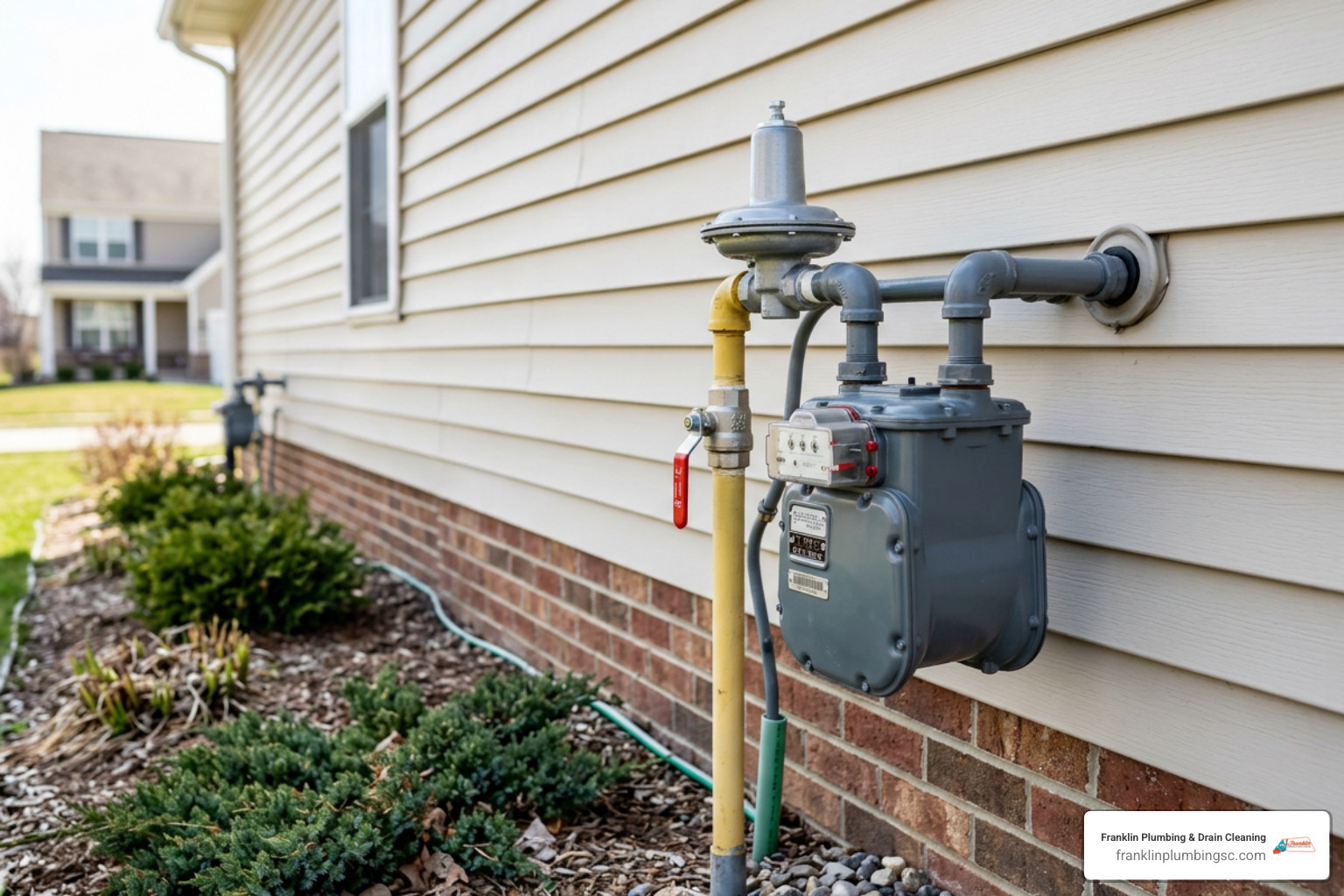
Next, call your local natural gas utility company’s emergency dispatch line. Utility technicians will respond quickly to test exterior service connections, isolate the supply, and turn off the primary meter shutoff valve. If a private customer line is leaking, the utility provider will place a physical safety lock on the meter.
Natural gas utility companies are only responsible for the service main and the meter. Property owners own and maintain all downstream piping running into the home, across crawlspaces, and out to appliances. For code-compliant repairs and required static pressure tests, contact a licensed provider of emergency plumbing services in Columbia, SC.
Professional Gas Leak Detection and Repair Methods
Advanced Tools for Non-Invasive Gas Leak Detection and Repair
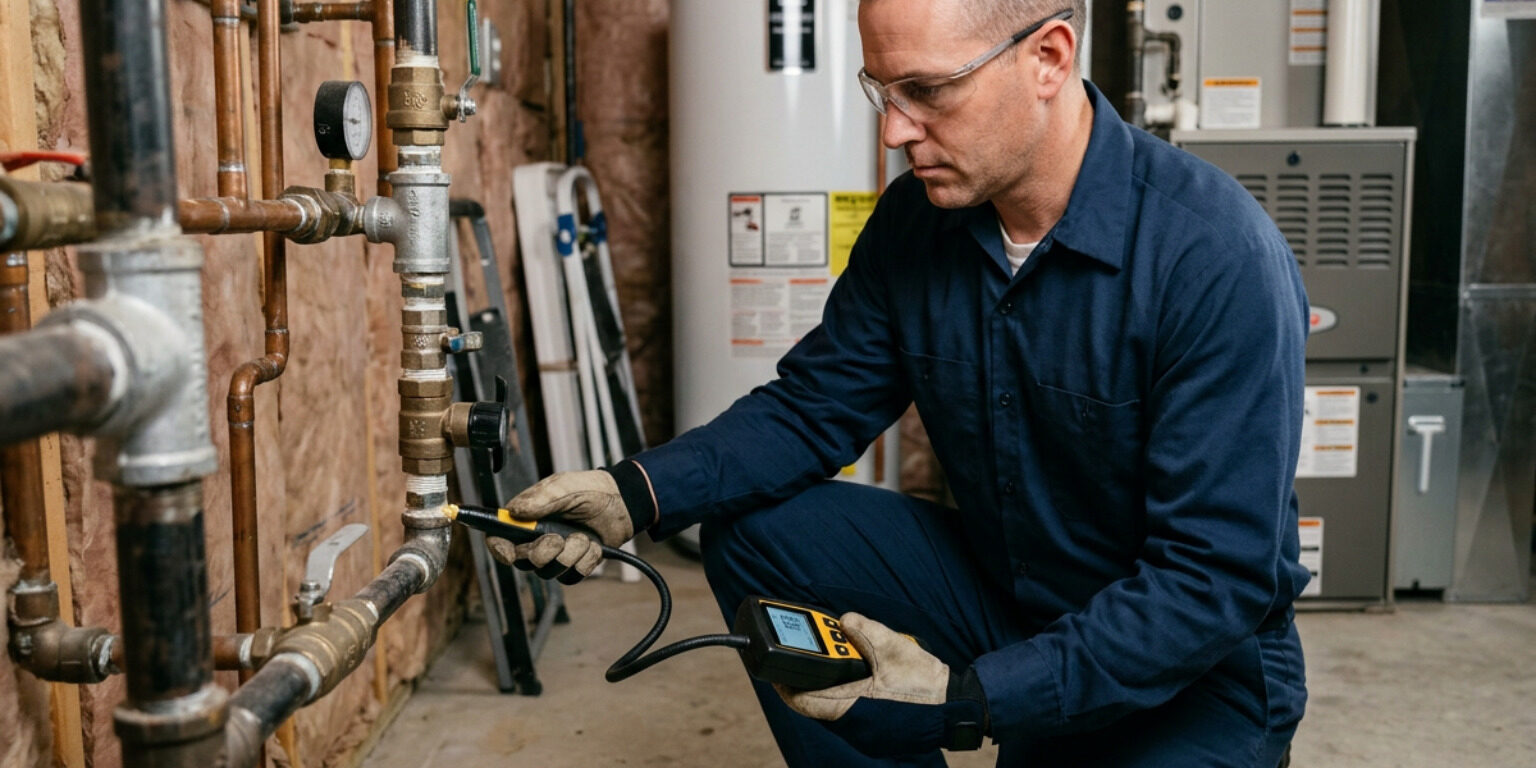
Finding a tiny gas leak hidden behind finished drywall, inside a ceiling cavity, or beneath an outdoor slab requires sensitive diagnostic tools. Licensed technicians use non-invasive instruments that locate leaks quickly without unnecessary demolition.

- Combustible Gas Sniffers: Digital handheld sensors pull air samples across an internal catalytic bead or infrared sensor every millisecond, measuring methane concentrations down to a few parts per million (PPM) to track leaks back to their exact source.
- Ultrasonic Acoustic Sensors: Gas escaping high-pressure pipe systems generates high-frequency acoustic friction. Ultrasonic listening devices isolate and amplify these sound waves, allowing technicians to locate leaks through drywall, flooring, and masonry.
- Differential Pressure Drop Testing: Technicians close the main supply valve, cap all appliance drops, and pressurize the closed system with dry nitrogen or compressed air. An analog test gauge or high-precision digital manometer monitors the line. Any pressure drop confirms a leak exists somewhere within the piping network.
- Non-Corrosive Bubble Detection Solutions: Technicians brush or spray specialized bubble solutions over exposed pipe joints, fittings, and regulator diaphragms. Escaping gas creates expanding clusters of bubbles at the exact failure point. Technicians can also use fluorescent formulas paired with ultraviolet light to find micro-fissures in dark crawlspaces.
For more detail on identifying hidden utility-line problems, explore gas leak detection in Columbia, SC.
Step-by-Step Gas Leak Detection and Repair Procedures
Once testing confirms the leak’s exact location, our licensed technicians begin the structural repair process in line with international fuel gas codes and local municipal safety standards:
- System Supply Isolation: Technicians isolate the supply at the main meter or downstream shutoff valve and purge remaining fuel gas using low-pressure inert nitrogen.
- Defective Component Extraction: Damaged piping, worn shutoff valves, cracked cast fittings, or degraded flexible connectors are unthreaded and removed. Depending on the installation, repairs may involve rigid black iron pipe or flexible corrugated stainless steel tubing (CSST).
- Pipe Reconfiguration and Sealant Application: Technicians cut, ream, and thread replacement steel piping or assemble manufacturer-certified mechanical fittings for CSST lines. All National Pipe Taper (NPT) male threads receive high-density PTFE pipe thread tape and approved PTFE-based pipe joint compound to ensure a lasting seal.
- Pneumatic Pressure Testing: Before restoring fuel flow, technicians seal the repaired system and pump it with compressed air or inert nitrogen to a test pressure that exceeds normal operational limits. The system must hold this pressure steady for a set duration with zero drop on the test gauge.
- System Reconnection and Appliance Relighting: Once the line passes pressure testing and receives municipal or utility clearance, technicians reconnect the main gas meter, bleed the lines, restore line pressure, check each appliance, and relight pilot systems.
Before a repair visit, homeowners can prepare the area and understand access needs with proper preparations for residential gas line repair.
When a confirmed leak requires professional intervention, arrange gas line repair in Columbia, SC with our certified plumbing team.
Preventative Maintenance and Best Practices to Avoid Line Failure
Routine Inspections, Connector Lifespans, and Detector Installation
Routine preventative maintenance is the most effective way to avoid unexpected gas line emergencies. Gas distribution systems face continuous internal pressure, temperature shifts, and natural building settling that stress joints and seals over time.
- Schedule Professional Inspections: Have your gas piping, manifold hubs, and appliance supply drops professionally inspected at least once every two to three years. Older properties with legacy black iron systems benefit from annual plumbing inspections.
- Replace Aging Flexible Appliance Connectors: Movable appliances like ranges, clothes dryers, and water heaters connect to rigid supply drops through flexible corrugated metal tubes. These connectors undergo metal fatigue from appliance vibration, routine cleaning movement, and material aging. Replace flexible gas connectors every 10 to 15 years.
- Exercise Gas Shutoff Valves: Emergency manual shutoff valves behind appliances and at the primary meter can seize if left untouched for years. Have a licensed technician inspect and lubricate these valves during regular plumbing maintenance.
- Install Listed Fuel Gas Alarms: Protect your home from odor-fade risks and sensory limitations by installing residential methane detectors certified under NFPA 715. Place these detectors in rooms with gas-fired equipment, mounting them near the ceiling because natural gas is lighter than air and rises.
Consistent inspections and prompt repairs are central to avoiding gas line failure.
Preventing Infrastructure Damage and Safe Excavation
Physical excavation strikes are a leading cause of sudden, catastrophic gas line ruptures. Buried yard lines running from utility easements to meters, outdoor kitchens, backup generators, and pool heaters sit just inches below the ground surface.
Always contact the national 811 utility locator service at least several business days before digging for fences, trees, hardscaping, or drainage lines. Field locators will mark all public underground utility lines with high-visibility yellow paint or stakes at no cost to you.
Homeowners should also address structural factors that contribute to line degradation over time:
- Foundation Settling and Soil Shifts: Heavy rain, poor soil compaction, and foundation settling can pull on rigid gas pipes passing through crawlspaces and exterior walls, straining threaded joints.
- Corrosion on Exposed Piping: Exterior gas lines, meter manifolds, and crawlspace pipes exposed to damp soil or standing moisture develop surface rust. Left unaddressed, rust weakens pipe walls and causes pinhole leaks.
- Physical Wear in High-Traffic Areas: Pipes running through basements, workshops, and garages face risk of impact from storage boxes, ladders, and lawn equipment. Protect exposed runs with safety bollards or protective structural shielding.
Knowing the leading causes of gas line damage and issues can help homeowners prevent avoidable problems. When planning new gas service runs or installing outdoor equipment, review professional gas line installation requirements to ensure the setup complies with local plumbing codes.
Frequently Asked Questions About Residential Gas Safety
What are the most common signs of a gas leak in a home?
The most common indicators of an active natural gas leak include a distinct sulfur or rotten-egg odor caused by added mercaptan, audible hissing or whistling sounds near pipes and appliances, dead or discolored patches of lawn above buried pipe runs, continuous bubbling in standing yard water, and yellow or orange burner flames on gas-fired equipment.
What should I do immediately if I suspect a natural gas leak?
If you suspect a gas leak, evacuate all occupants and pets from the home immediately. Do not operate light switches, unplug cords, use landline or mobile phones indoors, or start motorized vehicles. Once you are at a safe outdoor distance, call 911 and your natural gas utility company to secure the property.
How do professional plumbers detect gas leaks behind walls?
Licensed plumbers use advanced, non-invasive diagnostic tools including digital combustible gas sniffers that detect methane concentrations down to parts per million, ultrasonic acoustic listening sensors that pick up the sound of escaping pressurized gas, and differential pressure drop testing on isolated piping networks to pinpoint leaks without cutting into finished drywall.
What does the gas line repair process typically involve?
The repair process involves isolating the gas supply, purging residual fuel with inert nitrogen, removing damaged piping, fittings, or valves, installing code-approved black iron or CSST piping with PTFE-rated thread sealants, and performing a high-pressure pneumatic hold test to confirm system integrity before restoring service.
How much does professional gas leak detection and repair cost in Columbia, SC?
The cost of professional gas leak detection and repair varies depending on the pipe’s location, accessibility behind walls or under slabs, the extent of structural corrosion, the materials required, and whether repairs call for minor fitting adjustments or full line replacements. Utility companies locate and isolate leaks on their side of the meter for free, while licensed private plumbers handle diagnostics and repairs on customer-owned piping.
Can I fix a natural gas line leak myself?
No. Homeowners should never attempt DIY repairs on natural gas piping. Fuel gas lines present severe fire, explosion, and asphyxiation hazards that require specialized training, calibrated pressure testing equipment, code-approved materials, and licensed plumbing oversight to meet local building codes and utility safety standards.
How often should residential gas lines and appliances be inspected?
Residential gas supply lines, shutoff valves, and appliance connections should receive a professional inspection every two to three years. For homes older than 15 years, annual plumbing inspections are recommended to catch pipe corrosion, joint wear, and appliance connector fatigue before failures develop.
What are the primary health risks associated with gas leaks?
Natural gas displaces breathable oxygen within enclosed spaces, leading to oxygen deprivation and asphyxiation. Physical symptoms of exposure include throbbing headaches, dizziness, fatigue, nausea, respiratory irritation, confusion, and loss of consciousness at high concentrations.
What is the difference between a natural gas leak and a carbon monoxide issue?
A natural gas leak involves unburned raw methane fuel escaping from supply pipes, recognized by its added rotten-egg smell and its risk of fire or explosion. Carbon monoxide is a toxic, odorless, colorless gas generated by incomplete fuel combustion within malfunctioning appliances, presenting a serious chemical poisoning risk that requires dedicated carbon monoxide alarms.
Who should I call for certified gas leak detection and repair in Columbia, SC?
After evacuating and notifying 911 and your gas utility company to shut off the main meter, contact Franklin Plumbing & Drain Cleaning. Our licensed plumbers provide prompt diagnostics, non-invasive leak detection, code-compliant repairs, and certified pressure testing throughout Columbia and surrounding communities.
Conclusion
A natural gas leak is a serious safety concern, but knowing how to respond and keeping up with line maintenance will protect your home and family. Recognizing the early signs of escaping fuel, investing in NFPA-compliant methane alarms, scheduling routine plumbing inspections, and calling 811 before digging will help keep your gas distribution system running safely for years to come.
Never take chances with fuel gas line integrity. If you suspect an active leak, face an unexpected utility shutoff, or need an aging system evaluated, reach out to qualified professionals right away. The certified technicians at Franklin Plumbing & Drain Cleaning provide the expertise, advanced diagnostic tools, and dedicated service needed to help keep your home safe. Contact our professional gas leak detection and repair technicians to schedule service in the Greater Columbia area.

professional
drain cleaning

highly
recommended

through
repairs

quality
work