Under the Slab: Methods for Detecting Copper Pipes in Concrete
Home »

When Pipes Hide in Plain Sight: Finding Water Lines Under Concrete Slabs
A pipe detector for concrete floor scanning is often the first tool a homeowner or plumber reaches for when a slab leak is suspected, a sump pump needs installing, or a renovation threatens to cut through a hidden water line. But knowing which detector to use, and how to use it in a concrete environment, can make the difference between a clean fix and a costly mistake.
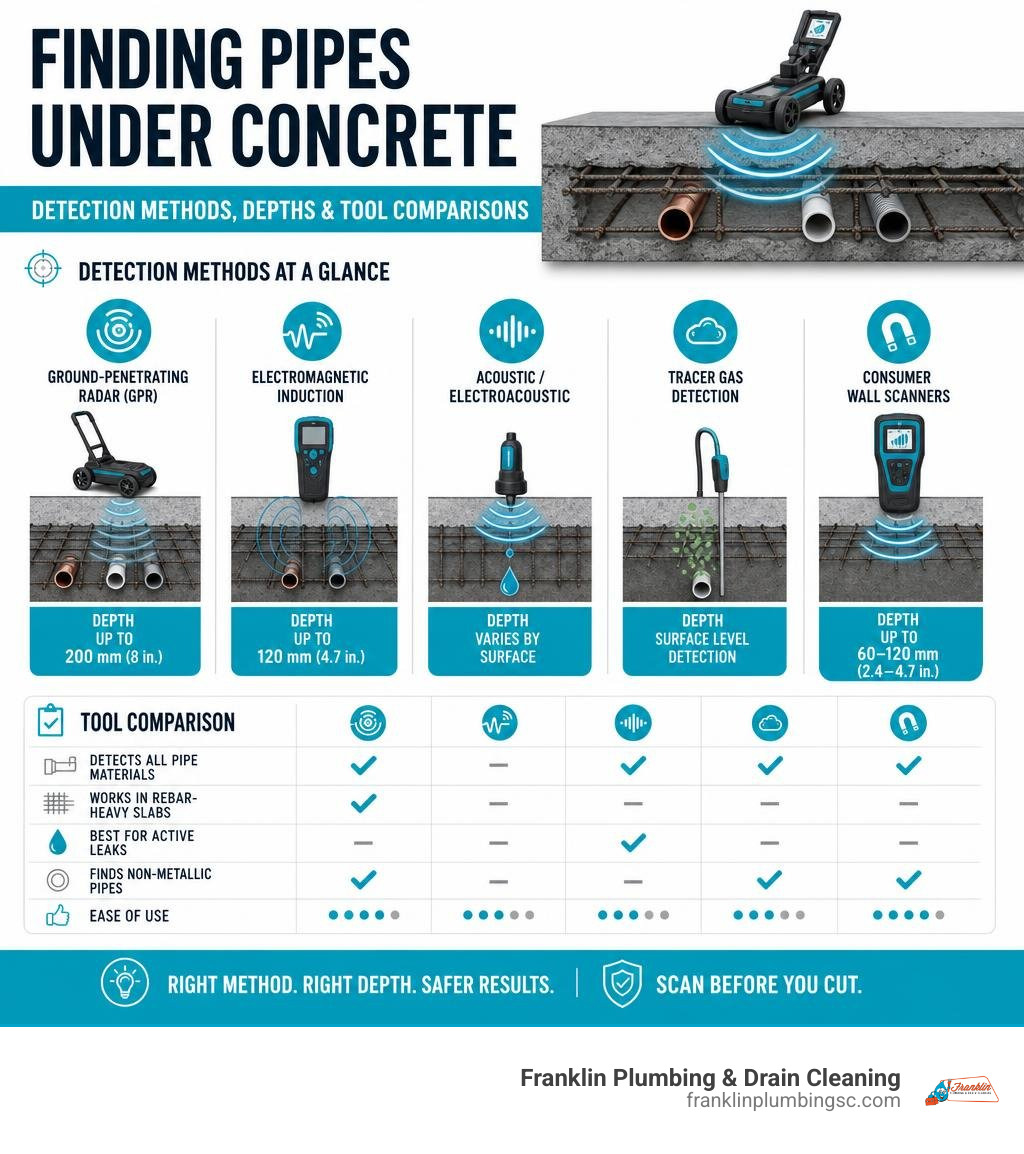
Quick Answer: Best Methods for Detecting Pipes in a Concrete Floor
| Method | Best For | Typical Depth |
|---|---|---|
| Ground-penetrating radar (GPR) | All pipe materials, rebar-heavy slabs | Up to 200 mm (8 in.) |
| Electromagnetic induction | Metal pipes, tracer wire | Up to 120 mm (4.7 in.) |
| Acoustic / electroacoustic | Active leak location | Varies by surface |
| Tracer gas detection | Plastic and PVC pipes with no signal | Surface level detection |
| Consumer wall scanners | Shallow copper or iron pipes | Up to 60-120 mm (2.4-4.7 in.) |
Concrete slabs hide a lot. Copper supply lines, PVC drain pipes, electrical conduit, and reinforcing steel (rebar) all sit beneath the surface, often within inches of each other. That’s what makes locating a specific pipe so difficult, and so easy to get wrong.
One homeowner scenario captures the problem perfectly: someone excavating a basement floor to install a sump pump discovers their copper water line runs somewhere through the concrete, but rebar interference is throwing off their metal detector readings. Shutting off the water before breaking ground sounds obvious, but without knowing exactly where the pipe runs, even careful digging carries real risk.
This guide breaks down every practical method for finding embedded pipes in concrete, which tools work best in different situations, and when it makes sense to call in a professional locating service.
Choosing the Right Pipe Detector for Concrete Floor Applications
Locating a copper pipe embedded deep inside a poured concrete slab is far more challenging than finding a stud behind drywall. Concrete is highly dense, contains varying levels of moisture, and is almost always reinforced with a grid of steel rebar. Selecting the wrong tool can lead to missed targets, false positives, or catastrophic strikes during drilling.
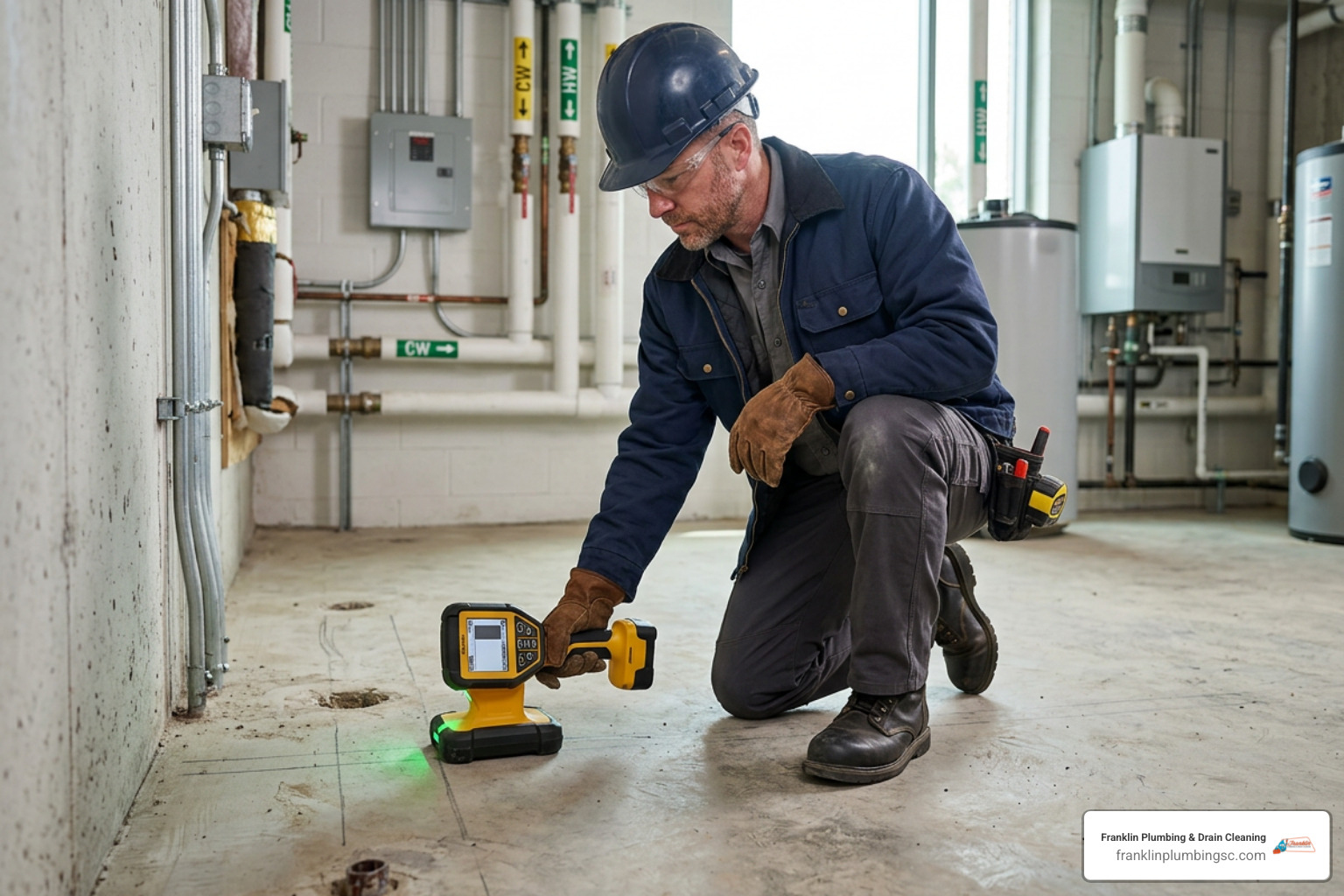
When selecting a pipe detector for concrete floor scanning, match the tool to the specific environment. Standard utility locators can trace active lines over long distances, while high-frequency radar units help map physical obstacles in a small, concentrated workspace. When an active leak may be causing structural damage, a physical locator paired with specialized acoustic testing is often the most reliable approach. For more detail on diagnosing these issues, see our comprehensive guide to leak detection in Columbia, SC.
How a Specialized Pipe Detector for Concrete Floor Works
Modern concrete scanners rely primarily on ground-penetrating radar (GPR) or advanced electromagnetic induction. GPR units work by sending high frequency radio signals, or radar waves, directly into the concrete floor. As these waves travel through the slab, they strike objects with different electrical properties, known as dielectric constants.
When a radar wave hits a copper pipe or steel rebar, it bounces back to the receiver. The scanner calculates how long the reflection takes to return, helping estimate the object’s location and depth. Radar-based scanners can help identify water-filled plastic pipes, copper lines, and ferrous metals, but usable depth and accuracy vary with the device, concrete thickness, moisture, and reinforcement conditions.
Key Features to Look For in Slab Scanning Tools
If you are shopping for or renting a slab scanner, several critical features will determine your success. When a suspected leak calls for testing beyond a scanner’s capabilities, professional leak detection services can help identify the source without unnecessary concrete removal:
- Depth Capacity: The scanner must be rated for the thickness of your slab. While basic hand tools might only penetrate 50 to 60 mm, professional-grade radar scanners can read up to 200 mm (8 inches) deep in solid concrete.
- Material Identification: High-end detectors can distinguish between magnetic metals, such as steel rebar, non-magnetic metals, such as copper, and non-metallic objects, such as PVC pipes or wooden supports. This distinction helps a plumbing team choose a safer repair strategy, as discussed in our article on selecting the ideal pipes for residential water lines.
- Power and Battery Life: Concrete scanning is tedious work. Look for devices with robust lithium-ion battery systems that offer at least 5 to 10 hours of continuous runtime.
- Signal Calibration: Look for tools that feature automatic calibration or specialized concrete modes, which adjust the sensor sensitivity to account for the unique density and moisture levels of cured masonry.
Core Technologies for Locating Embedded Copper Pipes
No single technology can solve every concrete scanning challenge. Plumbers and utility locators rely on a combination of electromagnetic induction, acoustic sensors, and tracer gas systems to build a complete picture of what lies beneath the surface.
To understand how these technologies compare, let us look at their strengths and ideal applications:
| Technology | Operating Principle | Maximum Depth | Best Suited For | Key Limitation |
|---|---|---|---|---|
| Ground-penetrating radar (GPR) | High frequency radar pulses | Up to 200 mm | Mapping rebar, copper, and PVC | Highly sensitive to wet concrete |
| Electromagnetic Induction | Magnetic field distortion | Up to 120 mm | Tracing copper and iron pipes | Easily confused by steel rebar |
| Acoustic Sensors | Ground microphones | Varies by pressure | Finding active pressurized leaks | Requires high water pressure |
| Tracer Gas Systems | Hydrogen gas detection | Surface level | Pinpointing tiny slab leaks | Requires draining the pipe system |
Ground Penetrating Radar for Deep Slab Scanning
Ground-penetrating radar is the gold standard for non-destructive testing in concrete floors. By emitting ultra-wideband radar pulses, GPR creates a continuous, cross-sectional profile of the slab.
Because GPR detects changes in dielectric constants, it does not require the pipe to be metallic. It can easily find water-filled PVC, empty conduits, and copper lines alike. However, GPR requires a skilled operator to interpret the hyperbolic curves shown on the screen, and the signals can be severely scattered if the concrete has not fully cured or contains pockets of trapped moisture.
Electroacoustic and Tracer Gas Leak Detection
When a copper pipe under a slab begins to leak, locating the pipe is only part of the process. The exact point of failure matters too. Electroacoustic leak detection uses sensitive ground microphones to listen for vibrations and rushing sounds created as pressurized water escapes underground. A trained plumbing team can interpret those signals alongside other diagnostic results to narrow down the leak location before unnecessary concrete removal.
If the leak is too small to make a distinct sound, or if the pipe is made of a soft material like PVC that dampens sound waves, technicians use tracer gas. The water line is drained and pressurized with a safe, non-toxic mixture of 5% hydrogen and 95% nitrogen. Because hydrogen is the lightest and smallest gas molecule, it escapes through the leak and rises straight up through the concrete slab, where a specialized gas sniffer detects it at the surface. If you suspect your home has a quiet, hidden leak, review the identifying the signs of a hidden water leak to catch the problem early.
Overcoming the Challenges of Rebar and Concrete Interference
The single greatest obstacle to locating copper pipes in concrete is the presence of reinforcing steel, commonly known as rebar. Because rebar is highly magnetic and laid out in a dense grid pattern, it acts as a shield, masking the signals of non-ferrous copper pipes running beneath or alongside it.
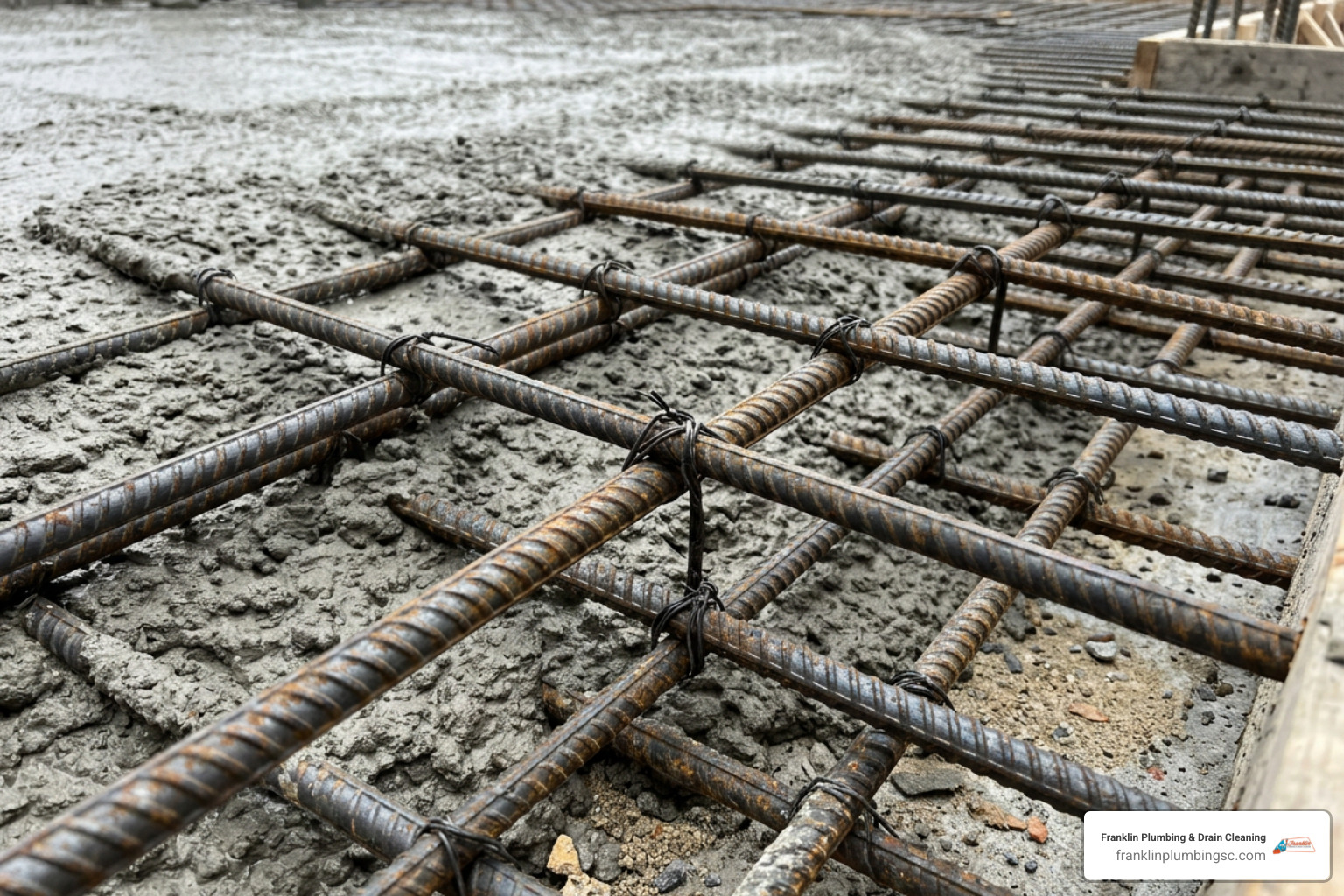
Calibrating Your Pipe Detector for Concrete Floor Scanning with Rebar
To bypass the magnetic interference caused by rebar, proper calibration is essential. If you are using a handheld metal detector or multi-scanner, you should never turn the device on while it is resting directly over a known piece of metal.
Instead, perform a circular calibration routine. Place the scanner flat against a clear section of the concrete wall or floor, turn it on, and move it in a slow, continuous circle. This allows the internal sensors to measure the baseline magnetic profile of the concrete and the embedded rebar grid. Once calibrated, the device can suppress the background signal of the rebar grid, making it much easier to identify the unique non-ferrous signal of a copper pipe running at a deeper level.
Distinguishing Copper Pipes from Rebar and Conduits
How do you tell the difference between a copper water line and a steel rebar rod when both trigger a metal warning?
- Look at the Metal Type Indicator: Advanced scanners will display a specific icon for ferrous (magnetic) and non-ferrous (non-magnetic) metals. Rebar is ferrous, while copper is non-ferrous.
- Analyze the Grid Pattern: Rebar is almost always installed in a highly structured, repeating grid pattern with uniform spacing, usually 12, 18, or 24 inches apart. A pipe, on the other hand, will run in a single direction, often cutting diagonally across the rebar grid to reach a plumbing fixture.
- Watch for Live Wire Alerts: If the object in question is a metal conduit carrying electrical lines, a high-quality scanner will display a lightning bolt icon, indicating the presence of active AC voltage.
Understanding these differences is key to preventing accidental line strikes, which are among the common causes of water line damage.
Safe Excavation Practices and Damage Prevention
Locating the pipe is only the first step. Once you have mapped out the pathway of your underground utilities, you must proceed with extreme caution during the actual digging or drilling process.
Pre-Excavation Safety Protocols
Before you pull out a jackhammer or rotary hammer drill, you must establish a safety perimeter and prepare for the worst-case scenario.
- Locate and Test the Main Shutoff Valve: Ensure everyone on the job site knows exactly where the main water shutoff valve is located and that it is fully functional. If a pressurized line is struck, every second counts.
- Relieve System Pressure: If you are drilling close to a suspected line, shut off the water main and open the lowest faucets in the building to drain the system. If you do accidentally nick a copper pipe, a depressurized line will cause a small trickle rather than a catastrophic 70 PSI geyser.
- Double-Check Your Maps: Mark the scanned pipe pathways directly onto the concrete floor using high-visibility spray paint or chalk. Never rely on memory once the dust starts flying. This level of care helps prevent major structural issues, which we discuss in our article on how severe pipe clogging and blockages lead to damage.
What to Do If a Pipe Is Damaged During Drilling
If your drill bit suddenly drops, the motor bogs down, or you hear a metallic scraping sound, stop drilling immediately. Do not force the tool or attempt to back it out quickly. Drain-system issues can also develop without obvious symptoms, so watch for the common signs of compromised sewer lines before damage becomes more extensive.
If water begins to pool around the drill hole, immediately shut off the main water isolation valves. Once the flow of water has stopped, use a wet-vac to clear the standing water so you can inspect the damage. Never attempt to patch a pressurized copper water line with temporary wraps, epoxy, or rubber clamps under a concrete slab. Because these pipes are inaccessible once the concrete is repoured, they require a permanent repair by a licensed plumber. If you are dealing with drain systems instead of water lines, our tips for catching sewer line problems early can help you recognize related warning signs.
DIY vs. Professional Concrete Slab Scanning
With basic wall scanners available at local home improvement centers, many homeowners wonder if they can tackle concrete pipe locating as a DIY project or if they need to hire a professional utility locating service.
Limitations of Consumer-Grade Detectors
While a budget-friendly detector is fine for hanging pictures on drywall, it quickly runs into physical limitations when faced with a thick concrete slab. Consumer-grade stud finders and metal detectors rarely penetrate deeper than 50 to 60 mm. Furthermore, they lack the sophisticated signal processing required to filter out rebar interference, leading to frequent false positives and calibration errors.
If you rely on a basic consumer tool to clear a drilling path, you are essentially guessing. A single missed copper line can easily result in thousands of dollars in emergency plumbing repairs and water damage restoration costs.
When to Call a Professional Locating Service
You should always call in a professional plumbing service if:
- The concrete slab is thicker than 4 inches.
- The concrete is reinforced with heavy wire mesh or a dense rebar grid.
- You suspect a slab leak but cannot visually pinpoint the source of the water.
- You are working on commercial concrete floors, which often contain post-tension cables that are incredibly dangerous to cut.
- You need to map out both metallic and non-metallic lines, such as PVC drains and gas conduits, over a large surface area.
Required DIY Safety Guidance
If you are planning any DIY excavation or scanning, remember that safety must be your top priority. If safety concerns arise, if specialized tools like high-frequency ground-penetrating radar are required, or if you are dealing with complex structural concrete, always contact a licensed professional before proceeding. Attempting to drill or cut into concrete without absolute certainty of what lies beneath can lead to severe injury, electrical shock, or catastrophic flooding.
Frequently Asked Questions about Concrete Pipe Detection
How deep can a pipe detector for concrete floor scan?
The maximum detection depth depends on the technology used. High-end professional radar scanners can locate metal objects up to 200 mm (8 inches) deep in dry concrete. Consumer-grade hand scanners are typically limited to depths of 60 mm to 120 mm (2.4 to 4.7 inches).
Can a standard metal detector find copper pipes under concrete?
A standard hobbyist metal detector can detect copper under concrete, but it will struggle significantly if the slab contains steel rebar. The magnetic signal of the rebar will mask the non-ferrous signal of the copper pipe, making it nearly impossible to distinguish between the two without a specialized concrete scanner.
How do you tell the difference between rebar and copper pipes?
Professional scanners distinguish between the two by identifying the magnetic properties of the metal. Rebar is a ferrous metal, which triggers a magnetic warning on the scanner screen. Copper is a non-ferrous metal, which displays a separate, non-magnetic material icon.
Does moisture in concrete affect pipe detector accuracy?
Yes, moisture has a major impact on radar-based scanners. Water absorbs and scatters electromagnetic signals, reducing the penetration depth of ground-penetrating radar and causing signal distortion or false readings.
Can a pipe detector locate plastic or PVC pipes in concrete?
Yes, but only if you use ground-penetrating radar (GPR) or a specialized blockage locator. GPR detects the physical boundary and air/water pocket of the PVC pipe. Standard electromagnetic metal detectors cannot find plastic pipes unless they have a tracer wire taped to them.
What is the best method for finding a slab leak?
The most effective approach is a combination of electroacoustic leak detection (listening for water escape vibrations with ground microphones) and tracer gas detection (pressurizing the drained line with a hydrogen-nitrogen mix and sniffing for gas at the slab surface).
Should I shut off the water before scanning a concrete floor?
No, you should keep the water running and the system pressurized during the initial scan. Many modern scanners, especially GPR and acoustic units, rely on the physical presence of water inside plastic pipes or the sound of pressurized water escaping to make an accurate detection.
How does ground-penetrating radar find pipes?
GPR emits high frequency radio waves into the concrete. When these waves encounter a material with a different dielectric constant (like a copper pipe, air gap, or PVC sleeve), the signal bounces back to the receiver, creating a visual profile on the screen.
Can I rent a professional concrete scanner for DIY use?
Yes, many industrial tool rental yards offer professional concrete scanners. However, these tools require proper training to calibrate correctly, and interpreting the complex radar graphs on the screen takes significant experience.
What should I do if my pipe detector keeps giving false positives?
If you are getting constant alerts, move the scanner away from the concrete, perform a manual factory recalibration in the air, and clean the sensor area. Ensure you are not wearing metal jewelry or heavy work gloves, which can interfere with the sensor field.
Conclusion
Locating a copper water line buried deep under a concrete floor requires the right blend of advanced technology, careful calibration, and patient execution. While DIY scanners can help with basic, shallow plumbing layouts, they simply cannot match the depth and accuracy of commercial-grade ground-penetrating radar and acoustic locating equipment.
Whether you are dealing with a suspected slab leak, planning a major basement renovation, or need to map out utility lines before drilling, the experienced team at Franklin Plumbing & Drain Cleaning is here to help. Do not risk costly line strikes or structural damage to your home. For a safe, accurate next step, contact our professional leak detection technicians.

professional
drain cleaning

highly
recommended

through
repairs

quality
work