Why Heavy Rain Causes Sewer Backups in Columbia, SC
Home »
Why Heavy Rain Can Send Sewage Back Into Your Columbia, SC Home
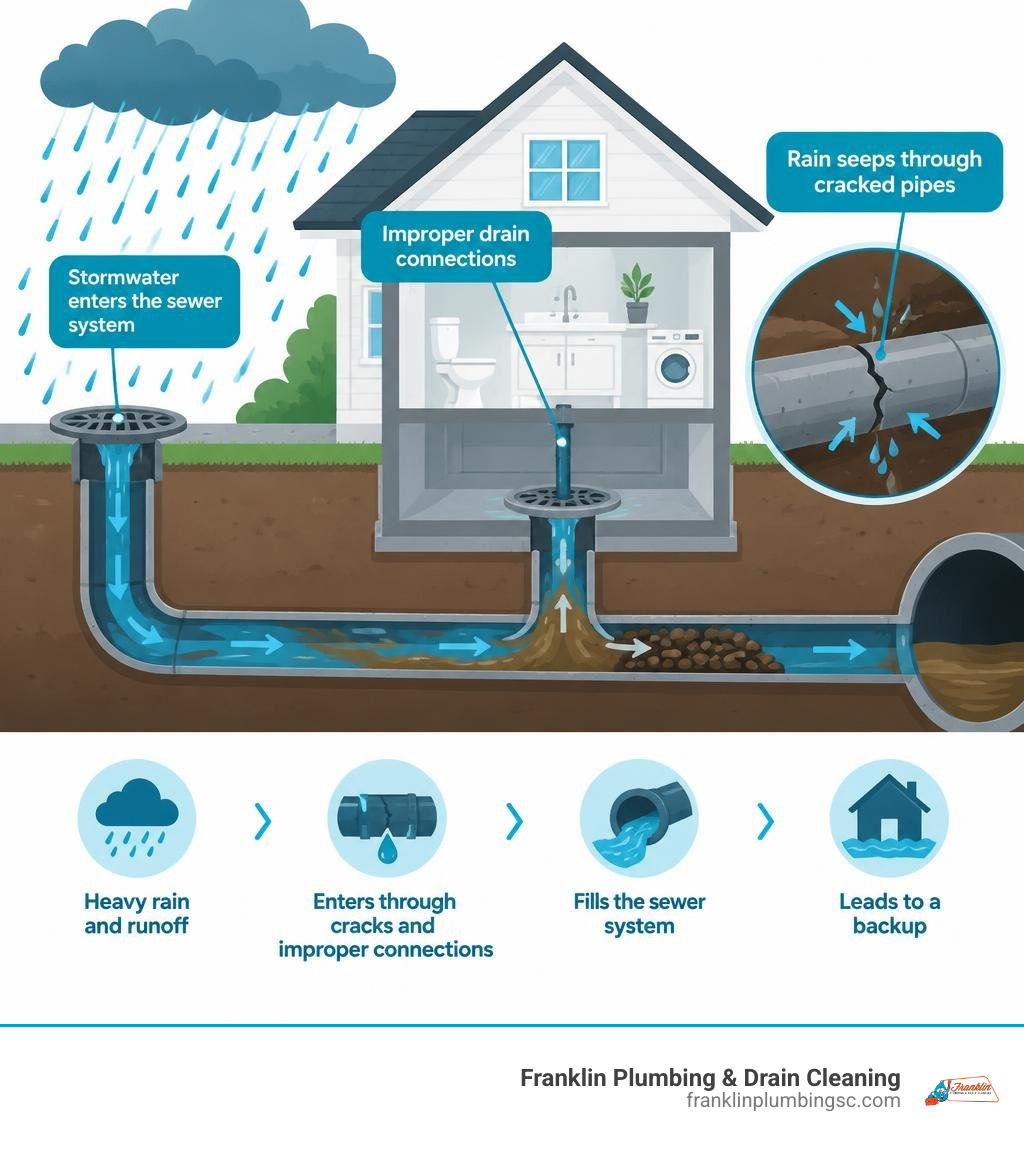
A heavy rain sewer backup can happen when stormwater enters sewer pipes faster than the system can carry it away. Rainwater may seep through cracked pipes or enter through drains connected to a sanitary sewer line. If a pipe is partly blocked, sewage can rise through a home’s lowest floor drain, toilet, or shower.
If you notice gurgling drains, sewage odors, or water rising from a floor drain during a storm, stop using sinks, toilets, and appliances. Keep people and pets away from the water, report the backup to your sewer utility, and have a licensed plumber check your private sewer line.
The Franklin Plumbing & Drain Cleaning team explains what to watch for in Columbia, SC, and how to lower the risk of another backup.
What Causes a Heavy Rain Sewer Backup in Columbia, SC
Intense subtropical downpours and tropical storm systems regularly sweep across the Midlands, dropping significant precipitation within short timeframes. When several inches of rain fall over an afternoon in communities like Forest Acres, SC, or West Columbia, SC, that massive volume of surface runoff must go somewhere. In municipal drainage networks, sewer backups occur primarily due to two distinct engineering phenomena: inflow and infiltration.
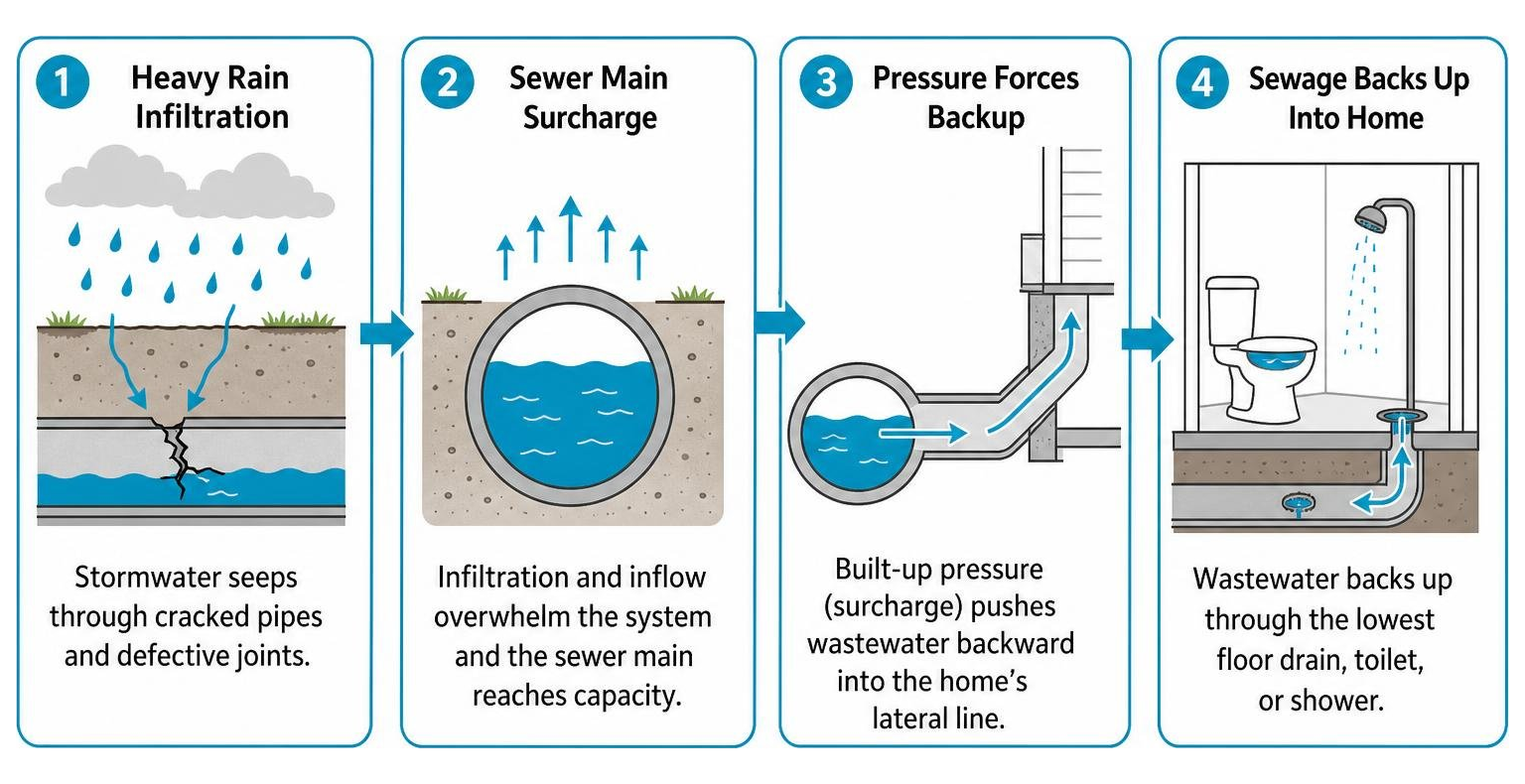
Inflow happens when clean stormwater directly enters the sanitary sewer system through surface openings, unsealed manhole covers, or unauthorized residential connections. Infiltration occurs when the surrounding soil becomes so thoroughly drenched that rising groundwater forces its way into underground pipe cracks, defective joints, and porous conduit walls.
As stormwater surges into the underground infrastructure, public sewer mains rapidly reach capacity. This leads to hydraulic surcharge, a condition where internal water pressure builds up and pushes wastewater backward through residential lateral connections toward low-lying plumbing fixtures. According to the EPA guidelines on sanitary sewer overflows, untreated wastewater discharges and system surcharges present substantial public health and environmental hazards across our nation’s collection networks.
Furthermore, physical blockages accelerate hydraulic surcharge. When fats, oils, and grease (FOG) wash down kitchen sinks, they solidify along pipe walls. Nationally, municipal records indicate that grease accumulation causes roughly 40% of all investigated sewer system blockages. When an already narrowed pipe encounters a massive influx of wet-weather runoff, wastewater cannot escape quickly enough, forcing raw sewage back into private residences.
How Saturated Soil and Infiltration Overwhelm Underground Lines
The unique soil composition across Columbia, SC, and neighboring towns like Lexington, SC, and Irmo, SC, plays a major role in pipe failures during storm season. Heavy Midlands clay expands when saturated with water, exerting extreme hydrostatic pressure on buried sewer lines. Older neighborhoods often rely on vitrified clay or aging cast-iron pipes. While durable under normal conditions, vitrified clay is brittle and easily fractures under shifting soil loads.
When saturated clay swells around an older lateral pipe, shifting ground can separate joints or crack the line. Groundwater then rushes through these structural openings, carrying fine silt and debris along with it. Recognizing the warning signs of a broken sewer line early, such as isolated soggy patches in the lawn or chronic indoor drain sluggishness, allows homeowners to address structural defects before heavy rainfall turns a minor fracture into a full indoor flood.
The Impact of Improper Stormwater Connections
Private plumbing design flaws can also lead to a severe indoor backup. In older Midlands properties, builders sometimes tied exterior stormwater collection components directly into the home’s sanitary sewer lateral. Common improper connections include:
- Rooftop gutter downspouts routed straight into underground sanitary cleanouts.
- Foundation perimeter footing drains tied into basement gravity traps.
- Outdoor patio and driveway catch basins connected to private household sewer pipes.
- Basement sump pumps discharging into indoor laundry tubs or sewer standpipes.
During a storm, a single residential roof can shed thousands of gallons of rainwater. If those downspouts feed into the sanitary sewer lateral, the lateral quickly becomes overwhelmed. Clean water discharge regulations prohibit routing stormwater into sanitary sewers because it overloads municipal wastewater treatment facilities and increases the likelihood of localized sewage spills.
Identifying Risks and Warning Signs in Midlands Homes
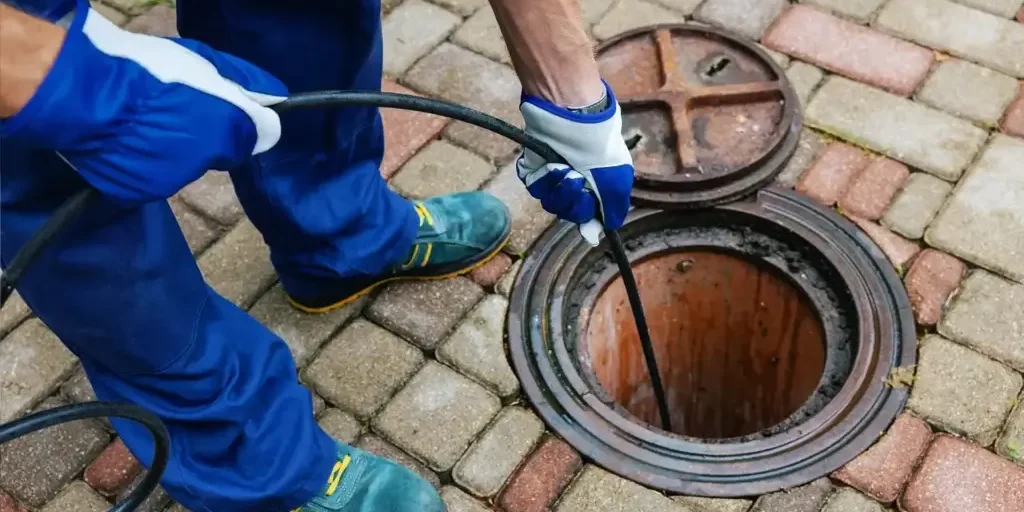
Certain home designs and geographic positions in the Midlands face higher vulnerability to storm-related backups. Properties situated in valley floors, low-lying parcels along the Congaree River basin, or homes sitting below the elevation of the nearest street manhole rim are at the highest structural risk. In neighborhoods across Cayce, SC, and St Andrews, SC, subgrade basement fixtures, lower-level slab floor drains, and downstairs utility sinks act as the path of least resistance when public sewer mains surcharge.
Soil density variations across Richland and Lexington counties also influence risk. Dense clay traps water near the surface, while sandy loam allows rapid deep percolation that puts pressure on lower foundation walls and underground cleanouts.
Warning Signs of an Impending Heavy Rain Sewer Backup
A major sewer backup rarely happens without brief warning signals. As underground pipes fill with storm runoff and air gets trapped in the drainage network, indoor plumbing will exhibit distinct symptoms:
- Gurgling toilet bowls and drain traps: Air bubbles forced backward through water seals make bubbling or gurgling sounds, especially when appliances like washing machines drain.
- Simultaneous slow drainage: Sinks, tubs, and showers across the lowest level of the house start draining noticeably slower at the same time.
- Foul sewer gas odors: Unpleasant odors seep past dry or pressurized traps during or immediately following heavy rain.
- Wastewater seepage in lowest fixtures: Water or dark residue begins rising in basement floor drains, shower pans, or lower-level toilets without any fixtures running inside.
Pre-Existing Pipe Vulnerabilities and Root Infiltration
Under normal dry conditions, a partially obstructed sewer line can often pass routine household wastewater without spilling. However, intense rainfall exposes these hidden pipe vulnerabilities. Mature pine, sweetgum, and live oak trees common throughout Columbia, SC, seek underground moisture sources during warm weather. Tiny root hairs penetrate microscopic cracks or loose joints in clay pipes, expanding into thick root masses that catch toilet paper and solid waste.
When sudden downpours flood the ground and send surging runoff through the lateral, water flow is halted by these pre-existing obstructions. Clearing tree roots in your sewer pipe through professional mechanical cutting or hydro jetting helps maintain open capacity for storm season.
Who Is Responsible: City Sewer Mains vs. Private Lateral Lines
A common question among property owners facing a backup is determining who holds legal and financial responsibility for repairs. The plumbing network is divided into public and private infrastructure:
- The Public Sewer Main: The municipal utility owns, operates, and maintains the large collection pipes running beneath public roadways and designated utility easements.
- The Private Sewer Lateral: The property owner owns and maintains the entire sewer lateral pipe extending from the interior plumbing of the building out to the connection point at the municipal main line.
If an obstruction or structural collapse occurs inside the private lateral line, even if located beneath your front lawn, repairing that pipe is the homeowner’s responsibility. Conversely, if the city main line becomes blocked or overwhelmed with floodwaters, the municipal utility manages the main line clearance. Reviewing our complete sewer line repair guide provides further detail on property boundaries, permitting steps, and repair expectations for Midlands residents.
Municipal Response and Damage Claim Limitations
When a storm causes neighborhood-wide sewer surcharge, municipal dispatchers prioritize emergency crews to inspect public collection mains and pump stations. However, municipalities generally operate under sovereign immunity protections and municipal liability limitations.
Most public utility departments categorize extreme weather backups as unforeseen acts of nature unless a homeowner can provide clear documentation of systemic negligence, such as an ignored, documented main line collapse. Filing a formal damage claim with a city or county entity usually requires strict submission deadlines, detailed photographic evidence, and proof that the private lateral was free of internal clogs.
Understanding Homeowners Insurance and Water Backup Riders
Many homeowners assume that standard hazard insurance policies cover flood or sewer damage automatically. In reality, standard policies generally exclude damage caused by rising surface water and sewer backflow.
To protect personal property, finishes, and structural framing, homeowners should purchase an optional water backup and sump overflow endorsement. This affordable rider covers water damage originating from sewers, drains, and failed sump pumps. When filing a claim, take detailed photographs before cleanup, save damaged items for adjuster inspection, keep receipts for professional sanitization, and catalog every lost personal possession.
Emergency Response and Safe Cleanup After Drain Backflow
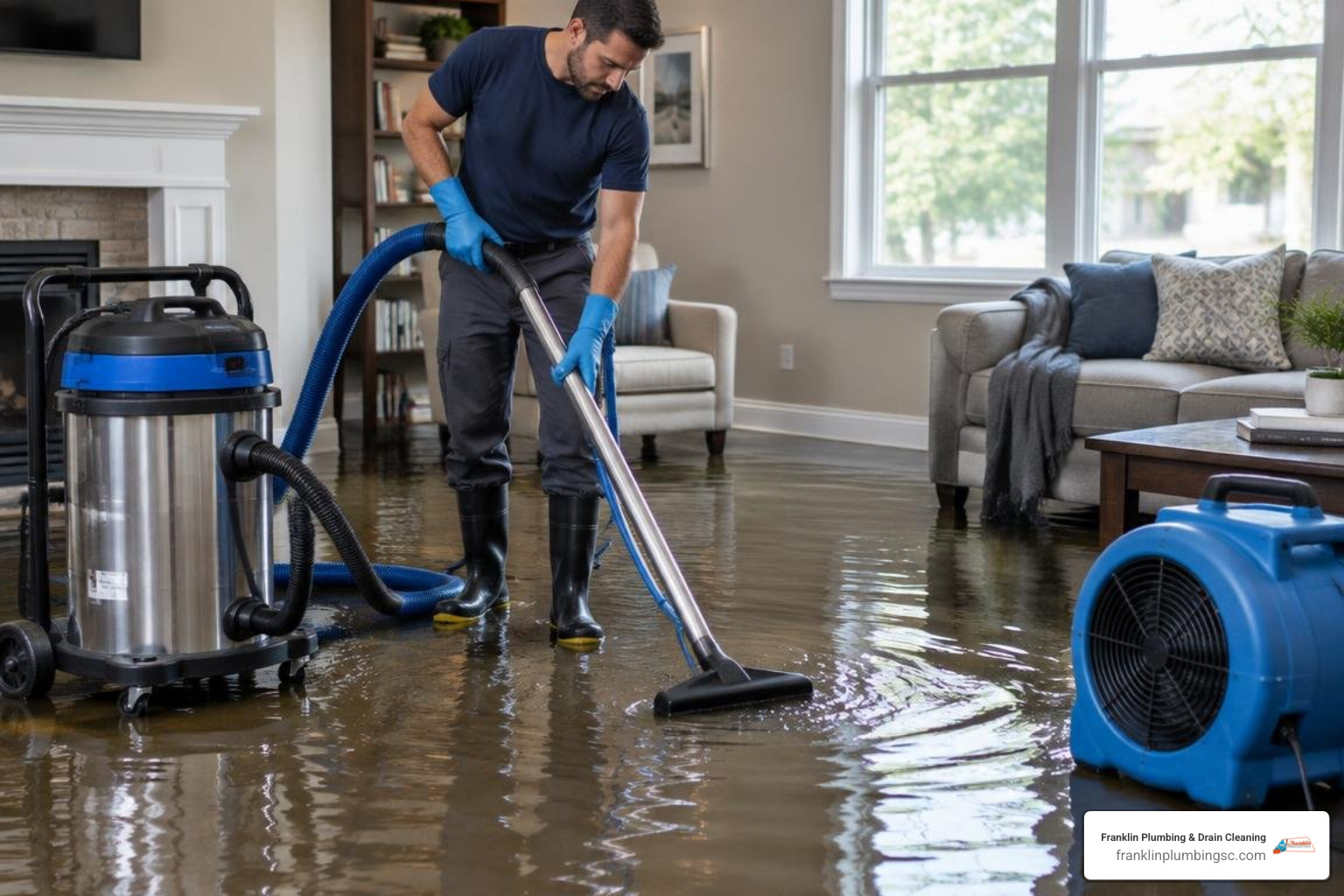
Raw sewage is classified as blackwater, carrying dangerous bacteria, viruses, parasites, and fungi that pose severe health risks. Exposure can lead to skin rashes, gastrointestinal illnesses, and eye infections. Contact with contaminated standing water must be approached with caution.
Immediate Safety Measures During a Heavy Rain Sewer Backup
When wastewater enters your living space during a storm, take these immediate safety precautions. For a concise response checklist, follow our five immediate steps to handle a sewer backup before beginning cleanup:
- Cease all indoor water usage: Stop running sinks, dishwashers, washing machines, and showers. Every gallon sent down an indoor drain will immediately surface out of your lowest floor opening.
- Shut off electrical power: If standing water reaches electrical outlets, baseboard heaters, or appliances, turn off the corresponding circuit breakers at the main service panel only if the panel can be accessed safely without standing in water.
- Evacuate vulnerable occupants: Ensure children, seniors, and pets remain completely away from contaminated rooms.
- Wear protective gear: Put on heavy rubber boots, nitrile inner gloves beneath durable work gloves, eye protection, and an N95 respirator mask before stepping near affected zones.
- Contact professional services: Notify your local sewer authority to log the street incident, and call a plumbing professional to evaluate your private line.
Proper Disinfection and Porous Material Disposal
Proper remediation prevents persistent mold growth and lingering airborne contaminants. Hard, non-porous surfaces such as concrete slabs, ceramic tile, and porcelain fixtures can be sanitized by scrubbing thoroughly with warm soapy water, followed by a disinfectant solution of 1/4 cup household chlorine bleach per gallon of clean water.
Porous materials that have absorbed raw sewage must be removed and discarded safely. This includes soaked carpet padding, wall-to-wall carpeting, upholstered furniture, mattresses, stuffed toys, and drywall cut several inches above the highest water mark. Once contaminated materials are cleared, run commercial dehumidifiers and air movers continuously to dry structural wall studs and subfloors.
Long-Term Plumbing Solutions to Prevent Wet-Weather Backups
Relying on luck during heavy rains leaves your home open to recurring property damage. Modern plumbing upgrades offer dependable barriers against city sewer surcharges and lateral flooding.
| Prevention Method | Protection Type | Ideal Home Application | Power Needed? | Maintenance Level |
|---|---|---|---|---|
| Backwater Check Valve | Automatic flapper barrier | Homes with fixtures below street sewer main grade | No | Annual cleaning & inspection |
| Mechanical Drain Plugs | Manual temporary seal | Emergency sealing of basement floor drains/toilets | No | Installed manually before storms |
| Sump Pump System | Active ground dewatering | Basements & crawl spaces collecting groundwater | Yes (Battery backup recommended) | Semi-annual float testing |
| Overhead Sewer Conversion | Elevated discharge loop | High-risk basements prone to municipal main surcharges | Yes (Ejector pump required) | Periodic pump maintenance |
Accurate diagnostics always precede effective plumbing upgrades. Scheduling a professional sewer camera inspection allows licensed technicians to run high-resolution video fiber optics through your lateral line, pinpointing hidden root balls, cracked joints, or improper downspout tie-ins without digging up your yard. When blockages or heavy grease accumulations are discovered, our hydro jetting services scour pipe walls clean using high-pressure water streams, restoring the full carrying diameter of your lateral.
Backwater Valves vs. Temporary Fixture Plugs
For permanent protection, a backwater valve remains the industry gold standard. Installed directly on the main sewer lateral in your basement or exterior lawn, this mechanical fitting features an internal flapper. Under normal gravity flow, the flapper rests open, letting household waste leave the building. If the municipal main line fills and pushes wastewater backward toward your home, the rising water forces the flapper shut, creating a watertight seal against incoming sewage.
Homeowners must remember one critical operational rule: when a backwater valve closes during a storm, indoor plumbing cannot be used. Because the exit path is blocked, running water inside the home will trap wastewater behind the valve and cause a self-inflicted backup.
For an inexpensive, temporary measure while planning permanent upgrades, homeowners can insert mechanical twist expansion plugs or inflatable rubber test balls directly into basement floor drains and remove subgrade toilets to seal the pipe opening with a threaded plug before major tropical storms.
Comprehensive Sewer Lateral Upgrades and Replacements
When an older lateral pipe has suffered structural collapse or chronic root infestation, localized clearing only provides temporary relief. In these situations, comprehensive sewer and water line replacement in Columbia, SC delivers a lasting solution.
Modern trenchless technology allows our team to rehabilitate or replace deteriorated lines with minimal lawn disturbance:
- Cured-In-Place Pipe (CIPP) Lining: An epoxy-saturated sleeve is inserted into the damaged host pipe, inflated, and cured into a smooth, seamless pipe-within-a-pipe that resists root intrusion.
- Trenchless Pipe Bursting: A hardened bursting head pulls new high-density polyethylene (HDPE) pipe directly through the old line, fracturing the brittle clay pipe outward while pulling a smooth, durable pipe in its place.
- Traditional Excavation: For severely collapsed or improperly graded lines, open trenching allows technicians to install modern PVC piping with cleanouts for easier long-term maintenance.
Working with an experienced team for expert sewer repair ensures all installations adhere to local South Carolina plumbing codes and provide long-term protection against severe weather.
Frequently Asked Questions About Wet-Weather Backups
What causes sewer backups specifically during heavy rain storms?
Heavy rains introduce excessive stormwater into municipal and private sewer networks through surface inflow and soil infiltration. When water volume exceeds the carrying capacity of collection mains, hydraulic pressure forces sewage backward through private lateral lines into low-lying home drains.
How do I know if my Columbia, SC home is at risk for a sewer backup?
Homes built on low-lying ground, properties with basements or subgrade fixtures sitting below the street sewer manhole cover, older homes with clay sewer pipes, and yards with mature oak or pine trees over sewer laterals face elevated backup risks during storm season.
Who pays to fix a sewer backup between the homeowner and the city?
The homeowner pays for repairs if the blockage, root intrusion, or pipe defect is located within the private sewer lateral connecting the house to the public main. The city handles repairs only if the failure occurs directly within the municipal collection main line.
Does standard homeowners insurance cover sewer backup water damage?
Standard homeowners insurance policies exclude drain and sewer backups unless the policyholder has added an optional water backup and sump overflow endorsement. Homeowners must verify their policy details with their insurance provider before storm season arrives.
Can I run water or flush toilets when outdoor sewers are backing up?
No. When outdoor sewers surcharge or when an installed backwater valve is engaged, running sinks, dishwashers, washing machines, or flushing toilets will trap water inside your home’s drainage network and flood your lowest-level rooms from the inside.
How does a backwater valve protect against storm sewer surcharges?
A backwater valve features a one-way mechanical flapper installed on the sewer lateral. It allows wastewater to exit the home under normal conditions, but automatically seals shut when reverse pressure from an overloaded city sewer main tries to push wastewater back into the building.
Is it safe to clean up sewage backup water without a professional?
Small, localized backups on non-porous concrete or tile can be sanitized by homeowners using personal protective equipment and a diluted bleach solution. Extensive sewage backups involving saturated drywall, carpets, subflooring, or widespread blackwater should be handled by professional remediation technicians.
Why are older homes with clay sewer pipes more vulnerable during storms?
Vitrified clay pipes feature numerous mechanical joints that loosen over time. Saturated clay soil shifts during heavy downpours, cracking brittle pipe walls and allowing groundwater and tree roots to infiltrate the line, creating severe flow restrictions during storms.
How do roof downspouts connected to sewer pipes cause basement backups?
Roof downspouts collect massive volumes of clean rainwater during downpours. When connected directly to the sanitary sewer lateral, this sudden flow overwhelms the private pipe’s capacity, causing clean runoff and wastewater to push up through basement drains.
What should I do immediately when sewage begins rising from my floor drain?
Immediately stop all indoor water usage, keep family and pets away from the contaminated area, avoid operating electrical switches near standing water, notify your municipal sewer department, and contact a licensed plumbing professional to inspect your sewer lateral line.
Conclusion
A storm-related sewer backup can cause costly property damage and create serious health hazards inside your home. Taking proactive steps, such as disconnecting exterior downspouts from your lateral line, clearing root intrusions, and installing a dependable backwater valve, protects your home from municipal surcharges and saturated soil pressure. When bad weather strikes, prompt action can help minimize interior damage and protect your household.
For long-term protection, routine pipe maintenance, and advanced sewer diagnostic inspections across the Midlands, trust the experienced team at Franklin Plumbing & Drain Cleaning. We provide thorough assessments, trenchless lateral repairs, and camera diagnostics backed by our 100% satisfaction guarantee. To protect your property before the next major storm, contact our professional sewer repair technicians today to schedule an inspection.

professional
drain cleaning

highly
recommended

through
repairs

quality
work