Why Your Toilet Keeps Overflowing and Needs Repair
Home »
How to Stop a Toilet from Overflowing and Find the Cause
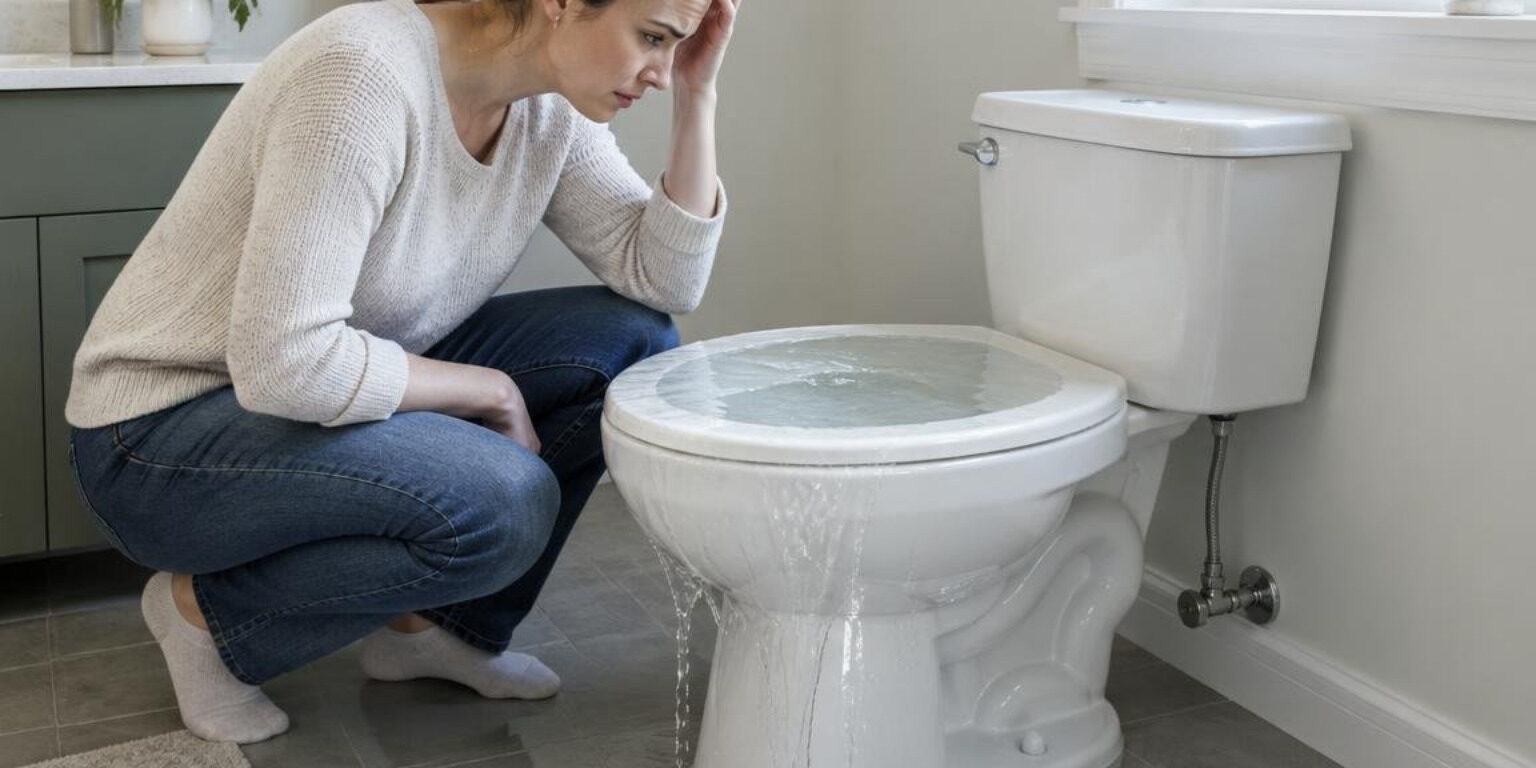
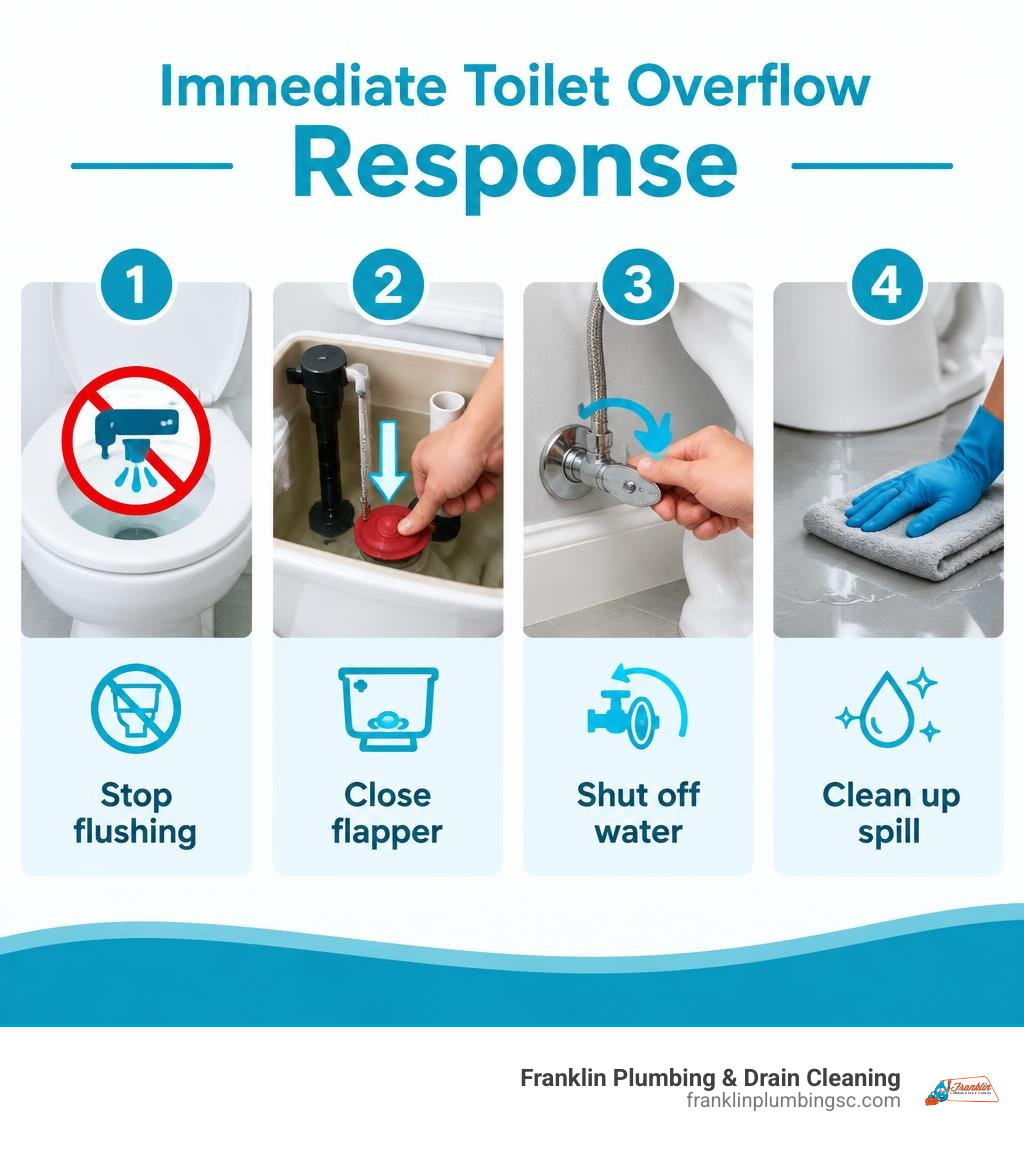
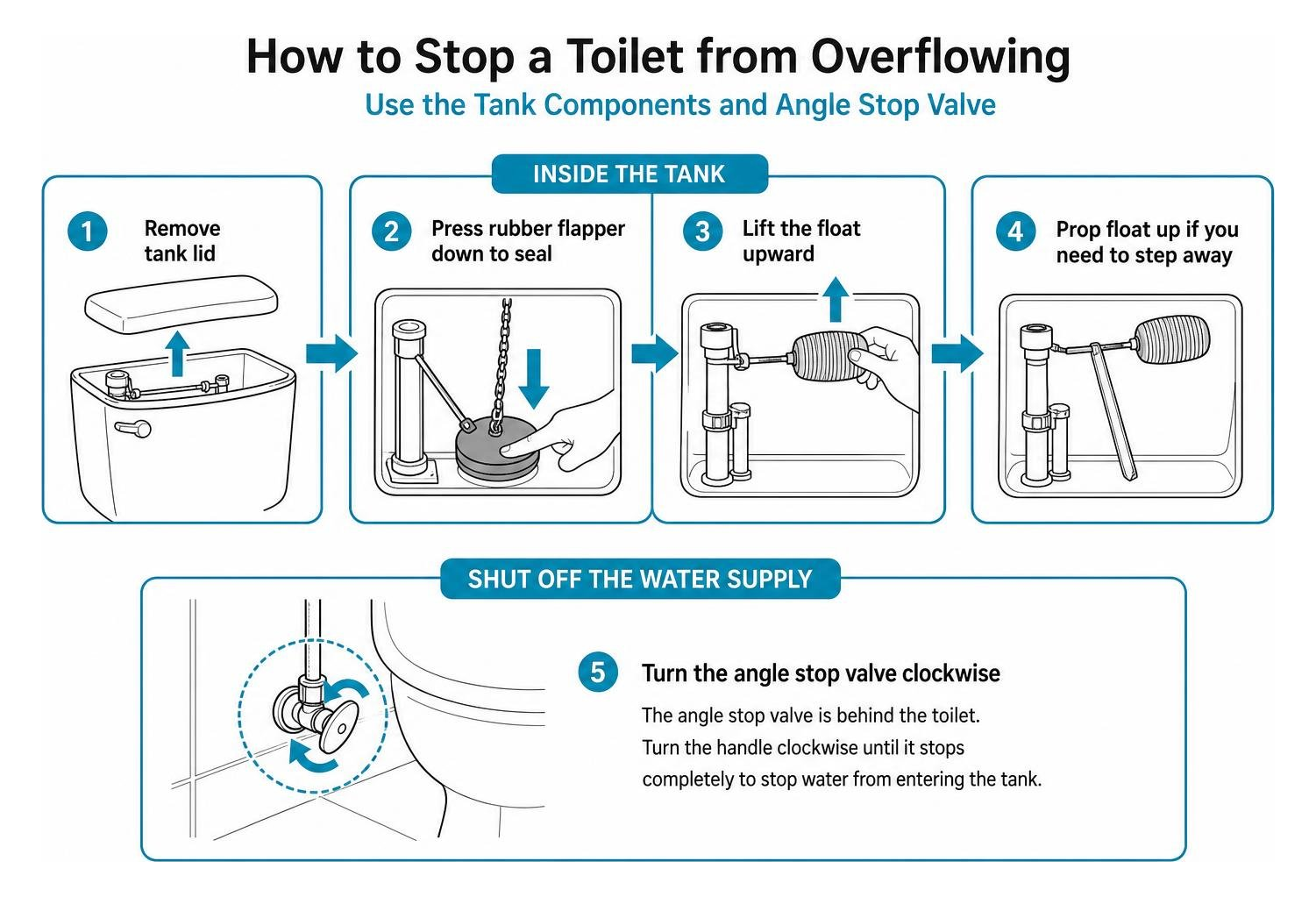
To stop a toilet from overflowing, do not flush again. Turn the water shut-off valve behind the toilet clockwise. If the bowl is still rising during a flush, remove the tank lid and press the rubber flapper closed to stop water leaving the tank. Lift the float if the tank keeps refilling.
If water is on the floor, soak it up promptly. Once the bowl level drops, you can try a toilet plunger, but a toilet that keeps overflowing may have a deeper drain blockage or a faulty tank part. Our team at Franklin Plumbing & Drain Cleaning helps Columbia, SC, homeowners find and repair the cause.
Immediate Actions on How to Stop a Toilet from Overflowing
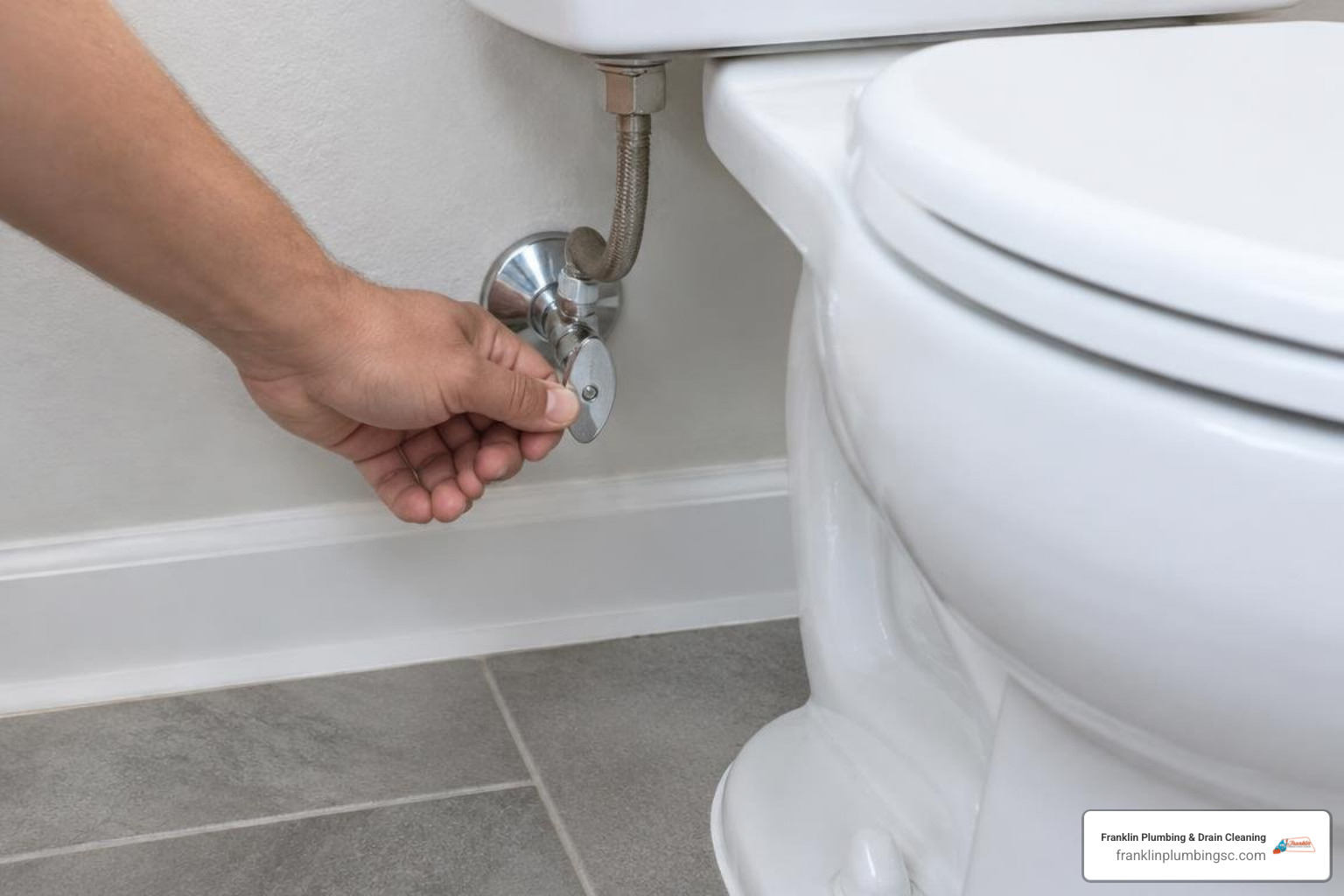
When a toilet bowl begins filling rapidly, you have mere seconds before wastewater spills over the porcelain rim and onto your bathroom floor. Understanding how to stop a toilet from overflowing begins with isolating the water supply immediately. The primary control point for your fixture is the angle stop valve, which sits on the wall or floor directly behind the toilet base.
To shut down incoming water, reach behind the fixture, grip the oval handle, and turn it clockwise until it stops completely. If the valve is a quarter-turn lever, turn it perpendicular to the water line. Halting the flow prevents additional gallons from entering the tank and spilling over the bowl edges.
How to Stop a Toilet from Overflowing Using the Tank Flapper and Float
If the shut-off valve is stiff, corroded, or hard to reach quickly, you can stop water flow directly from inside the tank.
- Carefully lift the ceramic tank lid straight up and place it safely on a flat surface or towel to prevent cracking.
- Reach inside the tank and push the round rubber flapper down firmly over the central drain hole at the bottom. This immediately creates a seal and prevents remaining tank water from flooding into the bowl.
- Locate the float mechanism, which is either a hollow ball on a metal arm or a plastic cylinder sliding along the vertical fill valve shaft.
- Lift the float upward with your hand. Raising the float signals the fill valve that the tank is full, instantly shutting off the incoming municipal water stream.
- If you must leave the toilet to grab towels or tools, you can prop the float arm in the raised position using a small wooden stick or ruler to keep the water off.
Why Learning How to Stop a Toilet from Overflowing Matters for Subfloor Protection
Every extra flush introduces roughly 6 to 9 liters of water into a blocked system. Leaving standing wastewater on a bathroom floor for as little as ten minutes can cause severe structural damage. Water quickly finds pathways along floor seams, penetrations around the toilet flange, and baseboards, saturating the wooden subfloor underneath.
In the humid climate of South Carolina, trapped moisture beneath vinyl planks, sheet laminate, or ceramic tile creates an ideal breeding ground for harmful mold within 48 to 72 hours. When an overflow occurs on an upper floor, water swiftly seeps through the subfloor into the ceiling drywall and insulation of the room below. Practicing timely action during sudden plumbing leaks is essential to limit property damage and avoid extensive structural renovations.
Critical Steps for Water Extraction and Floor Protection
Once you cut off the water supply, shift your focus to immediate liquid containment. Standing wastewater carries bacteria and biological contaminants that threaten indoor air quality and building materials. Put on heavy-duty waterproof gloves and protective footwear before beginning cleanup.
- Contain the perimeter: Place dry bath towels, rags, or absorbent containment pads around the perimeter of the spill to prevent water from traveling into hallways or adjacent carpeted bedrooms.
- Extract standing water: Use a dedicated wet-dry shop vacuum to pull water directly from hard floors. If a wet vacuum is unavailable, use thick towels to soak up the liquid, wringing them out into a bucket.
- Sanitize hard surfaces: Thoroughly mop the flooring with a professional-grade disinfectant or a warm water and mild bleach solution to neutralize harmful pathogens.
- Promote rapid air circulation: Open bathroom windows and set up oscillating fans alongside a dehumidifier to draw lingering moisture from the air and trim.
Recognizing the severity of moisture migration is critical for identifying urgent water intrusion risks before wood rot takes hold inside floor joists.
What to Do When Water Reaches the Baseboards
If overflow water reaches the perimeter walls, moisture can wick behind wooden or composite baseboards through capillary action. Carefully pry the affected baseboards away from the drywall using a flat putty knife. This allows trapped moisture behind the trim to evaporate rather than soaking into the paper backing of the wallboard.
Inspect the perimeter of the fixture closely. If water continues pooling around the porcelain footprint even after the bowl is empty, you may be addressing leaks beneath the toilet base, which typically points to a degraded wax ring seal or a cracked closet flange that needs professional repair.
Hidden Mechanical and Drain Causes Behind Recurring Toilet Overflows
A single toilet overflow is often caused by an excess of paper products trapped in the internal curved passageway, known as the porcelain S-trap. However, when a fixture repeatedly backs up, the underlying problem usually lies deeper within the mechanical hardware or drainage venting.
| Overflow Issue Location | Primary Diagnostic Symptoms | Common Underlying Causes | Recommended Resolution Path |
|---|---|---|---|
| Isolated Fixture Trap | Water rises only in single toilet; sinks drain normally | Paper buildup, foreign objects, low-flow flush failure | Mechanical plunging or professional closet auger clearing |
| Toilet Tank Mechanism | Continuous water hiss; tank spills into overflow tube | Warped flapper, improperly adjusted fill valve float | Recalibrate critical level mark or replace fill valve assembly |
| Roof Vent Stack | Slow draining, bubbling sounds, sewer odors present | Bird nests, leaves, negative atmospheric pressure | Clear vent stack opening from roof level |
| Main Sewer Line | Backups in tubs and showers when toilet is flushed | Tree root intrusion, collapsed pipe, municipal blockages | Motorized drain snaking, hydro jetting, camera inspection |
Faulty Fill Valves and Warped Flappers
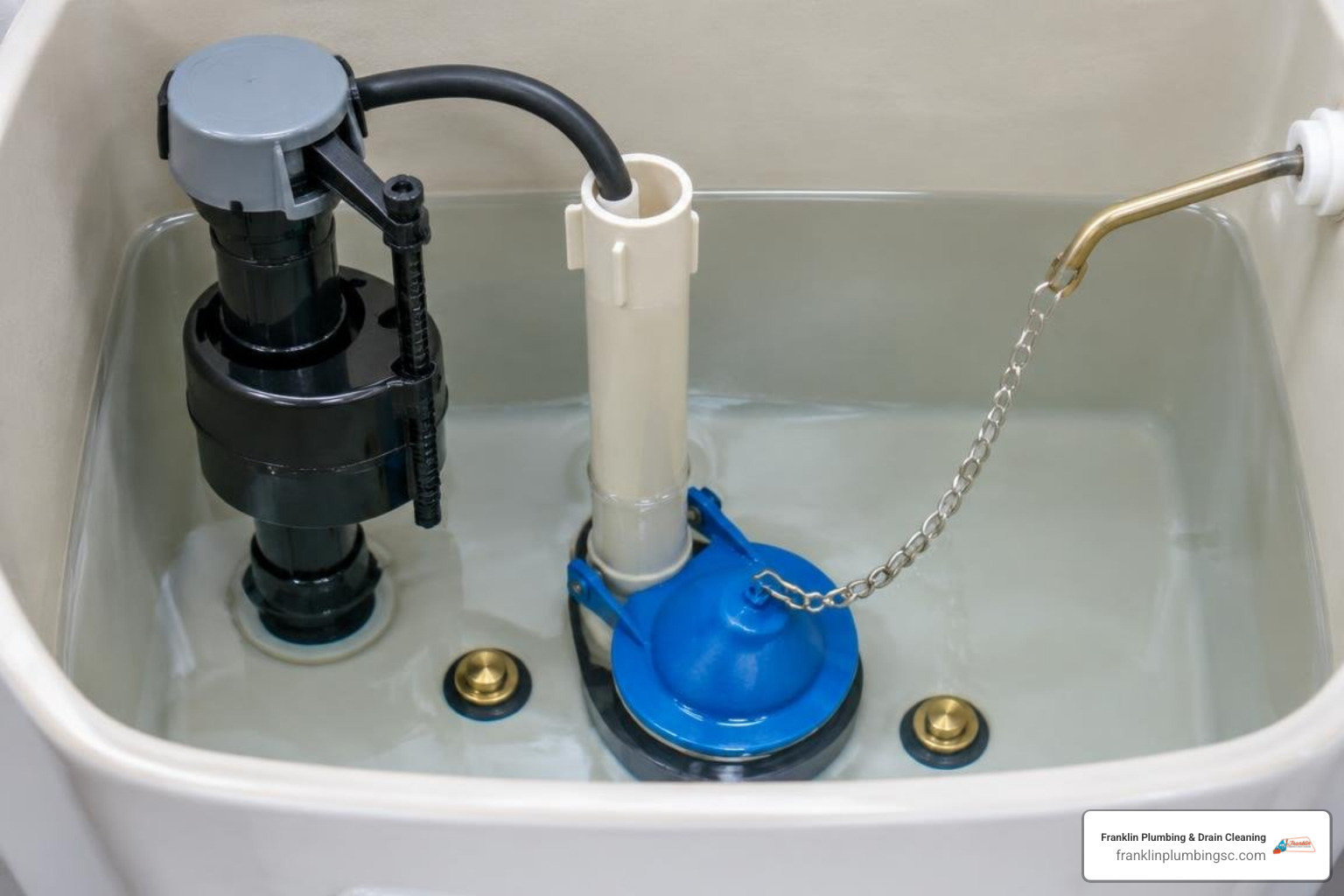
Not all overflows originate in the toilet bowl. A toilet tank can flood if the internal fill valve fails to shut off. Modern plumbing standards mandate that the fill valve Critical Level (CL) mark sits exactly 1 inch above the top of the overflow pipe. The overflow pipe itself must be positioned at least 1 inch below the tank lever opening to ensure excess water discharges safely down into the bowl rather than spilling out onto the floor.
If mineral scale or wear prevents the fill valve from closing, water enters the overflow tube continuously. If the bowl downstream has even a partial obstruction, this steady stream of incoming tank water can cause the bowl to slowly fill and overflow over time. Similarly, a warped, cracked, or misaligned rubber flapper allows water to continually leak from the tank into the bowl, creating continuous refilling cycles.
Foreign Objects and Non-Flushable Wipes
The internal trapway of a residential toilet measures only 2 to 2.5 inches in diameter and features tight curves designed to create a siphon. Items such as facial tissues, paper towels, dental floss, feminine hygiene products, and personal wipes do not break down rapidly in water like standard toilet paper.
Even products commercially marketed as flushable often fail to disintegrate, catching on internal porcelain casting imperfections and pipe joints. Communities like Arcadia Lakes, SC, emphasize responsible disposal practices aligned with local wastewater and municipal guidelines to prevent sewer network clogs. When these products snag inside the trap, they create a physical net that catches solid waste, causing recurrent overflows with standard use.
Safe Troubleshooting and Clearing Methods After Halting the Water
Once incoming water is stopped, allow 10 to 15 minutes for the water level in the bowl to drop naturally. Most household clogs are somewhat porous, meaning standing water will slowly seep past the obstruction.
If the bowl remains full to the brim, bail some liquid into a bucket using a small disposable container before attempting to clear the drain. Lowering the water level prevents messy splashing during drain clearing.
Never pour boiling water into a porcelain toilet. The sudden temperature shift causes thermal shock that can instantly crack the porcelain bowl, flooding the room and ruining the fixture. Similarly, avoid harsh chemical drain cleaners. Caustic chemicals generate intense heat, emit harmful fumes, soften plastic plumbing lines, and create severe chemical burn risks if water splashes during subsequent plunging.
Proper Flange Plunger Technique
A standard bell-shaped cup plunger is meant for flat sinks and tubs, not toilets. To clear a toilet blockage effectively, use a heavy-duty flange plunger, which features an extended rubber sleeve designed to fit snugly inside the curved toilet drain opening.
- Fold the internal flange outward from the plunger cup.
- Insert the plunger head into the bowl at an angle so the cup fills with water rather than trapped air. Air compresses under pressure, whereas water transfers hydraulic force directly against the clog.
- Position the flange securely into the drain opening to create an airtight seal.
- Push down firmly, then pull back sharply without breaking the suction seal. The upward pulling motion is just as important as the downward push, as alternating suction and compression shifts the obstruction back and forth to break it apart.
- Repeat this rhythmic push-pull motion 10 to 15 times before breaking the seal.
Controlled Testing Before Restoring the Supply
Never test a newly cleared drain by pulling the flush handle. If the blockage remains lodged deep in the line, a full flush introduces a fresh tank of water that will quickly overflow the rim.
Instead, test drain flow manually by pouring a gallon of warm tap water from a bucket directly into the bowl from waist height. If the water exits swiftly down the trapway, the blockage has cleared. You can then slowly turn the wall isolation valve counterclockwise to refill the tank. If the valve fails to respond or leaks at the stem, knowing the proper method for shutting off the home water main if isolation fails ensures your home remains protected while repairs take place.
Signs of Deep Sewer Line and Vent Stack Complications
When standard plunging fails to resolve recurring toilet overflows, the issue often stems from systemic plumbing problems located beyond the bathroom walls. Every drainage system relies on a network of vertical plumbing vents extending through the roof. These vent pipes release sewer gases and draw in atmospheric air to equalize pressure inside the drain pipes.
If leaves, debris, or bird nests block a roof vent, rushing wastewater creates a negative pressure vacuum. This vacuum slows the drain flow, pulls water out of internal fixture traps, and causes toilets to flush sluggishly or back up unexpectedly.
When Multiple Fixtures Gurgle or Back Up
The most critical indicator of a severe plumbing failure is a mainline sewer blockage. Your home drain system funnels wastewater from every fixture into a single main lateral pipe connecting to the municipal sewer or septic tank. When this main line clogs due to heavy debris or aggressive tree root intrusion, wastewater backs up at the lowest plumbing fixture in the home.
Watch for these warning signs of a mainline complication:
- The toilet gurgles or bubbles when nearby bathroom sinks or washing machines drain.
- Water rises into the bathtub or shower basin when you flush the toilet.
- Multiple toilets across different bathrooms back up simultaneously.
- Foul sewer odors emanate from floor drains in laundry rooms or basements.
Recognizing these symptoms allows homeowners to begin managing whole-home sewer line backups safely before widespread property damage occurs. Homeowners throughout Columbia, SC, and nearby communities like Irmo and Lexington should contact our team quickly when these signs appear, since delays often allow the blockage to worsen.
When to Call a Licensed Professional
Stubborn blockages, mechanical failures, and structural pipe damage require specialized diagnostic tools and industrial equipment. While light clogs yield to basic plunging, attempting to force stiff consumer snakes into delicate porcelain can permanently scratch the finish or lodge the cable inside the trap.
If your toilet backs up repeatedly without a clear cause, or if wastewater appears in adjacent fixtures, reach out to our plumbing technicians, who utilize advanced high-definition sewer camera inspections, motorized mechanical augers, and high-pressure hydro jetting to restore complete flow to your drainage system.
For persistent drain clogs and recurring backups, our professional drain cleaning services clear the toughest blockages and help protect your home from future overflows. When persistent plumbing trouble threatens your home, you can easily schedule professional plumbing support to resolve the problem permanently.
Frequently Asked Questions About Toilet Overflows and Repairs
What is the very first thing I should do if my toilet begins to overflow?
Reach behind the toilet base and turn the water shut-off valve clockwise until it stops. If the valve is stuck or missing, remove the tank lid and press the rubber flapper down over the drain hole, then lift the float arm to stop the tank from filling.
How do I stop the water if the shut-off valve behind the toilet is stuck?
Take off the tank lid and pull the float mechanism up to the top of the tank. You can wedge a ruler or stick beneath the float arm to hold it upright, which mechanically closes the fill valve and stops incoming water flow without requiring tools.
Why does my toilet overflow when no one has flushed anything unusual?
Sluggish drains and unexpected overflows often stem from a partially blocked porcelain trapway, a obstructed roof vent stack creating negative air pressure, or downstream tree root intrusion narrowing the main sewer lateral pipe.
Can pouring boiling water into the toilet bowl clear a stubborn clog?
No, never pour boiling water into a toilet bowl. The rapid thermal shock can crack the cold porcelain casting, causing extensive water leaks onto your floor and requiring a complete replacement of the fixture. Use warm tap water instead.
Why should I avoid using chemical drain cleaners in a clogged toilet?
Chemical drain cleaners generate intense heat that can crack porcelain and warp plastic pipes. Furthermore, if the chemical fails to clear the clog, it leaves standing caustic water in the bowl that presents a severe chemical burn risk during manual plunging or snaking.
How can I tell if the overflow is caused by a main sewer line clog?
A main line clog typically impacts multiple plumbing fixtures simultaneously. If flushing the toilet causes water or bubbles to emerge in your bathtub, shower drain, or nearby sink, the main sewer line is obstructed.
What causes water to overflow from the tank instead of the bowl?
Tank-level overflows occur when the fill valve fails to shut off and the internal overflow pipe is cracked, set too high, or obstructed. The Critical Level mark on the fill valve must always sit at least 1 inch above the top of the overflow pipe.
How long does it take for standing toilet overflow water to cause mold?
Microbial growth and mold colonies can begin developing within 48 to 72 hours when moisture seeps beneath tile, vinyl flooring, baseboards, or subflooring in a warm, enclosed bathroom environment.
How do I safely test if the clog is gone before turning the water back on?
Pour a gallon of tap water directly from a bucket into the toilet bowl. If the water drains rapidly without backing up, the trapway is clear, and you can safely reopen the water supply valve behind the fixture.
When is a recurring toilet overflow considered a serious plumbing issue?
If a toilet overflows frequently despite normal use and careful plunging, it points to deep tree root intrusion, foreign object accumulation, misaligned venting, or a failing sewer pipe requiring professional camera inspection and hydro jetting.
Conclusion
Understanding how to quickly halt rising water, properly clear minor blockages, and recognize systemic drain failures can help protect your home from costly water damage. Whether the cause is a worn fill valve, a compromised wax ring, or a blockage deeper in the sewer line, recurring toilet overflows require an accurate diagnosis and the right repair. For dependable, long-term plumbing solutions in Columbia, SC, and surrounding communities, trust Franklin Plumbing & Drain Cleaning and contact our professional drain cleaning technicians today.

professional
drain cleaning

highly
recommended

through
repairs

quality
work